
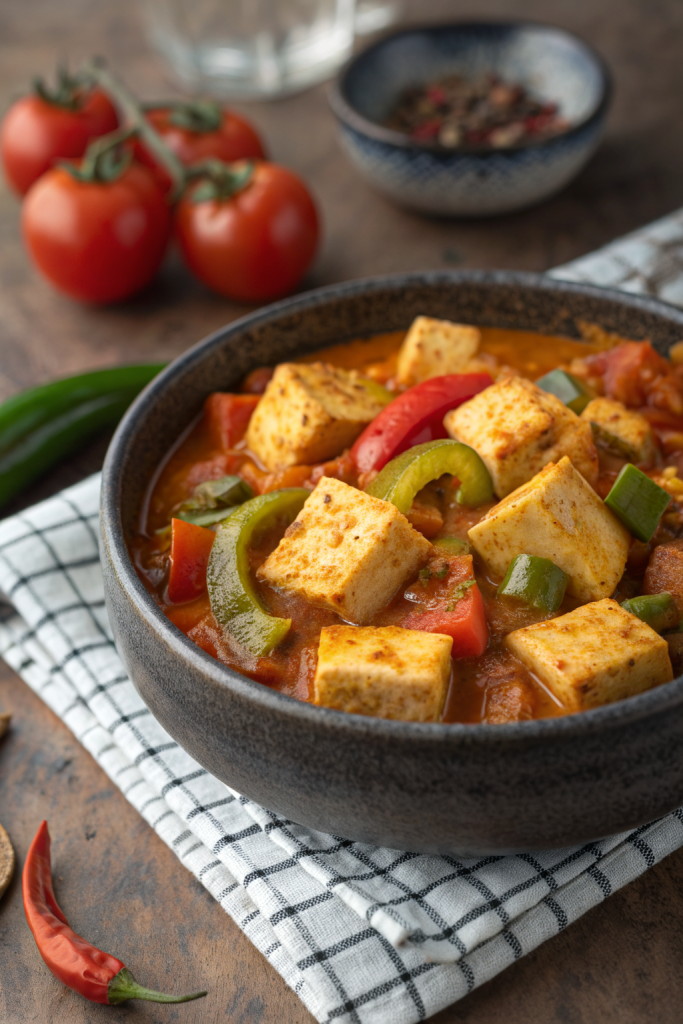
Vegan Paprikash Recipe tastes rich, smoky, and creamy with tender veggies in a paprika-forward sauce that feels like a hug in a bowl. It works well for cozy weeknights, date nights, or meal prep and takes about 45 minutes start to finish. I grew up on the classic version, and I still feel smug every time this vegan paprikash hits the table and nobody misses the meat.
Why Vegan Paprikash Recipe Is Worth It
This Vegan Paprikash Recipe delivers all the comfort of the Hungarian classic without dairy or meat. You still get a silky, tangy, paprika-loaded sauce that clings to noodles or potatoes in the best way.
You only need simple ingredients, one main pan, and about 45 minutes. The recipe reheats beautifully, so you cook once and enjoy it for days.
“This Vegan Paprikash Recipe tastes like old-school comfort food with a plant-based glow-up, and I scraped my bowl clean. ★★★★★”
Ingredients You Need
Paprika & spices
- Sweet Hungarian paprika – Non-negotiable for authentic flavor. Use a fresh, bright-red paprika; old paprika tastes dusty and flat.
- Smoked paprika – Adds depth and a subtle campfire note; use Spanish smoked paprika if you have it.
- Garlic powder (optional) – Boosts flavor if your fresh garlic runs mild.
- Caraway seeds (optional but traditional) – Lightly crush them for more aroma.
- Bay leaf – Adds background savoriness.
- Fine sea salt and black pepper – Season in layers, not just at the end.
Vegetables
- Yellow onion – Classic base; white onion works in a pinch.
- Red bell pepper – Adds sweetness and color; orange or yellow bell peppers also work.
- Mushrooms (cremini or button) – Stand in for the meaty bite; portobello works if you slice it thin.
- Garlic cloves – Fresh garlic gives the sauce a deeper flavor.
- Tomato paste – Concentrated umami and color; I like the kind in a tube for easy storage.
Creamy element
- Full-fat coconut milk (from a can) – Gives a lush, creamy texture; use a brand with minimal gums for best flavor.
- Or cashew cream – Blend ¾ cup soaked cashews with 1 cup water until silky; this works well if you avoid coconut.
- Plain unsweetened vegan yogurt (optional) – Stir in at the end for tang, similar to sour cream. Choose a thick, neutral brand.
Broth & acids
- Vegetable broth – Use low-sodium so you control the salt. A good-quality bouillon paste works as a pantry shortcut.
- Soy sauce or tamari – Adds umami and depth; use tamari for gluten-free.
- Apple cider vinegar or lemon juice – Brightens the sauce at the end.
Oil & starch
- Olive oil or avocado oil – Neutral enough for sautéing while still tasty.
- Vegan butter (optional) – Stir in a tablespoon at the end for extra richness.
- All-purpose flour or cornstarch – Thickens the sauce; use cornstarch for gluten-free.
To serve
- Egg-free wide noodles – Many “egg-style” noodles now come in vegan versions; check labels.
- Or pasta shells, fusilli, or penne – Great texture for catching sauce.
- Or boiled or mashed potatoes, rice, or spaetzle-style vegan dumplings – All work well with this Vegan Paprikash Recipe.
- Fresh parsley or chives – Adds color and freshness on top.
Equipment
- Large deep skillet or wide Dutch oven with lid
- Cutting board and sharp knife
- Wooden spoon or spatula
- Measuring cups and spoons
- Small bowl or cup for mixing slurry (if using cornstarch)
Quick Tips & substitutions
- Use fresh, high-quality sweet Hungarian paprika; toss any paprika older than a year.
- Mix sweet and smoked paprika for balance; start with 2:1 sweet to smoked and adjust.
- Swap mushrooms with soy curls, seitan strips, or chickpeas if you dislike mushrooms.
- Use cashew cream instead of coconut milk if you want a more neutral flavor.
- Choose tamari and cornstarch plus gluten-free noodles or rice for a gluten-free version.
- Sauté onions low and slow until soft and golden for deeper flavor.
- Add paprika after onions soften and cook it briefly so it blooms but does not burn.
- Thin a too-thick sauce with a splash of broth; simmer a few extra minutes if it runs thin.
- Taste and adjust salt, acid, and paprika at the end; this step often turns “good” into “wow.”
How to Make Vegan Paprikash Recipe
Step 1: Prep the ingredients
Chop the onion into small dice. Slice the bell peppers into thin strips. Clean the mushrooms with a damp towel and slice them. Mince the garlic and crush the caraway seeds slightly if you use them.
Measure out the paprika, smoked paprika, and other spices so you add them quickly. Shake the coconut milk can or stir your cashew cream so it looks smooth. Keep the broth nearby. This setup keeps the cooking process calm and easy.
Step 2: Sauté the onions and peppers
Heat a large skillet or Dutch oven over medium heat and add oil. Add the diced onions with a pinch of salt and cook 6–8 minutes until they turn soft and lightly golden. Stir often so they do not scorch.
Add the sliced bell peppers and cook another 5–7 minutes until they soften and start to caramelize around the edges. If the pan looks dry, add another drizzle of oil or a splash of broth. This base builds the sweet backbone of the Vegan Paprikash Recipe.
Step 3: Add mushrooms and garlic
Add the sliced mushrooms to the pan. Spread them out so they sit in a single layer as much as possible. Let them cook undisturbed for 2–3 minutes so they brown, then stir and cook another 4–5 minutes until they release their moisture and that liquid cooks off.
Add the minced garlic and crushed caraway seeds. Stir and cook about 1 minute until the garlic smells fragrant. Keep the heat moderate so the garlic does not burn.
Step 4: Toast the paprika and tomato paste
Reduce the heat to medium-low. Add sweet paprika, smoked paprika, garlic powder (if using), and tomato paste. Stir constantly for 1–2 minutes so the spices bloom and the tomato paste darkens slightly.
Watch the pan closely and keep the heat gentle. The mixture should smell rich and aromatic, not bitter. If it looks too dry or starts to stick, add a small splash of broth and keep stirring.
Step 5: Build the sauce
Sprinkle the flour over the vegetables and stir well so it coats everything. Cook 1–2 minutes to remove the raw flour taste. If you use cornstarch instead, skip this step and mix it with a few tablespoons of cold broth in a small bowl to make a slurry.
Pour in the vegetable broth slowly while you stir, scraping up any browned bits from the bottom of the pan. Add soy sauce or tamari, the bay leaf, and a pinch of salt and pepper. If you prepared a cornstarch slurry, stir it in now.
Step 6: Simmer until thick and cozy
Bring the mixture to a gentle simmer. Let it bubble on low heat for 10–15 minutes, stirring occasionally. The sauce should thicken and coat the vegetables.
Taste and adjust seasoning with more salt, pepper, or paprika as needed. If the sauce thickens too much, add a splash of broth. If it still looks thin after 10–15 minutes, simmer a bit longer.
Step 7: Add the creamy element
Lower the heat to low. Stir in the coconut milk or cashew cream until the sauce turns velvety and orange-red. Let it warm through for 3–4 minutes, but do not boil vigorously.
Add a small splash of apple cider vinegar or lemon juice to brighten the flavor. If you want extra tang, stir in a spoonful or two of thick vegan yogurt. Taste again and fine-tune the salt and paprika.
Step 8: Cook the noodles or starch
While the sauce simmers, bring a large pot of salted water to a boil. Cook your vegan noodles or pasta according to package directions until just tender. Drain well.
If you use potatoes, boil them in salted water until fork-tender, then drain. Rice or other grains also work; cook them while the sauce simmers so everything finishes together.
Step 9: Finish and serve
Fish out the bay leaf. Stir in a small knob of vegan butter if you want extra richness. Add chopped parsley or chives and give everything a final stir.
Serve the Vegan Paprikash Recipe over hot noodles, potatoes, or rice. Spoon plenty of sauce over the top so every bite tastes creamy and paprika-rich. Garnish with more herbs and a tiny extra sprinkle of paprika if you feel fancy.
Recipe Variations
- Gluten-free – Use tamari, cornstarch instead of flour, and gluten-free pasta, rice, or potatoes.
- Extra protein – Add chickpeas, lentils, cubed tofu, or seitan strips with the mushrooms.
- Low carb – Serve over cauliflower rice, steamed green beans, or zucchini ribbons.
- Extra veggies – Toss in zucchini, green beans, or peas during the last 5–7 minutes of simmering.
- Spicy version – Add a pinch of hot Hungarian paprika or red pepper flakes with the other spices.
- Extra smoky – Increase the smoked paprika slightly and add a dash of liquid smoke.
Ways to Serve Vegan Paprikash Recipe
- Spoon over wide vegan noodles with a sprinkle of fresh parsley.
- Serve on top of creamy mashed potatoes with a side of steamed broccoli.
- Pair with fluffy white or brown rice and a simple cucumber salad.
- Ladle over roasted cauliflower or roasted potatoes for extra texture.
- Serve with crusty bread and a green salad for a cozy, balanced meal.
Storage Success
Let the Vegan Paprikash Recipe cool to room temperature, then store it in an airtight container in the fridge for up to 4 days. The flavors deepen overnight, so leftovers often taste even better. Reheat gently on the stove over low heat with a splash of broth or water to loosen the sauce. Freeze portions without the noodles for up to 2 months, then thaw in the fridge and reheat before serving over fresh starch.