
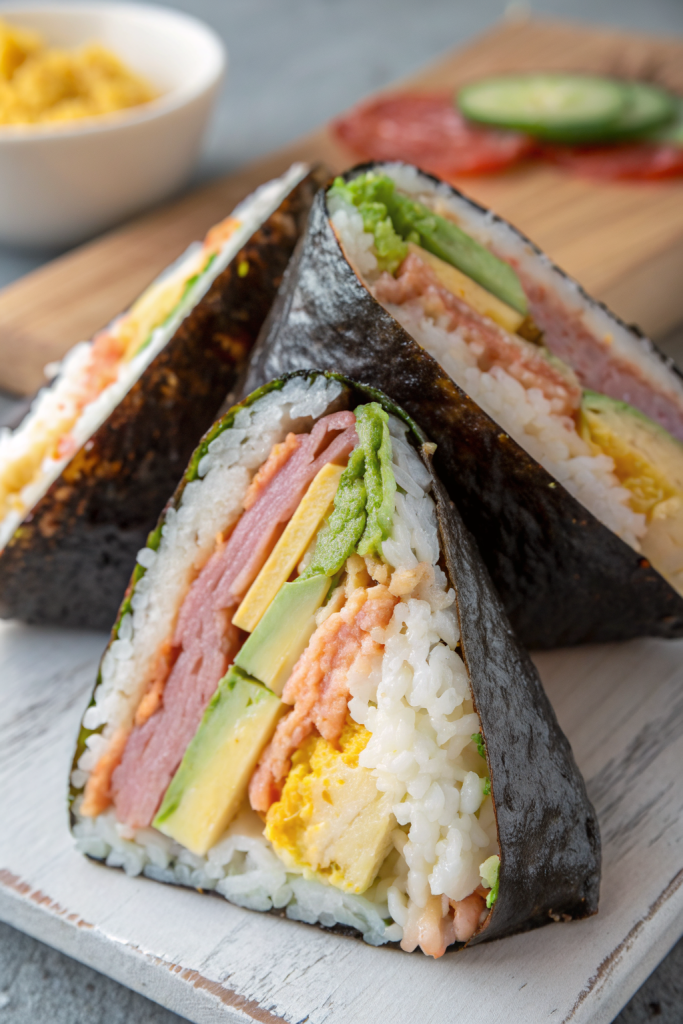
Onigirazu Recipe tastes like a sushi roll and a sandwich had a very delicious, slightly messy baby, and it works perfectly for busy folks who want a portable, flavorful meal in under 40 minutes. This Onigirazu Recipe suits meal preppers, lunchbox packers, college students, and anyone who loves Japanese flavors without fussy techniques. I first made it after a long shift when I felt too tired to roll sushi, and it instantly became my “I deserve something good” comfort food.
Why Make This Onigirazu Recipe at Home
You control everything: the fillings, the seasoning, the rice texture, and how generous you feel with the sauce. That freedom means you can build a vegetarian, vegan, or protein-packed version that still tastes like a treat.
You also save money and time. Onigirazu packs easily, holds up in a lunchbox, and tastes great at room temperature, which makes it ideal for work, school, picnics, or road trips.
“This Onigirazu Recipe became my go-to lunch because it tastes like takeout sushi but packs like a sandwich and stays fresh until noon. ★★★★★”
Ingredients You Need
Rice & Seasoning
- Short-grain Japanese rice or sushi rice
- Short-grain rice gives that classic sticky texture that holds everything together.
- Avoid long-grain rice, which stays too loose and falls apart.
- Water
- Rice vinegar
- Sugar
- Salt
You can also use pre-cooked frozen rice from brands like Nishiki or Kokuho if you feel short on time. Just heat it gently and season it while still warm so it absorbs the vinegar mixture.
Nori & Wrapping
- Full sheets of nori (seaweed), roasted
- Use sushi-grade nori that looks dark and crisp, not pale or flimsy.
- I like brands that label sheets as “gold” or “silver” grade for better flavor and texture.
- Plastic wrap or parchment sheets
- This helps you shape and hold the Onigirazu while it sets.
Protein Options (Pick 1–2 per batch)
- Cooked chicken thigh or breast, sliced
- Canned tuna mixed with a little mayo and soy sauce
- Spam or luncheon meat, sliced and pan-seared
- Firm tofu, pressed and pan-seared with soy sauce
- Cooked shrimp or imitation crab sticks
- Fried egg or tamagoyaki-style rolled egg
You can mix and match based on what you have. Leftover rotisserie chicken, teriyaki chicken, or baked tofu all work nicely in this Onigirazu Recipe.
Veggies & Extras
- Cucumber, cut into thin sticks
- Carrot, julienned or shredded
- Avocado, sliced
- Lettuce leaves or shredded cabbage
- Pickled radish (takuan) or pickled cucumber
- Sliced green onion or chives
- Sesame seeds
Pre-shredded coleslaw mix works as a shortcut when you do not want to chop vegetables. You can also use bagged salad greens in a pinch.
Sauces & Seasonings
- Soy sauce or tamari
- Japanese mayonnaise or your favorite mayo
- Sriracha or chili sauce
- Tonkatsu sauce or teriyaki sauce
- Furikake seasoning or toasted sesame seeds with a pinch of salt
Mix mayo with sriracha for a quick spicy spread. Use low-sodium soy sauce if you want more control over saltiness.
Equipment List
- Rice cooker or a medium pot with lid
- Small saucepan for rice seasoning
- Cutting board
- Sharp knife
- Measuring cups and spoons
- Small bowl for sauces
- Plastic wrap or parchment
- Clean kitchen towel
A rice paddle or silicone spatula helps you fold the seasoning into the rice without smashing the grains. A sharp knife makes neat cuts through the nori and fillings.
Tips & Mistakes
- Use freshly cooked, slightly warm rice so it sticks together better and absorbs seasoning.
- Avoid overcooking rice, since mushy rice turns the center heavy and gummy.
- Season the rice while warm and fold gently so you keep the grains intact.
- Keep your hands slightly damp when handling rice to prevent sticking.
- Do not overload fillings, or the nori will tear and the Onigirazu will burst open.
- Place wetter ingredients like avocado or sauced tuna in the center, not directly on the nori, to avoid soggy edges.
- Wrap tightly in plastic or parchment and let it sit a few minutes so everything sets before slicing.
- Use a sharp, slightly damp knife and slice in one confident motion to keep clean edges.
- Pack Onigirazu with cool fillings only; hot fillings can steam and soften the nori too much.
- Taste your sauces before you add them and adjust salt so the final bite does not taste too salty.
How to Make Onigirazu Recipe
Step 1: Cook and Season the Rice
Rinse 2 cups of short-grain rice under cold water until the water runs mostly clear. Drain well and cook with the appropriate amount of water in a rice cooker or pot.
While the rice cooks, heat 4 tablespoons rice vinegar, 2 tablespoons sugar, and 1 teaspoon salt in a small saucepan until the sugar dissolves. Transfer the hot rice to a wide bowl, drizzle the vinegar mixture over it, and fold gently with a rice paddle until the grains look glossy. Let the rice cool until warm, not hot.
Step 2: Prep Fillings
Slice your protein into strips or bite-size pieces. If you use Spam or tofu, sear slices in a pan until the edges turn golden and slightly crisp.
Cut cucumbers and carrots into thin sticks and slice avocado just before assembly to keep it from browning. Mix canned tuna with a spoonful of mayo and a splash of soy sauce, or stir together mayo and sriracha for a spicy spread. Set everything within arm’s reach.
Step 3: Set Up the Nori and Wrap
Place a sheet of plastic wrap or parchment on your cutting board. Lay one sheet of nori on top, shiny side down, with a corner pointing toward you so it forms a diamond shape.
Scoop about 1/3 to 1/2 cup of warm rice into the center of the nori and shape it into a small square. Press gently to level it, but keep some fluff so it does not feel dense. Sprinkle a pinch of furikake or sesame seeds if you like.
Step 4: Add Fillings
Layer your protein on top of the rice square. Add vegetables like cucumber, carrot, and lettuce, then tuck in avocado slices or pickles.
Drizzle or spread a small amount of sauce over the fillings, such as spicy mayo or teriyaki. Keep the stack relatively flat and even so the Onigirazu closes neatly.
Step 5: Top With More Rice
Add another 1/4 to 1/3 cup of rice over the fillings and gently press to form a square that matches the base layer. Cover the fillings fully so the rice acts like a cushion between them and the nori.
Check that the stack stays centered on the nori diamond. Adjust any pieces that stick out so you avoid tearing when you fold.
Step 6: Fold and Wrap
Take the bottom corner of the nori and fold it up over the rice stack. Then fold the top corner down, followed by the left and right corners, so you form a neat square package.
Use the plastic wrap or parchment underneath to wrap the Onigirazu tightly. Press gently with your hands to help it hold its shape. Let it rest for 5 to 10 minutes so the nori softens slightly and the rice sets.
Step 7: Slice and Serve
Use a sharp knife and cut the Onigirazu in half diagonally through the center. Wipe the blade and dampen it lightly between cuts so the rice does not stick.
Serve the halves cut-side up so the layers show. Add extra soy sauce, spicy mayo, or a small container of dipping sauce on the side if you pack it for lunch.
Variations I've Tried
Tuna mayo Onigirazu: canned tuna mixed with Japanese mayo, soy sauce, and a little black pepper, plus cucumber and lettuce. This version tastes creamy, salty, and fresh, and it works well for quick lunches.
Spam and egg Onigirazu: pan-seared Spam slices, fried egg, shredded cabbage, and a drizzle of tonkatsu sauce. It tastes like a breakfast sandwich with a Japanese twist and feels very satisfying.
Teriyaki chicken Onigirazu: leftover teriyaki chicken, avocado, and sesame seeds. This variation uses leftovers efficiently and tastes even better the next day since the flavors settle into the rice.
Veggie tofu Onigirazu: soy-glazed tofu, carrot, cucumber, lettuce, and pickled radish. It tastes bright and crunchy and works nicely for vegetarian or vegan eaters when you use vegan mayo or skip it.
How to Serve Onigirazu Recipe
Serve Onigirazu at room temperature or slightly cool, which keeps the rice tender and the nori just soft enough to bite cleanly. Add a side of cut fruit, edamame, miso soup, or a simple green salad for a more complete meal. Pack it in a lunchbox with an ice pack if you plan to eat it several hours later. Kids also love small, bite-size pieces, so you can cut each half into smaller chunks for little hands.
How to store
- Store leftover Onigirazu tightly wrapped in plastic or parchment, then place it in an airtight container in the fridge for up to 24 hours.
- Keep fillings with mayo or egg on the shorter side of that window and eat them the same day when possible.
- Freeze plain rice blocks wrapped in plastic for up to 1 month, then thaw and use them later to assemble fresh Onigirazu with new fillings.
- Reheat gently in the microwave for 15 to 20 seconds if you want slightly warmer rice, but keep in mind that nori can soften more, so reheat lightly and eat soon after.