
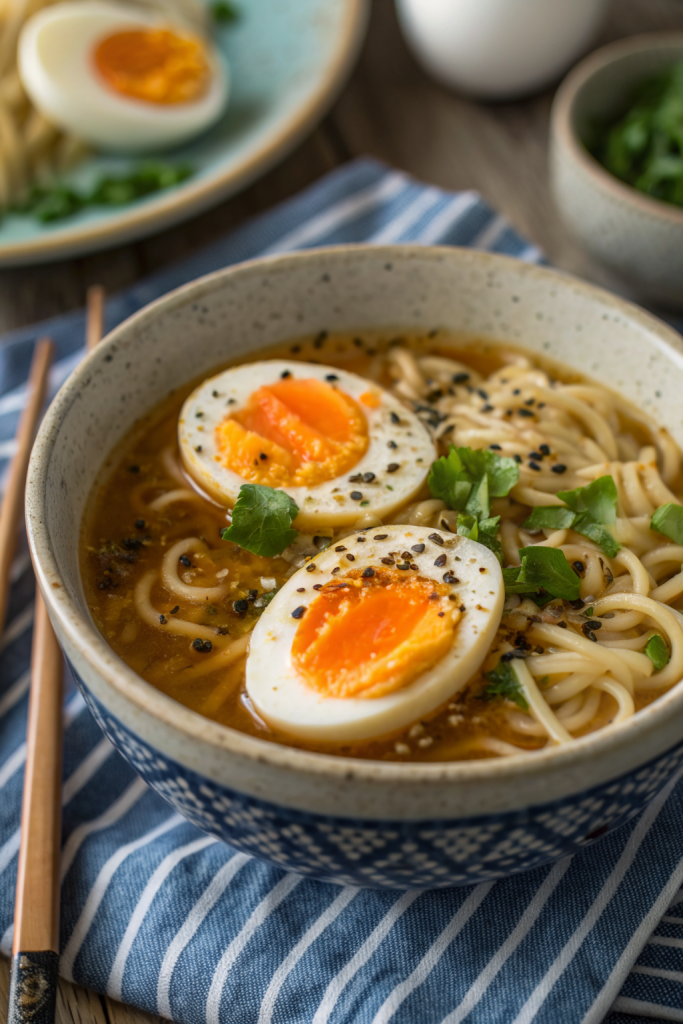
Ajitama Japanese Ramen Egg Recipe tastes rich, savory, and just a little sweet, with a jammy yolk that feels like ramen-shop magic at home in about 30 minutes of active time. It suits ramen lovers, meal-preppers, and anyone who wants a simple upgrade for noodles, rice bowls, or snacks. I still remember the first time I nailed that custardy yolk and did a tiny victory dance in my kitchen.
Why Choose This Ajitama Japanese Ramen Egg Recipe
This Ajitama Japanese Ramen Egg Recipe uses simple pantry ingredients and a repeatable method, so you get consistent jammy yolks every time. You control the flavor strength and salt level, which beats guessing at store-bought eggs.
The marinade works on a small or big batch, so you can prep once and enjoy all week. You also use the leftover marinade as a seasoning splash for stir fries or rice, so nothing goes to waste.
“These Ajitama eggs taste like they came from a tiny Tokyo ramen shop, not my messy home kitchen. ★★★★★”
Ingredients You’ll Need
Eggs
- 6 large eggs
- Use fridge-cold eggs so they peel easier.
- Choose large size for consistent timing.
- Older eggs (about a week old) peel more easily than super fresh ones.
Marinade
- 1/2 cup soy sauce
- Use Japanese-style soy sauce if possible.
- Low-sodium soy sauce works if you prefer a lighter salt level.
- 1/2 cup water
- This dilutes the soy so the eggs do not turn too salty.
- 1/4 cup mirin
- Mirin adds sweetness and aroma.
- If you do not have mirin, use 3 tablespoons sugar plus 1 tablespoon water and simmer briefly to dissolve.
- 2 tablespoons sake
- Optional but adds depth and that ramen-shop flavor.
- If you avoid alcohol, skip it and add 1 extra tablespoon water plus 1 teaspoon sugar.
- 1 tablespoon sugar
- Adjust to taste for sweeter or more savory eggs.
- 1 clove garlic, lightly crushed
- 1 small piece ginger, about 1/2 inch, sliced
- 1 green onion, cut into 2 inch pieces
- These aromatics add flavor without extra work.
Equipment
- Medium pot for boiling eggs
- Slotted spoon or spider strainer
- Large bowl for ice bath
- Measuring cups and spoons
- Small saucepan for marinade
- Zip-top bag or small container that fits eggs snugly
- Timer
- Small pin or thumbtack (optional, for pin-pricking eggs to reduce cracking)
Tips & Tricks
- Use fridge-cold eggs so the shell separates more easily from the white.
- Pin-prick the rounded end of each egg with a thumbtack to reduce cracking and help center the yolk.
- Keep the water at a gentle boil, not a wild one, to avoid cracked eggs.
- Set a timer the second the eggs hit the water so you hit your preferred yolk texture.
- Prepare an ice bath before you cook the eggs so you can chill them instantly.
- Peel eggs under running water to help lift stubborn shell bits.
- Use a zip-top bag for marinating and press out extra air so the marinade covers every egg.
- Rotate the bag in the fridge a couple of times during marinating so the color and flavor stay even.
- Taste the marinade before you add eggs and adjust sugar or water if it tastes too strong.
- Reuse leftover marinade once for another batch of eggs or as a seasoning splash for stir fries, then discard it.
How to Make Ajitama Japanese Ramen Egg Recipe
Step 1: Mix the Marinade
- Add soy sauce, water, mirin, sake, and sugar to a small saucepan.
- Toss in the garlic, ginger, and green onion pieces.
- Bring the mixture to a light simmer over medium heat and stir until the sugar dissolves.
- Turn off the heat and let the marinade cool to room temperature, then move it to the fridge to chill.
Step 2: Prepare the Ice Bath
- Fill a large bowl halfway with cold water.
- Add plenty of ice so the water turns very cold.
- Set the bowl near the stove so you can move the eggs quickly.
Step 3: Boil the Eggs
- Fill a medium pot with enough water to cover the eggs by about 1 inch.
- Bring the water to a gentle boil over medium-high heat.
- Use a pin to prick the rounded end of each cold egg if you choose that method.
- Lower the eggs into the boiling water carefully with a slotted spoon and start the timer right away.
Step 4: Time the Yolks
- Cook 6 minutes for a very runny yolk that barely holds.
- Cook 6 minutes 30 seconds for a soft, jammy center that still flows a little.
- Cook 7 minutes for a custardy, slightly firmer jammy yolk, which works best for ramen eggs.
- Cook 8 minutes if you prefer a more set but still moist yolk.
Step 5: Chill and Peel
- When the timer rings, move the eggs straight into the ice bath with the slotted spoon.
- Let them sit in the ice bath at least 10 to 15 minutes so the cooking stops and the shell loosens.
- Gently crack each egg all over on a hard surface, then peel under running water.
- Dry the peeled eggs with a paper towel so the marinade does not dilute.
Step 6: Marinate the Eggs
- Place the peeled eggs into a zip-top bag or a snug container.
- Pour the chilled marinade over the eggs so they sit fully covered.
- Press out extra air from the bag and seal it, or place a small piece of plastic wrap directly on the surface in a container.
- Chill in the fridge at least 4 hours for light flavor or overnight up to 24 hours for deeper color and taste, turning the bag a couple of times.
Step 7: Serve
- Pull the Ajitama Japanese Ramen Eggs from the marinade when you want to serve them.
- Slice each egg in half with a very sharp knife so the yolk stays neat and glossy.
- Place the halves on top of hot ramen, rice bowls, or salads.
- Spoon a tiny bit of marinade over the cut eggs if you want extra flavor.
What to Serve with Ajitama Japanese Ramen Egg Recipe
These Ajitama eggs shine on a bowl of shoyu ramen, miso ramen, or even instant noodles that need a glow up. You can tuck them over steamed rice with some sliced cucumbers, kimchi, and a drizzle of sesame oil for a quick lunch. They also taste great on top of avocado toast, cold soba noodles, or a simple green salad. I often pack one in a lunchbox with onigiri, sliced fruit, and some crunchy veggies.
Storage Options
- Keep Ajitama Japanese Ramen Eggs in the fridge, submerged in marinade, for up to 3 days for best texture and flavor.
- If you want to store them a bit longer, move the eggs out of the marinade after 3 days and keep them in an airtight container up to 2 more days.
- Do not freeze these eggs, since freezing changes the yolk texture and turns it grainy.
- Reheat gently by placing the whole eggs in warm water for 5 to 7 minutes if you want them slightly warm, or enjoy them straight from the fridge.
Ajitama Japanese Ramen Egg Recipe
Ingredients
Instructions
- Add soy sauce, water, mirin, sake, and sugar to a small saucepan.
- Add the garlic, ginger, and green onion pieces.
- Bring to a light simmer over medium heat, stirring until the sugar dissolves.
- Remove from heat and let the marinade cool to room temperature, then chill it in the refrigerator.
- Fill a large bowl halfway with cold water, add plenty of ice, and set it near the stove.
- Fill a medium pot with enough water to cover the eggs by about 1 inch and bring to a gentle boil over medium-high heat.
- Carefully lower the cold eggs into the boiling water with a slotted spoon and start the timer immediately.
- Boil for about 7 minutes for a custardy, jammy yolk, adjusting by 1 minute more or less for your preferred texture.
- When the time is up, transfer the eggs straight into the ice bath and let sit for 10 to 15 minutes.
- Gently crack the shells all over and peel the eggs under running water, then pat dry with a paper towel.
- Place the peeled eggs in a zip-top bag or snug container and pour the chilled marinade over them so they are fully covered.
- Press out excess air and seal, then refrigerate for at least 4 hours and up to 24 hours, turning occasionally for even color and flavor.
- Remove the eggs from the marinade just before serving.
- Slice each egg in half with a very sharp knife.
- Serve on top of hot ramen, rice bowls, or salads, spooning a little marinade over the eggs if desired.
Notes
Approximate per 1 egg (1/6 of recipe): 90 calories; fat 5 g; saturated fat 1.5 g; carbohydrates 4 g; fiber 0 g; sugars 3 g; protein 7 g; sodium 560 mg. Values will vary based on brands, exact marinating time, and how much marinade is absorbed.