
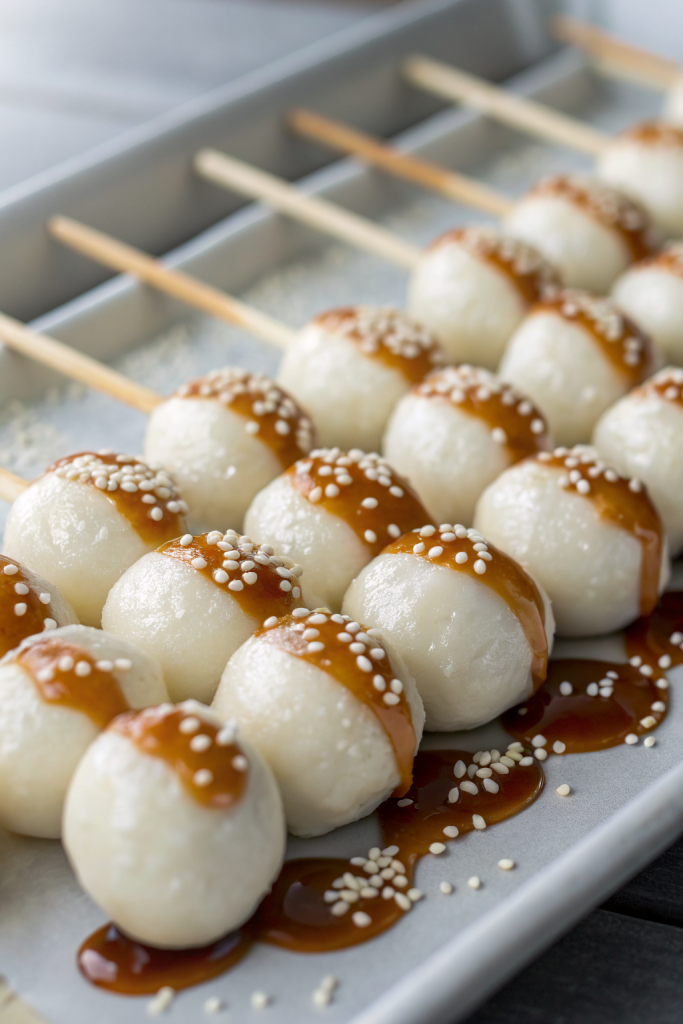
Shiratama Dango Japanese Dessert Recipe tastes chewy, slightly sweet, and incredibly soothing, like the mochi cousin that always shows up on time. It works perfectly for beginners, busy home cooks, or anyone who wants a pretty dessert on the table in under 30 minutes. I first made shiratama dango in a tiny apartment kitchen with one pot and a mismatched bowl, so you and your cookware situation already stand ahead of where I started.
Why Shiratama Dango Japanese Dessert Recipe Is Worth It
Shiratama dango brings that classic Japanese mochi-style chew without any complicated steaming or special molds. You just mix, roll, boil, and chill, then pair the dumplings with toppings like sweet red bean paste, kinako (roasted soybean flour), or matcha syrup.
The recipe uses only a few ingredients, stays naturally gluten-free, and scales easily for one person or a crowd. You also control the sweetness level, so the dessert can taste light and refreshing instead of heavy.
Soft, chewy, and endlessly customizable, this Shiratama Dango Japanese Dessert Recipe tastes like something from a traditional wagashi shop ★★★★★
Ingredients You Need
Core ingredients
-
Shiratamako (白玉粉) – 100 g (about 1 cup loosely packed)
- This rice flour gives the classic chewy texture.
- Choose a Japanese brand like Shirakiku or Mochiko Shiratamako if possible.
- Do not swap with regular rice flour; it will not give the same chew.
-
Water – about 80–100 ml (about 5–7 tablespoons), room temperature
- Add gradually until the dough feels like soft earlobe cartilage.
- Use filtered water if your tap water tastes strongly of minerals.
-
Sugar – 1–2 teaspoons (optional)
- Add a little sugar if you plan to eat the dango plain.
- Skip it if you serve with sweet toppings like anko or syrup.
Classic toppings (choose 1–3)
-
Anko (sweet red bean paste) – 1/2–1 cup
- Tsubuan (chunky) or koshian (smooth) both work.
- Use canned anko from a Japanese or Asian market as a pantry shortcut.
-
Kinako (roasted soybean flour) – 2–3 tablespoons
- Mix with 1–2 tablespoons sugar and a pinch of salt.
- Store-bought kinako keeps well and works great for quick desserts.
-
Kuromitsu (Japanese brown sugar syrup) – 2–3 tablespoons
- Use bottled kuromitsu or mix dark brown sugar with a little hot water until syrupy.
- You can also use a simple brown sugar syrup you cook on the stove.
-
Matcha syrup – 2–3 tablespoons
- Whisk 1 teaspoon matcha powder with 2 tablespoons hot water and 1–2 tablespoons sugar.
- Use a small whisk or milk frother to avoid clumps.
-
Fresh fruit
- Sliced strawberries, kiwi, mango, or canned mandarin oranges taste great.
- Fruit adds color and freshness to the bowl.
Optional finishing touches
- Vanilla ice cream or matcha ice cream
- Sweetened condensed milk (drizzle)
- Toasted black or white sesame seeds
- A small pinch of flaky salt to balance sweetness
Equipment list
- Medium mixing bowl
- Kitchen scale or measuring cups
- Spoon or chopsticks for mixing
- Small pot for boiling water
- Slotted spoon or mesh strainer
- Bowl of ice water for shocking the dango
- Small tray or plate for holding cooked dumplings
- Small bowls or glasses for serving
Quick Tips & substitutions
- Add water slowly to the shiratamako so the dough stays soft, not sticky.
- Aim for dough that feels like a soft earlobe when you press it with your finger.
- If the dough cracks when you roll it, add 1 teaspoon of water and knead again.
- If the dough sticks to your hands, dust your palms with a tiny bit of shiratamako.
- Roll the balls slightly smaller than a ping-pong ball so they cook evenly.
- When the dango float, keep boiling for 1–2 more minutes so the centers cook fully.
- Shock the cooked dango in ice water so they stay bouncy and do not turn mushy.
- Use mochiko (sweet rice flour) only if you cannot find shiratamako, and add water more slowly since mochiko absorbs water differently.
- Sweeten the dough lightly if you plan to eat the dango plain or with unsweetened matcha.
- Serve toppings on the side if you host guests, so everyone customizes their own bowl.
How to Make Shiratama Dango Japanese Dessert Recipe
Mix the dough
-
Measure the shiratamako
- Add 100 g shiratamako to a medium mixing bowl.
- Break up any visible clumps with your fingers or the back of a spoon.
- Stir in 1–2 teaspoons sugar if you want slightly sweet dumplings.
-
Add water gradually
- Pour in about half the water and mix with chopsticks or a spoon.
- Add more water 1 tablespoon at a time while you mix.
- Stop when the dough comes together and no dry flour remains.
-
Knead to the right texture
- Switch to your hands and knead the dough in the bowl.
- Press and fold until the dough feels smooth and soft, like an earlobe.
- If it feels dry or cracks, add a few drops of water; if it feels sticky, sprinkle a tiny bit more shiratamako and knead again.
Shape the dango
-
Divide the dough
- Roll the dough into a log and cut it into equal pieces, about 16–20 pieces.
- Keep the unused pieces covered with a slightly damp towel so they do not dry out.
- Aim for pieces that look like large marbles.
-
Roll into balls
- Roll each piece between your palms into a smooth ball.
- Press out any cracks with your fingertips.
- Place the finished balls on a plate or tray and keep them covered.
-
Add the signature dimple (optional but classic)
- Press your thumb lightly into each ball to make a small indentation.
- This dimple helps the center cook evenly and holds sauce or syrup.
- Do not press too hard or you will flatten the dumpling.
Boil the dango
-
Boil water and prep ice bath
- Fill a small pot with water and bring it to a gentle boil.
- Set up a large bowl of ice water next to the stove.
- Keep a slotted spoon or mesh strainer nearby.
-
Cook the dumplings
- Gently slide the shiratama dango into the boiling water.
- Stir once or twice so they do not stick to the bottom.
- Watch as they sink, then float to the surface after a few minutes.
-
Finish cooking after they float
- After all the dumplings float, keep boiling for 1–2 more minutes.
- Test one by cutting it in half; the center should look evenly translucent and chewy.
- If the center looks chalky, cook for another 30–60 seconds.
Chill and set the texture
-
Shock in ice water
- Scoop the cooked dango out with a slotted spoon.
- Transfer them straight into the ice water bowl.
- Let them chill for 2–3 minutes so the texture turns bouncy and firm.
-
Drain well
- Drain the cooled dango in a strainer.
- Shake off excess water so sauces and toppings stick better.
- Use them right away or keep them covered until serving.
Assemble and serve
-
Classic anko and kinako style
- Place a few shiratama dango in a small bowl.
- Add a spoonful of anko on the side.
- Dust the dango with kinako mixed with sugar and a pinch of salt, then drizzle a little kuromitsu if you like.
-
Matcha parfait style
- Add a scoop of vanilla or matcha ice cream to a glass.
- Top with shiratama dango, fruit, and a drizzle of matcha syrup.
- Sprinkle toasted sesame seeds for a nutty finish.
-
Simple syrup style
- Place dango in a shallow bowl.
- Pour a little brown sugar syrup or kuromitsu over the top.
- Add fruit on the side and enjoy while the dumplings stay cool and chewy.
Recipe Variations
-
Vegan version
- Use plant-based ice cream or skip ice cream entirely.
- Sweeten with kuromitsu, brown sugar syrup, or maple-style syrup.
-
Extra low sugar
- Skip sugar in the dough and use unsweetened matcha or lightly sweetened anko.
- Add fresh fruit for natural sweetness.
-
Matcha shiratama dango
- Mix 1–2 teaspoons matcha powder into the shiratamako before you add water.
- Adjust water slightly since matcha can dry the dough.
-
Black sesame dango
- Add 1–2 tablespoons finely ground black sesame seeds and 1 tablespoon sugar to the dough.
- Top with extra sesame and a drizzle of syrup.
-
Stuffed dango
- Wrap small bits of anko inside each dough ball before boiling.
- Seal the dough well so the filling stays inside.
-
Fruit bowl style
- Serve shiratama dango over chilled fruit salad with a little syrup.
- Add a spoonful of yogurt for a breakfast-style bowl.
Ways to Serve Shiratama Dango Japanese Dessert Recipe
- With anko and kinako for a classic Japanese wagashi-style dessert.
- Over vanilla or matcha ice cream with kuromitsu and toasted sesame seeds.
- In a fruit parfait with strawberries, kiwi, and a drizzle of sweetened condensed milk.
- With chilled matcha or hojicha tea on the side for a light afternoon snack.
- As part of a dessert platter with mochi, dorayaki, and seasonal fruit.
- In a simple bowl with brown sugar syrup and a tiny pinch of salt on top.
Storage Success
Keep leftover shiratama dango in an airtight container in the fridge, covered with just enough cold water to submerge them. Change the water once a day so the dumplings stay fresh and clean. Eat them within 1–2 days, since the texture turns firmer over time. To revive chilled dango, dip them briefly in warm water, drain well, then add your favorite toppings again.
Shiratama Dango Japanese Dessert Recipe
Ingredients
Instructions
- Add 100 g shiratamako to a medium mixing bowl and break up any visible clumps with your fingers or the back of a spoon.
- Stir in 1–2 teaspoons sugar if you want slightly sweet dumplings.
- Pour in about half of the water and mix with chopsticks or a spoon, then continue adding water 1 tablespoon at a time until the dough comes together with no dry flour remaining.
- Switch to your hands and knead the dough until it feels smooth and soft, like an earlobe. If it feels dry or cracks, add a few drops of water; if it feels sticky, sprinkle in a little more shiratamako and knead again.
- Roll the dough into a log and cut it into 16–20 equal pieces, about the size of large marbles. Keep unused pieces covered with a slightly damp towel so they do not dry out.
- Roll each piece between your palms into a smooth ball, pressing out any cracks with your fingertips, and place the balls on a plate or tray.
- Optionally press your thumb lightly into each ball to make a small indentation so the center cooks evenly and can hold sauce.
- Bring a small pot of water to a gentle boil and set a large bowl of ice water nearby. Have a slotted spoon or mesh strainer ready.
- Gently slide the shiratama dango into the boiling water and stir once or twice so they do not stick to the bottom.
- Cook until the dumplings float to the surface, then continue boiling for 1–2 more minutes. Cut one in half to check; the center should look evenly translucent and chewy, not chalky.
- Use a slotted spoon to transfer the cooked dango directly into the bowl of ice water and let them chill for 2–3 minutes until bouncy and firm.
- Drain the dango well in a strainer and shake off excess water so toppings stick better.
- For a classic serving, place a few shiratama dango in a small bowl, add a spoonful of anko, dust with kinako mixed with sugar and a pinch of salt, and drizzle with kuromitsu if desired.
- Alternatively, serve with matcha syrup, fresh fruit, ice cream, or a simple drizzle of brown sugar syrup to taste.
Notes
Approximate per serving (1/4 of recipe, dango only, without toppings): 140 calories; fat 0 g; saturated fat 0 g; carbohydrates 32 g; fiber 0 g; sugars 2 g; protein 2 g; sodium 2 mg. Toppings such as anko, kinako, syrups, fruit, and ice cream will increase calories, sugars, and fats depending on type and amount used. Values are estimates and will vary based on brands, add-ins, and portion size.