
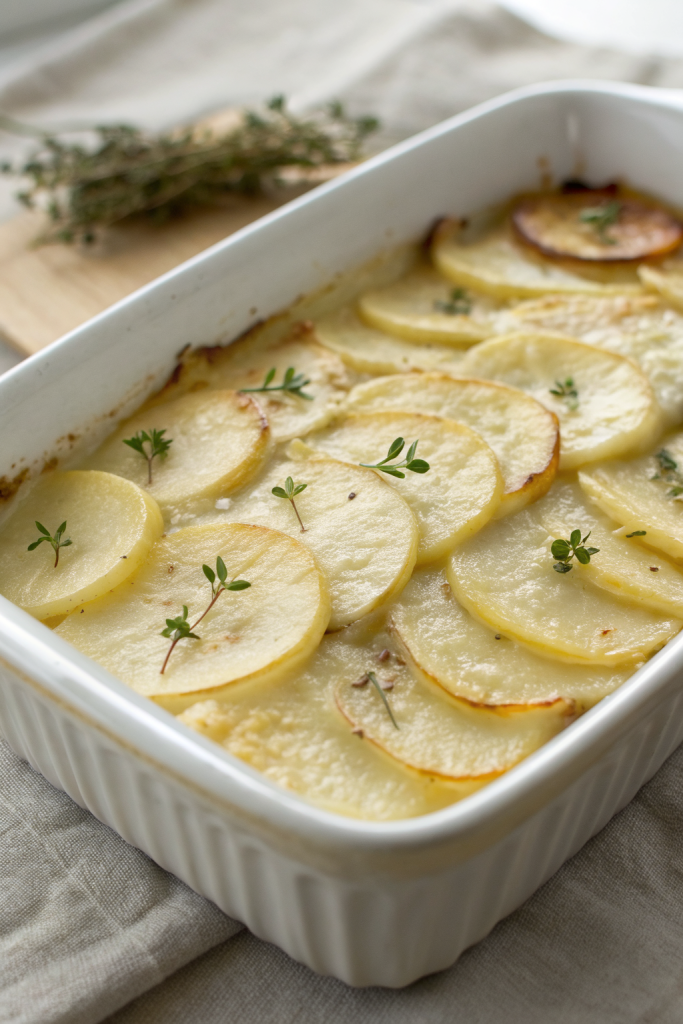
Scalloped Potatoes Recipe means ultra-creamy, garlicky layers of tender potatoes in a rich, cheesy sauce that feels like a hug in casserole form. It works perfectly for holidays, Sunday dinners, or any night when you want comfort food in about 1 hour 15 minutes. I grew up eating every version of cheesy potatoes possible, and this one still disappears first at my family table.
Why Choose This Scalloped Potatoes Recipe
This scalloped potatoes recipe gives you soft, sliceable layers with a thick, velvety sauce that never turns grainy or watery. The flavor hits that sweet spot between rich and cheesy without feeling heavy after two bites.
You cook the sauce on the stove first, so it bakes up smooth and consistent every time. The method works well for beginners, yet still impresses picky relatives who swear by their grandma’s version.
“Hands down the creamiest, most flavorful scalloped potatoes recipe I’ve ever baked, and the leftovers taste even better the next day! ★★★★★”
Ingredients You’ll Need
Potatoes
- 3 pounds Yukon Gold potatoes, thinly sliced (about 1/8 inch)
- Yukon Golds stay creamy and hold their shape.
- Use Russet potatoes if you prefer a softer, fluffier texture.
- 1 teaspoon kosher salt (for seasoning the sliced potatoes)
- 1/2 teaspoon black pepper
Creamy sauce
- 4 tablespoons unsalted butter
- 1 small yellow onion, very finely chopped
- 3 cloves garlic, minced
- 1/4 cup all-purpose flour
- 2 cups whole milk
- 1 cup heavy cream
- Use half-and-half if you want a slightly lighter sauce.
- 1 teaspoon kosher salt
- 1/2 teaspoon black pepper
- 1/2 teaspoon smoked paprika or regular paprika
- 1/4 teaspoon ground nutmeg (optional but adds great depth)
Cheese
Traditional scalloped potatoes skip cheese, but this version leans into the cheesy side.
- 2 cups shredded sharp cheddar cheese
- I recommend shredding from a block, since bagged shreds often contain starch that affects melting.
- 1/2 cup shredded Gruyère or Swiss cheese
- Use all cheddar if you want a simpler flavor.
Topping (optional but highly recommended)
- 2 tablespoons grated Parmesan cheese
- 1 tablespoon butter, cut into tiny pieces
- 1 tablespoon chopped fresh parsley or chives, for garnish
Pantry shortcuts and notes
- Use pre-sliced deli potatoes or mandoline-sliced potatoes from the store if you feel short on time.
- Use pre-minced garlic from a jar in a pinch, though fresh garlic gives better flavor.
- Use onion powder if you dislike onion texture: 1 teaspoon onion powder instead of fresh onion.
Equipment
- 9×13 inch baking dish (ceramic or glass)
- Medium saucepan
- Sharp chef’s knife or mandoline slicer
- Cutting board
- Whisk
- Foil
- Oven mitts
- Ladle or large spoon
Tips & Tricks
- Slice potatoes evenly at about 1/8 inch so they cook at the same rate and stay tender.
- Rinse sliced potatoes in cold water, then pat dry to remove extra starch and avoid a gluey texture.
- Warm the milk and cream slightly before adding to the roux so the sauce thickens smoothly.
- Whisk constantly while you add milk and cream to avoid lumps.
- Shred cheese from a block for the smoothest melting and best flavor.
- Season every layer lightly with salt and pepper so the dish tastes flavorful all the way through.
- Cover the dish with foil for most of the bake, then uncover at the end so the top browns without burning.
- Let the scalloped potatoes rest 10 to 15 minutes before serving so the layers set and slice cleanly.
How to Make Scalloped Potatoes Recipe
Prep the potatoes and pan
- Preheat the oven to 375°F. Grease a 9×13 inch baking dish with butter or nonstick spray.
- Peel the potatoes if you prefer a classic look, or leave the skins on for a rustic style. Slice the potatoes into thin rounds about 1/8 inch thick, using a mandoline or a sharp knife.
- Place the slices in a large bowl of cold water, swish them around, then drain and pat dry with clean kitchen towels or paper towels. Toss the dry slices with 1 teaspoon salt and 1/2 teaspoon pepper.
Cook the onion and garlic
- Place a medium saucepan over medium heat and add 4 tablespoons butter.
- When the butter melts and foams, add the chopped onion and cook until soft and translucent, about 4 to 5 minutes, while you stir occasionally.
- Add the minced garlic and cook 30 seconds to 1 minute, until fragrant, while you stir so it does not burn.
Build the roux and sauce
- Sprinkle the flour over the onion and garlic and stir until the flour coats everything and looks like a thick paste, about 1 minute.
- Warm the milk and cream together in the microwave or in a small pot until just warm to the touch.
- Slowly pour the warm milk and cream into the flour mixture while you whisk constantly.
- Keep whisking until the sauce looks smooth, then add 1 teaspoon salt, 1/2 teaspoon pepper, paprika, and nutmeg.
- Cook the sauce over medium heat, while you whisk often, until it thickens enough to coat the back of a spoon, about 4 to 6 minutes.
Add the cheese
- Turn the heat to low. Add the shredded cheddar and Gruyère in small handfuls while you whisk.
- Stir until the cheese melts fully and the sauce looks smooth and glossy.
- Taste the sauce and adjust salt and pepper if needed. The sauce should taste slightly more seasoned than you want the final dish, since the potatoes will mellow it out.
Layer the potatoes
- Spread a thin layer of cheese sauce on the bottom of the greased baking dish.
- Arrange a layer of potato slices over the sauce, slightly overlapping them like shingles.
- Spoon more sauce over the potatoes, just enough to coat them.
- Repeat with more layers of potatoes and sauce until you use all the potatoes, finishing with a generous layer of sauce on top.
Add topping and bake
- Sprinkle the Parmesan evenly over the top layer of sauce. Dot the surface with tiny pieces of butter.
- Cover the baking dish tightly with foil, tenting it slightly so the cheese does not stick.
- Bake at 375°F for 40 minutes.
- Remove the foil and bake another 20 to 25 minutes, until the top turns golden and the potatoes feel very tender when you pierce the center with a knife.
Rest and serve
- Place the dish on a cooling rack or trivet and let the scalloped potatoes rest 10 to 15 minutes. This rest time helps the sauce thicken and the layers hold together when you slice.
- Sprinkle chopped parsley or chives over the top for a fresh pop of color and flavor.
- Slice into squares or scoop with a large spoon and serve warm.
What to Serve with Scalloped Potatoes Recipe
This scalloped potatoes recipe pairs beautifully with roasted chicken, baked ham, or simple pan-seared pork chops. You can serve it with grilled sausages or meatloaf for a cozy weeknight dinner. Add a crisp green salad, steamed green beans, or roasted broccoli to balance the richness. Kids also love it next to chicken tenders or turkey meatballs, so it works well for family meals.
Storage Options
- Cool leftovers to room temperature, then cover the dish tightly or transfer to airtight containers and store in the fridge for up to 4 days.
- Reheat single portions in the microwave in 30 second bursts, covered, until hot, or reheat a whole pan covered in a 325°F oven for 20 to 25 minutes.
- Freeze cooled portions in freezer-safe containers or wrapped tightly for up to 2 months.
- Reheat frozen scalloped potatoes in a covered baking dish at 325°F until hot in the center, and add a splash of milk or cream if the sauce looks too thick.
Scalloped Potatoes Recipe
Ingredients
Instructions
- Preheat the oven to 375°F. Grease a 9x13 inch baking dish with butter or nonstick spray.
- Peel the potatoes if you prefer a classic look, or leave the skins on for a rustic style. Slice the potatoes into thin rounds about 1/8 inch thick, using a mandoline or a sharp knife.
- Place the slices in a large bowl of cold water, swish them around, then drain and pat dry with clean kitchen towels or paper towels. Toss the dry slices with 1 teaspoon salt and 1/2 teaspoon pepper.
- Place a medium saucepan over medium heat and add 4 tablespoons butter.
- When the butter melts and foams, add the chopped onion and cook until soft and translucent, about 4 to 5 minutes, stirring occasionally.
- Add the minced garlic and cook 30 seconds to 1 minute, until fragrant, stirring so it does not burn.
- Sprinkle the flour over the onion and garlic and stir until the flour coats everything and forms a thick paste, about 1 minute.
- Warm the milk and cream together until just warm to the touch.
- Slowly pour the warm milk and cream into the flour mixture while whisking constantly until the sauce looks smooth.
- Add 1 teaspoon salt, 1/2 teaspoon pepper, paprika, and nutmeg, then cook the sauce over medium heat, whisking often, until it thickens enough to coat the back of a spoon, about 4 to 6 minutes.
- Reduce the heat to low. Add the shredded cheddar and Gruyère in small handfuls while whisking.
- Stir until the cheese melts fully and the sauce looks smooth and glossy.
- Taste and adjust salt and pepper if needed; the sauce should taste slightly more seasoned than you want the final dish.
- Spread a thin layer of cheese sauce on the bottom of the greased baking dish.
- Arrange a layer of potato slices over the sauce, slightly overlapping them like shingles.
- Spoon more sauce over the potatoes, just enough to coat them.
- Repeat with layers of potatoes and sauce until all the potatoes are used, finishing with a generous layer of sauce on top.
- Sprinkle the Parmesan evenly over the top layer of sauce and dot the surface with tiny pieces of butter.
- Cover the baking dish tightly with foil, tenting it slightly so the cheese does not stick.
- Bake at 375°F for 40 minutes.
- Remove the foil and bake another 20 to 25 minutes, until the top is golden and the potatoes are very tender when pierced in the center with a knife.
- Place the dish on a cooling rack or trivet and let the scalloped potatoes rest 10 to 15 minutes so the sauce thickens and the layers set.
- Sprinkle chopped parsley or chives over the top for garnish.
- Slice into squares or scoop with a large spoon and serve warm.
Notes
Approximate per serving (8 servings): 390 calories; fat 24 g; saturated fat 14 g; carbohydrates 32 g; fiber 3 g; sugars 5 g; protein 12 g; sodium 640 mg. Values will vary based on specific ingredients, brands, and portion size.