
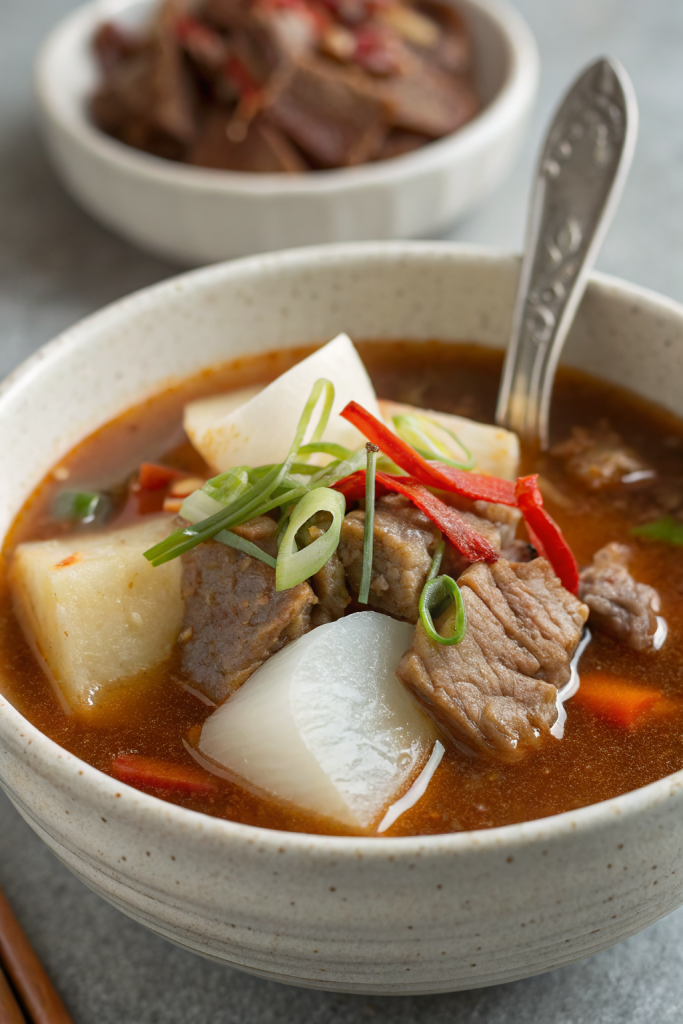
Korean Winter Soup Recipe tastes rich, savory, a little spicy, and deeply comforting, like a hug in a bowl on a cold night. It suits busy home cooks who want a cozy one-pot dinner in about 40 minutes, with simple ingredients and big flavor. I first made this on a snow day when my kids asked for “something soupy and cozy but not boring,” and this recipe stuck.
Why Make This Tasty Korean Winter Soup Recipe at Home
This Korean Winter Soup Recipe gives you restaurant-style comfort with grocery store ingredients and weeknight timing. You control the spice level, the protein, and the veggies, so picky eaters and spice lovers both win.
You also stretch a small amount of meat into a full meal, which helps the budget. Leftovers taste even better the next day, so you cook once and eat twice.
“This Korean Winter Soup Recipe tastes like a cozy Korean restaurant meal at home, with simple steps and huge flavor payoff.”
Ingredients You Need
Here is everything you need for a big pot of Tasty Korean Winter Soup Recipe that serves 4 to 6. I list pantry shortcuts and swaps so you use what you already have.
Broth base
- 6 cups low-sodium chicken broth
- Use vegetable broth for a vegetarian version.
- I like brands with clean labels and no added sugar.
- 1 cup water
- This keeps the broth from tasting too salty if you use store-bought stock.
Protein
- 8 ounces thinly sliced beef (ribeye, sirloin, or hot pot style)
- Shortcut: use pre-sliced bulgogi meat from Korean markets.
- Swap: use thinly sliced pork shoulder or chicken thigh.
- 7 to 10 ounces firm tofu, cut into 1-inch cubes
- Use shelf-stable tofu if that is what you have in the pantry.
Aromatics and vegetables
- 1 tablespoon neutral oil (avocado, canola, or grapeseed)
- 1 medium yellow onion, thinly sliced
- 2 medium carrots, sliced into thin half-moons
- 2 cups Napa cabbage, chopped into bite-size pieces
- 1 cup mushrooms, sliced (shiitake, cremini, or button)
- 3 cloves garlic, minced
- 1 tablespoon fresh ginger, minced or grated
- 3 green onions, sliced (white and green parts separated)
Korean flavor base
- 2 tablespoons gochujang (Korean red chili paste)
- I like brands such as Chung Jung One or CJ Haechandle for balanced heat.
- Use mild gochujang if cooking for kids.
- 1 to 2 tablespoons gochugaru (Korean red pepper flakes), to taste
- Start with 1 tablespoon for mild heat, add more at the end if you want.
- 2 tablespoons soy sauce
- Use low-sodium if your broth tastes salty.
- 1 tablespoon toasted sesame oil
- 1 tablespoon rice vinegar or apple cider vinegar
- 1 teaspoon sugar or honey
- This rounds out the spice and salt.
Hearty add-ins
- 1 medium potato, peeled and cut into small cubes
- 1 cup zucchini, halved and sliced
- 1 cup cooked rice or 4 ounces Korean sweet potato noodles or glass noodles
- Pantry shortcut: use leftover rice from takeout night.
- If you use noodles, cook them separately and add at the end.
Optional toppings
- Extra sliced green onions
- Toasted sesame seeds
- A drizzle of sesame oil
- Kimchi on the side
Equipment
- Large heavy-bottomed pot or Dutch oven
- Cutting board and sharp knife
- Wooden spoon or heat-safe spatula
- Ladle for serving
- Small bowl and whisk or spoon to mix the gochujang seasoning
Tips & Mistakes
- Slice meat very thin so it cooks quickly and stays tender.
- Do not boil the soup hard after adding tofu or it can break apart; keep it at a gentle simmer.
- Taste the broth before adding extra salt; gochujang and soy sauce already add plenty.
- Add gochugaru gradually so you control the heat instead of surprising your taste buds.
- Cut potatoes and carrots small and even so they cook through at the same time.
- Stir gochujang into a bit of warm broth first so it dissolves smoothly and does not clump.
- Add soft veggies like zucchini near the end so they stay bright and not mushy.
- Use low-sodium broth so you season to taste instead of fighting excess salt.
- Store noodles separately when possible so they do not soak up all the broth.
- Cool the soup before refrigerating so it keeps a fresher flavor.
How to Make Korean Winter Soup Recipe
Step 1: Sauté veggies and aromatics
Heat oil in a large stock pot or Dutch oven over medium heat. Add onions and carrots and cook until they soften and turn slightly golden at the edges, about 7 to 8 minutes. Stir in garlic, ginger, and the white parts of the green onions and cook 1 to 2 minutes, until fragrant. Sprinkle a pinch of salt to help the veggies sweat and build flavor.
Step 2: Build the Korean flavor base
In a small bowl, whisk together gochujang, soy sauce, sugar or honey, and a ladle of warm broth or water until smooth. Pour this mixture into the pot with the sautéed veggies and stir so everything coats in the red paste. Add gochugaru to taste and cook 1 to 2 minutes, so the spices bloom and deepen in flavor. The mixture should look glossy and smell spicy and savory.
Step 3: Add broth and hearty vegetables
Pour in chicken broth and water and stir to combine with the flavor base. Add potatoes, mushrooms, and Napa cabbage and bring the pot to a gentle boil over medium-high heat. Once it reaches a boil, reduce heat to medium-low and simmer 10 to 12 minutes, until potatoes turn tender when pierced with a fork. Skim any foam from the top with a spoon to keep the broth clear and clean-tasting.
Step 4: Cook the protein
Add the thinly sliced beef to the simmering soup, separating the slices with chopsticks or tongs so they do not clump. Simmer 3 to 4 minutes, just until the beef cooks through and turns tender. Add tofu cubes and zucchini and simmer another 4 to 5 minutes, so the tofu warms through and the zucchini softens slightly. Stir gently so the tofu keeps its shape.
Step 5: Finish and adjust seasoning
Stir in sesame oil, rice vinegar, and most of the green onion tops. Taste the broth and adjust with more soy sauce for salt, more vinegar for brightness, or more gochugaru for heat. If the broth tastes too strong, add a splash of water and taste again. Keep the soup at a low simmer until everything tastes balanced and cozy.
Step 6: Add rice or noodles
If you use cooked rice, add a small scoop to each serving bowl, then ladle hot soup over the rice. If you use noodles, cook them separately according to package directions, rinse briefly, and portion them into bowls. Ladle the hot Tasty Korean Winter Soup Recipe over the noodles so they soak up the broth. Top each bowl with extra green onions and sesame seeds.
Variations I’ve Tried
I swap beef for sliced chicken thighs when I want a lighter feel and it still tastes rich and satisfying. I also make a vegetarian version with vegetable broth, extra tofu, and a handful of sliced king oyster mushrooms for a meaty texture.
On busy nights, I toss in frozen mixed veggies straight from the bag and they work surprisingly well. Sometimes I stir in a beaten egg at the end while the soup simmers gently, which gives silky ribbons and extra protein.
If I have leftover kimchi, I chop some and add it with the cabbage for a tangy, deeper flavor. I also tried adding a spoonful of peanut butter once for a nutty twist, and it tasted like a fun cross between Korean soup and satay-style broth.
How to Serve Korean Winter Soup
Serve Tasty Korean Winter Soup Recipe piping hot in deep bowls so the broth stays warm longer. Add rice or noodles directly to each bowl, then ladle the soup over so the starch soaks up all that spicy, savory flavor. Set out toppings like extra green onions, sesame seeds, and a small dish of kimchi so everyone customizes their bowl. Pair it with plain iced tea, hot barley tea, or sparkling water with lemon for a refreshing contrast.
How to store
- Cool the soup to room temperature within 1 hour, then transfer to airtight containers.
- Store in the fridge for up to 4 days; keep rice or noodles in a separate container so they do not soak up all the broth.
- Freeze the soup without rice or noodles for up to 2 months; add fresh rice or noodles when you reheat.
- Reheat gently on the stove over medium-low heat until hot, or in the microwave in short bursts, stirring between each burst so the heat distributes evenly.
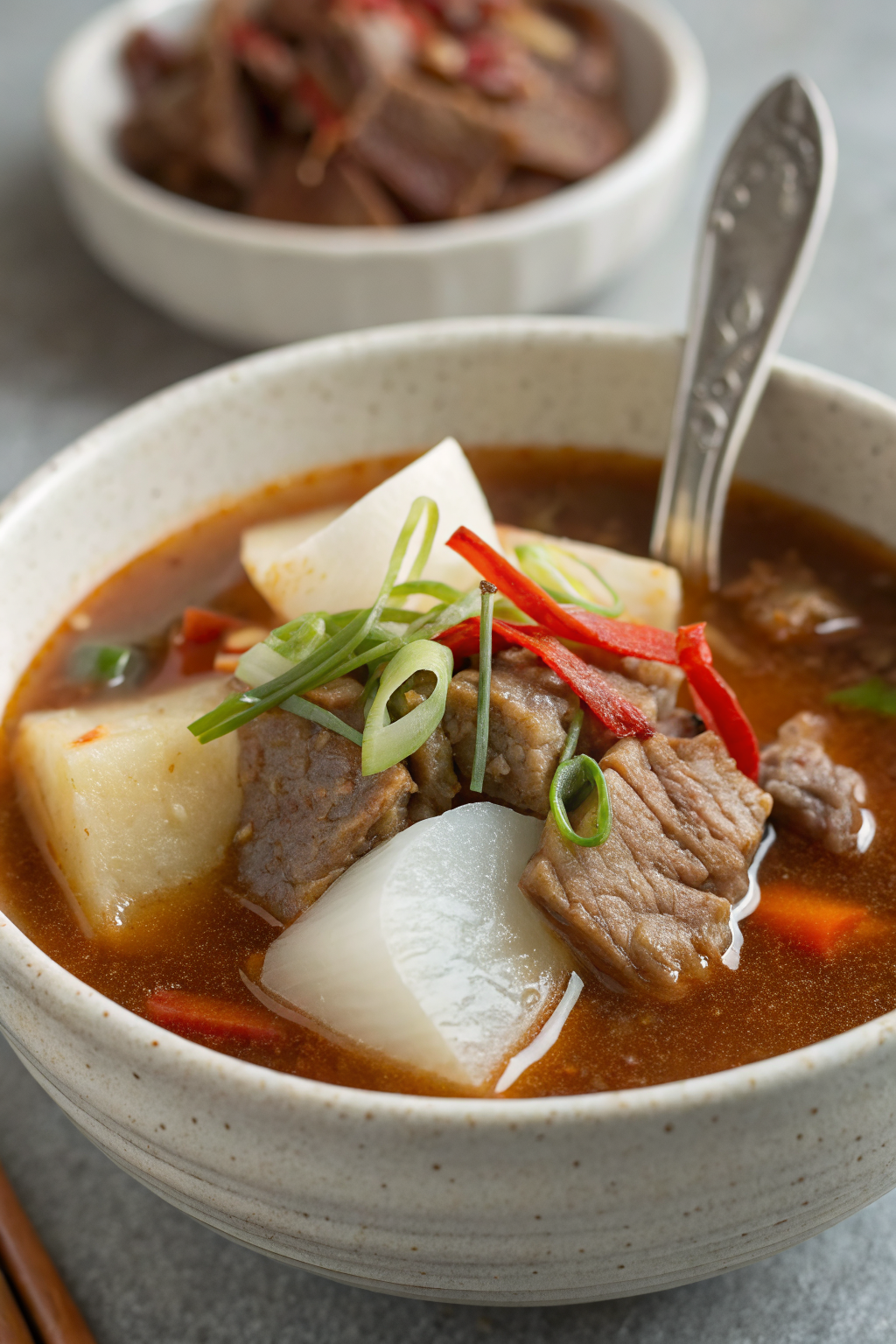
Tasty Korean Winter Soup Recipe
Ingredients
Instructions
- Heat the neutral oil and sesame oil in a large pot over medium-high heat. Add the sliced beef and cook, stirring, until it begins to brown.
- Add the white parts of the green onions, minced garlic, and sliced onion. Sauté for 2 to 3 minutes until fragrant and slightly softened.
- Stir in the gochujang and gochugaru, coating the beef and aromatics, and cook for 1 to 2 minutes to bloom the spices.
- Pour in the beef broth and water. Add soy sauce, salt, black pepper, and sugar if using. Bring to a boil, then reduce to a gentle simmer.
- Add the Napa cabbage, daikon radish, mushrooms, and zucchini. Simmer for 15 to 20 minutes, or until the vegetables are tender and flavors are well combined.
- Gently stir in the tofu cubes, if using, and simmer for an additional 3 to 5 minutes to heat through.
- Taste and adjust seasoning with additional salt or soy sauce if needed. Ladle into bowls and top with the green parts of the sliced green onions.
- Serve hot with steamed rice and additional kimchi or banchan on the side if desired.
Notes
Approximate per serving (4 servings): 260 calories; fat 14 g; saturated fat 4 g; carbohydrates 13 g; fiber 3 g; sugars 5 g; protein 20 g; sodium 980 mg. Values will vary based on specific ingredients, brands, and portion sizes.
Leave a Reply