

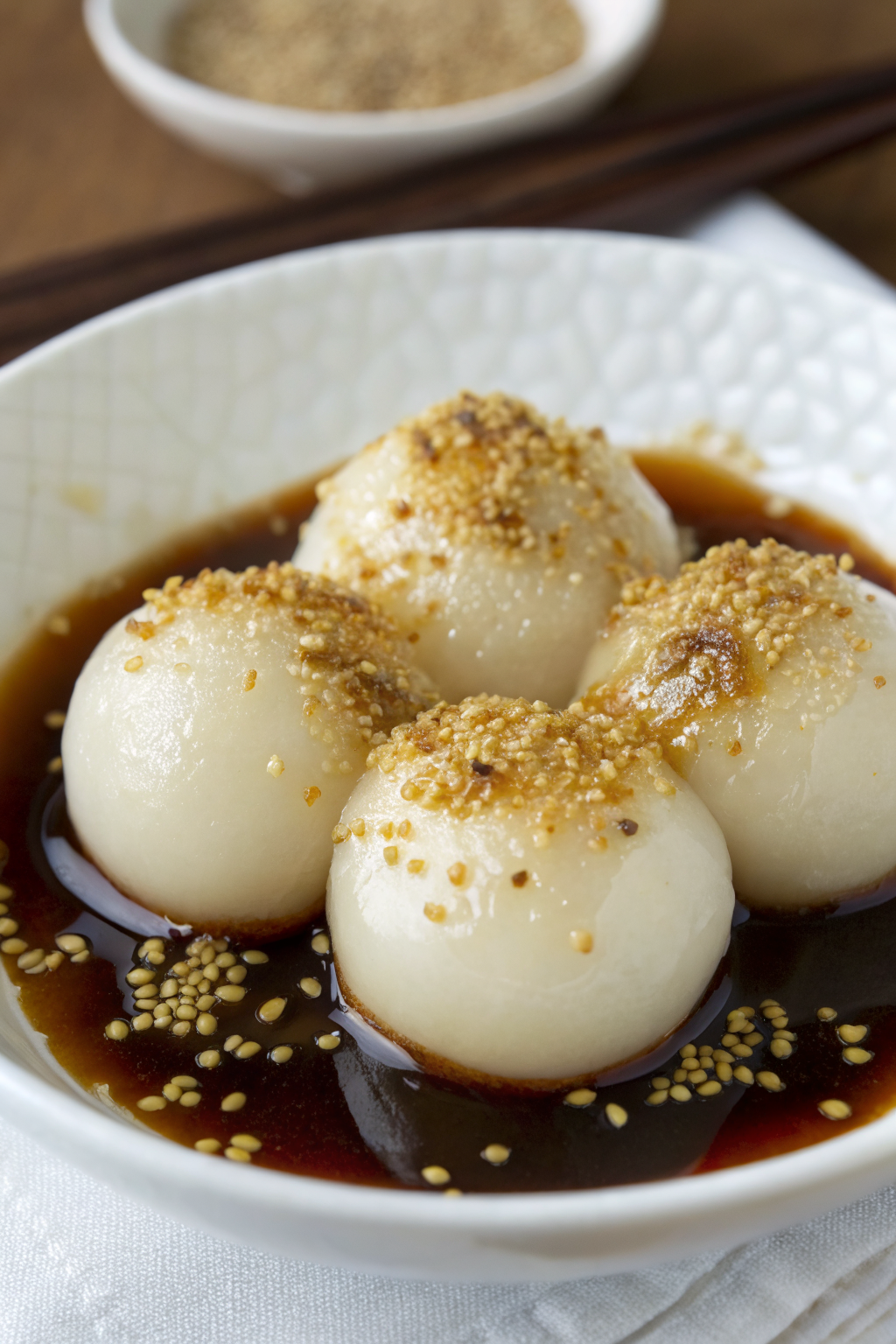
Shiratama Dango Japanese Dessert Recipe tastes soft, chewy, and slightly sweet, with a bouncy texture that feels like a cross between mochi and marshmallows. It suits anyone who loves Japanese desserts, wants a gluten-free treat, and needs a quick recipe that comes together in about 30 minutes. I still remember the first time I overcooked my shiratama dango and turned them into tiny rubber balls, so you can skip that phase with this guide.
Why Choose This Shiratama Dango Japanese Dessert Recipe
This Shiratama Dango Japanese Dessert Recipe uses simple ingredients, comes together quickly, and works for both beginners and experienced home cooks. You mix, roll, boil, and chill, then pair the dango with toppings like sweet red bean paste, kinako, or matcha syrup for a dessert that looks fancy but stays easy.
The recipe uses shiratamako, which gives the dango a smoother, silkier texture than regular mochiko. You also adjust the water gradually, so the dough stays soft and pliable instead of dry or sticky.
“These shiratama dango turned out perfectly chewy and silky, just like the ones at my favorite Japanese cafe. ★★★★★”
Ingredients You’ll Need
Main ingredients
- 1 cup shiratamako (glutinous rice flour made from short-grain rice; I like using Shirakiku or Koda Farms when I find them)
- 6 to 8 tablespoons water, room temperature, plus 1 extra tablespoon if needed
- 1 to 2 teaspoons sugar (optional, for a slightly sweeter dango)
- Ice water in a medium bowl, for cooling the dango after boiling
Shiratamako gives the best texture for this Shiratama Dango Japanese Dessert Recipe, since the grains stay coarse and hydrate evenly. If you only find mochiko, you can still use it, but the texture turns a bit denser and less bouncy, so add the water slowly and stop when the dough feels like soft earlobe.
Classic toppings and sauces
Pick one or mix and match:
-
Anko (sweet red bean paste)
- 1/2 to 3/4 cup tsubuan (chunky red bean paste) or koshian (smooth red bean paste)
- You can use canned anko from brands like Morinaga or Shirakiku to save time.
-
Kinako sugar topping
- 3 tablespoons kinako (roasted soybean flour)
- 1.5 to 2 tablespoons sugar
- Small pinch of salt to balance sweetness
-
Kuromitsu-style brown sugar syrup (quick version)
- 3 tablespoons dark brown sugar or Japanese kurozato
- 2 tablespoons water
- Small pinch of salt
-
Matcha syrup (optional)
- 1 teaspoon matcha powder
- 2 tablespoons hot water
- 1 to 1.5 tablespoons sugar
You can also add fresh fruit like sliced strawberries, kiwi, or canned mandarin oranges, plus a scoop of vanilla or matcha ice cream for a parfait-style dessert.
Equipment list
- Medium mixing bowl
- Measuring cups and spoons
- Small silicone spatula or spoon
- Small saucepan or pot for boiling water
- Slotted spoon or spider strainer
- Medium bowl for ice water
- Small bowls for toppings and sauces
- Kitchen scale (optional, but very helpful for consistent dango size)
Tips & Tricks
- Add water gradually to the shiratamako and mix after each spoonful so the dough stays soft, not sticky.
- Aim for a dough texture that feels like a soft earlobe when you press it; if it cracks, add a few drops of water and knead again.
- Roll the dango into balls about 2 centimeters wide so they cook evenly and stay tender.
- Press a tiny dent in the center of each ball with your finger to help them cook through and avoid splitting.
- Keep the uncooked balls covered with a slightly damp towel so they do not dry out while you shape the rest.
- Boil the dango in gently bubbling water, not a wild rolling boil, so they keep a smooth surface.
- Scoop the dango into ice water right after they float and cook a bit longer, which stops cooking and locks in the chewy texture.
- Serve the Shiratama Dango Japanese Dessert Recipe soon after cooking for the best bouncy bite, since they firm up as they sit.
- If you chill them in the fridge, dunk them in warm water for a few seconds before serving to soften them again.
- Taste your toppings and adjust sugar or salt before serving, since dango itself stays mildly flavored and pairs best with balanced sauces.
How to Make Shiratama Dango Japanese Dessert Recipe
Mix the shiratamako dough
- Add 1 cup shiratamako to a medium mixing bowl and break up any large clumps with your fingers or a spoon.
- Stir in 1 to 2 teaspoons sugar if you want slightly sweet dango.
- Add 6 tablespoons water, one spoon at a time, while you mix with your hand or a spatula.
- Squeeze and knead the mixture until it comes together into a soft, smooth dough with no dry pockets.
- If the dough feels dry or cracks when you press it, add water 1 teaspoon at a time and knead again.
- When the dough feels like a soft earlobe and no longer sticks to your fingers, you have the right texture.
Shape the dango
- Divide the dough into 4 equal pieces, then roll each piece into a log.
- Cut each log into 5 to 6 portions so you get about 20 to 24 small pieces total.
- Roll each piece between your palms into a smooth ball.
- Press a tiny dent in the center of each ball with your fingertip; this helps them cook evenly and gives them a classic look.
- Place the shaped dango on a plate and cover them lightly with a damp kitchen towel so they stay moist while you heat the water.
Boil the dango
- Fill a medium pot with water and bring it to a gentle boil over medium heat.
- Lower the heat slightly so the water simmers steadily with small bubbles.
- Add the dango in batches so you do not crowd the pot, and stir gently once so they do not stick to the bottom.
- Watch as the dango sink first, then float to the surface after a few minutes.
- After they float, cook them for another 1 to 2 minutes so the centers cook through and stay chewy, not doughy.
- While they finish cooking, prepare a medium bowl of ice water.
Cool the dango in ice water
- Use a slotted spoon or spider strainer to lift the cooked dango from the pot.
- Transfer them directly into the ice water bowl.
- Let them sit in the ice water for 2 to 3 minutes so they cool and firm up slightly.
- Drain the dango well and place them on a plate or in serving bowls.
Prepare the toppings
Kinako sugar topping
- Add 3 tablespoons kinako, 1.5 to 2 tablespoons sugar, and a tiny pinch of salt to a small bowl.
- Stir until everything mixes evenly and no sugar lumps remain.
- Taste and adjust sweetness or salt to your liking.
Brown sugar syrup
- Add 3 tablespoons dark brown sugar and 2 tablespoons water to a small saucepan.
- Heat over low to medium heat while you stir until the sugar dissolves and the syrup thickens slightly.
- Turn off the heat and let it cool to room temperature.
Matcha syrup
- Add 1 teaspoon matcha powder to a small bowl.
- Pour in 2 tablespoons hot water and whisk until smooth with no clumps.
- Stir in 1 to 1.5 tablespoons sugar until it dissolves and the syrup tastes balanced.
Assemble and serve
- Place several shiratama dango in a small dessert bowl.
- Spoon anko on one side, then sprinkle kinako sugar over the dango or dust it lightly on top.
- Drizzle brown sugar syrup or matcha syrup over everything.
- Add fruit slices or a scoop of ice cream if you want a cafe-style Shiratama Dango Japanese Dessert Recipe.
- Serve right away while the dango stay soft and pleasantly chewy.
What to Serve with Shiratama Dango Japanese Dessert Recipe
Serve this Shiratama Dango Japanese Dessert Recipe with hot green tea, hojicha, or genmaicha for a cozy afternoon treat. Kids usually love it with cold milk or a lightly sweetened iced matcha latte. You can also pair it with fresh seasonal fruit like strawberries, mango, or peaches for a brighter, more refreshing bowl. If you host a dessert night, set up a small topping bar with anko, kinako, syrups, and fruit so everyone builds their own dango bowl.
Storage Options
- Store leftover shiratama dango in an airtight container in the fridge for up to 1 day for the best texture.
- Keep the dango separate from sauces and toppings so they do not get soggy.
- To freeze, place cooked and cooled dango on a tray in a single layer, freeze until firm, then transfer to a freezer bag and store for up to 1 month.
- Reheat chilled or frozen dango by soaking them in warm (not boiling) water for a few minutes until they soften again, then drain well and serve with your favorite toppings.
Shiratama Dango Japanese Dessert Recipe
Ingredients
Instructions
- Place the shiratamako in a mixing bowl and gradually add water while mixing with your fingers or a spatula.
- Knead until the dough is smooth, soft, and pliable like an earlobe. If it feels dry or cracks when shaped, add a few drops of water at a time until it comes together.
- Divide the dough into 16 equal pieces and roll each piece into a smooth ball between your palms.
- Gently press each ball to slightly flatten and make a small indent in the center with your fingertip to help them cook evenly.
- Bring a medium pot of water to a gentle boil over medium heat.
- Add the shaped dango to the boiling water, stirring gently to prevent sticking.
- Cook until the dango float to the surface, then continue to cook for 1–2 minutes more to ensure they are cooked through.
- Use a slotted spoon to transfer the dango to a bowl of ice water to cool and firm up slightly.
- Drain well before serving.
- In a small bowl, mix the kinako, sugar, and a pinch of salt until evenly combined.
- Place the drained dango on a serving plate. Dust generously with the kinako sugar mixture.
- Serve with anko and drizzle with kuromitsu or light sugar syrup if desired.
Notes
Approximate per serving (1/4 of recipe, without optional anko/kuromitsu): 170 calories; fat 2 g; saturated fat 0 g; carbohydrates 36 g; fiber 1 g; sugars 7 g; protein 4 g; sodium 80 mg.
With 2 tablespoons anko and 1 teaspoon kuromitsu per serving (optional toppings): about 230 calories; fat 2 g; saturated fat 0 g; carbohydrates 49 g; fiber 2 g; sugars 21 g; protein 6 g; sodium 90 mg. Values will vary based on brands, exact portion sizes, and optional toppings used.
Leave a Reply