
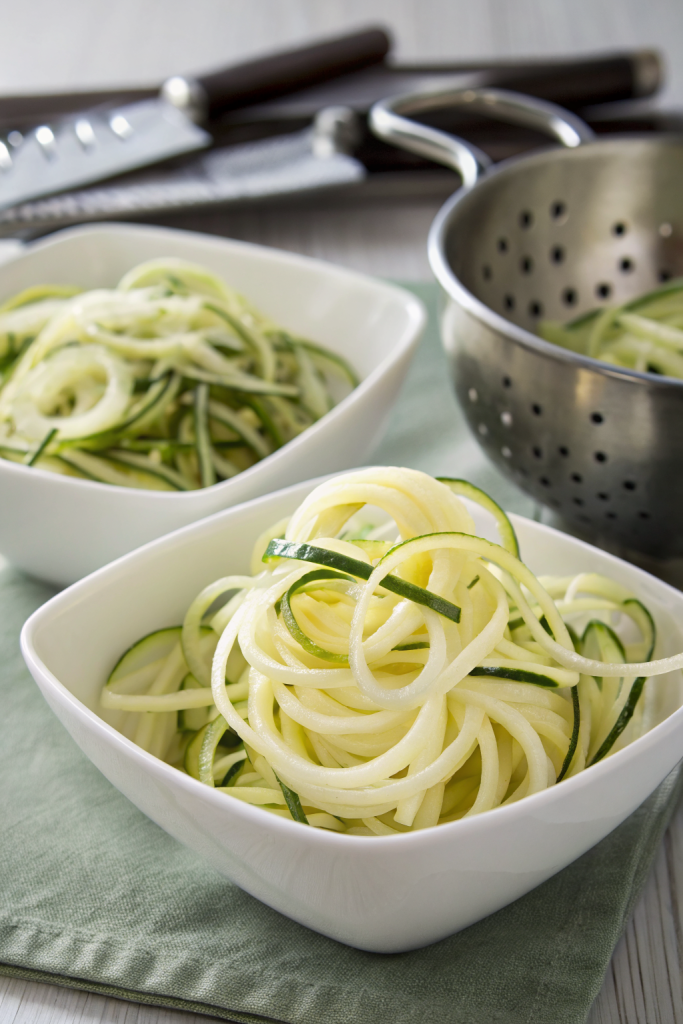
How to Make Zucchini Noodles tastes fresh and a little bit like pasta’s chill, veggie-forward cousin. It works for busy weeknights, low-carb eaters, gluten-free folks, and anyone who wants dinner on the table in about 20–25 minutes. I started spiralizing zucchini in a tiny apartment kitchen a decade ago, and it still saves my week when I want something cozy but not heavy.
Why Zucchini Noodles Is Worth It
Zucchini noodles give you that twirlable, saucy comfort without the carb coma. You still enjoy big bowls of “pasta,” but your plate holds mostly vegetables and flavor instead of starch.
You cook them fast, with minimal equipment and cleanup. You also flavor them a hundred different ways, so the dish never feels boring or diet-y.
“These zucchini noodles taste like a restaurant-level healthy pasta swap that still feels satisfying and fun to eat.” ★★★★★
Ingredients You Need
Zucchini (the star)
- 3–4 medium zucchini (about 2 pounds)
- Choose firm, glossy zucchini with no soft spots.
- Smaller to medium zucchini give better texture and less water than huge ones.
Basic seasoning + cooking fat
- 1–2 tablespoons olive oil (or avocado oil for higher heat)
- 1 tablespoon butter (optional, but it adds richness)
- 2–3 cloves garlic, minced
- 1/2 teaspoon kosher salt, plus more to taste
- 1/4 teaspoon black pepper
Flavor boosters (mix and match)
- 1/4–1/2 teaspoon red pepper flakes (for a little heat)
- 1/2 teaspoon Italian seasoning or dried oregano
- Juice of 1/2 lemon (brightens everything)
- 1/4 cup grated Parmesan or Pecorino Romano
- Use a wedge and grate it fresh if you can; it melts and tastes better than the green can.
- 2 tablespoons chopped fresh herbs (basil, parsley, or chives)
Sauce options (pick one or two)
- 1–1 1/2 cups marinara sauce
- Jarred works great; I like Rao’s or any low-sugar brand.
- 1–1 1/2 cups pesto
- Store-bought pesto saves time; thin it with a splash of pasta water or broth.
- 1–1 1/2 cups Alfredo or light cream sauce
- 1–1 1/2 cups tomato basil sauce
- 1–1 1/2 cups stir-fry sauce or teriyaki-style sauce (low-sodium if possible)
Optional protein add-ins
- Cooked chicken breast or rotisserie chicken, shredded
- Cooked shrimp
- Ground turkey or chicken, browned and seasoned
- Crispy tofu cubes
- Chickpeas or white beans, drained and rinsed
Equipment list
- Spiralizer, julienne peeler, or regular vegetable peeler
- A handheld spiralizer works great and stores easily.
- A box spiralizer gives more control and uniform noodles.
- Large cutting board
- Sharp chef’s knife
- Large colander or clean kitchen towel (for draining)
- Large skillet or sauté pan (nonstick or stainless)
- Tongs or a large fork (for tossing)
- Paper towels (optional, for extra moisture control)
Quick Tips & substitutions
- Use medium zucchini for firmer noodles and less water.
- Salt the zucchini noodles lightly, then drain them before cooking to reduce sogginess.
- Pat the noodles dry with paper towels if they look very wet.
- Cook zucchini noodles quickly over medium-high heat; long cooking turns them mushy.
- Toss zucchini noodles with warm sauce off the heat to keep texture.
- Swap butter with extra olive oil for dairy-free or vegan versions.
- Use nutritional yeast instead of Parmesan for a cheesy, vegan flavor.
- Add pre-cooked protein (rotisserie chicken, shrimp, tofu) at the end to keep things juicy.
- Use a julienne peeler if you do not own a spiralizer; peel lengthwise strips for “ribbon” noodles.
- Keep seasoning simple: salt, pepper, garlic, and lemon already taste amazing.
How to Make and Cook Zucchini Noodles
Step 1: Prep and spiralize the zucchini
Wash the zucchini and dry them well so they do not slip while you cut. Trim off both ends. Attach each zucchini to your spiralizer and crank to form long noodles, or run a julienne peeler down the length to form thin strips.
If you only own a regular peeler, shave long, thin ribbons instead of noodles. Slice very thick strands in half with a knife so they cook evenly and twirl more easily.
Step 2: Salt and drain the zucchini noodles
Place the zucchini noodles in a large colander set over the sink or a bowl. Sprinkle with a light, even layer of salt and toss with your hands. Let them sit for 10–15 minutes so they release some water.
After they rest, squeeze small handfuls gently to remove excess moisture, or press them between clean kitchen towels. Do not crush them into a pulp; you just want to remove the extra water so they sauté instead of steam.
Step 3: Prep your sauce and add-ins
While the zucchini noodles drain, heat your chosen sauce in a separate small pot over low heat. Stir occasionally so it warms gently and does not scorch. If you use pesto, thin it with a spoonful of water or broth so it coats the noodles easily.
Warm any cooked protein in a skillet or microwave so it does not cool down the dish later. Chop herbs, grate cheese, and mince garlic so everything stands ready near the stove.
Step 4: Sauté the zucchini noodles
Heat a large skillet over medium or medium-high heat. Add olive oil and butter, then swirl until the butter melts and the fat shimmers. Add minced garlic and cook about 30 seconds, just until it smells fragrant.
Add the zucchini noodles to the skillet and toss with tongs to coat them in the oil and garlic. Season with a pinch of salt and pepper. Cook 2–4 minutes, tossing often, until the noodles look just tender but still slightly crisp in the center.
Taste a strand and stop cooking when it still has a little bite. You want “al dente” zucchini noodles, not soft, watery strands.
Step 5: Combine with sauce and protein
Turn the heat to low or even off. Add your warm sauce to the skillet with the zucchini noodles, starting with less than you think you need. Toss gently until every strand looks lightly coated.
Add your protein and toss again so everything heats through together. Squeeze in lemon juice, sprinkle in red pepper flakes or Italian seasoning, and adjust salt and pepper. Finish with grated Parmesan and fresh herbs right before serving.
Step 6: Taste and adjust
Taste a forkful with sauce and toppings. Add more lemon, herbs, or cheese if the flavor needs a boost. If the noodles released a little extra liquid, simmer on low for 1–2 minutes while you toss, so the sauce thickens and clings.
Recipe Variations
- Gluten-free:
- Use gluten-free marinara or sauce with no hidden flour.
- Add gluten-free meatballs or sausage for a heartier bowl.
- Vegan:
- Use olive oil only and skip butter and dairy cheese.
- Top with nutritional yeast or a vegan Parmesan-style cheese.
- Low carb / keto:
- Choose low-sugar marinara or a creamy garlic butter sauce.
- Add high-protein toppings like grilled chicken, shrimp, or tofu.
- Garlic butter zucchini noodles:
- Sauté zucchini noodles in olive oil and butter with extra garlic and lemon.
- Finish with parsley and Parmesan.
- Pesto zucchini noodles:
- Toss warm zucchini noodles with basil pesto off the heat.
- Add cherry tomatoes and mozzarella pearls if you eat dairy.
- Stir-fry zucchini noodles:
- Cook zucchini noodles quickly with a splash of soy sauce or tamari, garlic, and ginger.
- Add bell peppers, snap peas, and tofu or chicken.
- Tomato basil zucchini noodles:
- Use marinara, fresh basil, and a sprinkle of red pepper flakes.
- Add olives or artichokes for a Mediterranean spin.
Ways to Serve Zucchini Noodles
- Serve as a main dish with a big side salad.
- Pair with grilled chicken, shrimp, or tofu on top.
- Use as a base under turkey meatballs or bean-based meatballs.
- Serve alongside roasted vegetables for a veggie-packed plate.
- Pack in a lunch container with extra sauce on the side.
Storage Success
Store leftover zucchini noodles in an airtight container in the fridge for up to 2–3 days. Keep the noodles and sauce separate when possible, because that helps them stay firmer. Reheat gently in a skillet over medium heat, just until warm, so they do not overcook and turn soft. If they release a little extra liquid on day two, simmer them with a bit more sauce or cheese until the texture tightens up again.
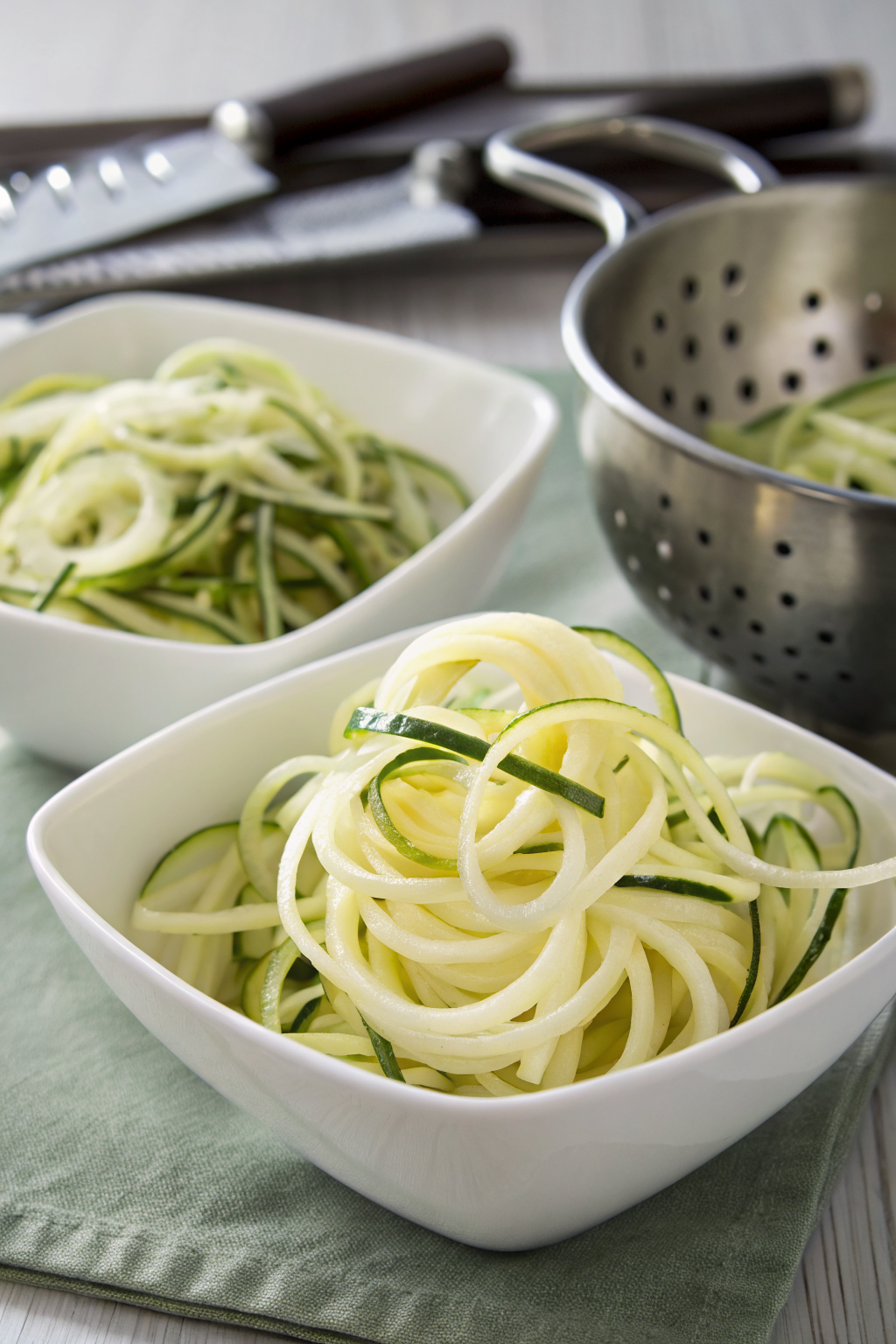
How to Make and Cook Zucchini Noodles
Ingredients
Instructions
- Wash the zucchini and dry them well. Trim off both ends. Use a spiralizer to form long noodles, or use a julienne peeler to make thin strips. If using a regular peeler, shave long ribbons and slice very thick strands in half so they cook evenly.
- Place the zucchini noodles in a large colander set over the sink or a bowl. Sprinkle lightly with salt and toss. Let sit for 10–15 minutes so they release some water, then gently squeeze small handfuls or press between clean kitchen towels to remove excess moisture without crushing the noodles.
- While the zucchini noodles drain, warm your chosen sauce in a small pot over low heat, stirring occasionally. If using pesto, thin it with a spoonful of water or broth so it coats the noodles easily. Warm any cooked protein separately and prep herbs, cheese, and garlic.
- Heat a large skillet over medium to medium-high heat. Add olive oil and butter and let the fat heat until shimmering. Add the minced garlic and cook for about 30 seconds until fragrant. Add the zucchini noodles, season with a pinch of salt and pepper, and toss to coat. Cook for 2–4 minutes, tossing often, until the noodles are just tender but still slightly crisp in the center.
- Turn the heat to low or off. Add warm sauce to the skillet with the zucchini noodles, starting with less than you think you need, and toss gently until the noodles are lightly coated. Stir in the warmed protein if using. Add lemon juice, red pepper flakes, and Italian seasoning if desired. Finish with grated Parmesan and fresh herbs just before serving.
- Taste and adjust seasoning with more salt, pepper, lemon, herbs, or cheese. If the noodles release extra liquid, simmer gently for 1–2 minutes while tossing until the sauce thickens and clings. Serve immediately while the noodles are still firm and bouncy.
Notes
Approximate per serving (4 servings, without sauce or protein): 90–120 calories; fat 7–9 g; saturated fat 2–3 g; carbohydrates 7–9 g; fiber 2 g; sugars 5 g; protein 3–4 g; sodium 260–320 mg. Values will increase and vary depending on the type and amount of sauce, cheese, and protein used, as well as exact portions.
Leave a Reply