
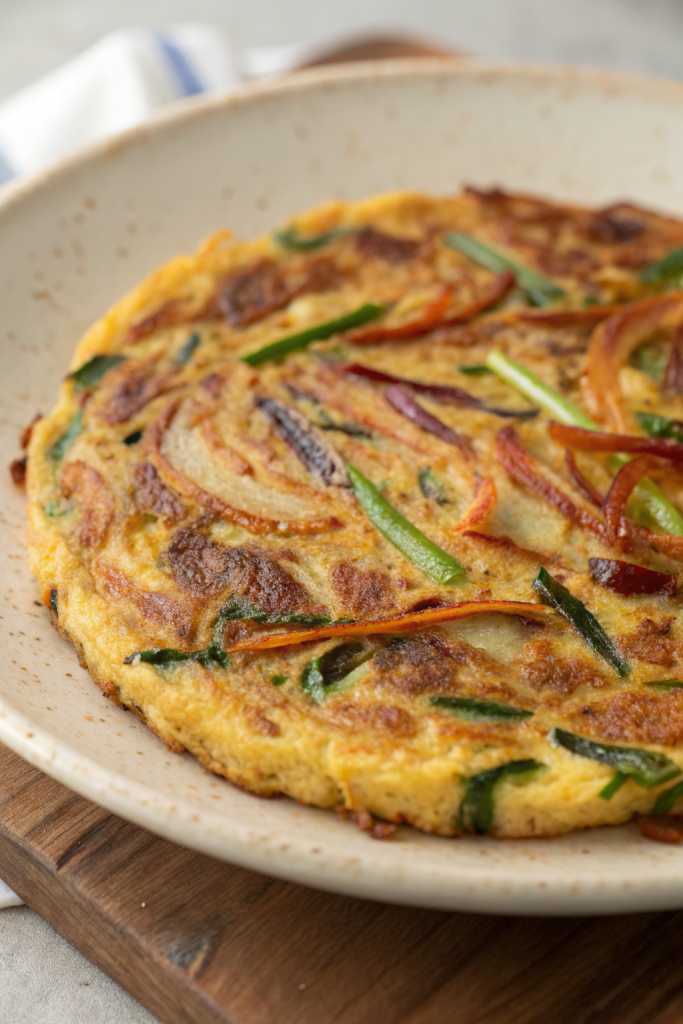
Hobak Buchim – Korean Zucchini Pancakes Recipe tastes savory, slightly sweet from the zucchini, and gloriously crispy around the edges with a tender center. It works perfectly for busy weeknights, picky eaters, and anyone who wants a 25–30 minute veggie-forward dish that still feels like comfort food. I first learned this from a Korean neighbor in college, and I still hear her voice in my head every time my batter looks too thick.
Why Hobak Buchim – Korean Zucchini Pancakes Recipe Is Worth It
These Korean zucchini pancakes use simple ingredients and turn them into something that tastes like snack food and side dish at the same time. You get golden, crisp edges, soft zucchini inside, and a salty-savory dipping sauce that makes the whole plate disappear fast.
You can whip this up with one bowl, one pan, and one zucchini that sat in the fridge a little too long. The recipe scales easily, works as a side, snack, or light meal, and kids usually eat it without realizing they just inhaled a pile of vegetables.
“These Hobak Buchim taste like the best part of tempura and scallion pancakes combined, but they come together in under 30 minutes and vanish even faster. ★★★★★”
Ingredients You Need
Zucchini pancakes
- 2 medium zucchini (about 1 pound total), ends trimmed
- 1 teaspoon kosher salt (Diamond Crystal; use ¾ teaspoon if you use Morton)
- ½ small yellow onion, thinly sliced (adds sweetness and texture)
- 2–3 green onions, thinly sliced (white and green parts)
- 1 large egg
- ½ cup all-purpose flour
- ¼ cup potato starch or cornstarch (potato starch gives extra crispness)
- ¼ teaspoon ground black pepper
- ½ teaspoon garlic powder or 1 small clove garlic, minced
- Neutral oil for frying (avocado, canola, or grapeseed work well)
Dipping sauce (cho-ganjang style)
- 2 tablespoons soy sauce (I like Kikkoman or a Korean brand like Sempio)
- 1 tablespoon rice vinegar
- 1 teaspoon toasted sesame oil
- ½ teaspoon sugar or honey
- 1 teaspoon finely chopped green onion
- ½ teaspoon toasted sesame seeds
- Pinch of Korean red pepper flakes (gochugaru), optional for heat
Pantry shortcuts and substitutions
- Use pre-shredded zucchini if your store sells it, but squeeze it extra well since it holds more water.
- Swap potato starch with cornstarch if that sits in your pantry already.
- Replace yellow onion with extra green onion if you want a milder flavor.
- Use gluten-free all-purpose flour blend in place of regular flour if you need gluten-free Hobak Buchim.
- Skip the egg and add 1 tablespoon ground flaxseed mixed with 3 tablespoons water if you want a vegan version.
Equipment
- Box grater or food processor with shredding disc
- Large mixing bowl
- Fine-mesh strainer or colander
- Clean kitchen towel or cheesecloth for squeezing zucchini
- 10–12 inch nonstick skillet or well-seasoned cast iron pan
- Spatula (thin, wide one helps with flipping)
- Small bowl for dipping sauce
- Measuring cups and spoons
Quick Tips & substitutions
- Salt the shredded zucchini and squeeze it very well so the batter stays thick and the pancakes crisp up.
- Keep the batter slightly loose but not runny; add a spoonful of flour if it looks watery or a splash of water if it looks stiff.
- Use medium heat so the pancakes cook through without burning before they turn golden.
- Fry in a generous slick of oil; think thin shallow fry, not dry pan.
- Make mini pancakes for easier flipping and extra crispy edges.
- Swap zucchini with yellow squash if that sits in your fridge.
- Add a spoonful of kimchi juice to the batter if you want extra tang and color.
- Use tamari instead of soy sauce and gluten-free flour blend to keep the whole dish gluten-free.
- Skip egg and use a flax “egg” plus a bit more starch for a vegan version.
- Stir in a pinch of gochugaru directly into the batter if you love heat.
How to Make Hobak Buchim – Korean Zucchini Pancakes Recipe
Step 1: Prep and salt the zucchini
- Grate the zucchini on the large holes of a box grater into a large bowl.
- Sprinkle the zucchini with the kosher salt and toss well so the salt coats everything.
- Let the zucchini sit for 10 minutes so it releases water and softens slightly.
Step 2: Squeeze out the moisture
- Transfer the salted zucchini to a fine-mesh strainer or colander over the sink.
- Use your hands to press out as much liquid as you can.
- Wrap the zucchini in a clean kitchen towel or cheesecloth and twist hard to squeeze until it feels fairly dry; this step gives you crisp Hobak Buchim.
Step 3: Mix the batter
- Add the squeezed zucchini back to the bowl.
- Stir in the sliced onion, green onion, egg, flour, potato starch, black pepper, and garlic powder.
- Mix until everything looks evenly coated and the batter clings to the vegetables; it should look thick but spoonable, not soupy.
- If it looks too wet, sprinkle in another tablespoon of flour or starch and stir again.
Step 4: Make the dipping sauce
- In a small bowl, combine soy sauce, rice vinegar, sesame oil, sugar or honey, green onion, sesame seeds, and gochugaru if you use it.
- Stir until the sugar dissolves.
- Taste and adjust with a bit more vinegar for tang or a pinch more sugar if you want it slightly sweeter.
Step 5: Fry the pancakes
- Heat a nonstick or cast iron skillet over medium heat and pour in enough oil to thinly coat the bottom.
- When the oil shimmers, scoop about ¼ cup of batter per pancake into the pan and gently spread each mound into a thin round, about ¼ inch thick.
- Leave a little space between pancakes so you can flip them easily.
- Cook each side for about 3–4 minutes until the edges turn deep golden and the center feels set when you press lightly with the spatula.
Step 6: Drain and repeat
- Transfer cooked Hobak Buchim to a wire rack or paper towel-lined plate so excess oil drips off.
- Sprinkle a tiny pinch of salt over them while they sit hot if you like a bit more seasoning.
- Repeat with the remaining batter, adding a bit more oil as the pan dries out.
- Keep finished pancakes warm in a low oven (about 200°F / 95°C) while you finish the batch.
Step 7: Serve
- Stack the Korean zucchini pancakes on a plate or board.
- Serve them hot with the dipping sauce on the side.
- Slice larger pancakes into wedges if you want easy finger food for kids or guests.
Recipe Variations
- Gluten-free: Use a gluten-free all-purpose flour blend and tamari instead of soy sauce.
- Vegan: Replace the egg with 1 tablespoon ground flaxseed mixed with 3 tablespoons water, and let it sit 5 minutes before adding.
- Low carb: Swap the flour with fine almond flour and increase the egg to help bind, then use a bit more zucchini to keep texture.
- Extra veggie: Add thin matchsticks of carrot or bell pepper to the batter.
- Cheesy: Sprinkle a bit of shredded mozzarella or mild cheddar into the batter for a stretchy, snacky version.
- Spicy: Add chopped fresh chili or extra gochugaru to the batter and dipping sauce.
- Seafood twist: Stir in a small handful of chopped shrimp or squid for a hobak-jeon meets haemul-pajeon mashup.
Ways to Serve Hobak Buchim – Korean Zucchini Pancakes Recipe
- Serve as a banchan (side dish) with rice, kimchi, and other small Korean dishes.
- Pack cooled pancakes in lunchboxes with a small container of dipping sauce.
- Top with a fried egg and sliced avocado for a simple brunch plate.
- Cut into small squares and serve as an after-school snack with cucumber sticks.
- Pair with miso soup or simple vegetable soup for a light dinner.
Storage Success
Store leftover Hobak Buchim in an airtight container in the fridge for up to 3 days. Place parchment between layers so they do not stick together. Reheat them in a lightly oiled skillet over medium heat or in an air fryer so they crisp back up instead of turning soggy. Freeze cooked pancakes in a single layer on a sheet pan, then move them to a freezer bag and reheat straight from frozen on the stove or in the oven.
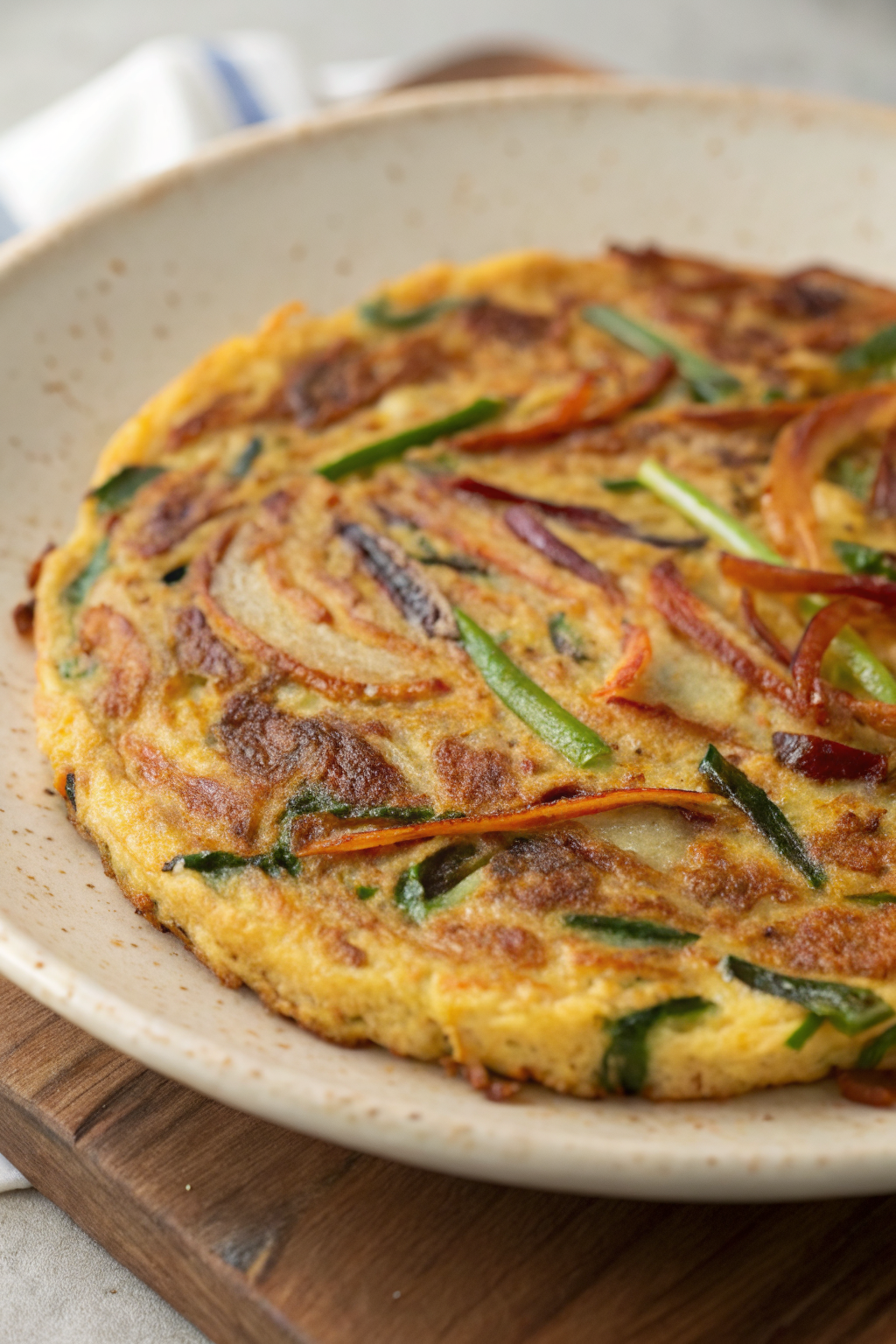
Hobak Buchim - Korean Zucchini Pancakes Recipe
Ingredients
Instructions
- Grate the zucchini on the large holes of a box grater into a large mixing bowl.
- Sprinkle the grated zucchini with the kosher salt and toss well to coat evenly.
- Let the zucchini sit for about 10 minutes so it releases water and softens slightly.
- Transfer the salted zucchini to a fine-mesh strainer or colander set over the sink.
- Use your hands to press out as much liquid as possible.
- Wrap the zucchini in a clean kitchen towel or cheesecloth and twist firmly to squeeze until the zucchini feels fairly dry.
- Return the squeezed zucchini to the mixing bowl.
- Add the sliced yellow onion, green onions, egg, all-purpose flour, potato starch, black pepper, and garlic powder or minced garlic.
- Stir until everything is evenly coated and the batter clings to the vegetables. It should be thick but spoonable, not soupy.
- If the mixture looks too wet, sprinkle in an extra tablespoon of flour or starch and mix again.
- In a small bowl, combine the soy sauce, rice vinegar, toasted sesame oil, sugar or honey, chopped green onion, sesame seeds, and gochugaru if using.
- Stir until the sugar dissolves, then taste and adjust with a bit more vinegar for tang or a pinch more sugar for sweetness if desired.
- Heat a nonstick or well-seasoned cast iron skillet over medium heat and add enough neutral oil to thinly coat the bottom of the pan.
- When the oil shimmers, scoop about 1/4 cup of batter per pancake into the pan and gently spread each portion into a thin round about 1/4 inch thick.
- Leave space between pancakes so you can flip them easily.
- Cook for 3 to 4 minutes per side, or until the edges are deep golden and crisp and the centers feel set when pressed lightly with a spatula.
- Transfer cooked pancakes to a wire rack or a paper towel-lined plate to drain excess oil.
- If desired, sprinkle a small pinch of salt over the hot pancakes for extra seasoning.
- Repeat with the remaining batter, adding more oil to the pan as needed.
- Serve the Hobak Buchim hot with the dipping sauce on the side. Cut larger pancakes into wedges for easier sharing if you like.
Notes
Approximate per serving (1 of 4, including some dipping sauce): 210–240 calories; fat 13–15 g; saturated fat 2 g; carbohydrates 19–22 g; fiber 2–3 g; sugars 5–6 g; protein 6–7 g; sodium 620–780 mg. Values will vary based on oil absorbed during frying, exact zucchini size, brands used, and portion size.
Leave a Reply