
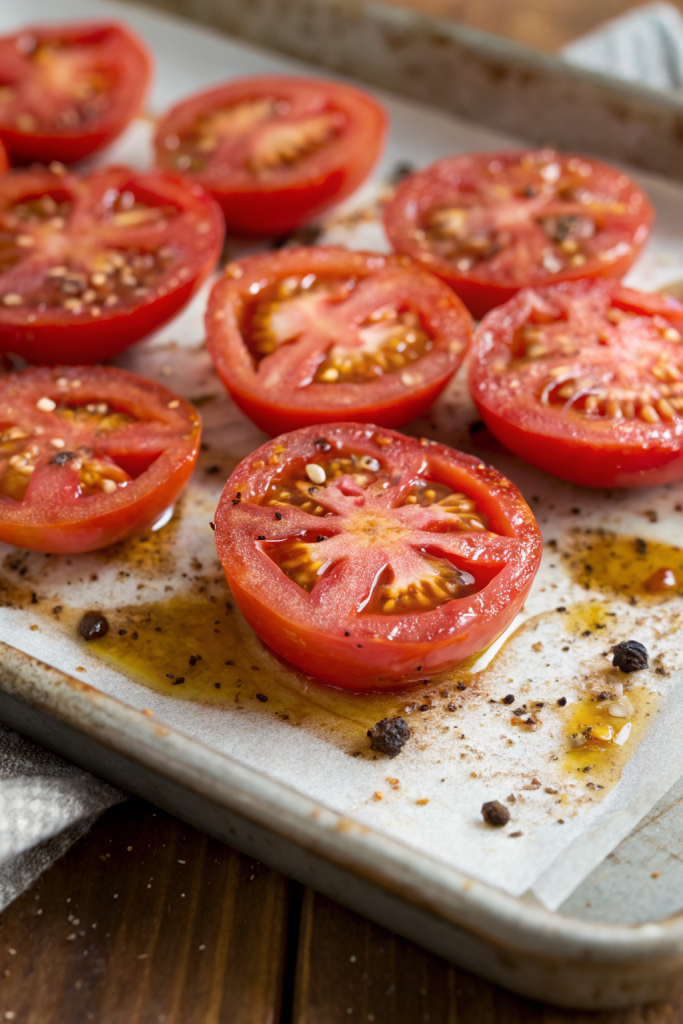
Easy Homemade Roasted Tomato Sauce tastes rich, sweet, and a little smoky, like summer in a jar with way less effort than you expect. It works for busy home cooks who want big flavor in about 1 hour total, with only 15 minutes of actual hands-on time. I first made a version of this on a Tuesday night when I felt tired and cranky, and it still turned into one of the best sauces of my life.
Why Easy Homemade Roasted Tomato Sauce Is Worth It
Roasting concentrates the natural sweetness of tomatoes and gives the sauce a deep, caramelized edge that stovetop simmering alone can’t match. You toss everything on a sheet pan, slide it into the oven, and the heat does the heavy lifting while you handle the rest of dinner.
This sauce works with fresh garden tomatoes, sad grocery store tomatoes, or a mix of both. You control the salt, oil, and herbs, so the flavor stays clean and bright without weird additives.
“This Easy Homemade Roasted Tomato Sauce tastes like an all-day simmered Italian grandma sauce, but my kitchen stays clean and I finish dishes early. ★★★★★”
Ingredients You Need
Tomatoes (about 3 pounds)
- Use Roma, plum, or any meaty tomato.
- Mix in some cherry or grape tomatoes if you want extra sweetness.
- In winter, I often use Campari or “vine-ripened” tomatoes from the store and still get great flavor.
Onion (1 medium, yellow or sweet)
- Yellow onion gives balance and depth.
- Sweet onion works if you like a milder, sweeter sauce.
- Red onion works in a pinch and adds a slightly sharper bite.
Garlic (6–8 cloves)
- Roast whole, peeled cloves for a mellow, nutty flavor.
- If you love garlic, bump it up to 10 cloves; the oven softens the punch.
Olive oil (about 1/4 cup)
- Use a decent extra-virgin olive oil; no need for the fancy bottle.
- You need enough oil to coat the tomatoes so they caramelize instead of dry out.
Salt & pepper
- Use kosher salt or sea salt for more control.
- Freshly ground black pepper adds a gentle heat and aroma.
Dried herbs (optional but tasty)
- 1–2 teaspoons dried oregano or Italian seasoning.
- Dried basil works, but fresh basil at the end tastes brighter.
- If you keep crushed red pepper in the pantry, add a pinch for gentle heat.
Fresh herbs (optional finish)
- Handful of fresh basil, parsley, or both.
- Stir them in after blending so they stay vibrant and green.
Acid balance (optional but helpful)
- A splash of balsamic vinegar or red wine vinegar can round out the flavor.
- A pinch of sugar helps if your tomatoes taste very tart or bland.
Equipment List
- Large rimmed baking sheet (or two, if your tomatoes crowd the pan).
- Parchment paper or a silicone baking mat for easier cleanup.
- Chef’s knife and cutting board.
- Blender, immersion blender, or food processor.
- Large spoon or spatula.
- Storage containers or jars with lids.
Quick Tips & substitutions
- Use any mix of tomatoes, but include at least half plum/Roma for a thicker sauce.
- Pat tomatoes dry after rinsing so they roast instead of steam.
- Spread tomatoes in a single layer; crowding leads to watery sauce.
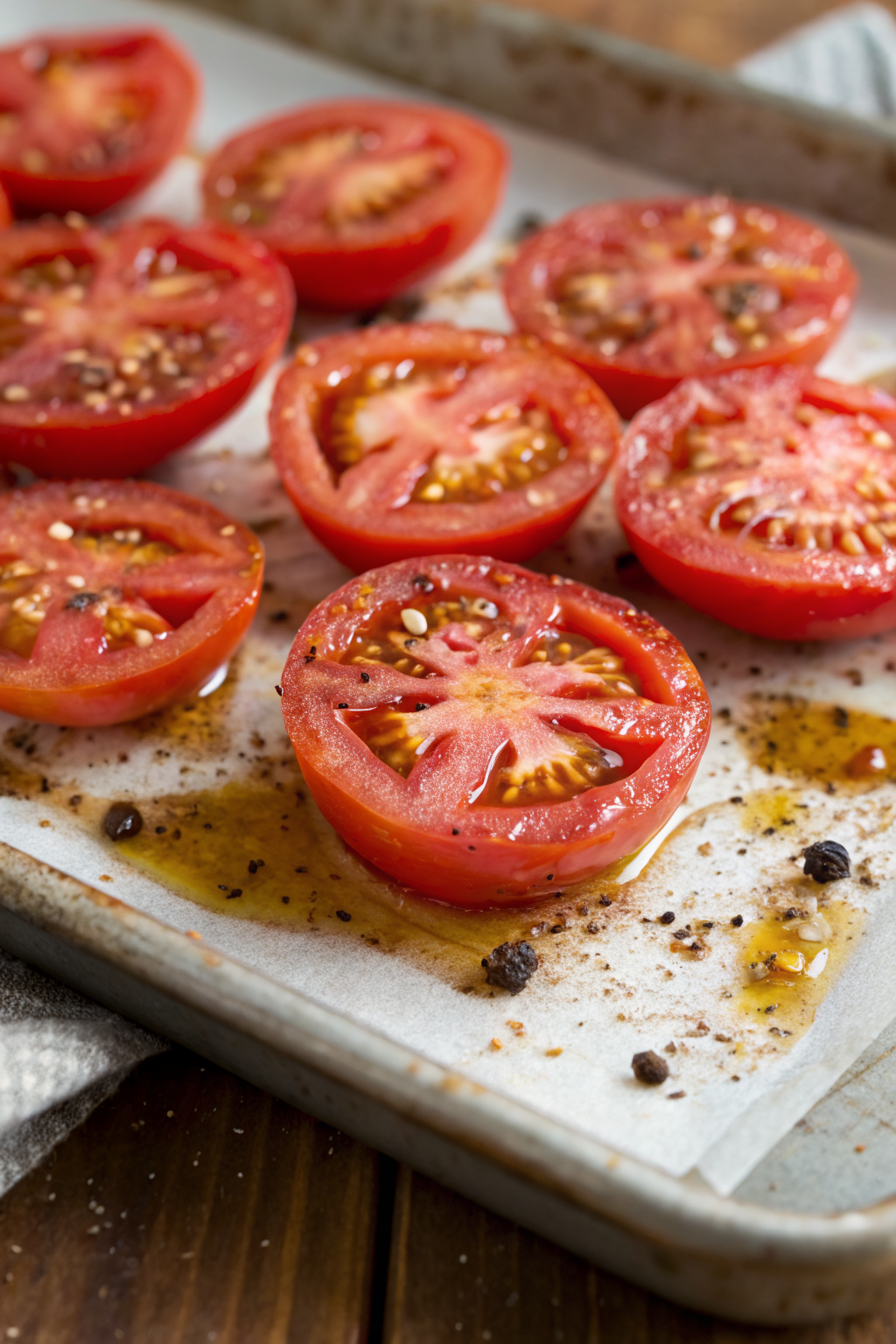
- Roast cut-side up so juices stay in the tomato and caramelize.
- Swap yellow onion with shallots for a slightly fancier flavor.
- Use garlic powder (1–2 teaspoons) if you run out of fresh garlic; sprinkle it on before roasting.
- Replace olive oil with avocado oil if you prefer a neutral flavor.
- Add a small carrot (sliced) to the pan if you want natural sweetness instead of sugar.
- Keep the sauce chunky by pulsing a few times, or blend smooth for picky eaters.
- Taste after blending and adjust salt, pepper, and acid so the flavor pops.
How to Make Easy Homemade Roasted Tomato Sauce
Step 1: Prep the tomatoes and veggies
Preheat the oven to 400°F (200°C). Line a large rimmed baking sheet with parchment or a silicone mat. Rinse the tomatoes, dry them well, then cut them into halves or quarters, depending on size.
Peel the onion and cut it into thick wedges. Peel the garlic cloves and keep them whole. Spread tomatoes, onion wedges, and garlic cloves on the baking sheet in a single layer.
Step 2: Season everything
Drizzle the olive oil evenly over the tomatoes and veggies. Sprinkle with salt, black pepper, and your dried herbs of choice. Toss gently with your hands or a spatula so every piece gets a light coat of oil and seasoning.
Arrange tomatoes cut-side up after tossing, so juices stay in the flesh. Tuck garlic cloves between tomatoes so they don’t burn. Taste one tomato piece for seasoning and add a pinch more salt if it tastes flat.
Step 3: Roast until caramelized and soft
Slide the pan into the oven and roast for 35–45 minutes. Check at the 30-minute mark; the tomatoes should look soft, wrinkled, and slightly browned at the edges. Onions should look tender with some golden spots, and garlic should look soft and lightly golden.
If the edges brown too fast, lower the oven to 375°F and move the pan to a higher rack. If you want deeper flavor, roast an extra 10 minutes, but keep an eye on the garlic so it does not burn.
Step 4: Blend the sauce
Let the roasted tomatoes cool for about 5–10 minutes so the steam calms down. Transfer everything from the pan, including all juices and browned bits, to a blender or a large pot if you use an immersion blender. Add a small splash of water or broth if the mixture looks very thick.
Blend until you reach your preferred texture. For a smooth sauce, blend on high until silky. For a rustic sauce, pulse a few times and leave some chunks.
Step 5: Taste and adjust
Pour the blended sauce into a pot and set it over low heat. Taste a spoonful and check for salt, pepper, and acidity. Add more salt if it tastes dull, more pepper if you want a little kick, and a splash of vinegar or a pinch of sugar if it tastes flat or too sharp.
Stir in chopped fresh basil or parsley right before you turn off the heat. Simmer for 5–10 minutes if you want the flavors to meld more, or use it right away if everyone already hovers near the stove.
Recipe Variations
- Gluten-free: The sauce itself stays naturally gluten-free; just pair it with gluten-free pasta, zucchini noodles, or spaghetti squash.
- Vegan: The base recipe stays vegan; serve with dairy-free cheese or nutritional yeast for a cheesy vibe.
- Low carb: Spoon the sauce over grilled chicken, roasted veggies, spaghetti squash, or zucchini noodles.
- Spicy arrabbiata style: Add 1–2 teaspoons crushed red pepper flakes before roasting, then taste and adjust after blending.
- Creamy version: Stir in a splash of heavy cream or coconut milk at the end for a richer, velvety sauce.
- Herb-heavy version: Add extra fresh basil, oregano, and parsley after blending for a bright, garden-style sauce.
- Smoky twist: Sprinkle in a little smoked paprika or add a small roasted red pepper to the blender.
- Chunky veggie sauce: Roast diced bell peppers, zucchini, or mushrooms on the pan and pulse lightly so chunks stay visible.
Ways to Serve Easy Homemade Roasted Tomato Sauce
- Toss with hot pasta and a handful of grated Parmesan or dairy-free cheese.
- Spoon over grilled chicken or turkey meatballs.
- Use as a base for homemade pizza or flatbread.
- Serve warm over roasted vegetables or baked potatoes.
- Use as a dipping sauce for mozzarella sticks, garlic bread, or baked polenta fries.
- Stir into cooked rice or quinoa for a quick tomato “pilaf.”
- Layer in lasagna or baked pasta dishes.
- Use as a sauce for stuffed peppers or stuffed zucchini.
Storage Success
Let the Easy Homemade Roasted Tomato Sauce cool to room temperature, then transfer it to airtight containers or jars. Store in the fridge for up to 5 days, and stir before reheating because natural separation can happen. Freeze in freezer-safe containers or silicone bags for up to 3 months, or freeze in ice cube trays for small portions. Label with the date so you actually use it instead of letting it hide behind the mustard forever.
Easy Homemade Roasted Tomato Sauce
Ingredients
Instructions
- Preheat the oven to 400°F (200°C). Line a large rimmed baking sheet with parchment paper or a silicone baking mat.
- Rinse the tomatoes, dry them well, then cut them into halves or quarters depending on size. Peel the onion and cut it into thick wedges. Peel the garlic cloves and leave them whole.
- Spread the tomatoes, onion wedges, and garlic cloves on the prepared baking sheet in a single layer.
- Drizzle the olive oil evenly over the vegetables. Season with salt, black pepper, and dried herbs, and add a pinch of crushed red pepper if using. Toss gently so everything is lightly coated.
- Arrange the tomatoes cut-side up and tuck the garlic cloves between the tomatoes so they do not burn.
- Roast for 35–45 minutes, until the tomatoes are soft, wrinkled, and lightly browned at the edges, the onions are tender with golden spots, and the garlic is soft and lightly golden.
- Let the roasted vegetables cool for 5–10 minutes, then transfer everything from the pan, including juices and browned bits, to a blender or a pot if using an immersion blender.
- Blend to your preferred texture, adding a small splash of water or broth if the mixture is very thick. Blend until silky for a smooth sauce or pulse a few times for a chunky, rustic sauce.
- Pour the blended sauce into a pot over low heat. Taste and adjust seasoning with more salt, pepper, a splash of vinegar, or a pinch of sugar as needed.
- Stir in chopped fresh basil or parsley right before turning off the heat. Simmer for 5–10 minutes for the flavors to meld, or use the sauce immediately.
Notes
Approximate per 1/2-cup serving (about 6 servings total): 90 calories; fat 7 g; saturated fat 1 g; carbohydrates 7 g; fiber 2 g; sugars 4 g; protein 2 g; sodium 220 mg. Values will vary based on tomato variety, salt level, and optional ingredients such as sugar or added broth.
Leave a Reply