
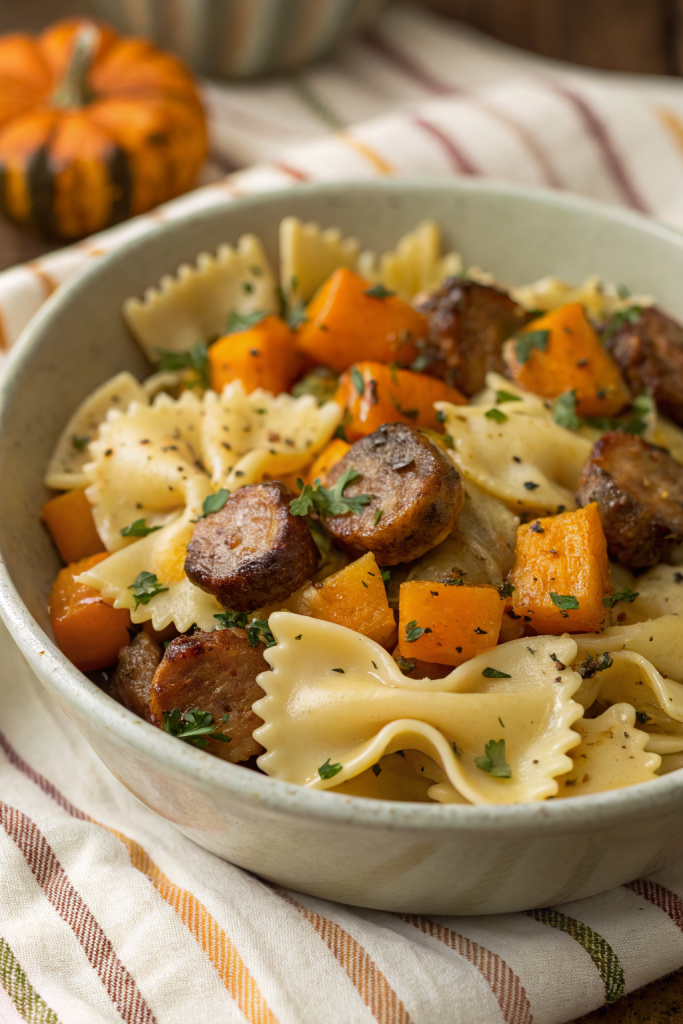
Creamy Butternut Squash Pasta with Sausage and Spinach tastes silky, cozy, and savory-sweet in the best way, with crispy sausage and tender greens tucked into every bite. It works perfectly for busy weeknights or casual dinner guests, and you can get it on the table in about 40 minutes. I first made this on a chilly Tuesday when my kids demanded “mac and cheese but fancier,” and this dish instantly joined our regular rotation.
Why Creamy Butternut Squash Pasta with Sausage and Spinach Is Worth It
This pasta gives you all the comfort of a rich cream sauce without feeling heavy or boring. The butternut squash purées into a velvety, naturally sweet sauce that hugs every piece of pasta, while the sausage adds salty, crispy bits and the spinach keeps things fresh.
You cook everything in one large pot and one skillet, so cleanup stays manageable. The recipe also uses simple, easy-to-find ingredients, and you can tweak it for picky eaters or special diets without much effort.
“This Creamy Butternut Squash Pasta with Sausage and Spinach tastes like fancy restaurant comfort food, but I pulled it off on a weeknight with kids running through the kitchen. ★★★★★”
Ingredients You Need
Pasta and main ingredients
-
Pasta:
- 12 ounces short pasta (rigatoni, penne, fusilli, or shells work great)
- I like bronze-cut Italian brands because the sauce clings better, but any sturdy pasta shape works.
-
Butternut squash:
- About 3 cups peeled and cubed butternut squash (fresh or frozen)
- Frozen butternut squash saves time and tastes just as good once you purée it.
-
Italian sausage:
- 12 ounces Italian sausage, casings removed
- Use mild for family-friendly, hot for a little kick, or chicken sausage for a lighter option.
-
Spinach:
- 4–5 cups fresh baby spinach, loosely packed
- You can use frozen chopped spinach (thawed and squeezed dry) in a pinch.
Aromatics and flavor boosters
- 2 tablespoons olive oil
- 1 tablespoon unsalted butter (optional, but it adds richness)
- 1 small yellow onion, diced
- 3–4 garlic cloves, minced
- ½ teaspoon crushed red pepper flakes (adjust to taste)
- ½ teaspoon dried thyme or Italian seasoning
- ½ teaspoon smoked paprika (optional, but it adds great depth)
- ½–1 teaspoon kosher salt, plus more to taste
- Freshly ground black pepper
Sauce ingredients
- 1½ cups low-sodium chicken broth (or vegetable broth)
- ½–¾ cup heavy cream or half-and-half
- ½ cup freshly grated Parmesan cheese, plus more for serving
- 1–2 teaspoons fresh lemon juice (brightens the sauce)
Optional toppings
- Extra grated Parmesan
- Chopped fresh parsley or sage
- Toasted breadcrumbs or crushed garlic croutons for crunch
- A drizzle of good olive oil
Equipment list
- Large pot for boiling pasta
- Large deep skillet or sauté pan (12-inch works well)
- Blender or immersion blender to purée the squash
- Colander
- Cutting board and sharp knife
- Wooden spoon or spatula
- Measuring cups and spoons
Quick Tips & substitutions
- Salt the pasta water generously so the noodles carry flavor before they hit the sauce.
- Use frozen butternut squash to skip peeling and chopping; it cooks and purées beautifully.
- Swap heavy cream with half-and-half or whole milk and a spoonful of cream cheese for a lighter but still creamy sauce.
- Use chicken or turkey sausage if you want less fat, or plant-based sausage for a meatless version.
- Replace spinach with chopped kale, Swiss chard, or arugula if that’s what you have.
- Keep some pasta water before draining; it helps thin the sauce and makes it glossy.
- Taste and adjust salt and lemon at the end; the Parmesan and sausage already add salt.
- Cook the sausage until you see deep brown bits on the pan; those browned bits build huge flavor in the sauce.
How to Make Creamy Butternut Squash Pasta with Sausage and Spinach
Step 1: Cook the pasta
- Bring a large pot of well-salted water to a boil.
- Add the pasta and cook until just al dente, usually 1 minute less than the package suggests.
- Scoop out about 1 cup of starchy pasta water and set it aside.
- Drain the pasta and keep it nearby while you make the sauce.
Step 2: Cook the butternut squash
- While the pasta cooks, heat 1 tablespoon olive oil in a large skillet over medium heat.
- Add the cubed butternut squash and a pinch of salt and pepper.
- Sauté for 3–4 minutes so the edges start to brown.
- Pour in 1 cup of the broth, bring it to a simmer, cover the skillet, and cook until the squash turns very tender, about 10–12 minutes.
Step 3: Purée the squash into sauce
- Transfer the cooked squash and any remaining liquid to a blender, or use an immersion blender right in the pan.
- Add the heavy cream (start with ½ cup), Parmesan, smoked paprika, and a small pinch of salt and pepper.
- Blend until the mixture turns completely smooth and creamy.
- Taste and adjust seasoning, then set the sauce aside while you cook the sausage.
Step 4: Brown the sausage and aromatics
- Wipe out the skillet if it looks very wet, then heat the remaining 1 tablespoon olive oil and the butter over medium-high heat.
- Add the sausage, break it into small crumbles, and cook until browned and cooked through, about 6–8 minutes.
- Stir in the diced onion and cook until it softens and turns golden at the edges, about 4–5 minutes.
- Add the garlic, crushed red pepper flakes, thyme or Italian seasoning, and a pinch of salt, and cook 1 minute until fragrant.
Step 5: Bring the sauce together
- Pour the butternut squash sauce into the skillet with the sausage mixture.
- Stir everything together and add the remaining ½ cup broth to loosen the sauce.
- Let the sauce simmer gently for 3–4 minutes, stirring often, until it thickens slightly and the flavors meld.
- Add a splash of pasta water if the sauce looks too thick; you want it to coat the back of a spoon but still flow.
Step 6: Add spinach and pasta
- Add the spinach to the skillet and stir until it wilts into the sauce, about 1–2 minutes.
- Add the cooked pasta and toss well so every piece gets coated in the creamy butternut squash sauce.
- If the mixture looks tight or sticky, add more pasta water a few tablespoons at a time until it turns glossy and silky.
- Squeeze in the lemon juice, taste, and adjust salt, pepper, and red pepper flakes as needed.
Step 7: Finish and serve
- Turn off the heat and shower the top with extra Parmesan.
- Sprinkle on chopped fresh parsley or sage if you like a fresh herbal note.
- Spoon the pasta into warm bowls and add a final drizzle of olive oil or a spoonful of toasted breadcrumbs for crunch.
- Serve right away while the sauce stays hot and creamy.
Recipe Variations
- Gluten-free: Use your favorite gluten-free pasta and check that your sausage and broth carry gluten-free labels.
- Vegan: Use plant-based sausage, vegetable broth, coconut milk or cashew cream instead of dairy, and a vegan Parmesan-style cheese.
- Dairy-light: Swap heavy cream with half-and-half or evaporated milk and reduce the Parmesan slightly.
- Low carb: Use zucchini noodles or spaghetti squash strands instead of pasta and reduce the amount of butternut squash slightly.
- Extra veggies: Add sautéed mushrooms, roasted Brussels sprouts, or peas to bulk up the vegetables.
- Extra protein: Stir in cooked shredded chicken or crispy chickpeas along with the sausage or instead of it.
- Spicy version: Use hot Italian sausage and bump up the crushed red pepper flakes.
Ways to Serve Creamy Butternut Squash Pasta with Sausage and Spinach
- Pair with a simple green salad with lemony vinaigrette.
- Add warm garlic bread or focaccia on the side for sauce-scooping.
- Serve with roasted broccoli, green beans, or asparagus for extra vegetables.
- Pack leftovers in a thermos for a cozy work or school lunch.
- Top each bowl with extra Parmesan and a squeeze of lemon for brightness.
Storage Success
Store leftover Creamy Butternut Squash Pasta with Sausage and Spinach in an airtight container in the fridge for up to 3–4 days. Add a splash of broth or milk before reheating so the sauce loosens and turns creamy again. Reheat on the stove over low heat or in the microwave, stirring halfway so it warms evenly. I do not suggest freezing this one because the cream sauce can separate and the pasta can turn mushy.
Leave a Reply