
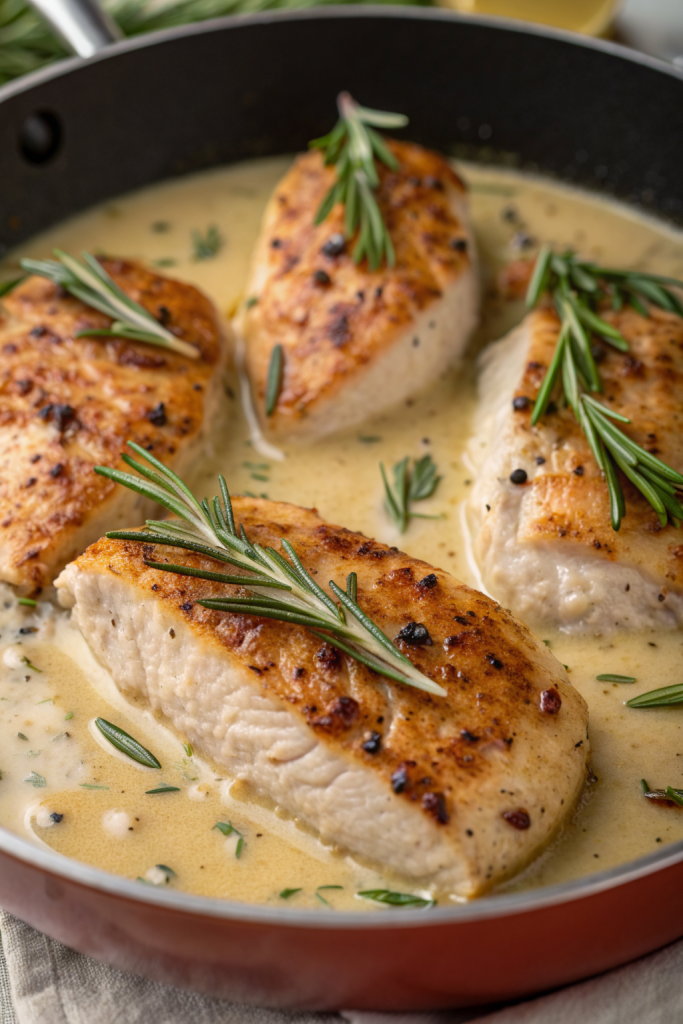
Rosemary Dijon Chicken Recipe hits that perfect spot between cozy comfort food and “wow, you actually cooked this?” flavor, and it works on a weeknight in about 35–40 minutes start to finish. It suits busy home cooks who want something impressive without babysitting a pan all evening. I’ve made versions of this dish for years, and my kids now call it “the fancy chicken that smells like a holiday.”
Why Rosemary Dijon Chicken Recipe Is Worth It
This Rosemary Dijon Chicken Recipe gives you juicy, tender chicken with a tangy, herby, garlicky crust that tastes like you put in way more effort than you did. The Dijon mustard and rosemary cling to the chicken and caramelize in the oven, so every bite hits with flavor.
You whisk the sauce in one bowl, toss it with the chicken, and let the oven finish the job. It works for meal prep, date night at home, or a “friends coming over in 45 minutes” situation.
“This Rosemary Dijon Chicken Recipe tastes like a restaurant special but fits into my Tuesday night schedule. ★★★★★”
Ingredients You Need
Chicken
- 2 pounds boneless skinless chicken thighs
- Use thighs for maximum juiciness and forgiveness if you overcook slightly.
- Swap with boneless skinless chicken breasts and pound them to even thickness for quicker, more even cooking.
Marinade / Sauce
- 3 tablespoons Dijon mustard
- Use a smooth Dijon like Maille or Grey Poupon for consistent flavor.
- Avoid whole grain mustard as the seeds burn faster in the oven.
- 2 tablespoons whole milk Greek yogurt or sour cream
- This keeps the chicken moist and adds a slight tang.
- 3 tablespoons olive oil
- Use regular olive oil, not extra virgin, since you roast at a higher temperature.
- 3 cloves garlic, minced or grated
- Jarred minced garlic works if you feel tired, but fresh gives better flavor.
- 1 tablespoon fresh rosemary, very finely chopped
- Use 1 teaspoon dried rosemary if you do not have fresh; crush it between your fingers to wake up the flavor.
- 1 teaspoon kosher salt
- If you use table salt, start with 1/2 teaspoon and adjust to taste.
- 1/2 teaspoon black pepper
- 1 teaspoon honey or maple syrup
- This tiny bit of sweetness balances the sharp mustard.
- 1 teaspoon lemon zest
- 1 tablespoon lemon juice
Optional add-ins
- 1 small onion, sliced into wedges
- 1 cup small baby potatoes, halved
- 1 cup green beans or broccoli florets
Pantry shortcuts and notes
- Use pre-chopped garlic, pre-washed herbs, and bagged veggies to save time.
- Use bottled lemon juice if you do not have fresh lemons, but zest from a fresh lemon gives better aroma.
- Use frozen veggies in a pinch; toss them in during the last 10–15 minutes so they do not overcook.
Equipment
- Large mixing bowl
- Measuring spoons and cups
- Whisk or fork
- Cutting board and sharp knife
- Baking dish or sheet pan (9×13 or similar)
- Instant read thermometer for perfect doneness
- Tongs or spatula
Quick Tips & substitutions
- Pat the chicken dry with paper towels so the sauce sticks better and browns nicely.
- Use chicken breasts instead of thighs and roast a bit less time, then check early with a thermometer.
- Marinate the chicken in the fridge for up to 24 hours for deeper flavor, or at least 15 minutes if you feel rushed.
- Use dried rosemary when you lack fresh, but reduce the amount since dried herbs taste stronger.
- Add a pinch of smoked paprika if you want a subtle smoky note without a grill.
- Use maple syrup instead of honey if that is what you have; both balance the mustard.
- Line the pan with parchment paper for easier cleanup and less sticking.
- Slice leftovers and use them cold in salads or wraps for quick lunches.
How to Make Rosemary Dijon Chicken Recipe
Mix the Rosemary Dijon marinade
- Add Dijon mustard, Greek yogurt or sour cream, olive oil, garlic, chopped rosemary, salt, pepper, honey, lemon zest, and lemon juice to a large mixing bowl.
- Whisk until the mixture looks smooth and creamy, with no big streaks of mustard or yogurt.
- Taste a tiny bit and adjust with a pinch more salt, pepper, or lemon juice if you want a brighter flavor.
Prep the chicken
- Pat the chicken thighs dry on both sides with paper towels.
- Trim any large pieces of excess fat if you prefer a leaner bite, but leave some for flavor.
- Place the chicken pieces into the bowl with the marinade and toss until every piece looks coated.
Optional: quick marinate
- Cover the bowl and chill the chicken for at least 15 minutes if you have time.
- Chill up to 24 hours for stronger rosemary and Dijon flavor.
- If you feel rushed, skip the marinating time and go straight to the pan; the sauce still tastes great.
Prep the pan and veggies
- Heat your oven to 400°F (200°C).
- Line a baking dish or sheet pan with parchment paper for easier cleanup.
- If you use onions, potatoes, or veggies, toss them with a drizzle of olive oil, a pinch of salt, and a little extra chopped rosemary in the pan.
Arrange the chicken
- Place the coated chicken pieces on top of the veggies or directly on the lined pan in a single layer.
- Spread any extra marinade over the top of the chicken so you do not waste flavor.
- Leave a little space between pieces so the heat circulates and browns the edges.
Roast the chicken
- Place the pan in the hot oven and roast for 18 to 25 minutes, depending on the size of the chicken pieces.
- Check the internal temperature with an instant read thermometer; aim for 165°F in the thickest part.
- If you want more color, switch the oven to broil for 2 to 3 minutes at the end and watch closely so the top browns but does not burn.
Rest and finish
- Remove the pan from the oven and let the chicken rest for 5 minutes so the juices settle.
- Spoon some of the pan juices over the top of the chicken for extra flavor and shine.
- Sprinkle a little fresh chopped rosemary or parsley and a squeeze of lemon over the top if you want a fresh finish.
Recipe Variations
-
Gluten free
- This Rosemary Dijon Chicken Recipe already avoids gluten as written, as long as your mustard and yogurt list gluten free on the label.
-
Dairy free
- Swap the Greek yogurt or sour cream with a thick dairy free yogurt made from coconut or almond.
-
Low carb / keto friendly
- Skip the potatoes and use broccoli, cauliflower, or green beans as your veggie base.
- Use a sugar free sweetener like a tiny pinch of monk fruit instead of honey if you track carbs closely.
-
Extra herby version
- Add thyme or oregano with the rosemary for a stronger herb flavor.
-
Spicy kick
- Add 1/4 to 1/2 teaspoon red pepper flakes or a little hot sauce to the marinade.
-
Grilled version
- Marinate the chicken as written, then grill over medium heat and baste with extra marinade during the first half of cooking time.
Ways to Serve Rosemary Dijon Chicken Recipe
- Serve over fluffy mashed potatoes with the pan juices as a quick sauce.
- Slice and pile on top of a big green salad with cucumbers, tomatoes, and a simple lemon olive oil dressing.
- Pair with roasted veggies like carrots, Brussels sprouts, or asparagus.
- Tuck slices into warm pita or tortillas with lettuce and cucumber for an easy handheld dinner.
- Serve with rice, quinoa, or cauliflower rice for a balanced plate.
- Add to a grain bowl with farro or brown rice, roasted veggies, and a squeeze of extra lemon.
Storage Success
Let the Rosemary Dijon Chicken cool to room temperature, then place it in airtight containers within two hours of cooking. Store in the fridge for up to 4 days, and keep the chicken separate from any salad greens so they do not wilt. Reheat gently in a covered skillet over low heat with a splash of water or broth so the chicken stays juicy. Freeze leftovers for up to 2 months, and thaw overnight in the fridge before reheating.
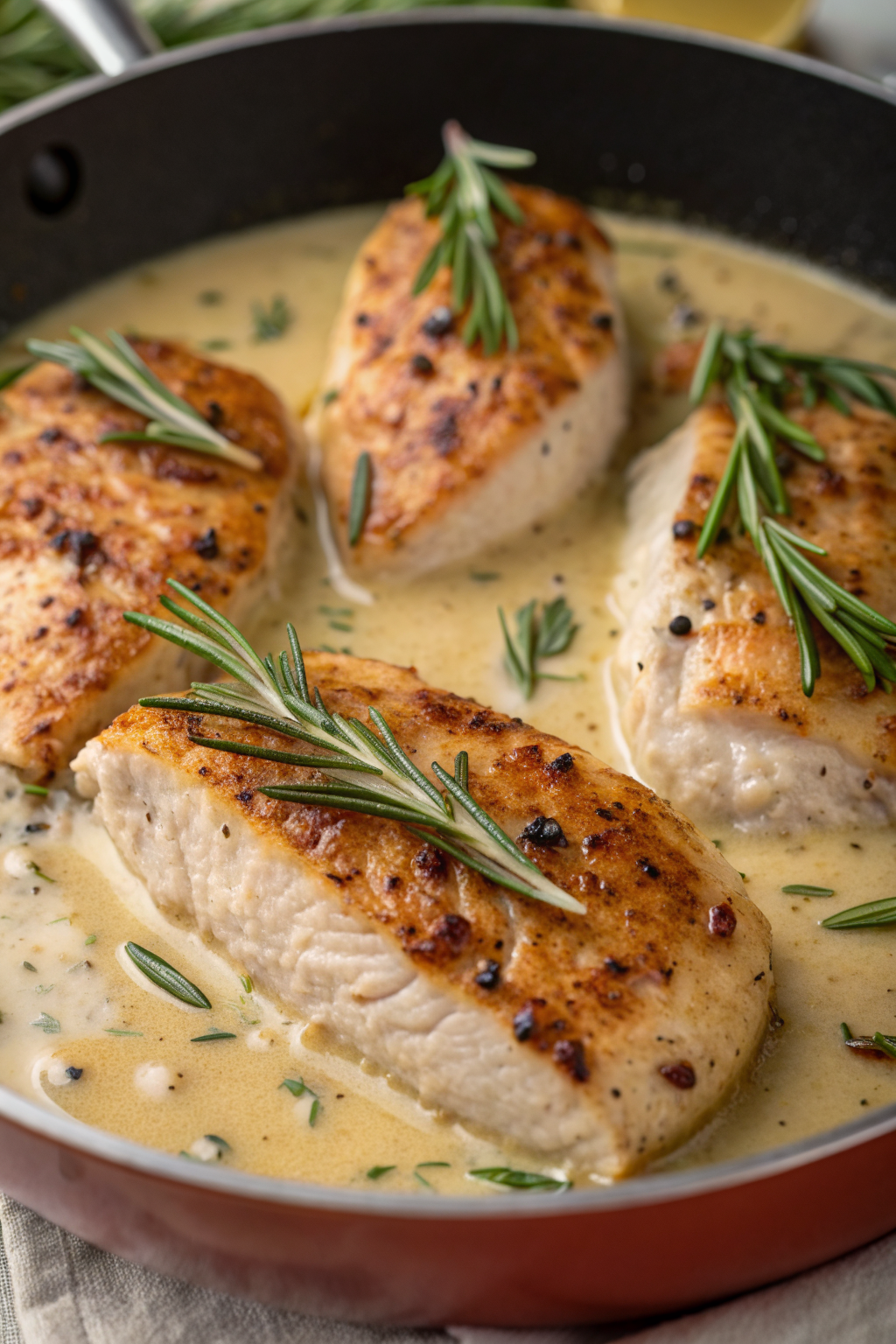
Rosemary Dijon Chicken Recipe
Ingredients
Instructions
- Add the Dijon mustard, Greek yogurt or sour cream, olive oil, garlic, chopped rosemary, salt, pepper, honey, lemon zest, and lemon juice to a large mixing bowl.
- Whisk until the mixture looks smooth and creamy with no visible streaks of mustard or yogurt.
- Pat the chicken thighs dry on both sides with paper towels.
- Trim any large pieces of excess fat if desired, leaving some for flavor.
- Add the chicken pieces to the bowl with the marinade and toss until every piece is evenly coated.
- Cover the bowl and refrigerate the chicken for at least 15 minutes for more flavor, or up to 24 hours if you have time.
- Preheat the oven to 400°F (200°C).
- Line a baking dish or sheet pan with parchment paper for easier cleanup.
- If using onion, potatoes, or veggies, spread them on the pan and toss with a drizzle of olive oil, a pinch of salt, and a little extra chopped rosemary if you like.
- Place the coated chicken pieces on top of the veggies or directly on the lined pan in a single layer.
- Spoon any remaining marinade over the chicken so all the flavor is used.
- Leave a bit of space between the pieces so the heat can circulate and brown the edges.
- Roast the chicken in the preheated oven for 18 to 25 minutes, depending on the size of the pieces.
- Check for doneness with an instant-read thermometer; the thickest part of the chicken should reach 165°F (74°C).
- For more color, switch the oven to broil for 2 to 3 minutes at the end, watching closely so the top browns without burning.
- Remove the pan from the oven and let the chicken rest for about 5 minutes so the juices settle.
- Spoon some of the pan juices over the chicken before serving for extra flavor and moisture.
Notes
Approximate per serving (1/6 of recipe, without optional veggies): 280–320 calories; fat 19–22 g; saturated fat 4–5 g; carbohydrates 4–6 g; fiber 0 g; sugars 3–4 g; protein 24–27 g; sodium 480–620 mg. Values will vary based on specific brands, exact chicken pieces, and any added vegetables or sides.
Leave a Reply