
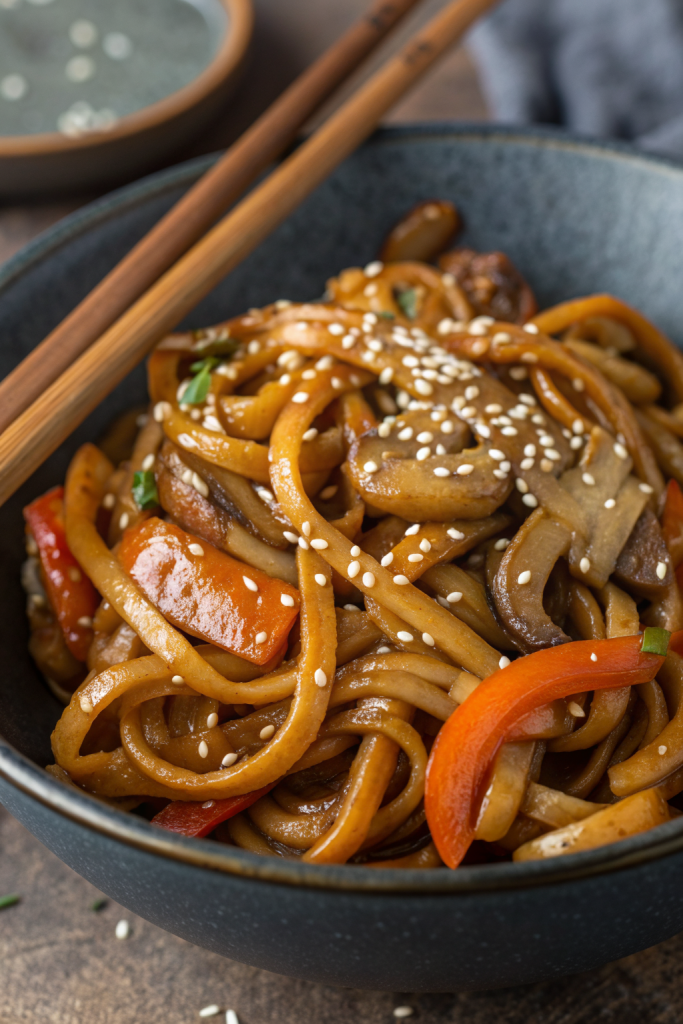
Quick Yaki Udon Recipe hits all the right notes: chewy noodles, savory-sweet sauce, and just enough veggies and protein to feel like a full meal. It works perfectly for busy folks who want a satisfying dinner on the table in about 20 minutes. I make this on nights when I stare at my fridge, sigh dramatically, and still want something that tastes like I tried.
Why Quick Yaki Udon Recipe Is Worth It
You get restaurant-style stir-fried udon without leaving your kitchen or dirtying every pan you own. The sauce uses simple pantry staples, and the frozen udon noodles cook in minutes and stay wonderfully chewy.
This dish works for beginners and experienced home cooks because it forgives small mistakes. You can toss in whatever veggies and protein you have, and the noodles still soak up that glossy, savory sauce like champs.
Tastes like a weeknight miracle: chewy noodles, smoky stir-fry flavor, and a glossy sauce that clings to every bite. ★★★★★
Ingredients You Need
Udon & Protein
-
2 packs frozen udon noodles (about 7–8 oz each)
- Frozen udon gives the best chewy texture and cooks quickly.
- If you only have shelf-stable udon, cook it 1–2 minutes less than package directions so it stays bouncy.
-
6–8 oz thinly sliced protein
- Options: chicken thigh, pork shoulder, beef sirloin, shrimp, or extra-firm tofu.
- I like thinly sliced pork or chicken for classic yaki udon flavor.
- Use pre-sliced “shabu-shabu” style meat if your store carries it to save time.
Vegetables
Use what you have, but this combo works really well:
- 1 small onion, thinly sliced
- 1 small carrot, cut into matchsticks
- 1 cup green cabbage, thinly sliced
- 3–4 scallions, sliced (white and green parts separated)
- 1/2 cup mushrooms, sliced (shiitake, cremini, or button)
You can swap cabbage with bagged coleslaw mix as a shortcut. That trick saves chopping time and still gives crunch.
Sauce
This sauce gives classic yaki udon flavor: savory, slightly sweet, and a little smoky.
- 2 tbsp soy sauce (use low-sodium if you prefer)
- 1 tbsp oyster sauce (or vegetarian mushroom stir-fry sauce)
- 1 tbsp mirin (or 1 tbsp water + 1/2 tsp sugar as a backup)
- 1 tsp sugar (adjust to taste)
- 1 tsp sesame oil
- 1–2 tsp Worcestershire sauce (gives that street-food flavor)
- Optional: 1–2 tsp Japanese-style stir-fry sauce like Otafuku okonomi sauce for extra depth
Mix the sauce in a small bowl before you start cooking. That step keeps you from scrambling while the noodles cook.
Aromatics & Oil
- 2 cloves garlic, minced
- 1 tsp grated ginger (optional but tasty)
- 1–2 tbsp neutral oil (canola, avocado, or grapeseed)
- A tiny drizzle of extra sesame oil at the end (optional, for aroma)
Toppings (Highly Recommended)
- Toasted sesame seeds
- Extra sliced scallions (green parts)
- Katsuobushi (bonito flakes), if you enjoy that smoky flavor
- Shichimi togarashi or chili flakes, if you like heat
- Japanese mayonnaise, a tiny zigzag on top (optional but so good)
Equipment
- Large nonstick skillet or wok
- Tongs or chopsticks for tossing noodles
- Small bowl for sauce
- Pot or kettle for boiling water (to loosen udon, if needed)
- Cutting board and sharp knife
Quick Tips & substitutions
- Use frozen udon if possible; it stays chewier than shelf-stable noodles.
- Loosen frozen udon in hot water for 1–2 minutes, then drain well so the sauce does not thin out.
- Slice protein and veggies thin so everything cooks quickly and evenly.
- Use bagged coleslaw mix as a shortcut for cabbage and carrots.
- Swap oyster sauce with mushroom stir-fry sauce or extra soy sauce plus a pinch of sugar.
- Use tamari or coconut aminos instead of soy sauce if you avoid regular soy.
- Stir the noodles gently with tongs so they do not break.
- Taste the sauce at the end and adjust with a splash of soy for salt or a pinch of sugar for balance.
- Cook in batches if your pan feels crowded; crowded pans steam instead of stir-fry.
- Add chili oil or shichimi at the table so everyone can control the heat level.
How to Make Quick Yaki Udon Recipe
Step 1: Prep the Sauce and Ingredients
Add soy sauce, oyster sauce, mirin, sugar, sesame oil, and Worcestershire sauce to a small bowl. Whisk until the sugar dissolves and the sauce looks smooth. Set the bowl near the stove.
Slice all veggies and protein thin so they cook fast. Keep the scallion greens separate for topping.
Step 2: Loosen the Udon Noodles
Boil water in a pot or kettle. Place the frozen udon blocks in a heatproof bowl and pour the hot water over them. Gently shake them apart with chopsticks or tongs until they loosen, then drain well.
If you use shelf-stable udon, cook them slightly under the package time, then rinse quickly and drain. Toss the noodles with a tiny drizzle of oil so they do not stick.
Step 3: Stir-Fry the Protein
Heat a large skillet or wok over medium-high heat. Add 1 tbsp oil, then add the sliced protein in a single layer. Sprinkle a small pinch of salt and stir-fry until the meat browns and cooks through.
If you use tofu, pat it dry, then sear it until golden on at least two sides. Transfer the cooked protein to a plate and keep the pan on the stove.
Step 4: Cook the Vegetables
Add a bit more oil if the pan looks dry. Toss in onion, carrot, and the white parts of the scallions. Stir-fry 2–3 minutes until the onion softens slightly.
Add cabbage and mushrooms and cook another 2–3 minutes. Stir in garlic and ginger and cook about 30 seconds until fragrant, so it does not burn.
Step 5: Add the Noodles and Sauce
Add the drained udon noodles to the pan. Use tongs or chopsticks to gently separate and mix them with the veggies. Pour the sauce over the noodles.
Toss everything together over medium-high heat for 2–3 minutes. Coat the noodles evenly and let the sauce thicken slightly and cling to the noodles.
Step 6: Finish and Serve
Return the cooked protein to the pan and toss again. Add a small drizzle of sesame oil and half of the scallion greens. Taste and adjust with a splash of soy sauce or a pinch of sugar if you want.
Turn off the heat and portion the noodles into bowls. Top with the remaining scallion greens, sesame seeds, and any extras like bonito flakes, chili flakes, or a tiny zigzag of Japanese mayo.
Recipe Variations
- Gluten-free: Use gluten-free tamari and a gluten-free oyster-style sauce; pair with gluten-free udon or thick rice noodles.
- Vegan: Use extra-firm tofu or tempeh, skip bonito flakes, and use mushroom stir-fry sauce instead of oyster sauce.
- Low carb-ish: Use shirataki noodles or spiralized zucchini mixed with a smaller amount of udon for texture.
- Extra protein: Add a beaten egg at the end and scramble it into the noodles, or toss in cooked edamame.
- Spicy version: Stir in chili crisp, gochujang, or a spoonful of sambal with the sauce.
- Veggie-packed: Add bell peppers, snap peas, or baby spinach during the veggie step.
- Kid-friendly: Go lighter on the Worcestershire and skip spicy toppings; add a little extra sugar for a milder, teriyaki-style flavor.
Ways to Serve Quick Yaki Udon Recipe
- Serve in deep bowls with extra scallions and sesame seeds on top.
- Pair with miso soup and a simple cucumber salad for a full meal.
- Pack leftovers in a lunch container and eat at room temperature or reheated.
- Add a side of edamame with sea salt for extra protein.
- Top with a soft-boiled or fried egg for a more filling bowl.
Storage Success
Let the noodles cool until they feel just slightly warm, then pack them into an airtight container. Store in the fridge for up to 3 days. Reheat in a skillet over medium heat with a splash of water or broth, and toss until the noodles loosen and heat through. Add fresh scallions or a drizzle of sesame oil after reheating to bring back that just-cooked flavor.
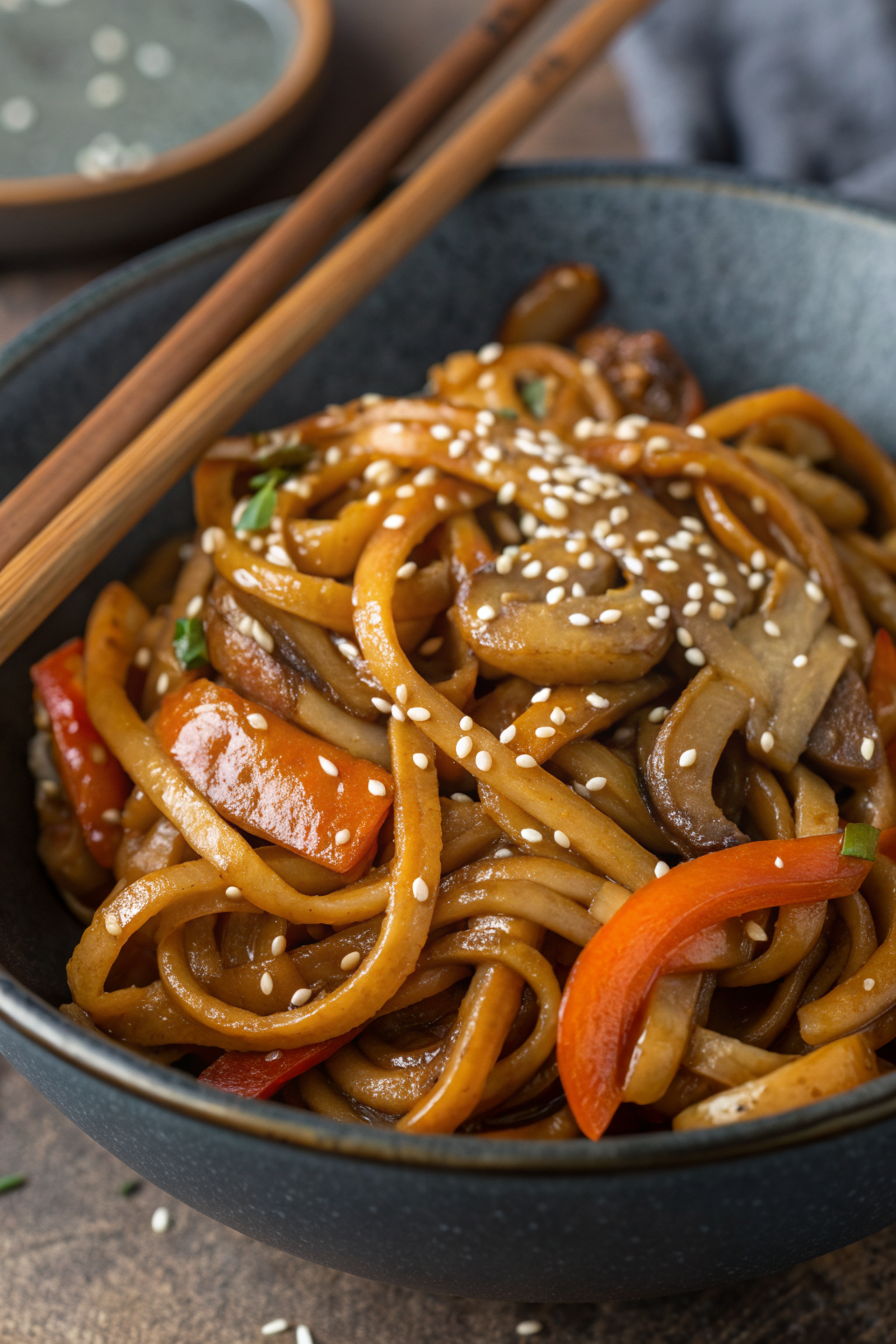
Quick Yaki Udon Recipe
Ingredients
Instructions
- In a small bowl, whisk together the soy sauce, oyster sauce, mirin, sugar, sesame oil, and Worcestershire sauce until the sugar dissolves. Set the bowl near the stove.
- Slice the onion, carrot, cabbage, mushrooms, and scallions, keeping the scallion greens separate for topping. Thinly slice your chosen protein if it is not already sliced.
- Bring water to a boil in a pot or kettle. Place the frozen udon blocks in a heatproof bowl and pour the hot water over them. Gently shake and separate the noodles with chopsticks or tongs until loosened, then drain well.
- Heat a large skillet or wok over medium-high heat. Add 1 tablespoon neutral oil, then add the sliced protein in a single layer. Season lightly with a pinch of salt and stir-fry until browned and cooked through. Transfer the cooked protein to a plate and keep the pan on the stove.
- If the pan looks dry, add a little more oil. Add the onion, carrot, and white parts of the scallions. Stir-fry for 2–3 minutes until the onion begins to soften.
- Add the cabbage and mushrooms and cook for another 2–3 minutes. Stir in the garlic and ginger and cook for about 30 seconds, just until fragrant.
- Add the drained udon noodles to the pan. Use tongs or chopsticks to gently separate and toss them with the vegetables. Pour the prepared sauce over the noodles.
- Stir-fry everything together over medium-high heat for 2–3 minutes, tossing until the noodles are evenly coated and the sauce thickens slightly and clings to the noodles.
- Return the cooked protein to the pan and toss to combine. Add a small drizzle of extra sesame oil and half of the scallion greens. Taste and adjust with a splash of soy sauce or a pinch more sugar if desired.
- Turn off the heat. Divide the noodles into bowls and top with the remaining scallion greens, toasted sesame seeds, and any optional toppings such as bonito flakes, chili flakes, or a zigzag of Japanese mayonnaise. Serve hot.
Notes
Approximate per serving (3 servings total, using chicken thigh and without optional toppings): 620 calories; fat 24 g; saturated fat 5 g; carbohydrates 78 g; fiber 4 g; sugars 10 g; protein 28 g; sodium 1850 mg. Values will vary based on protein choice, noodle brand, sauces, toppings, and portion size.
Leave a Reply