
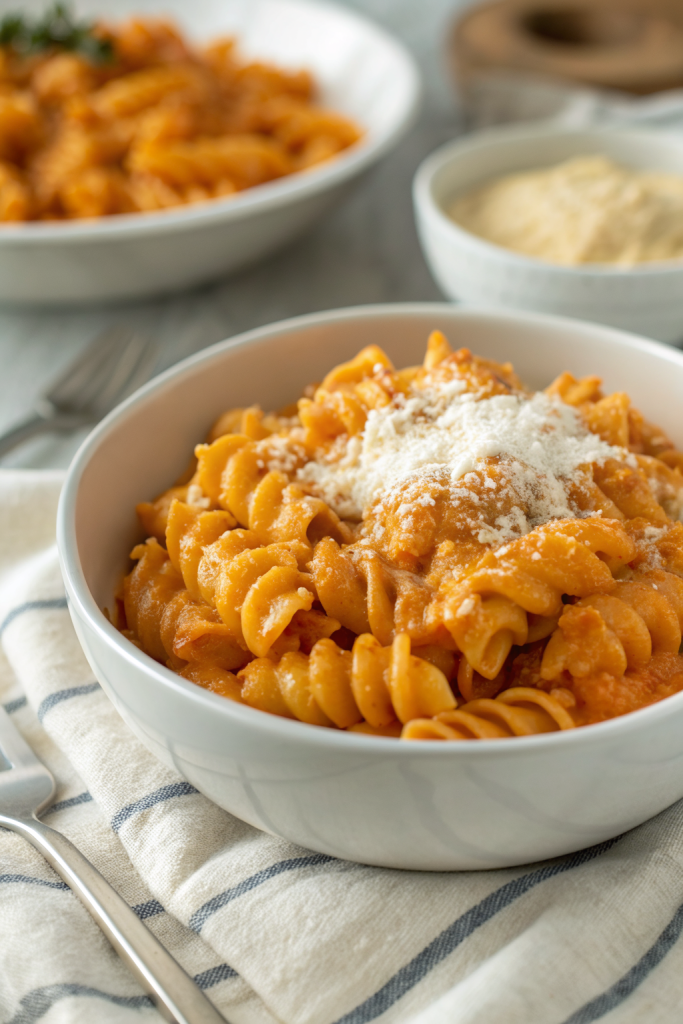
Butternut Squash Pasta Sauce Recipe tastes silky, slightly sweet, cozy, and savory with a hint of garlic and herbs, like fall in a bowl without needing a sweater. It works perfectly for busy weeknights or casual date nights, and you can get it on the table in about 40 minutes total. I first made this on a Tuesday when my pantry looked sad, and it completely saved dinner and my mood.
Why Make This Butternut Squash Pasta Sauce Recipe at Home
Homemade butternut squash pasta sauce tastes richer and cleaner than anything from a jar. You control the salt, the creaminess, and the sweetness, so the sauce fits your taste instead of the other way around.
You also stretch a single squash into a full, satisfying meal that feels special but stays budget friendly. Leftovers reheat beautifully, so you cook once and eat well twice.
This Butternut Squash Pasta Sauce Recipe tastes velvety, cozy, and restaurant-level good, but comes together with simple ingredients and easy steps. ★★★★★
Ingredients You Need
Main ingredients
-
Butternut squash
- About 2 pounds whole, or 4 packed cups cubed.
- You can use fresh peeled and cubed squash or pre-cut squash from the store to save time.
- Frozen cubed butternut squash also works; just roast it straight from frozen and add a few extra minutes.
-
Olive oil
- Use a good everyday extra virgin olive oil.
- You do not need anything fancy, just something you like the taste of.
-
Butter
- Adds richness and a silky finish.
- Use unsalted butter so you control the salt level.
-
Yellow onion
- One medium onion, diced.
- Sweet onion also works if you prefer a milder flavor.
-
Garlic
- 3 to 5 cloves, minced.
- Jarred minced garlic works in a pinch, but fresh garlic gives better flavor.
-
Vegetable broth or chicken broth
- Use low sodium broth so you season to taste.
- Vegetable broth keeps the recipe vegetarian.
-
Milk or cream
- Use heavy cream for the richest sauce.
- Use half and half or whole milk for a lighter version.
- For dairy free, use unsweetened oat milk or cashew milk and skip the butter.
-
Parmesan cheese, finely grated
- Freshly grated melts better and tastes sharper.
- Use a vegetarian hard cheese if you avoid traditional Parmesan.
Flavor boosters
-
Fresh sage leaves or dried sage
- Sage loves butternut squash and gives that cozy fall flavor.
- If you use dried sage, start with a small pinch and taste.
-
Fresh thyme or dried thyme
- Adds a gentle herbal note that keeps the sauce from tasting too sweet.
-
Ground nutmeg
- Just a pinch brings warmth and depth.
- Nutmeg tastes strong, so add a little at a time.
-
Red pepper flakes
- Optional, but a tiny pinch balances the natural sweetness.
-
Salt and black pepper
- Season in layers: during roasting and again while blending.
Pasta and add ins
-
Pasta of choice
- Short shapes like rigatoni, penne, shells, or orecchiette hold the sauce well.
- Long pasta like fettuccine or linguine also works if you thin the sauce slightly with pasta water.
- Use gluten free pasta if you need it; brown rice or chickpea pasta both work.
-
Reserved pasta water
- Starchy pasta water helps the sauce cling to the noodles and gives the perfect consistency.
Optional toppings
- Extra grated Parmesan
- Toasted walnuts or pecans
- Crispy sage leaves
- Cracked black pepper
- A squeeze of lemon juice to brighten the flavor
Equipment list
- Large baking sheet
- Parchment paper or a silicone baking mat
- Large pot for boiling pasta
- Large skillet or saucepan for finishing the sauce
- Blender or immersion blender
- Cutting board and sharp knife
- Wooden spoon or spatula
- Measuring cups and spoons
Tips & Mistakes
- Roast the squash until the edges caramelize slightly, since that browning gives deeper flavor.
- Cut the squash into even cubes so everything cooks at the same rate.
- Do not overcrowd the baking sheet, or the squash will steam instead of roast and taste bland.
- Salt the squash lightly before roasting and taste again after blending, so you avoid an over salty sauce.
- Save at least 1 cup of pasta water, since it turns a too thick sauce into a glossy, silky coating.
- Add cream or milk slowly while you blend, and stop when the sauce looks smooth and pourable.
- Do not skip the onion and garlic, because they balance the sweetness and keep the sauce savory.
- Use low heat when you reheat the blended sauce, since high heat can cause dairy to separate.
- Taste and adjust at the end with salt, pepper, and a squeeze of lemon juice if the sauce tastes flat.
- If the sauce tastes too sweet, add more black pepper, red pepper flakes, or a little extra Parmesan.
How to Make Butternut Squash Pasta Sauce Recipe
Step 1: Prep and roast the squash
Preheat your oven to 400°F and line a baking sheet with parchment paper. Peel the butternut squash, scoop out the seeds, and cut it into 1 inch cubes. Toss the cubes with olive oil, salt, pepper, and a small pinch of dried sage or thyme if you like. Spread the squash in a single layer on the baking sheet and roast for 25 to 30 minutes, until the cubes feel tender and show golden spots on the edges.
Step 2: Cook the aromatics
While the squash roasts, heat a tablespoon of olive oil and a tablespoon of butter in a large skillet over medium heat. Add the diced onion with a pinch of salt and cook 5 to 7 minutes, until the onion turns soft and lightly golden. Stir in the minced garlic and cook 30 to 60 seconds, until it smells fragrant but not burnt. Add the fresh thyme and sage, stir again, then turn the heat to low.
Step 3: Boil the pasta
Bring a large pot of salted water to a boil. Add your pasta and cook until al dente, following the package time. Scoop out at least 1 cup of the starchy pasta water and set it aside. Drain the pasta, then keep it in the pot or a large bowl while you finish the sauce.
Step 4: Blend the sauce base
Transfer the roasted butternut squash to a blender or a large bowl if you use an immersion blender. Add the cooked onion and garlic mixture, along with about 1 cup of broth. Blend until smooth and thick, then add more broth as needed until the sauce looks creamy and pourable. Add a pinch of nutmeg, red pepper flakes if you use them, and a small splash of cream or milk, then blend again.
Step 5: Adjust thickness and flavor
Pour the blended sauce back into the skillet over low heat. Stir in grated Parmesan cheese until it melts and the sauce turns glossy. Add more cream or milk if you want a richer sauce, or thin it with a splash of pasta water if it feels too thick. Taste and adjust with salt, pepper, and more nutmeg or herbs if you like.
Step 6: Combine with pasta
Add the cooked pasta directly into the skillet with the sauce. Toss gently over low heat and add small splashes of pasta water until every piece of pasta wears a light, even coat of sauce. Let the pasta sit in the sauce for 1 to 2 minutes so the flavors mingle. Turn off the heat and finish with extra Parmesan and black pepper.
Step 7: Plate and garnish
Spoon the butternut squash pasta into warm bowls. Top with more grated cheese, toasted nuts, or crispy sage leaves if you like a little crunch. Add a final pinch of red pepper flakes for heat or a squeeze of lemon juice for brightness. Serve right away while the sauce tastes hot and velvety.
Variations I've Tried
I swap the cream for coconut milk when I want a dairy free butternut squash pasta sauce recipe with a slight tropical note. I sometimes add a handful of baby spinach or chopped kale to the skillet at the end and let it wilt into the sauce. I also stir in cooked Italian sausage or crumbled turkey sausage when I want extra protein. On lazy nights, I skip roasting and simmer frozen squash cubes directly in broth, then blend everything with the aromatics.
How to Serve Butternut Squash Pasta Sauce Recipe
Serve this butternut squash pasta sauce recipe over hot pasta with a simple green salad on the side. Garlic bread or warm crusty bread tastes great for scooping up extra sauce. You can also spoon the sauce over grilled chicken, roasted vegetables, or use it as a creamy layer in a baked pasta casserole. Kids usually love the natural sweetness, so it works as a family friendly dinner that still feels cozy and special.
How to store
- Fridge: Cool the sauce completely, then store it in an airtight container in the refrigerator for up to 4 days.
- Freezer: Freeze the sauce in freezer safe containers or silicone trays for up to 3 months, and leave a little space at the top for expansion.
- Reheating on stove: Reheat gently in a saucepan over low heat, and stir often while you add small splashes of broth or milk until the sauce loosens.
- Reheating in microwave: Warm in short bursts, stir between each burst, and add a spoonful of water or milk if the sauce looks too thick.
Butternut Squash Pasta Sauce Recipe
Ingredients
Instructions
- Preheat the oven to 400°F (200°C) and line a large baking sheet with parchment paper.
- Place the cubed butternut squash on the baking sheet. Drizzle with olive oil, season with salt, black pepper, and a pinch of dried sage or thyme if using, and toss to coat.
- Spread the squash into an even single layer. Roast for 25 to 30 minutes, or until the cubes are tender and the edges are lightly caramelized and golden.
- While the squash roasts, heat the olive oil and butter in a large skillet over medium heat.
- Add the diced onion and a pinch of salt. Cook, stirring occasionally, for 5 to 7 minutes, until the onion is soft and lightly golden.
- Stir in the minced garlic and cook for 30 to 60 seconds, just until fragrant.
- Add the thyme and sage, stir to combine, then reduce the heat to low and keep warm.
- Bring a large pot of salted water to a boil. Add the pasta and cook until al dente according to package directions.
- Before draining, scoop out at least 1 cup of the starchy pasta water and set aside. Drain the pasta and keep it in the pot or a large bowl.
- Transfer the roasted butternut squash to a blender or a large bowl if using an immersion blender.
- Add the cooked onion and garlic mixture and about 1 cup of the broth.
- Blend until very smooth and thick, adding more broth as needed until the mixture is creamy and pourable.
- Add the nutmeg, red pepper flakes if using, and the cream or milk. Blend again until silky and well combined.
- Pour the blended sauce back into the skillet and place over low heat.
- Stir in the grated Parmesan cheese until melted and the sauce looks glossy. If the sauce is too thick, thin it with a splash of broth or reserved pasta water.
- Taste and season with additional salt, black pepper, and more nutmeg or herbs if desired.
- Add the cooked pasta directly into the skillet with the sauce. Toss gently over low heat, adding small splashes of reserved pasta water until the pasta is evenly coated in a light, creamy layer of sauce.
- Let the pasta sit in the sauce for 1 to 2 minutes off the heat so the flavors meld.
- Divide the butternut squash pasta among warm bowls.
- Top with extra grated Parmesan, toasted nuts, and crispy sage leaves if desired. Add a pinch of red pepper flakes or a squeeze of lemon juice to brighten the flavors.
- Serve immediately while the sauce is hot and velvety.
Notes
Approximate per serving (1 of 4, made with heavy cream, Parmesan, vegetable broth, and without optional toppings): 520 calories; fat 20 g; saturated fat 9 g; carbohydrates 71 g; fiber 7 g; sugars 7 g; protein 17 g; sodium 540 mg. Values will vary based on brands, exact ingredient amounts, and portion size.