
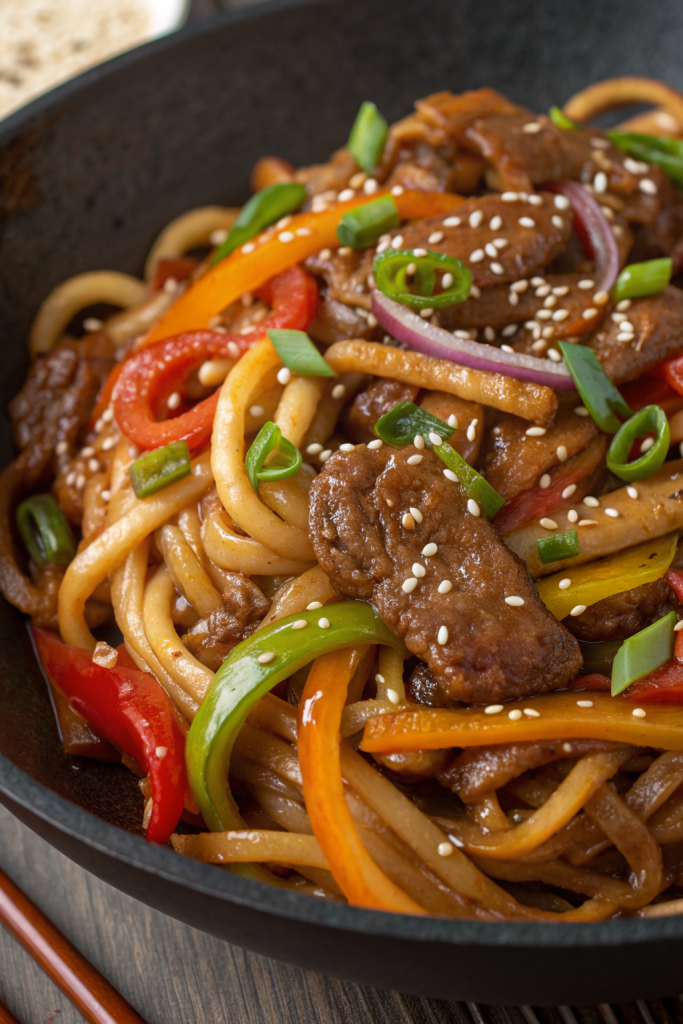
Beef Udon Noodles Recipe hits that perfect cozy spot: chewy udon, tender beef, and a savory-sweet broth that tastes like a hug in a bowl. It works on busy weeknights, date nights, or meal prep, and you can get it on the table in about 30–35 minutes. I tested versions of this in my tiny apartment kitchen while my smoke alarm judged me, so you get the polished version without the chaos.
Why Beef Udon Noodles Recipe Is Worth It
You get restaurant-style beef udon at home with simple grocery store ingredients and one pot plus one pan. The broth tastes rich and complex, but you build it in minutes with soy sauce, mirin, and a quick beef fond from the pan.
Thick udon noodles soak up all that flavor and stay bouncy, not mushy. You can keep it mild for kids or crank up the chili oil for spice lovers without changing the base recipe.
“This Beef Udon Noodles Recipe tastes like a cozy Japanese noodle shop at home, but on a weeknight schedule. ★★★★★”
Ingredients You Need
Udon & Beef
- 14–16 oz fresh or frozen udon noodles
- Fresh or frozen udon hold their chew best.
- Use shelf-stable udon in a pinch; just cook them slightly under package time.
- 3/4–1 lb beef, thinly sliced
- Use ribeye, sirloin, flank, or hot pot–style shaved beef.
- Ask the butcher to slice it thin, or partially freeze the meat at home and slice it yourself.
Broth Base
- 4 cups low-sodium beef broth or stock
- Low-sodium broth gives you better control over seasoning.
- 1–1.5 cups water (to adjust saltiness and broth volume)
- 1/4 cup soy sauce
- Use regular Japanese-style soy sauce if possible; low-sodium works too.
- 2–3 tbsp mirin
- Adds gentle sweetness and depth; if you skip it, add 1–2 tsp sugar.
- 1–2 tbsp sake (optional, if you cook with it)
- Skip if you avoid alcohol; add a splash more broth instead.
- 1–2 tsp sugar, to taste
- Adjust based on how salty your broth tastes.
- 1 tsp toasted sesame oil
- 1–1.5 tsp dashi powder (optional but tasty shortcut)
- Instant dashi gives that classic Japanese noodle shop flavor.
- If you skip it, the soup still tastes great, just slightly less “udon shop” style.
Aromatics & Veggies
- 1 small yellow onion, thinly sliced
- 2–3 cloves garlic, minced
- 1–2 tsp fresh ginger, grated or minced
- 1–2 cups sliced mushrooms (shiitake, cremini, or button)
- 2–3 green onions, thinly sliced (white and green parts separated)
- 1 small carrot, julienned or thinly sliced (optional)
- 1–2 cups baby spinach or chopped bok choy
Toppings & Finishing
- 1–2 soft-boiled eggs or jammy eggs per bowl (optional but amazing)
- Chili oil or shichimi togarashi (Japanese seven-spice)
- Toasted sesame seeds
- Extra sliced green onions
Pantry Shortcuts
- Use pre-minced garlic and ginger from a jar when you feel tired.
- Use bagged pre-sliced mushrooms and pre-washed baby spinach.
- Use instant dashi powder instead of making dashi from scratch.
Equipment List
- Large pot for boiling udon and simmering broth
- Large skillet or sauté pan for browning beef
- Cutting board and sharp knife
- Tongs or chopsticks for handling noodles and beef
- Ladle for serving broth
- Small pot if you cook soft-boiled eggs
Quick Tips & substitutions
- Slice beef very thin so it cooks in 1–2 minutes and stays tender.
- Partially freeze beef for 20–30 minutes to make thin slicing easier.
- Use chicken or vegetable broth if you run out of beef broth.
- Skip dashi powder if you cannot find it; add a bit more soy sauce and ginger.
- Use frozen udon straight from the freezer; do not thaw first.
- Undercook shelf-stable udon by 1 minute so they stay chewy in the broth.
- Swap beef with thinly sliced chicken thighs or pork if you prefer.
- Use extra-firm tofu cubes or seared mushrooms for a meatless version.
- Add more water if the broth tastes too salty; simmer a bit longer if it tastes too mild.
- Cook noodles separately and rinse them if you plan leftovers, so they do not soak up all the broth.
How to Make Beef Udon Noodles Recipe
Step 1: Prep the Ingredients
Slice the beef thinly across the grain and pat it dry with paper towels. Slice onion, mushrooms, carrot, and green onions, and mince garlic and ginger. Set the green onion tops aside for garnish so they stay bright and fresh.
If you want soft-boiled eggs, start a small pot of water and cook eggs 6–7 minutes, then chill them in ice water. Peel them once they cool and keep them in the fridge until serving time.
Step 2: Cook the Udon Noodles
Bring a large pot of water to a boil. Add udon noodles and cook according to package directions, but shave off about 1 minute so they stay extra chewy. Stir gently with chopsticks or tongs to separate strands.
Drain the noodles. Rinse briefly under warm water if they feel very starchy, then toss with a tiny drizzle of sesame oil so they do not clump. Set them aside while you build the broth and beef.
Step 3: Brown the Beef
Heat a large skillet over medium-high heat and add a thin layer of neutral oil. Add the sliced beef in a single layer and season lightly with salt and pepper. Sear quickly until the beef browns on the edges but still looks slightly pink inside.
Work in batches so the beef sears instead of steams. Transfer the browned beef to a bowl and keep any juices; that liquid holds a ton of flavor.
Step 4: Sauté Aromatics and Veggies
In the same skillet, lower the heat to medium and add a bit more oil if the pan looks dry. Add sliced onion and cook until it softens and turns lightly golden on the edges. Stir in garlic and ginger and cook about 30 seconds until fragrant.
Add mushrooms and carrot and cook until the mushrooms soften and release some moisture. Scrape up any browned bits from the bottom of the pan with a wooden spoon; those bits flavor the broth later.
Step 5: Build the Broth
Pour beef broth and water into the large pot you used for noodles. Add soy sauce, mirin, sugar, sesame oil, and dashi powder if you use it. Stir well and bring the mixture to a gentle simmer over medium heat.
Transfer the sautéed veggies and any pan juices into the pot. Taste the broth and adjust with more soy sauce for salt, more sugar for balance, or a splash of water if it tastes too strong.
Step 6: Finish the Beef in the Broth
Add the browned beef and any juices into the simmering broth. Let it simmer gently for 2–3 minutes so the flavors mingle and the beef finishes cooking. Add the white parts of the green onions and cook 1 more minute.
Stir in spinach or bok choy and cook just until the greens wilt and turn bright. Turn the heat to low so the broth stays hot but does not boil hard.
Step 7: Warm the Noodles in the Broth
Add the cooked udon noodles to the pot right before serving. Use tongs or chopsticks to gently separate and warm them in the broth for 1–2 minutes. Do not boil them hard or they soften too much.
Taste the broth one last time and adjust seasoning. If you like a richer flavor, add a tiny drizzle more sesame oil or a pinch of dashi powder.
Step 8: Assemble and Garnish
Ladle noodles and beef into deep bowls, then pour hot broth and veggies over the top. Halve the soft-boiled eggs and nestle them on the noodles. Sprinkle with green onion tops, toasted sesame seeds, and a pinch of shichimi togarashi or a drizzle of chili oil.
Serve the Beef Udon Noodles Recipe piping hot while the noodles stay bouncy and the broth steams. Keep extra chili oil and green onions on the table so everyone can customize their bowl.
Recipe Variations
- Gluten-free: Use gluten-free tamari instead of soy sauce and gluten-free udon or thick rice noodles.
- Vegan: Swap beef broth with vegetable broth, use dashi made from kombu and shiitake, and replace beef with tofu and extra mushrooms.
- Low carb: Use shirataki noodles or spiralized zucchini instead of udon and increase the beef and veggies.
- Extra protein: Add more beef, tofu, or a second egg per bowl.
- Spicy version: Add chili oil, gochujang, or extra shichimi togarashi right into the broth.
- Veggie-packed: Double the mushrooms, add snap peas, napa cabbage, or bean sprouts.
Ways to Serve Beef Udon Noodles Recipe
- Pair with a simple cucumber salad with rice vinegar and sesame seeds.
- Serve with steamed edamame and a sprinkle of sea salt.
- Add a side of quick pickled veggies for crunch and brightness.
- Offer small bowls of kimchi or radish pickles for a spicy kick.
- Pack leftovers in a thermos for a warm lunch at work or school.
Storage Success
Cool the Beef Udon Noodles Recipe slightly, then store broth and noodles in separate airtight containers when possible. Keep them in the fridge for up to 3 days. Reheat the broth on the stove until hot, then add noodles and beef just long enough to warm through so they keep a good texture. If the broth thickens or reduces, add a splash of water while it heats and taste again for seasoning.
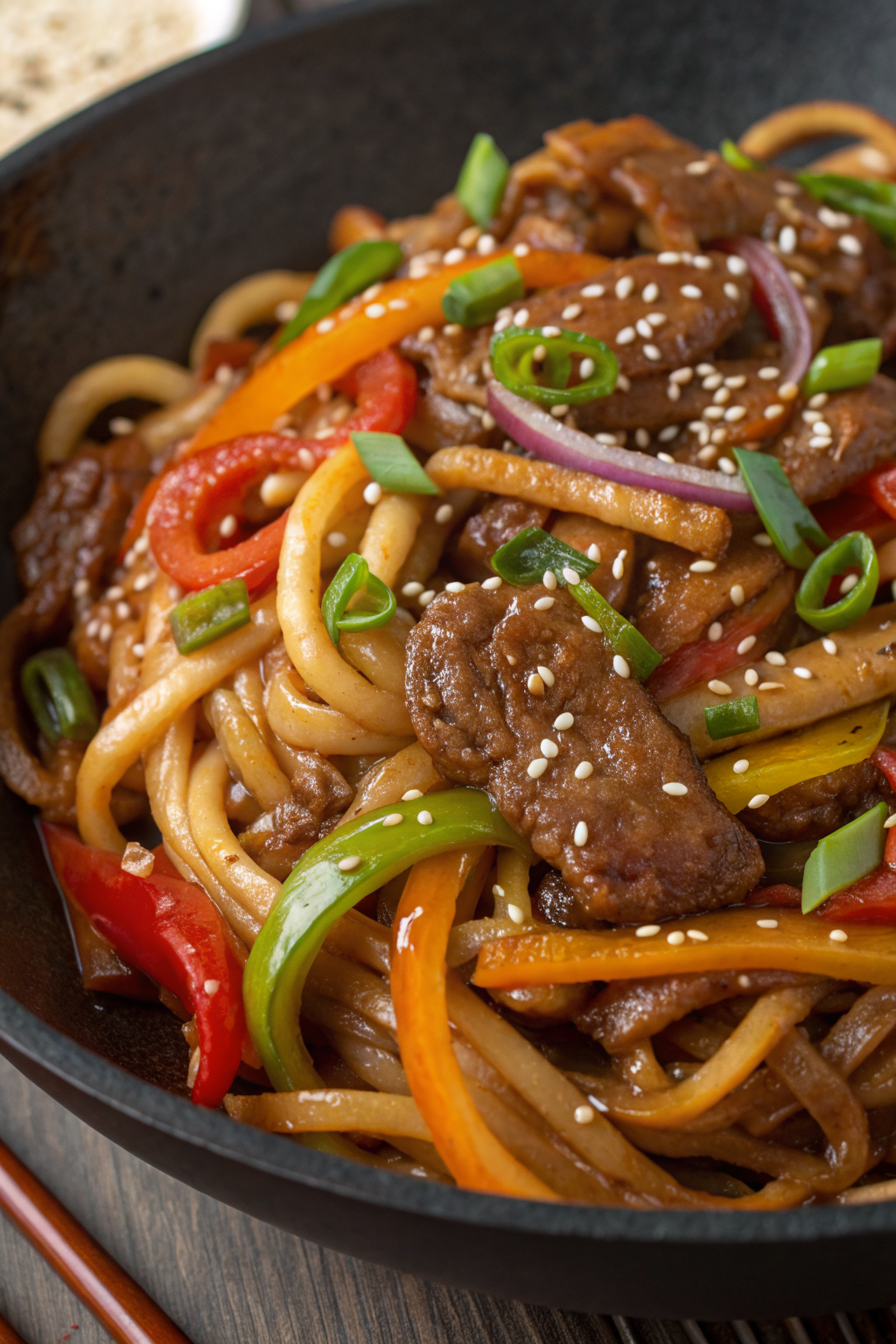
Beef Udon Noodles Recipe
Ingredients
Instructions
- Slice the beef thinly across the grain and pat dry with paper towels. Slice the onion, mushrooms, carrot, and green onions, keeping the green onion tops separate for garnish. Mince the garlic and ginger.
- If using soft-boiled eggs, bring a small pot of water to a boil. Gently lower in the eggs and cook for 6–7 minutes. Transfer to an ice bath to cool, then peel and refrigerate until serving.
- Bring a large pot of water to a boil. Add the udon noodles and cook according to package directions, reducing the cook time by about 1 minute so they stay extra chewy.
- Drain the noodles. Rinse briefly under warm water if very starchy, then toss with a tiny drizzle of sesame oil to prevent clumping. Set aside.
- Heat a large skillet over medium-high heat and add a thin layer of neutral oil. Add the sliced beef in a single layer, seasoning lightly with salt and pepper.
- Sear quickly until the beef is browned on the edges but still slightly pink inside. Work in batches so the beef sears instead of steams. Transfer the browned beef and any juices to a bowl and set aside.
- In the same skillet, reduce the heat to medium and add a bit more oil if needed. Add the sliced onion and cook until softened and lightly golden on the edges.
- Stir in the garlic and ginger and cook for about 30 seconds until fragrant.
- Add the mushrooms and carrot and cook until the mushrooms soften and release some moisture, scraping up any browned bits from the pan.
- In the large pot used for the noodles, add the beef broth and 1 cup of water. Stir in the soy sauce, mirin, sugar, sesame oil, and dashi powder if using.
- Bring the broth to a gentle simmer over medium heat. Add the sautéed vegetables and any pan juices. Taste and adjust with more soy sauce for salt, a bit more sugar for balance, or additional water if the flavor is too strong.
- Add the browned beef and any accumulated juices to the simmering broth. Cook gently for 2–3 minutes so the beef finishes cooking and the flavors meld.
- Stir in the white parts of the green onions and cook for 1 minute. Add the spinach or bok choy and cook just until the greens wilt and turn bright. Reduce the heat to low to keep the broth hot without boiling.
- Add the cooked udon noodles to the pot just before serving. Gently loosen and warm them in the broth for 1–2 minutes without boiling hard so they stay bouncy.
- Taste the broth and adjust seasoning as needed. For a richer flavor, add a small drizzle more sesame oil or a pinch more dashi powder.
- Ladle noodles, beef, and vegetables into deep bowls and pour hot broth over the top. Halve the soft-boiled eggs and nestle on the noodles if using.
- Garnish with green onion tops, toasted sesame seeds, and a pinch of shichimi togarashi or a drizzle of chili oil. Serve immediately while hot.
Notes
Approximate per serving (4 servings): 550–650 calories; fat 18–24 g; saturated fat 6–9 g; carbohydrates 70–85 g; fiber 4–6 g; sugars 8–12 g; protein 28–35 g; sodium 1600–2100 mg. Values will vary based on broth, soy sauce, beef cut, noodle brand, and toppings used.