
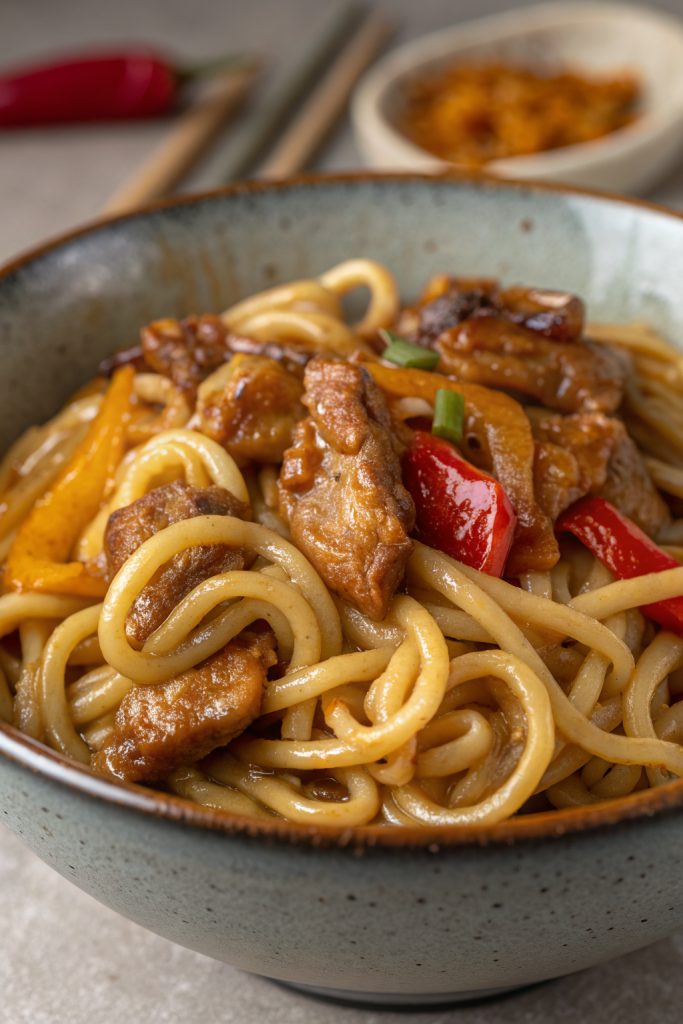
Bulgogi Beef Udon Stir Fry Recipe tastes sweet, savory, and a little smoky with chewy noodles and tender beef, perfect for busy weeknights in under 40 minutes. It suits anyone who loves takeout-style noodles but wants more control over ingredients and flavor. I first tested this on a Monday when my energy felt low and my noodle cravings felt high, and it instantly joined my weeknight rotation.
Why Make This Bulgogi Beef Udon Stir Fry Recipe at Home
You control the sweetness, spice, and veggie load, so the dish fits your taste instead of a generic takeout version. The beef turns incredibly tender, the udon stays bouncy, and the sauce clings to every strand in a way that often beats restaurant noodles.
You also use one pan and a simple marinade, so cleanup stays easy and the process feels relaxed. Once you slice the beef and whisk the sauce, the actual cooking flies by in about 10 minutes.
“This Bulgogi Beef Udon Stir Fry Recipe tastes like my favorite noodle shop but fresher, hotter, and way more satisfying at home. ★★★★★”
Ingredients You Need
Beef & Marinade
- 1 pound beef ribeye or sirloin, very thinly sliced across the grain
- Ask the butcher to slice it thin for stir fry, or partially freeze the steak for 30 minutes and slice it yourself.
- 3 tablespoons soy sauce (use low sodium if you watch salt)
- 2 tablespoons brown sugar or Korean pear juice
- Brown sugar gives caramel notes, while pear juice adds classic bulgogi tenderness.
- 1 tablespoon mirin or apple juice
- 1 tablespoon toasted sesame oil
- 1 tablespoon grated fresh ginger
- 3 cloves garlic, minced or grated
- 1 to 2 tablespoons gochujang (Korean chili paste), to taste
- Use 1 tablespoon for mild heat, 2 for a nice kick.
- 1 tablespoon neutral oil (canola, avocado, or grapeseed) for stir frying the beef
Udon & Vegetables
- 14 to 16 ounces fresh or vacuum-packed udon noodles
- Shelf-stable vacuum-packed udon works great and keeps in the pantry.
- 1 tablespoon neutral oil for the noodles and veggies
- 1 small yellow onion, thinly sliced
- 1 cup carrots, matchstick or thinly sliced
- 1 cup bell pepper strips (red or yellow taste sweetest)
- 1 to 1½ cups shredded green cabbage or napa cabbage
- 4 to 5 green onions, sliced (white and green parts separated)
- 1 cup mushrooms, sliced (shiitake or cremini taste best)
Extra Sauce (for stir fry stage)
This extra sauce helps the noodles stay glossy and flavorful.
- 2 tablespoons soy sauce
- 1 tablespoon oyster sauce or vegetarian stir fry sauce
- 1 tablespoon water or low sodium broth
- 1 teaspoon brown sugar or honey
- 1 teaspoon toasted sesame oil
Garnishes
- Toasted sesame seeds
- Extra sliced green onions
- Thinly sliced fresh chili or a sprinkle of gochugaru (Korean chili flakes), optional
Equipment List
- Large nonstick skillet or wok
- Mixing bowl for marinade
- Cutting board and sharp knife
- Tongs or chopsticks for tossing noodles
- Small bowl for extra sauce
- Colander if you need to loosen or rinse udon
Tips & Mistakes
- Slice beef very thin so it cooks fast and stays tender.
- Marinate at least 20 minutes so the flavors soak in; overnight in the fridge gives deeper flavor.
- Do not overcrowd the pan with beef; cook in batches so the meat browns instead of steaming.
- Use high heat during stir fry so the sauce caramelizes and the noodles pick up smoky flavor.
- Loosen vacuum-packed udon in hot water for 1 to 2 minutes so the strands separate easily.
- Do not overcook udon; keep them chewy or they turn mushy in the pan.
- Add vegetables in stages; start with firm veggies like carrots and onions, then add softer ones like cabbage and mushrooms.
- Taste the sauce before adding more sugar; bulgogi can turn too sweet quickly.
- Keep a little extra broth or water nearby; splash it in if the noodles look dry or sticky.
- Use a large pan; cramped noodles clump and burn instead of stir frying.
How to Make Bulgogi Beef Udon Stir Fry Recipe
Step 1: Slice and Marinate the Beef
Place the beef in the freezer for 20 to 30 minutes so it firms up slightly. Slice it very thin across the grain, about 1/8 inch thick, and place it in a mixing bowl.
Add soy sauce, brown sugar or pear juice, mirin, sesame oil, ginger, garlic, and gochujang to the bowl. Toss the beef until every slice looks coated, then cover and chill for at least 20 minutes and up to 24 hours.
Step 2: Prep the Udon Noodles
If you use vacuum-packed udon, place the bricks of noodles in a bowl and cover them with very hot tap water. Gently separate the strands with chopsticks or tongs until they loosen.
Drain the noodles well and set them aside. If you use frozen udon, cook them according to package directions until just tender, then drain and rinse quickly under cool water to stop the cooking.
Step 3: Mix the Extra Stir Fry Sauce
In a small bowl, whisk soy sauce, oyster sauce, water or broth, brown sugar or honey, and sesame oil. Taste and adjust salt or sweetness as needed.
Keep this bowl near the stove so you can grab it quickly during the stir fry. This little sauce pulls the whole dish together and coats the udon beautifully.
Step 4: Stir Fry the Beef
Heat 1 tablespoon neutral oil in a large skillet or wok over medium high heat until it shimmers. Add half the marinated beef in a single layer.
Let it sear for about 1 minute without moving, then stir and cook another 1 to 2 minutes until the beef looks browned and just cooked through. Transfer to a plate, then repeat with the remaining beef and set all the cooked beef aside.
Step 5: Cook the Vegetables
In the same pan, add 1 tablespoon neutral oil if the pan looks dry. Add the white parts of the green onions, sliced onion, and carrots.
Stir fry 2 to 3 minutes until they soften slightly. Add bell peppers, mushrooms, and cabbage, then cook another 2 to 3 minutes until the veggies turn crisp tender and bright.
Step 6: Add Udon and Sauce
Add the drained udon noodles to the pan with the vegetables. Pour the extra stir fry sauce over the top.
Use tongs to lift and toss the noodles so they mix with the veggies and soak up the sauce. If the noodles clump, gently separate them and add a splash of water or broth to loosen everything.
Step 7: Bring the Beef Back
Return the cooked bulgogi beef and any juices from the plate to the pan. Toss everything together for 1 to 2 minutes over medium high heat.
Add most of the green onion tops and a sprinkle of sesame seeds. Taste and adjust with a little more soy sauce or gochujang if you want more salt or heat.
Step 8: Finish and Serve
Turn off the heat and let the noodles sit for 1 minute so the flavors settle. Sprinkle more sesame seeds and the remaining green onions over the top.
If you like extra spice, add sliced fresh chili or a pinch of gochugaru. Serve hot while the noodles stay bouncy and the beef tastes juicy.
Variations I've Tried
Swap the beef for thinly sliced chicken thighs and marinate the same way; the chicken turns juicy and soaks up the bulgogi flavors beautifully. Use tofu or tempeh for a meatless version and pan fry it until golden before you add the sauce and veggies.
Change up the vegetables with broccoli florets, snap peas, or baby spinach if that matches what you have in the fridge. Add a soft fried egg or jammy boiled egg on top for extra richness and protein.
Use thick udon for maximum chew or try a mix of udon and sweet potato glass noodles for a fun texture combo. If you prefer lighter sauce, cut the sugar slightly and add a squeeze of lime at the end for brightness.
How to Serve Bulgogi Beef Udon Stir Fry Recipe
Serve this Bulgogi Beef Udon Stir Fry Recipe straight from the pan into warm bowls so the steam hits your face and the noodles stay glossy. Add simple sides like cucumber salad, kimchi, or steamed edamame to round out the meal. A bowl of miso soup or clear vegetable broth pairs nicely and keeps the meal cozy without feeling heavy. Kids often love this dish if you keep the gochujang mild and add extra veggies they already enjoy.
How to store
- Cool leftovers to room temperature within 30 minutes, then place them in an airtight container and store in the fridge for up to 3 days.
- Freeze portions in freezer-safe containers or bags for up to 2 months; press out extra air to prevent ice crystals.
- Reheat on the stovetop over medium heat with a splash of water or broth, tossing often until hot and steamy.
- Use the microwave in short bursts, stirring between each round, and add a few drops of sesame oil at the end to refresh the flavor.
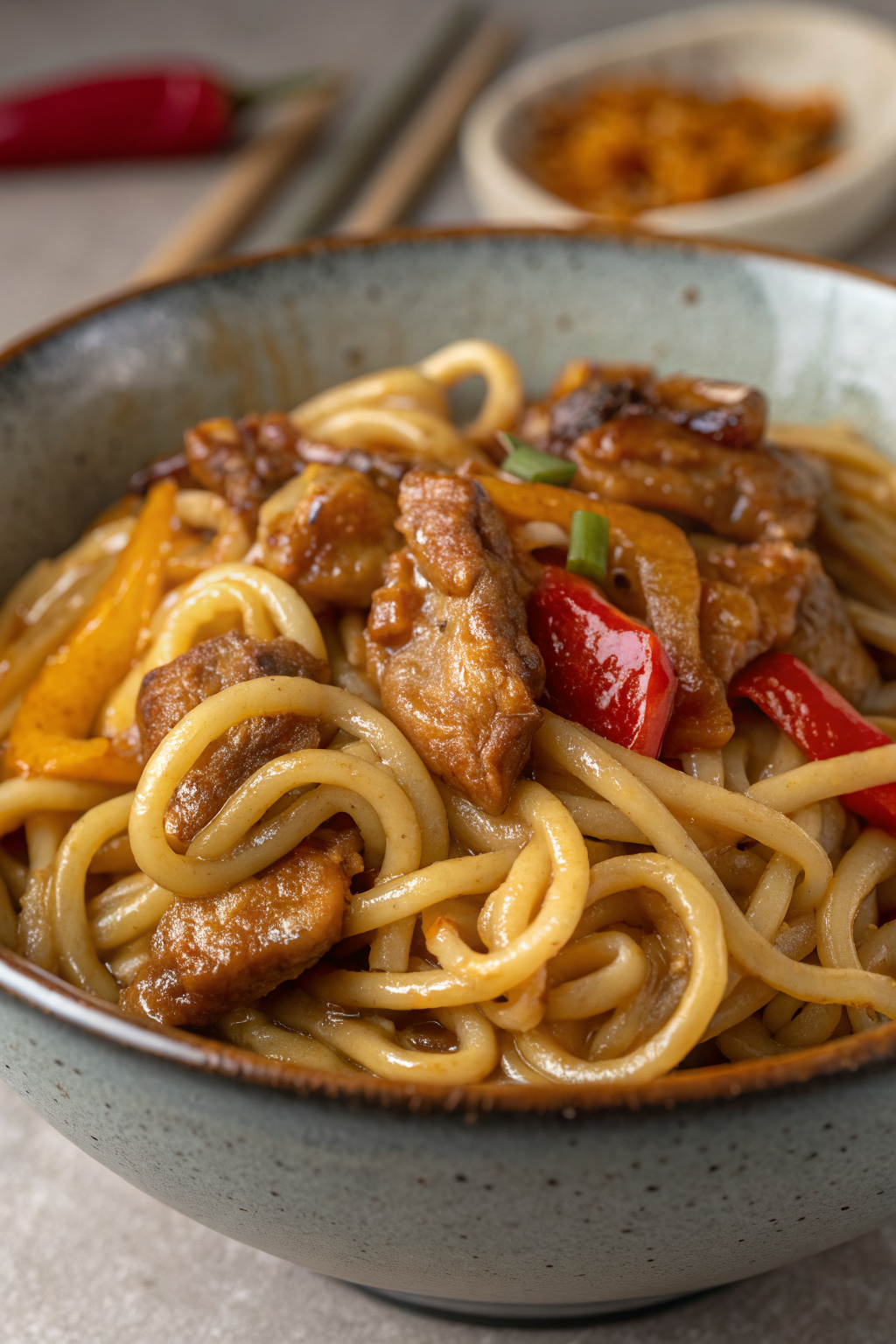
Bulgogi Beef Udon Stir Fry Recipe
Ingredients
Instructions
- Place the beef in the freezer for 20 to 30 minutes to firm up, then slice very thinly across the grain and add to a mixing bowl.
- Add soy sauce, brown sugar or pear juice, mirin, sesame oil, ginger, garlic, and gochujang to the bowl. Toss until the beef is well coated, then cover and marinate in the refrigerator for at least 20 minutes or up to 24 hours.
- Loosen fresh or vacuum-packed udon noodles in very hot tap water until the strands separate, then drain well. If using frozen udon, cook according to package directions until just tender, drain, and rinse quickly under cool water.
- In a small bowl, whisk together soy sauce, oyster sauce, water or broth, brown sugar or honey, and sesame oil for the extra stir fry sauce. Set near the stove.
- Heat 1 tablespoon neutral oil in a large skillet or wok over medium-high heat. Add half of the marinated beef in a single layer and sear for about 1 minute without moving, then stir and cook 1 to 2 minutes more until just cooked through. Transfer to a plate and repeat with the remaining beef. Set all cooked beef aside.
- In the same pan, add 1 tablespoon neutral oil if needed. Add the white parts of the green onions, sliced onion, and carrots. Stir fry for 2 to 3 minutes until slightly softened.
- Add bell peppers, mushrooms, and cabbage to the pan and cook for another 2 to 3 minutes until the vegetables are crisp-tender.
- Add the drained udon noodles to the pan with the vegetables. Pour the extra stir fry sauce over the top and toss with tongs until the noodles are coated and mixed with the vegetables, adding a splash of water or broth if they seem dry or clump together.
- Return the cooked bulgogi beef and any accumulated juices to the pan. Toss everything together over medium-high heat for 1 to 2 minutes. Stir in most of the green onion tops and a sprinkle of sesame seeds, then taste and adjust with more soy sauce or gochujang if desired.
- Turn off the heat and let the noodles rest for 1 minute. Sprinkle with additional sesame seeds, remaining green onions, and fresh chili or gochugaru if using. Serve hot.
Notes
Approximate per serving (1/4 of recipe): 580 calories; fat 24 g; saturated fat 7 g; carbohydrates 63 g; fiber 4 g; sugars 16 g; protein 30 g; sodium 1550 mg. Values are estimates and will vary based on specific ingredients, brands, and portion sizes.