
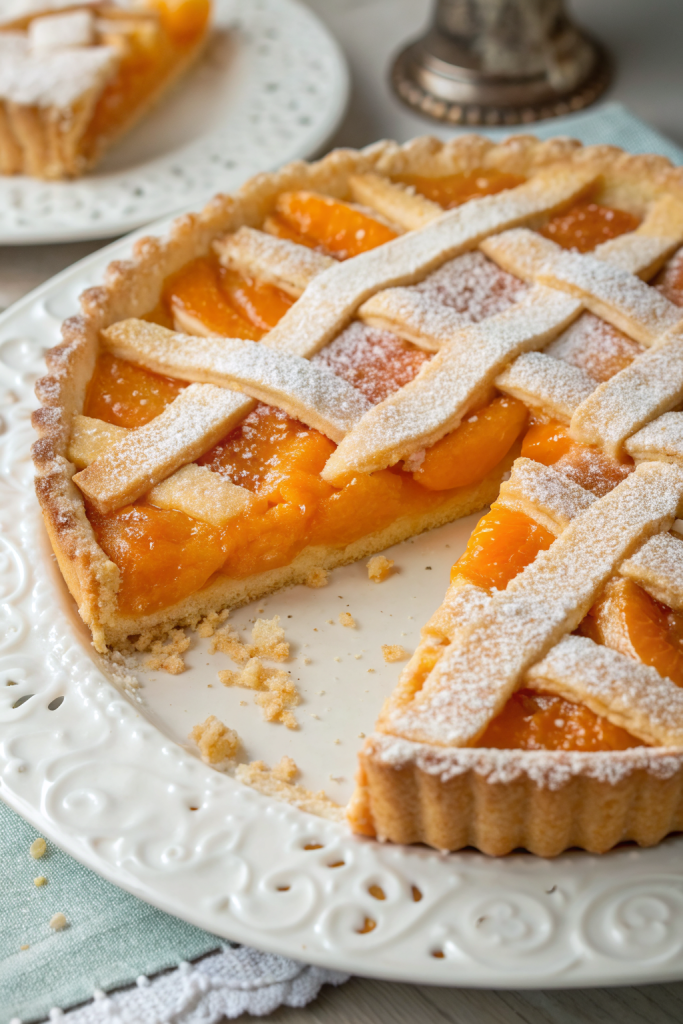
Classic Apricot Pie with Flaky Butter Crust tastes bright, buttery, and just a little bit tart in the best “summer on a plate” kind of way. It works perfectly for bakers who want a classic fruit pie that feels special yet fits into a weekend afternoon, with a total time of about 2 ½ hours including chilling and baking. I grew up in a house where fruit pies counted as breakfast, so I take this particular recipe very seriously.
Why Choose This Classic Apricot Pie with Flaky Butter Crust
This pie balances sweet and tangy flavors, so it never tastes sugary or flat. The apricots stay juicy but not soupy, and the butter crust bakes up crisp on the bottom with flaky layers on top.
You can use fresh or frozen apricots, so you can bake it outside of peak summer. The recipe uses simple pantry ingredients and clear steps, so even a nervous pie baker can pull it off without stress.
“This Classic Apricot Pie with Flaky Butter Crust tastes like a bakery showpiece but bakes up in a home kitchen without drama. ★★★★★”
Ingredients You’ll Need
For the flaky butter crust (double crust)
- 2 ½ cups (300 g) all-purpose flour
- 1 tablespoon granulated sugar
- 1 teaspoon fine sea salt
- 1 cup (2 sticks / 226 g) cold unsalted butter, cut into small cubes
- I prefer a high-fat European-style butter for extra flavor, but any good-quality unsalted butter works.
- ½ cup to ¾ cup ice-cold water, as needed
- Keep a cup of ice water nearby and add slowly so the dough stays tender.
For the apricot filling
- 6 cups fresh apricots, pitted and sliced (about 2 to 2 ½ pounds)
- You can use frozen sliced apricots without thawing fully; just break up any big clumps.
- ¾ to 1 cup granulated sugar, to taste
- Use ¾ cup for very ripe, sweet apricots and closer to 1 cup for firm or tart fruit.
- ¼ cup light brown sugar, packed
- ¼ cup cornstarch
- You can swap with ⅓ cup tapioca starch or ¼ cup quick-cooking tapioca.
- 1 tablespoon fresh lemon juice
- 1 teaspoon vanilla extract
- ¼ teaspoon almond extract
- Almond pairs beautifully with apricots, but you can skip it if you dislike almond flavor.
- ¼ teaspoon fine sea salt
- 1 tablespoon cold unsalted butter, cut into tiny pieces, for dotting the filling
For finishing
- 1 egg, beaten with 1 tablespoon milk or cream, for egg wash
- 1 to 2 tablespoons coarse sugar or granulated sugar, for sprinkling on top
Helpful equipment
- 9-inch standard pie dish (glass or metal; avoid deep dish for this recipe)
- Rolling pin
- Large mixing bowl
- Small bowl for egg wash
- Pastry blender, food processor, or two forks for cutting butter into flour
- Plastic wrap
- Sharp knife or pastry wheel
- Baking sheet lined with parchment to catch drips
- Cooling rack
Tips & Tricks
- Chill everything: Keep butter, flour, and water cold so the crust bakes up flaky instead of tough.
- Use visual cues: Stop adding water when the dough holds together in clumps that you can squeeze, not when it looks perfectly smooth.
- Rest the dough: Chill the wrapped dough discs at least 1 hour so the gluten relaxes and the butter firms up.
- Keep apricots juicy, not watery: Toss the fruit with sugar and cornstarch right before filling the crust so it does not release too much liquid.
- Taste the fruit: Adjust sugar based on how sweet or tart your apricots taste so the filling stays balanced.
- Avoid soggy bottoms: Bake the pie on the lowest oven rack on a preheated baking sheet so the bottom crust sets and browns.
- Protect the edges: Cover the crust edges with foil or a pie shield once they turn golden so they do not burn.
- Let it cool: Allow the pie to cool at least 3 hours so the filling thickens and slices hold together.
- Slice with confidence: Use a sharp, thin knife and wipe between cuts for neat wedges.
- Reheat gently: Warm slices in a low oven instead of a microwave to keep the crust crisp.
How to Make Classic Apricot Pie with Flaky Butter Crust
Mix the flaky butter crust
-
In a large bowl, whisk together the flour, sugar, and salt.
-
Add the cold butter cubes and toss them in the flour so they coat evenly.
-
Cut the butter into the flour with a pastry blender, two forks, or short pulses in a food processor until you see pea-sized bits of butter with some slightly larger pieces.
-
Sprinkle in ½ cup of ice-cold water, a few tablespoons at a time, while you toss the mixture with a fork.
-
Squeeze a small handful of dough; if it holds together without crumbling, stop adding water.
-
If it still feels dry and crumbly, add more water 1 tablespoon at a time until it just comes together in clumps.
-
Divide the dough into two equal portions.
-
Gently press each portion into a disc about 1 inch thick, wrap tightly in plastic, and label one as “bottom” and one as “top” if that helps you stay organized.
-
Chill both discs in the refrigerator for at least 1 hour and up to 2 days.
Prepare the apricot filling
-
While the dough chills, pit and slice the apricots into wedges about ½ inch thick.
-
Taste a slice and decide how much sugar you want to use based on sweetness.
-
In a large bowl, combine granulated sugar, brown sugar, cornstarch, salt, lemon juice, vanilla, and almond extract.
-
Add the apricot slices to the bowl and toss gently until every piece looks coated and glossy.
-
Let the mixture sit about 10 minutes while you roll out the crust so the sugar starts to draw out a little juice.
-
Stir again before you add the filling to the crust so the cornstarch distributes evenly.
Roll out the bottom crust
-
Lightly flour your work surface and rolling pin.
-
Take one dough disc from the fridge and let it sit at room temperature for 5 minutes so it softens slightly.
-
Roll from the center outward, turning the dough a quarter turn every few rolls, until you have a circle about 12 inches wide.
-
Gently roll the dough around the rolling pin and unroll it over your 9-inch pie dish.
-
Ease the dough into the corners of the dish without stretching it, and let the excess hang over the edges.
-
Place the pie dish in the fridge while you roll the top crust so the bottom crust stays cold.
Fill the pie
-
Give the apricot filling a final stir.
-
Take the pie dish from the fridge and pour the filling into the crust, scraping out all the juices and sugar from the bowl.
-
Spread the fruit into an even layer and gently mound it slightly higher in the center.
-
Dot the top of the fruit with the small pieces of cold butter.
-
Keep the filled pie in the fridge while you roll the top crust so everything stays chilled.
Roll out and place the top crust
-
Roll the second dough disc into another 12-inch circle on a lightly floured surface.
-
You can keep it whole for a classic top crust or cut it into strips for a lattice.
-
For a whole top, roll the dough around the pin and unroll it over the chilled, filled pie.
-
For a lattice, cut strips about ½ to ¾ inch wide and lay half in one direction over the pie.
-
Weave the remaining strips over and under to form a simple lattice pattern.
-
Trim the overhang so you keep about ½ inch of dough all around the edge.
-
Fold the edges of the top and bottom crust together under themselves to seal.
-
Crimp the edges with your fingers or a fork to create a decorative border.
-
If you use a full top crust, cut 4 to 6 small slits in the center so steam can escape.
Chill the assembled pie and preheat the oven
- Place the assembled pie in the fridge for at least 20 to 30 minutes so the crust firms up again.
- While it chills, preheat your oven to 400°F (200°C).
- Place a parchment-lined baking sheet on the lowest rack so it heats up and catches any drips later.
Add egg wash and sugar
- In a small bowl, whisk the egg with the milk or cream until smooth.
- Brush the top crust and crimped edges lightly with the egg wash; do not soak it or it may pool.
- Sprinkle the top with coarse or granulated sugar for sparkle and a little crunch.
Bake the pie
-
Set the chilled pie on the preheated baking sheet on the lowest rack.
-
Bake at 400°F for 20 minutes so the crust sets and starts to brown.
-
Lower the oven temperature to 350°F (175°C) and continue baking 35 to 45 minutes.
-
Watch for a deeply golden crust and thick, bubbling juices around the edges and possibly through the vents.
-
If the edges brown too quickly, cover them loosely with strips of foil or a pie shield.
-
When the filling bubbles steadily and the crust looks golden and crisp, remove the pie from the oven and place it on a cooling rack.
Cool and slice
-
Let the Classic Apricot Pie with Flaky Butter Crust cool at room temperature for at least 3 hours.
-
This cooling time allows the cornstarch to set the juices so the slices hold together.
-
Slice with a sharp knife and use a pie server to lift each wedge gently from the dish.
-
Serve slightly warm or at room temperature.
-
Add a scoop of vanilla ice cream, a spoonful of whipped cream, or a dollop of plain Greek yogurt if you want a not-too-sweet topping.
What to Serve with Classic Apricot Pie with Flaky Butter Crust
Classic Apricot Pie with Flaky Butter Crust pairs beautifully with vanilla ice cream, lightly sweetened whipped cream, or a spoonful of crème fraîche if you like a tangy contrast. You can also serve it with a scoop of plain or vanilla Greek yogurt for a brunch-style dessert that feels almost virtuous. For drinks, think iced tea, lemonade, cold brew coffee, or a simple glass of cold milk. If you serve it after dinner, offer hot coffee or herbal tea to keep the focus on the fruit and buttery crust.
Storage Options
- Store leftover pie covered at room temperature for up to 1 day if your kitchen stays cool, then move it to the fridge.
- In the refrigerator, keep the pie tightly covered for up to 4 days; the crust stays crispest in the first 2 days.
- To freeze, wrap individual slices or the whole cooled pie tightly in plastic, then in foil, and freeze for up to 2 months.
- Reheat slices in a 300°F (150°C) oven for 10 to 15 minutes until warm and crisp, or reheat a whole pie at the same temperature for 20 to 30 minutes.