
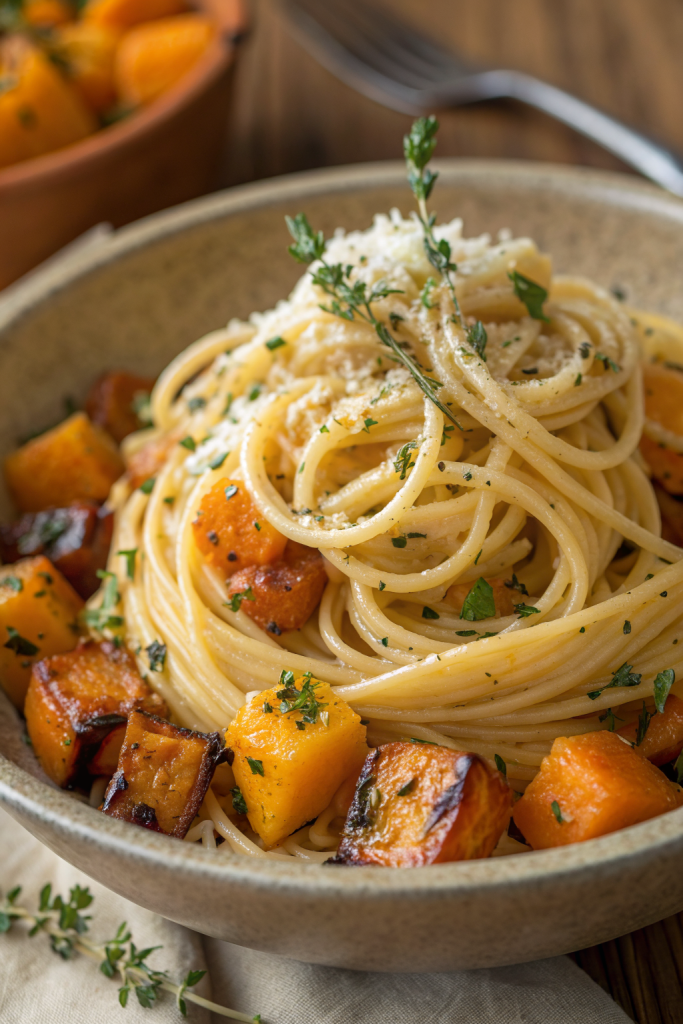
Creamy Lemon Butternut Squash Pasta Recipe tastes silky, bright, and cozy all at once, like mac and cheese that took a Mediterranean vacation. It works perfectly for busy weeknights or casual date nights and usually lands on the table in about 40–45 minutes. I tested this version on my own picky family, and everyone went back for seconds before I even sat down.
Why Creamy Lemon Butternut Squash Pasta Recipe Is Worth It
This pasta hits that perfect balance of creamy, tangy, and slightly sweet from the roasted butternut squash. The lemon cuts through the richness, so the sauce tastes light instead of heavy, even though it coats every noodle.
You use simple ingredients, most from the pantry, and the method stays straightforward enough for a Tuesday night. Leftovers also reheat like a dream, which means you cook once and eat happily twice.
“Ultra-creamy, bright, and cozy, this Creamy Lemon Butternut Squash Pasta Recipe tastes like a restaurant dish that you pulled off in your own kitchen. ★★★★★”
Ingredients You Need
Pasta & Squash
- 12 ounces short pasta
- I like rigatoni, fusilli, or shells because they hold the sauce in all the little curves.
- Use whole wheat or chickpea pasta if you want extra fiber or protein.
- 1 medium butternut squash (about 2–2½ pounds)
- You need about 3 cups diced squash.
- Use pre-cut squash from the produce section to save time.
- 2 tablespoons olive oil
- ½ teaspoon fine sea salt
- ¼ teaspoon black pepper
Aromatics & Flavor
- 1 small yellow onion, diced
- 3–4 garlic cloves, minced
- ½ teaspoon red pepper flakes (optional, adjust to taste)
- 1 teaspoon dried thyme or Italian seasoning
- ½ teaspoon smoked paprika (adds depth and a tiny hint of smokiness)
Creamy Lemon Sauce Base
- 1 cup low-sodium vegetable broth or chicken broth
- Use a good-tasting boxed broth; I like Pacific or Kettle & Fire.
- ½ cup heavy cream
- Swap with half-and-half for a lighter version, or use full-fat coconut milk for dairy-free.
- ½ cup grated Parmesan cheese, plus more for serving
- Use real Parmigiano Reggiano if possible; it melts smoother and tastes nuttier.
- Zest of 1 large lemon
- 2–3 tablespoons fresh lemon juice
- Start with 2 tablespoons, then taste and add more if you want extra brightness.
Finishing Touches
- 2 tablespoons butter
- 2–3 tablespoons chopped fresh parsley or basil
- Extra salt and pepper to taste
Equipment List
- Large baking sheet
- Large pot for boiling pasta
- Large skillet or sauté pan
- Blender or immersion blender
- Cutting board and sharp knife
- Microplane or fine grater for lemon zest and Parmesan
- Tongs or a large spoon for tossing pasta
Quick Tips & substitutions
- Roast pre-cut butternut squash to save about 10–15 minutes of prep.
- Use frozen butternut squash in a pinch; roast it straight from frozen and extend the roasting time slightly.
- Reserve at least 1 cup of starchy pasta water; it turns the sauce silky and helps it cling to the noodles.
- Swap heavy cream with full-fat coconut milk for dairy-free, then use vegan Parmesan or nutritional yeast.
- Use gluten-free pasta and check broth labels if you need a gluten-free Creamy Lemon Butternut Squash Pasta Recipe.
- Stir in a handful of baby spinach or kale at the end for extra greens without extra pans.
- Taste the lemon at the end; add zest for more fragrance or juice for more tang.
- Blend the sauce very smooth for a velvety texture, or pulse it lightly if you like a few tiny squash bits.
How to Make Creamy Lemon Butternut Squash Pasta Recipe
Step 1: Roast the Butternut Squash
- Preheat your oven to 400°F (200°C).
- Peel the butternut squash, slice it in half, scoop out the seeds, and cut it into ½-inch cubes.
- Spread the squash on a baking sheet, drizzle with 2 tablespoons olive oil, and sprinkle with ½ teaspoon salt and ¼ teaspoon pepper.
- Toss everything so the oil coats the squash, then spread it in a single layer.
- Roast for 25–30 minutes, toss once halfway, and cook until the edges look caramelized and the cubes feel tender when you pierce them with a fork.
Step 2: Cook the Pasta
- Bring a large pot of salted water to a boil while the squash roasts.
- Add the pasta and cook until it reaches al dente, following the package time as a guide.
- Scoop out at least 1 cup of pasta water and set it aside.
- Drain the pasta and keep it nearby while you build the sauce.
Step 3: Build the Flavor Base
- Heat a large skillet over medium heat.
- Add 1 tablespoon butter and a drizzle of olive oil if the pan looks dry.
- Add the diced onion and cook for 4–5 minutes, until the onion turns soft and lightly golden around the edges.
- Stir in the garlic, red pepper flakes, dried thyme or Italian seasoning, and smoked paprika.
- Cook for 1–2 minutes, until the garlic smells fragrant and the spices wake up.
Step 4: Blend the Creamy Lemon Butternut Squash Sauce
- Add the roasted butternut squash to the skillet with the onion and garlic mixture.
- Pour in the broth and stir to loosen any browned bits from the bottom of the pan.
- Transfer the mixture to a blender, or use an immersion blender directly in the pan.
- Add the heavy cream, lemon zest, and 2 tablespoons lemon juice.
- Blend until the sauce turns very smooth and creamy; add a splash of pasta water if it looks too thick to blend.
Step 5: Melt in the Cheese and Adjust
- Pour the blended sauce back into the skillet over low heat.
- Stir in the grated Parmesan cheese until it melts and the sauce looks glossy.
- Taste and adjust with more salt, pepper, or lemon juice as needed.
- If the sauce feels too thick, stir in a bit of pasta water until it reaches your ideal consistency.
Step 6: Toss the Pasta
- Add the cooked pasta straight into the skillet with the sauce.
- Toss well so every piece of pasta wears a thick coat of creamy lemon butternut squash sauce.
- Add the remaining tablespoon of butter and a splash of pasta water if the mixture looks tight.
- Stir in the chopped parsley or basil.
- Taste one more time and adjust seasoning so the flavors pop.
Step 7: Serve
- Spoon the pasta into warm bowls.
- Top with extra Parmesan, a sprinkle of herbs, and a tiny pinch of red pepper flakes if you like heat.
- Add a light squeeze of lemon over each bowl right before serving for extra brightness.
Recipe Variations
- Gluten-free: Use gluten-free pasta and confirm your broth and Parmesan labels.
- Vegan: Use olive oil instead of butter, full-fat coconut milk instead of cream, and vegan Parmesan or nutritional yeast.
- Protein boost: Add grilled chicken, sautéed shrimp, or crispy chickpeas on top.
- Extra veggies: Stir in spinach, kale, peas, or roasted broccoli during the final toss.
- Low carb: Serve the sauce over zucchini noodles or spaghetti squash instead of traditional pasta.
- Extra rich: Add an extra splash of cream and a bit more Parmesan for a thicker, ultra-luxurious sauce.
Ways to Serve Creamy Lemon Butternut Squash Pasta Recipe
- Pair with a simple green salad with lemony vinaigrette.
- Add garlic bread or warm crusty bread on the side for sauce swiping.
- Serve with roasted vegetables like broccoli, Brussels sprouts, or carrots.
- Pack it in a thermos for a cozy work or school lunch.
- Top with toasted walnuts or pine nuts for crunch.
Storage Success
Store leftover Creamy Lemon Butternut Squash Pasta Recipe in an airtight container in the fridge for up to 3–4 days. Add a splash of broth, water, or milk when you reheat it on the stove or in the microwave so the sauce turns silky again. Stir gently while it heats so the sauce stays smooth and the pasta warms evenly. If you want to freeze the sauce, freeze it without the pasta, then thaw and toss with freshly cooked noodles.
Creamy Lemon Butternut Squash Pasta Recipe
Ingredients
Instructions
- Preheat the oven to 400°F (200°C).
- Peel the butternut squash, slice it in half, scoop out the seeds, and cut it into 1/2-inch cubes.
- Spread the squash cubes on a large baking sheet, drizzle with olive oil, and sprinkle with fine sea salt and black pepper. Toss to coat and spread into a single layer.
- Roast for 25 to 30 minutes, tossing once halfway through, until the cubes are tender and the edges are caramelized.
- While the squash roasts, bring a large pot of salted water to a boil.
- Add the pasta and cook according to the package directions until al dente.
- Reserve at least 1 cup of the starchy pasta cooking water, then drain the pasta and set it aside.
- Heat a large skillet over medium heat.
- Add 1 tablespoon of butter. If the pan looks dry, add a small drizzle of olive oil.
- Add the diced onion and cook for 4 to 5 minutes, until softened and lightly golden at the edges.
- Stir in the minced garlic, red pepper flakes, dried thyme or Italian seasoning, and smoked paprika. Cook for 1 to 2 minutes, until the garlic is fragrant and the spices are toasted.
- Add the roasted butternut squash to the skillet with the onion and garlic mixture.
- Pour in the broth and stir, scraping up any browned bits from the bottom of the pan.
- Transfer the mixture to a blender, or use an immersion blender directly in the skillet.
- Add the heavy cream, lemon zest, and 2 tablespoons of lemon juice.
- Blend until the sauce is very smooth and creamy. If it is too thick to blend easily, add a splash of reserved pasta water to loosen.
- Return the blended sauce to the skillet over low heat.
- Stir in the grated Parmesan cheese until melted and glossy.
- Taste and season with additional salt, black pepper, or more lemon juice if you want extra brightness. Add more pasta water as needed to reach a silky, pourable consistency.
- Add the cooked pasta to the skillet with the sauce and toss until every piece is well coated.
- Add the remaining 1 tablespoon of butter and a splash of pasta water if the mixture looks too thick, stirring until the butter melts and the sauce clings to the pasta.
- Stir in the chopped parsley or basil and taste once more, adjusting seasoning as needed.
- Serve the pasta in warm bowls, topped with extra Parmesan, more fresh herbs, and a light squeeze of lemon if desired.
Notes
Approximate per serving (4 servings): 540 calories; fat 25 g; saturated fat 13 g; carbohydrates 65 g; fiber 5 g; sugars 6 g; protein 18 g; sodium 620 mg. Values will vary based on exact ingredients, brands, and portion size.