
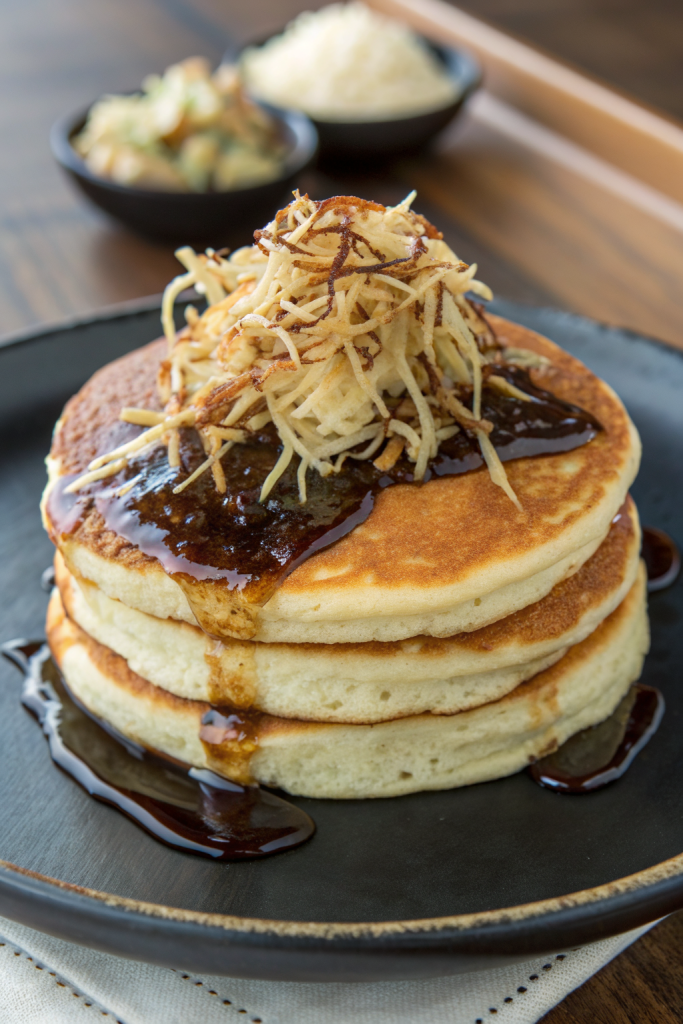
Okonomiyaki Japanese Pancakes Recipe tastes savory, a little sweet, and super satisfying, like a cross between a pancake, a veggie fritter, and your favorite takeout noodle dish. It works for busy weeknights, lazy weekends, or fun “DIY topping bar” dinners, and you can finish everything in about 45 minutes. I first learned this in a tiny Osaka-style spot in Los Angeles, and I’ve tinkered with it at home ever since.
Why Make This Okonomiyaki Japanese Pancakes Recipe at Home
Homemade okonomiyaki costs way less than restaurant versions and still tastes rich, comforting, and full of umami. You control the fillings, the crispiness, and the toppings, so picky eaters, vegetarians, and meat lovers all stay happy at the same table.
You also skip specialty restaurant trips and use simple pantry ingredients like flour, eggs, and cabbage. Once you mix the batter, you cook everything in one pan, which keeps cleanup easy and weeknight friendly.
“This Okonomiyaki Japanese Pancakes Recipe tastes like my favorite Osaka street food, but my wallet and my picky kids finally approve too. ★★★★★”
Ingredients You Need
Here is everything you need for a classic, Osaka-style Okonomiyaki Japanese Pancakes Recipe that works in a regular home kitchen.
Batter base
- All-purpose flour: 1 cup
- Any basic American brand works. Unbleached flour gives a slightly nuttier flavor, but regular works just fine.
- Baking powder: 1 teaspoon
- Salt: 1/2 teaspoon
- Sugar: 1 teaspoon
- Dashi stock: 3/4 cup
- Use instant dashi granules mixed with water as a shortcut. If you cannot find dashi, use low-sodium chicken broth or vegetable broth and add an extra splash of soy sauce.
- Eggs: 2 large
- Soy sauce: 1 teaspoon
- Grated nagaimo or yam (optional but traditional): 1/4 cup
- If you cannot find nagaimo, skip it and add 1 extra tablespoon of water. The texture stays slightly less bouncy but still tasty.
Vegetables and fillings
- Green cabbage, finely shredded: 3 packed cups
- Use regular green cabbage; savoy or napa also work but feel softer.
- Green onions, thinly sliced: 3
- Pickled red ginger (beni shoga), chopped: 2 tablespoons
- This adds a classic tangy punch. If you cannot find it, use a tiny splash of rice vinegar and a pinch of grated fresh ginger.
- Tenkasu (tempura bits): 1/2 cup
- Optional but adds crunch. If you cannot find it, crush plain rice crackers or panko lightly and use those.
Protein options
Pick one or mix a couple:
- Thinly sliced pork belly or bacon: 4 to 6 slices
- Use regular American bacon if pork belly is not available. Pat off excess grease with a paper towel after cooking if it feels too rich.
- Small shrimp, peeled and deveined: 1/2 cup
- Thinly sliced squid: 1/2 cup
- Firm tofu, small cubes, patted dry: 1/2 cup for a vegetarian version
Toppings
These toppings give that classic Okonomiyaki Japanese Pancakes Recipe flavor:
- Okonomiyaki sauce: 1/3 cup
- Use store-bought brands like Otafuku if possible. As a shortcut, mix 3 tablespoons ketchup, 2 tablespoons Worcestershire sauce, 1 tablespoon soy sauce, and 1 teaspoon sugar.
- Japanese mayonnaise (Kewpie): 1/4 cup
- Regular mayo works, but Kewpie tastes richer and tangier.
- Aonori (dried green seaweed flakes): 1 tablespoon
- If you cannot find it, crumble a small piece of nori very finely.
- Katsuobushi (bonito flakes): 1/2 cup
- Skip for vegetarian, or use extra aonori or toasted sesame seeds.
- Extra sliced green onions
- Extra pickled red ginger
Oil and equipment
- Neutral oil with high smoke point: 2 to 3 tablespoons
- Use canola, vegetable, or grapeseed oil.
- Nonstick skillet or cast iron pan, about 10 to 12 inches
- Mixing bowls
- Whisk or chopsticks
- Measuring cups and spoons
- Spatula, wide and sturdy
- Optional: lid for the pan, which helps cook the center evenly
Tips & Mistakes
- Slice the cabbage very thin so it softens quickly and blends into the batter instead of falling out in big chunks.
- Mix the batter gently and stop when no dry flour shows; heavy stirring makes the pancakes tough.
- Add the cabbage and fillings right before cooking so they do not water down the batter.
- Keep the heat at medium or medium-low; high heat burns the outside before the center cooks.
- Shape the pancake about 3/4 inch thick; thicker pancakes cook unevenly and stay raw in the middle.
- Press the pancake lightly with a spatula, not aggressively, so it holds shape but still stays fluffy.
- Use enough oil to coat the pan; a dry pan causes sticking and tears the pancake when you flip it.
- Slide the pancake onto a plate, then flip the plate back into the pan if flipping scares you.
- Do not drown the pancake in sauce; drizzle in thin lines so the toppings balance instead of turning soggy.
- Let the pancake rest 2 minutes before cutting so the structure sets and the slices hold together.
How to Make Okonomiyaki Japanese Pancakes Recipe
Step 1: Prep the vegetables and toppings
Finely shred the cabbage with a sharp knife or mandoline and place it in a large bowl. Slice the green onions and chop the pickled red ginger. Set out the tenkasu, proteins, and toppings so everything sits within reach when you start cooking.
Step 2: Mix the batter
In a medium bowl, whisk together flour, baking powder, salt, and sugar. In another bowl, whisk dashi, eggs, soy sauce, and grated nagaimo if you use it. Pour the wet mixture into the dry ingredients and whisk until the batter looks smooth with no dry spots, but stop before it turns gluey.
Step 3: Fold in cabbage and fillings
Add the shredded cabbage, sliced green onions, pickled red ginger, and tenkasu to the batter. Fold everything together until the cabbage coats evenly and the batter clings to the vegetables. The mixture should look more like very thick slaw than runny pancake batter.
If you use shrimp, squid, tofu, or small bacon bits inside the pancake, fold those in now. If you plan to lay pork belly or bacon strips on top, keep those separate for the pan.
Step 4: Heat the pan and portion the batter
Heat a nonstick or cast iron skillet over medium heat and add about 1 tablespoon of oil. Swirl the oil so it coats the entire surface. When a small drop of batter sizzles gently, the pan sits at the right temperature.
Scoop about 1 to 1 1/2 cups of the mixture into the pan and shape it into a round about 6 to 7 inches wide and 3/4 inch thick. Tuck in any stray cabbage pieces so they do not burn.
Step 5: Add pork belly or bacon (optional)
If you use pork belly or bacon strips on top, lay 2 to 3 strips across the uncooked surface of the pancake. Press them lightly into the batter so they stick. Drizzle a tiny bit of batter over the meat to help it adhere.
Step 6: Cook the first side
Cover the pan with a lid and cook the pancake for about 5 to 6 minutes over medium or medium-low heat. The lid traps heat and helps the center cook while the bottom browns. Check the underside after 4 minutes; it should look golden brown, not pale or dark brown.
If it browns too quickly, lower the heat slightly. If it looks pale after 6 minutes, give it another minute.
Step 7: Flip the pancake
Slide a wide spatula under the pancake and support the top lightly with your other hand or a second spatula. Flip it in one confident motion so the meat side faces down if you used it. If that feels tricky, slide the pancake onto a plate, place the pan upside down over the plate, and invert both together.
Cook the second side uncovered for another 5 to 6 minutes. Press the top gently with the spatula; it should feel firm, not squishy in the center.
Step 8: Check doneness
Insert a toothpick or chopstick into the center. It should come out hot and mostly clean, with no wet batter. If it still feels undercooked, lower the heat and cook another 2 to 3 minutes per side, flipping once more.
Repeat the process with remaining batter, adding more oil as needed. Keep finished pancakes warm on a plate covered loosely with foil.
Step 9: Sauce and toppings
Transfer a hot pancake to a serving plate. Brush or drizzle okonomiyaki sauce over the top in a thin, even layer. Squeeze Japanese mayo over the sauce in zigzags or crosshatch lines.
Sprinkle aonori and katsuobushi generously over the top. Add extra green onions and a little pickled red ginger in the center for color.
Step 10: Slice and serve
Cut the pancake into wedges, like a pizza, or into bite-size squares. Serve immediately while the edges stay crisp and the bonito flakes dance from the heat. Watch everyone fight politely over the last piece.
Variations I've Tried
I often make a seafood version with shrimp and squid, which adds a sweet briny flavor that pairs nicely with the tangy sauce. A vegetarian version with tofu, extra cabbage, and corn tastes surprisingly hearty and works great for meatless dinners. I also love a “fridge clean-out” version with leftover rotisserie chicken, shredded carrots, and a little kimchi for funk.
For a kid-friendly twist, I skip the pickled ginger and use small bacon bits mixed into the batter, then top with extra mayo and a light drizzle of sauce. On busy nights, I cook smaller, slider-size pancakes and set out toppings so everyone builds their own plate.
How to Serve Okonomiyaki Japanese Pancakes Recipe
Serve Okonomiyaki Japanese Pancakes Recipe hot from the pan with extra sauce, mayo, and toppings on the table so everyone customizes each slice. Pair it with simple sides like steamed rice, miso soup, or a crisp cucumber salad to balance the richness. I also like a side of edamame or a basic green salad with sesame dressing to round out the meal.
If you host friends, cut the pancakes into small squares and serve them as a fun finger food with chopsticks or toothpicks. Just warn people that the first bite comes hot, or they might learn the hard way.
How to store
- Cool leftovers completely, then place slices in an airtight container and store in the fridge for up to 3 days.
- For longer storage, wrap individual pieces tightly in plastic, place them in a freezer bag, and freeze for up to 1 month.
- Reheat in a lightly oiled skillet over medium heat for 4 to 5 minutes per side until hot and crisp again.
- As another option, use an air fryer at 350°F for 5 to 7 minutes, flipping once, and avoid the microwave unless you accept a softer, less crisp texture.