
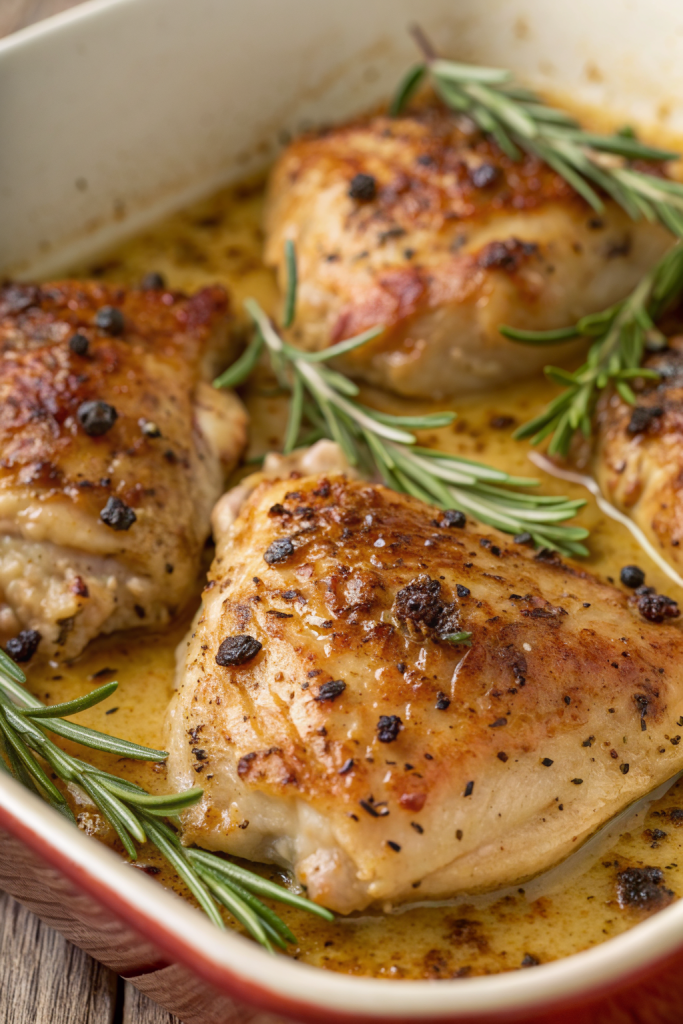
Rosemary Chicken Dijon Recipe tastes like cozy French bistro food met weeknight efficiency, with juicy chicken, tangy mustard, and herby garlic in a creamy sauce. It suits busy home cooks who want a 35–40 minute dinner that feels special without requiring chef-level skills. I first made a version of this in a tiny apartment kitchen with one sad skillet, so if your setup feels basic, you still win here.
Why Rosemary Chicken Dijon Recipe Is Worth It
This Rosemary Chicken Dijon Recipe hits that perfect balance of bright, herby, and creamy without feeling heavy. The Dijon cuts through the richness, the rosemary adds woodsy flavor, and the garlic ties everything together in a way that tastes restaurant-level.
You cook it in one pan, so cleanup stays easy and quick. The recipe uses simple pantry staples like Dijon mustard, broth, and cream, so you probably own most of what you need already.
“This Rosemary Chicken Dijon Recipe tastes like a fancy bistro meal but comes together on a Tuesday night with zero stress. ★★★★★”
Ingredients You Need
Chicken
- 4 boneless skinless chicken breasts
- Pound them to even thickness so they cook evenly.
- Use thighs instead if you prefer juicier, richer flavor; just adjust cook time slightly.
Marinade / Seasoning
- 1 ½ teaspoons kosher salt
- ½ teaspoon black pepper
- 2 teaspoons garlic powder
- 1 teaspoon onion powder
- 1 tablespoon olive oil
Rosemary Dijon Sauce
- 2 tablespoons olive oil or avocado oil
- 3–4 garlic cloves, minced
- 2 tablespoons fresh rosemary, finely chopped
- Use 2 teaspoons dried rosemary if you do not have fresh; crush it between your fingers to wake up the flavor.
- ⅓ cup Dijon mustard
- Use a smooth, classic Dijon; I like Maille or Grey Poupon for consistent flavor.
- 1 tablespoon whole grain mustard (optional, for texture)
- 1 cup low sodium chicken broth
- Use bouillon paste plus water as a shortcut if you keep that in your fridge.
- ½ cup heavy cream
- Swap with half and half for a lighter sauce; it just thickens a bit less.
- 1 teaspoon honey or maple syrup
- This tiny bit of sweetness balances the mustard.
- 1 tablespoon lemon juice, plus extra to taste
- 1 tablespoon butter
- Extra salt and pepper to taste
Optional Garnishes
- Extra chopped fresh rosemary
- Chopped fresh parsley
- Lemon wedges
Pantry Shortcuts & Sub Notes
- Use pre-minced garlic from a jar if you feel tired; just know fresh garlic tastes stronger.
- Use dried rosemary and dried parsley when fresh herbs feel hard to find; just reduce the amount slightly.
- Use any neutral oil if olive oil runs out; just avoid strongly flavored oils like toasted sesame.
Equipment List
- Large skillet (10 to 12 inch, stainless steel or cast iron works best)
- Cutting board and sharp knife
- Meat mallet or rolling pin (to pound chicken)
- Small whisk or fork
- Measuring cups and spoons
- Tongs or spatula
Quick Tips & substitutions
- Pound chicken to an even thickness so it cooks quickly and stays juicy.
- Pat chicken dry before seasoning so it browns better.
- Brown the chicken over medium high heat, not high heat, so the outside does not burn before the inside cooks.
- Use thighs instead of breasts if you want extra tenderness.
- Swap heavy cream with coconut cream for a dairy free version; expect a hint of coconut flavor.
- Use Greek yogurt at the end instead of cream; remove the pan from heat first so the yogurt does not curdle.
- Stir the Dijon into the broth before adding cream so the sauce stays smooth.
- Taste the sauce at the end and adjust with salt, pepper, and lemon juice until it sings.
- Keep some chicken broth nearby to thin the sauce if it thickens too much.
- Use dried rosemary if needed; just use about one third of the fresh amount.
How to Make Rosemary Chicken Dijon Recipe
Step 1: Prep and Season the Chicken
Lay the chicken breasts on a cutting board and cover them with plastic wrap. Pound them gently with a meat mallet or rolling pin until they reach an even thickness, about ½ to ¾ inch. Pat them dry with paper towels, then season both sides with salt, pepper, garlic powder, and onion powder, and drizzle with 1 tablespoon olive oil.
Step 2: Sear the Chicken
Heat 2 tablespoons olive oil in a large skillet over medium high heat. Add the chicken in a single layer without crowding the pan; cook in batches if needed. Sear each side for about 4 to 5 minutes until the chicken browns nicely and the internal temperature reaches about 160°F. Transfer the chicken to a plate and tent loosely with foil while you make the sauce.
Step 3: Sauté Garlic and Rosemary
Lower the heat to medium. Add the minced garlic and chopped rosemary to the same skillet. Stir constantly for about 30 seconds to 1 minute until the garlic smells fragrant and the rosemary sizzles lightly, but do not let the garlic burn.
Step 4: Build the Dijon Base
Whisk in the Dijon mustard and whole grain mustard. Add the chicken broth and whisk until the mustard fully dissolves into the liquid and no clumps remain. Scrape up any browned bits from the bottom of the pan, since those bits carry a lot of flavor.
Step 5: Add Cream and Sweetness
Pour in the heavy cream and whisk until the sauce looks smooth and creamy. Stir in the honey or maple syrup and bring the mixture to a gentle simmer. Let it bubble for 3 to 4 minutes, stirring occasionally, until it thickens slightly.
Step 6: Finish with Lemon and Butter
Add the lemon juice and butter to the skillet and stir until the butter melts. Taste the sauce and adjust with more salt, pepper, or lemon juice as needed. The sauce should taste tangy, herby, and lightly creamy, with a gentle hint of sweetness.
Step 7: Return Chicken to the Pan
Nestle the seared chicken breasts back into the skillet, coating them with the Rosemary Dijon sauce. Simmer on low heat for another 3 to 5 minutes until the chicken reaches 165°F internally and the sauce thickens to your liking. Spoon sauce over the top of each piece as it finishes.
Step 8: Rest and Serve
Turn off the heat and let the chicken rest in the pan for 3 minutes. Sprinkle with extra fresh rosemary or parsley if you like. Serve the chicken with generous spoonfuls of the Rosemary Dijon sauce over your favorite sides.
Recipe Variations
- Gluten free: Use gluten free chicken broth and check your Dijon label; serve with rice, potatoes, or gluten free pasta.
- Dairy free: Use olive oil instead of butter and coconut cream instead of heavy cream.
- Low carb: Serve with cauliflower mash, zucchini noodles, or roasted broccoli.
- Extra veggies: Add sliced mushrooms or green beans to the pan after searing the chicken and cook them before building the sauce.
- Extra tangy: Add 1 extra tablespoon of Dijon and a splash more lemon juice.
- Extra herby: Add thyme or tarragon along with the rosemary for a more complex herb flavor.
Ways to Serve Rosemary Chicken Dijon Recipe
- Spoon over mashed potatoes or cauliflower mash.
- Serve with buttered egg noodles or simple pasta.
- Pair with steamed rice or garlic herb rice.
- Add a side of roasted carrots, green beans, or asparagus.
- Slice the chicken and tuck it into a warm pita or wrap with lettuce and cucumber.
- Serve with a crisp green salad and crusty bread to soak up the sauce.
Storage Success
Store leftover Rosemary Chicken Dijon in an airtight container in the fridge for up to 3 to 4 days. Reheat it gently on the stove over low heat with a splash of broth or water so the sauce loosens and the chicken stays tender. You can freeze it for up to 2 months, though the sauce may look slightly separated after thawing; just whisk it as it reheats and it comes back together. I like to slice leftover chicken and pack it with rice and veggies for easy meal prep lunches.
Rosemary Chicken Dijon Recipe
Ingredients
Instructions
- Lay the chicken breasts on a cutting board and cover them with plastic wrap. Pound them gently with a meat mallet or rolling pin until they reach an even thickness, about 1/2 to 3/4 inch. Pat them dry with paper towels, then season both sides with kosher salt, black pepper, garlic powder, and onion powder. Drizzle with 1 tablespoon olive oil and rub to coat evenly.
- Heat 2 tablespoons olive oil or avocado oil in a large skillet over medium-high heat. Add the chicken in a single layer without crowding the pan; cook in batches if needed. Sear each side for about 4 to 5 minutes until browned and the internal temperature reaches about 160°F. Transfer the chicken to a plate and tent loosely with foil.
- Lower the heat to medium. Add the minced garlic and chopped rosemary to the same skillet. Stir constantly for 30 seconds to 1 minute until the garlic is fragrant and the rosemary sizzles lightly without burning.
- Whisk in the Dijon mustard and whole grain mustard (if using). Add the chicken broth and whisk until the mustard fully dissolves and the liquid is smooth. Scrape up any browned bits from the bottom of the pan.
- Pour in the heavy cream and whisk until the sauce looks smooth and creamy. Stir in the honey or maple syrup and bring the mixture to a gentle simmer. Let it bubble for 3 to 4 minutes, stirring occasionally, until it thickens slightly.
- Add the lemon juice and butter to the skillet and stir until the butter melts. Taste the sauce and adjust with more salt, pepper, or lemon juice as needed until the flavor is tangy, herby, and lightly creamy.
- Return the seared chicken breasts and any accumulated juices to the skillet, nestling them into the sauce and spooning some sauce over the top. Simmer on low heat for 3 to 5 minutes, until the chicken reaches 165°F internally and the sauce thickens to your liking.
- Turn off the heat and let the chicken rest in the pan for 3 minutes. Garnish with extra fresh rosemary, parsley, and lemon wedges if desired. Serve the chicken with generous spoonfuls of the Rosemary Dijon sauce over your favorite sides.
Notes
Approximate per serving (1/4 of recipe): 420 calories; fat 26 g; saturated fat 11 g; carbohydrates 7 g; fiber 0 g; sugars 4 g; protein 38 g; sodium 980 mg. Values will vary based on specific ingredients, brands, and portion sizes.