
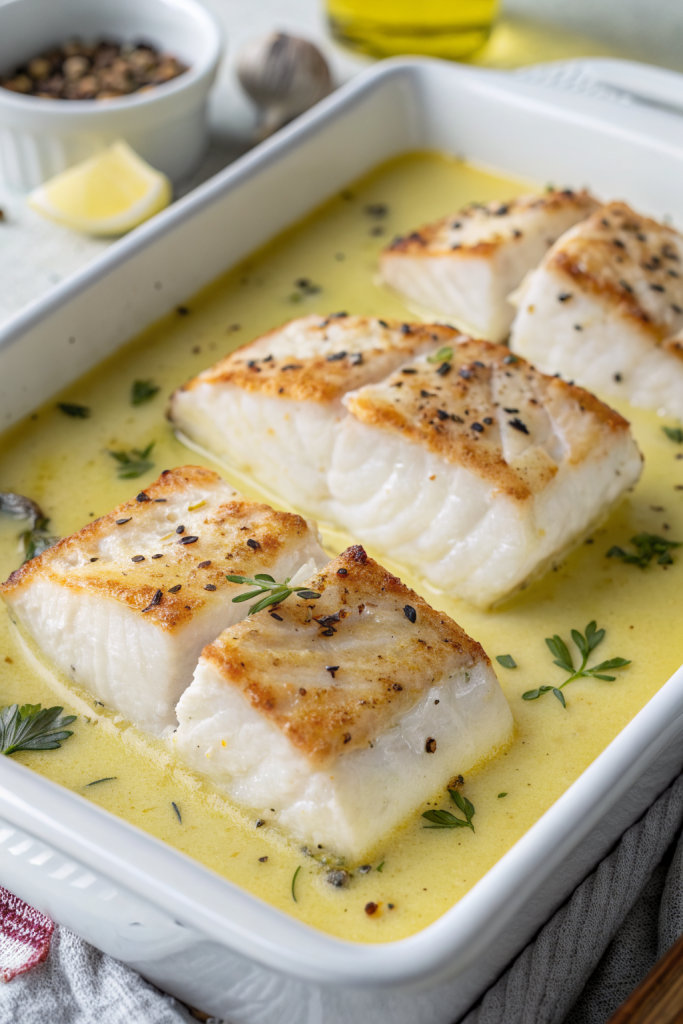
Baked Cod in Coconut Lemon Cream Sauce tastes rich and velvety, with bright citrus and gentle coconut that make the cod taste buttery and luxurious. It works perfectly for busy weeknights or at-home date nights, since it comes together in about 35 minutes from start to finish. I first made a version of this on a Tuesday when my fridge looked sad, and it still felt like a restaurant meal at my tiny kitchen table.
Why Make This Baked Cod in Coconut Lemon Cream Sauce at Home
Baked cod in coconut lemon cream sauce gives you that “fancy seafood restaurant” vibe without the white tablecloth or the bill that makes you wince. The coconut milk keeps the fish juicy, the lemon cuts through the richness, and the oven does most of the work while you clean up the kitchen or scroll recipes you will never actually cook.
You control the salt, the quality of the fish, and the amount of creaminess, so it fits weeknight dinners and lighter eating goals. The recipe also uses simple pantry staples, so you avoid buying a dozen specialty ingredients that gather dust in the back of the cabinet.
“This baked cod in coconut lemon cream sauce tastes silky, bright, and restaurant-level, yet it comes together with weeknight effort.”
Ingredients You Need
Cod and protein options
- Fresh cod fillets, about 1 ½ to 2 pounds, skinless
- Choose firm, mild white fillets that smell clean, not fishy.
- Frozen cod works well; thaw it overnight in the fridge and pat it very dry.
- Optional swap: haddock, pollock, halibut, or tilapia; keep fillets about 1 to 1 ½ inches thick so they bake evenly.
Coconut lemon cream sauce base
- Full-fat coconut milk, 1 can (13.5 to 14 ounces)
- Use full-fat for the creamiest texture; light coconut milk tastes thinner and less luxurious.
- I like Thai Kitchen or Native Forest, since they stay smooth and not gritty.
- Fresh lemon juice, from 1 to 2 lemons
- Bottle lemon juice works in a pinch, but fresh gives brighter flavor.
- Lemon zest from 1 lemon
- Zest adds big citrus flavor without extra acidity.
- Chicken or vegetable broth, low sodium, about ½ to ¾ cup
- Broth thins the sauce slightly and adds savory depth.
- Heavy cream or coconut cream, ¼ to ½ cup
- This finishes the sauce and gives it that silky restaurant texture.
- Dijon mustard, 1 to 2 teaspoons
- It does not taste “mustardy” but adds tang and body.
Aromatics and veggies
- Olive oil or avocado oil, 1 to 2 tablespoons
- Yellow onion or shallots, finely chopped, about 1 cup
- Garlic cloves, 3 to 5, minced
- Fresh ginger, 1 to 2 teaspoons, grated or minced
- Cherry tomatoes or diced Roma tomatoes, about 1 cup
- Canned diced tomatoes work if you drain them well.
- Baby spinach or chopped kale, 2 to 3 cups loosely packed
- Frozen spinach works; squeeze it very dry before adding.
Seasonings and flavor boosters
- Kosher salt and freshly ground black pepper
- Smoked paprika or sweet paprika, ½ to 1 teaspoon
- Crushed red pepper flakes, ¼ teaspoon or to taste
- Ground coriander, ½ teaspoon
- A pinch of sugar or honey, optional, to balance acidity
- Fresh herbs: chopped cilantro, parsley, or basil for garnish
Pantry shortcuts and notes
- Use frozen pre-chopped onions and garlic cubes if you want to save prep time.
- Use jarred ginger paste instead of fresh ginger; it works great in sauces.
- Use pre-squeezed lemon juice in the fridge section if citrus prices feel wild, but still add a little zest from one fresh lemon if possible.
Equipment list
- Large oven-safe skillet or braiser, 10 to 12 inches, or a Dutch oven
- Cutting board and sharp knife
- Microplane or fine grater for lemon zest and ginger
- Measuring cups and spoons
- Small whisk or fork for blending the sauce
- Tongs or spatula to handle the fish
- Instant-read thermometer, helpful but optional, to check fish doneness
Tips & Mistakes
- Pat the cod very dry with paper towels so it browns slightly and does not water down the sauce.
- Season the fish on both sides with salt and pepper before it touches the pan so the flavor goes into the fillets, not just the sauce.
- Keep the heat at medium when you sauté aromatics so the garlic and ginger turn fragrant but not bitter.
- Use full-fat coconut milk and avoid shaking the can too much so you can scoop the thick cream from the top for extra richness.
- Do not boil the coconut lemon cream sauce; simmer it gently so it stays smooth and does not separate.
- Taste the sauce before you add the fish and adjust salt, lemon, and spice so it already tastes delicious on its own.
- Nestle the cod fillets into the sauce in a single layer so they cook evenly and do not steam on top of each other.
- Bake just until the cod flakes easily with a fork or hits 130 to 135°F in the thickest part, since overcooked cod turns dry and stringy.
- Let the cod rest in the hot sauce for 3 to 5 minutes after baking so the juices settle and the flavors meld.
- Add tender greens like spinach near the end so they stay bright and soft, not gray and overcooked.
How to Make Baked Cod in Coconut Lemon Cream Sauce
Step 1: Sauté veggies and aromatics
Heat oil in a large oven-safe skillet or Dutch oven over medium heat. Add chopped onion and a pinch of salt, then cook until the onion turns soft and translucent, about 5 to 7 minutes. Stir in garlic and ginger and cook 1 to 2 minutes until fragrant, stirring often so they do not scorch.
Add tomatoes and cook another 3 to 4 minutes until they soften and release some juices. Sprinkle in paprika, coriander, and red pepper flakes, then stir and cook 1 minute so the spices bloom and smell toasty.
Step 2: Build the coconut lemon cream sauce
Pour in the coconut milk and broth, then whisk or stir to combine with the aromatics. Add Dijon mustard, lemon zest, and half of the lemon juice, then stir again. Bring the mixture to a gentle simmer over medium heat, not a hard boil.
Taste the sauce and adjust with more lemon juice, salt, or a pinch of sugar or honey if it tastes too sharp. Stir in the heavy cream or coconut cream and let the sauce bubble softly for 3 to 5 minutes until it thickens slightly and coats the back of a spoon.
Step 3: Season and nestle the cod
While the sauce simmers, pat the cod fillets very dry and season both sides with salt and pepper. If the fillets vary a lot in thickness, cut the larger ones in half so they cook at the same rate.
Turn off the heat under the pan. Gently place the cod fillets into the sauce in a single layer, spooning a little sauce over the top of each piece.
Step 4: Bake the cod
Preheat your oven to 375°F if you have not already. Slide the skillet or Dutch oven into the oven. Bake 10 to 15 minutes, depending on thickness, until the cod turns opaque and flakes easily with a fork.
Check the thickest piece with an instant-read thermometer; aim for 130 to 135°F, since the temperature will rise slightly as it rests. If the cod still looks a bit translucent in the center, give it another 2 to 3 minutes and check again.
Step 5: Finish with greens and herbs
Pull the pan from the oven and set it on a heat-safe surface. Scatter spinach or kale around the cod and gently push it into the hot sauce. The greens will wilt in 2 to 3 minutes from the residual heat.
Taste the sauce again and adjust seasoning if needed. Sprinkle chopped cilantro, parsley, or basil over the top, then add a few extra lemon wedges around the pan for squeezing at the table.
Step 6: Rest and serve
Let the cod sit in the sauce for 3 to 5 minutes so the juices settle and the sauce thickens slightly. Spoon the coconut lemon cream sauce over each portion of cod when you plate it so every bite tastes rich and bright.
If the sauce looks a bit thick, splash in a tablespoon or two of warm broth and stir. If it looks too thin, set the pan over low heat and simmer a couple of minutes without the fish, then spoon the thicker sauce back over the cod.
Variations I’ve Tried
- Herb-forward version
Load the sauce with fresh herbs like dill, parsley, and chives. Skip the paprika and coriander, and add a small spoonful of capers for a briny pop. This version tastes amazing over roasted potatoes or simple steamed rice. - Spicy coconut cod
Add a tablespoon of red curry paste or a spoonful of harissa when you sauté the aromatics. Increase the red pepper flakes if you like heat. Finish with lime instead of lemon and garnish with cilantro and sliced scallions. - Veggie-packed version
Add thinly sliced bell peppers and zucchini with the onions so the sauce turns into a full one-pan meal. Toss in extra spinach or some peas near the end for more color and sweetness. Serve this version over brown rice or quinoa for a hearty bowl. - Dairy-free twist
Skip the heavy cream and use only full-fat coconut milk or coconut cream. The sauce still tastes rich and silky, just with stronger coconut notes. Add a bit more lemon juice and zest to keep the flavor bright. - Kid-friendly mild version
Leave out the red pepper flakes and use sweet paprika instead of smoked if your kids prefer gentler flavors. Cut the cod into smaller chunks before baking so it cooks faster and feels more like “fish nuggets” in sauce. Serve over buttered noodles or mashed potatoes and watch it disappear.
How to Serve Baked Cod in Coconut Lemon Cream Sauce
Serve baked cod in coconut lemon cream sauce over fluffy jasmine rice, basmati rice, or simple white rice so the grains soak up every drop of that citrusy coconut goodness. Mashed potatoes or cauliflower mash also work beautifully if you want something cozy and spoonable. If you prefer something lighter, spoon the cod and sauce over steamed green beans, roasted asparagus, or a bed of garlicky sautéed spinach. Add lemon wedges on the side and a simple green salad to round out the meal without much extra effort.
How to store
- Fridge: Cool leftovers to room temperature within 1 hour, then store cod and sauce together in an airtight container in the refrigerator for up to 2 days.
- Freezer: Freeze portions of cod submerged in the coconut lemon cream sauce in freezer-safe containers for up to 2 months; thaw overnight in the fridge before reheating.
- Reheating on the stove: Warm the cod and sauce in a covered skillet over low heat, spooning sauce over the fish and heating until just hot; avoid boiling so the fish stays tender.
- Reheating in the microwave: Place a portion in a microwave-safe dish, cover loosely, and heat at 50 percent power in short bursts, stirring the sauce and checking the fish so it does not overcook.
- Refreshing the sauce: If the sauce thickens too much after chilling, stir in a splash of broth or coconut milk while reheating until it reaches your preferred consistency.
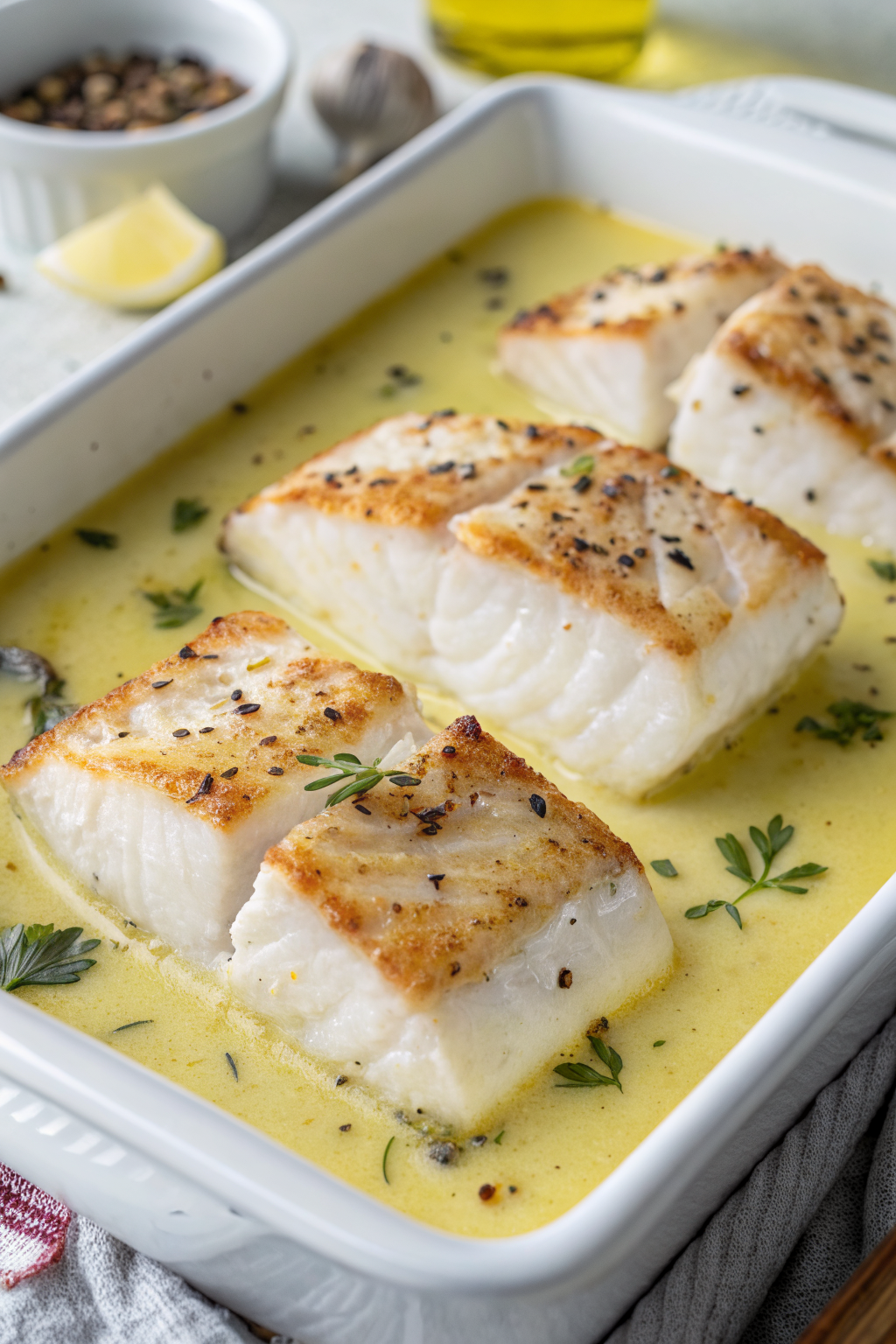
Baked Cod in Coconut Lemon Cream Sauce
Ingredients
Instructions
- Preheat the oven to 400°F (200°C). Lightly grease a baking dish large enough to hold the cod fillets in a single layer.
- Rub the cod fillets with olive oil and season on both sides with 1/2 teaspoon salt, black pepper, and garlic powder. Arrange the fillets in the prepared baking dish.
- In a small saucepan over medium heat, melt the butter. Add the minced garlic and cook, stirring, for 30–60 seconds until fragrant but not browned.
- Stir in the coconut milk and heavy cream. Bring just to a gentle simmer, then add lemon zest, lemon juice, remaining 1/2 teaspoon salt, and red pepper flakes if using. Simmer for 2–3 minutes to slightly thicken and blend the flavors, then remove from heat.
- Pour the coconut lemon cream sauce evenly over and around the cod fillets in the baking dish.
- Bake for 12–15 minutes, or until the cod flakes easily with a fork and is opaque throughout (internal temperature about 145°F / 63°C). Thicker fillets may need a few extra minutes.
- Remove from the oven, spoon some sauce over each fillet, and sprinkle with chopped fresh parsley. Serve hot with rice, potatoes, or crusty bread to soak up the sauce.
Notes
Approximate per serving (1 of 4): 360 calories; fat 24 g; saturated fat 15 g; carbohydrates 5 g; fiber 0 g; sugars 2 g; protein 30 g; sodium 520 mg. Values are estimates and will vary based on exact ingredients, brands, and portion sizes.
Leave a Reply