
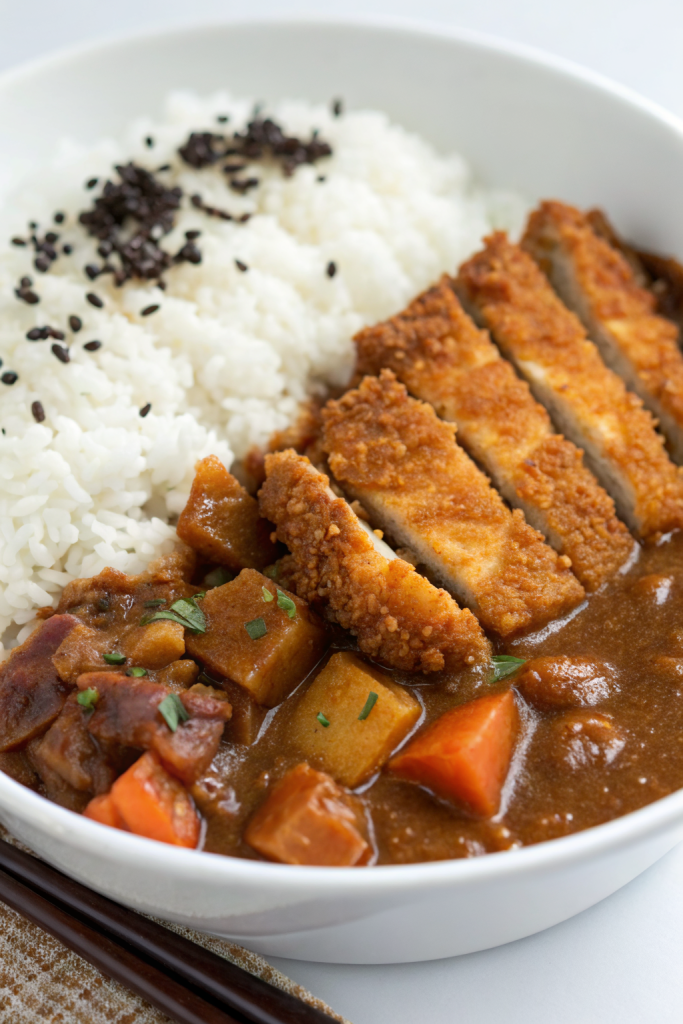
Chicken Katsu Curry Recipe hits that perfect spot between crispy comfort food and cozy Japanese-style curry, with crunchy panko chicken over a rich, mildly spiced sauce. It works well for busy weeknights or casual weekend dinners and usually lands on the table in about 45–55 minutes. I still remember burning my first batch of panko a decade ago, so you can skip my mistakes and just enjoy the good part.
Why Chicken Katsu Curry Recipe Is Worth It
You get the best of both worlds: super crunchy chicken cutlets and a smooth, savory curry sauce that tastes like your favorite Japanese curry house. The curry feels mild enough for kids yet flavorful enough for spice fans when you add a little chili.
You also use simple ingredients that most grocery stores carry, like panko, onions, carrots, and curry roux or curry powder. Leftovers taste even better the next day, so you cook once and enjoy twice.
“This Chicken Katsu Curry Recipe tastes like a cozy Japanese restaurant dinner at home, with shatteringly crisp chicken and silky curry sauce on fluffy rice. ★★★★★”
Ingredients You Need
Chicken katsu
- 2 large boneless, skinless chicken breasts
- 1 teaspoon kosher salt
- ½ teaspoon black pepper
- ½ teaspoon garlic powder (optional, but adds nice flavor)
- ½ cup all-purpose flour
- 2 large eggs, beaten
- 1–1½ cups panko breadcrumbs (Japanese-style; use Kikkoman or similar for best crunch)
- Neutral oil for shallow frying (canola, vegetable, or avocado oil)
Notes:
- Slice thick chicken breasts in half horizontally to make 4 thinner cutlets. Thin cutlets cook faster and stay juicy.
- Use gluten-free panko if you want a gluten-free version.
- Pat the chicken dry so the coating sticks better.
Curry sauce
You can go two routes: Japanese curry roux blocks (like Golden Curry, Vermont Curry, or Java Curry) or a from-scratch spice mix.
With curry roux blocks (easiest option):
- 1 large onion, thinly sliced
- 2 medium carrots, sliced into coins or half-moons
- 1 medium Yukon gold or russet potato, peeled and cubed
- 2 cloves garlic, minced
- 1 tablespoon grated ginger
- 2 tablespoons neutral oil or butter
- 3–4 cups low-sodium chicken broth or water (adjust thickness)
- ½–¾ of a standard box Japanese curry roux, chopped into pieces
- 1–2 teaspoons soy sauce, to taste
- 1 teaspoon sugar or honey, to round the flavor
- Optional: 1 teaspoon Worcestershire sauce for extra depth
From-scratch curry seasoning (if you skip roux blocks):
- 2 tablespoons mild curry powder (Japanese-style if possible)
- 1 tablespoon flour (or cornstarch for gluten-free)
- 1 teaspoon garam masala (optional, for warmth)
- 1 teaspoon tomato paste or ketchup
- 1 teaspoon soy sauce
- 1 teaspoon sugar or honey
To serve
- Steamed Japanese short-grain rice or jasmine rice
- Shredded cabbage (classic with katsu)
- Thinly sliced green onions or parsley
- Fukujinzuke (Japanese pickles) or quick cucumber pickles, optional
Equipment list
- Cutting board and sharp knife
- Meat mallet or rolling pin (to flatten chicken)
- 3 shallow bowls or plates for dredging
- Large skillet or frying pan
- Medium pot or saucepan for curry
- Tongs or chopsticks for frying
- Paper towels and wire rack (cooling the katsu)
Quick Tips & substitutions
- Pound chicken to an even thickness so it cooks evenly and stays juicy.
- Pat chicken dry and season it well before dredging for better flavor.
- Press panko firmly onto the chicken so it clings and fries up extra crunchy.
- Use Japanese curry roux blocks when you want a shortcut with consistent flavor.
- Swap chicken broth with vegetable broth if you want a lighter taste.
- Use gluten-free panko and cornstarch instead of flour for a gluten-free version.
- Bake or air-fry the katsu if you want less oil, and brush the cutlets lightly with oil first.
- Slice leftover katsu and re-crisp it in a hot oven or air fryer instead of microwaving.
- Adjust curry thickness by adding more broth to thin or simmering longer to thicken.
- Add a pinch of cayenne or chili flakes if you want more heat.
How to Make Chicken Katsu Curry Recipe
Step 1: Prep and flatten the chicken
Place each chicken breast between two sheets of plastic wrap or parchment.
Pound gently with a meat mallet or rolling pin until about ½ inch thick and even.
Season both sides with salt, pepper, and garlic powder.
Step 2: Set up the breading station
Place flour in one shallow dish, beaten eggs in a second, and panko in a third.
Keep the dishes in a line: flour, egg, panko.
This setup keeps the process quick and less messy.
Step 3: Bread the chicken
Dredge each cutlet in flour and shake off the excess.
Dip it into the beaten egg, coating completely.
Press it firmly into the panko, covering every spot, and set on a plate or rack.
Step 4: Start the curry base
Heat 2 tablespoons oil or butter in a medium pot over medium heat.
Add sliced onions and cook until they turn soft and lightly golden, about 8–10 minutes, and stir often.
Add garlic and ginger, then cook 1–2 minutes until fragrant.
Step 5: Add vegetables and liquid
Add carrots and potatoes to the pot and stir to coat them in the onion mixture.
Pour in 3 cups of chicken broth or water, just enough to cover the vegetables.
Bring it to a gentle boil, then lower the heat and simmer until the vegetables turn tender, about 12–15 minutes.
Step 6: Season the curry
If you use curry roux blocks, turn the heat to low and add the roux pieces.
Stir until they melt and the sauce thickens, then add soy sauce, sugar or honey, and Worcestershire if you use it.
If you use curry powder instead, stir curry powder and flour together with a splash of broth to make a paste, add it to the pot, then add tomato paste, soy sauce, and sugar, and simmer until thick and glossy.
Step 7: Adjust the sauce
Taste the curry and adjust salt, soy sauce, or sweetness as needed.
Add more broth if the curry feels too thick, or simmer a few extra minutes if it feels thin.
Keep the curry on low heat while you fry the chicken so it stays hot.
Step 8: Fry the chicken katsu
Pour about ¼ inch of oil into a large skillet and heat over medium to medium-high.
Test the oil by dropping in a breadcrumb; it should sizzle gently, not burn.
Lay the breaded cutlets in the pan without crowding, and cook each side 3–4 minutes until the crust turns deep golden and the center cooks through.
Step 9: Drain and slice
Transfer cooked cutlets to a wire rack or paper towel–lined plate.
Let them rest 2–3 minutes so the juices settle and the crust stays crisp.
Slice each cutlet into strips with a sharp knife.
Step 10: Plate and serve
Spoon hot curry sauce into a shallow bowl or plate.
Add a mound of steamed rice on one side, then arrange sliced chicken katsu over or beside the rice.
Top with shredded cabbage, green onions, and pickles if you like, and serve right away.
Recipe Variations
- Gluten-free: Use gluten-free panko, tamari instead of soy sauce, and cornstarch instead of flour in both dredging and curry thickening.
- Vegan: Swap chicken with firm tofu or eggplant slices, use plant-based milk in the egg step or skip it and use a slurry, and use vegetable broth and vegan curry roux.
- Low carb: Serve over cauliflower rice, reduce the potato amount, and thicken the curry with a small amount of xanthan gum or extra simmering instead of flour.
- Spicy version: Add chili oil, cayenne, or a spoon of gochujang to the curry sauce.
- Extra veggie version: Add peas, bell peppers, zucchini, or mushrooms to the curry during the last 5–10 minutes of simmering.
- Cheesy katsu: Sprinkle shredded mozzarella or cheddar over the sliced katsu and broil briefly until melted, then serve over the curry.
Ways to Serve Chicken Katsu Curry Recipe
- Over steamed Japanese rice with shredded cabbage and pickles on the side.
- With brown rice or quinoa for a heartier, fiber-rich bowl.
- Over cauliflower rice or shredded cabbage for a lighter option.
- As a katsu curry sandwich: stuff sliced katsu, curry-thickened sauce, and cabbage into soft sandwich bread.
- In a bento-style lunch box with rice, curry in a separate container, and some fresh fruit.
Storage Success
Cool leftover chicken katsu and curry sauce separately before you store them.
Place curry in an airtight container and keep it in the fridge for up to 3–4 days, or freeze it for about 2 months.
Store katsu in a separate container with paper towels to absorb moisture, and re-crisp it in a hot oven or air fryer instead of the microwave.
Keep rice in its own container as well, and splash a little water over it before reheating so it steams back to life.
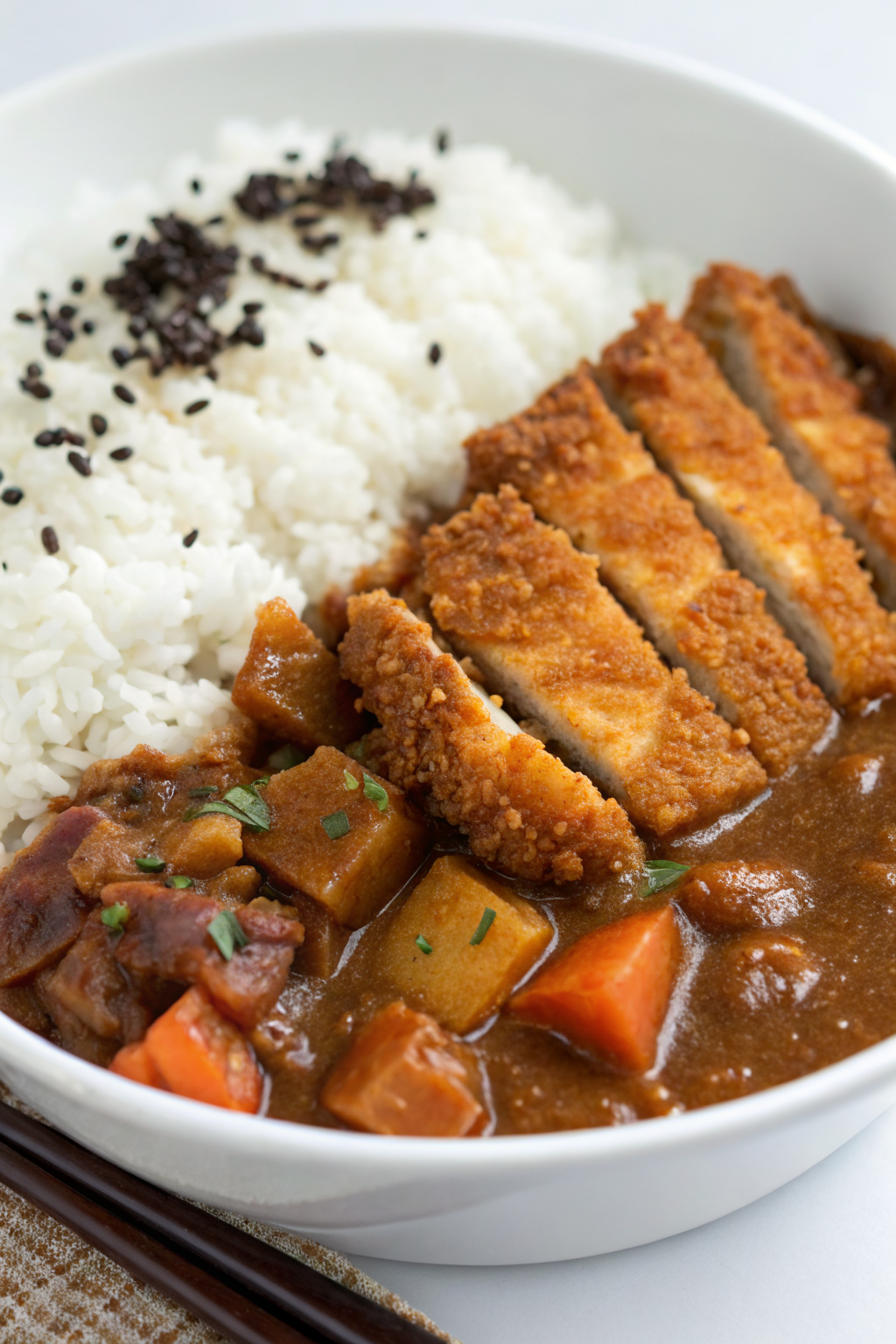
Chicken Katsu Curry Recipe
Ingredients
Instructions
- Heat 1 tablespoon of oil in a saucepan over medium heat. Add the sliced onion and cook, stirring often, until softened and lightly golden, about 8 to 10 minutes.
- Stir in the minced garlic and ginger and cook for 1 minute until fragrant.
- Add the sliced carrots and cook for another 2 to 3 minutes, stirring occasionally.
- Sprinkle in the curry powder and 2 tablespoons of flour. Stir constantly for 1 to 2 minutes to toast the spices and coat the vegetables.
- Gradually pour in the chicken stock while whisking to avoid lumps. Add the soy sauce and honey and bring the mixture to a gentle simmer.
- Reduce the heat and simmer for 15 to 20 minutes, stirring occasionally, until the carrots are tender and the sauce has thickened. Stir in garam masala if using and season with salt to taste.
- For a smoother sauce, blend with an immersion blender until mostly smooth, or leave chunky if preferred. Keep warm on low heat while you prepare the chicken.
- Season both sides of the pounded chicken breasts with salt and pepper.
- Place the flour in one shallow dish, the beaten eggs in a second, and the panko breadcrumbs in a third.
- Dredge each piece of chicken in the flour, shaking off any excess. Dip into the beaten eggs, then press firmly into the panko breadcrumbs until well coated on all sides.
- Heat about 1/3 cup of oil in a large skillet over medium to medium-high heat. When the oil is hot and shimmering, add the breaded chicken in a single layer without crowding.
- Fry the chicken for 3 to 4 minutes per side, or until golden brown and cooked through, reaching an internal temperature of 165°F (74°C). Adjust heat as needed to prevent burning.
- Transfer the cooked chicken to a paper towel–lined plate to drain excess oil. Let rest for a few minutes, then slice each cutlet into strips.
- Spoon a portion of hot cooked rice onto each plate.
- Ladle the warm curry sauce alongside or partially over the rice.
- Arrange sliced chicken katsu on top of the curry and rice. Garnish with chopped parsley or scallions if desired.
- Serve immediately while hot.
Notes
Approximate per serving (1 of 4, including sauce and rice): 780 calories; fat 32 g; saturated fat 6 g; carbohydrates 80 g; fiber 4 g; sugars 11 g; protein 40 g; sodium 1450 mg. Values are estimates and will vary based on specific ingredients, brands, and portion sizes.
Leave a Reply