
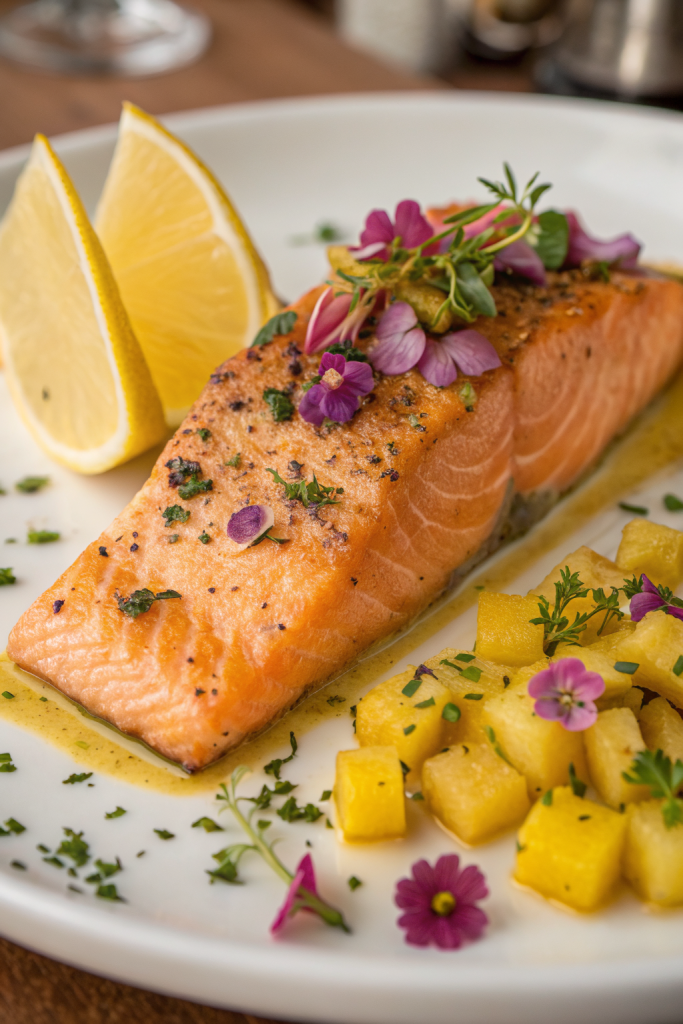
Crispy Skin Salmon with Lemon Beurre Blanc tastes rich, bright, and buttery with a shatteringly crisp skin and a silky, tangy sauce that feels restaurant-level but fits a weeknight. It suits anyone who loves salmon, wants a special dinner in about 30–35 minutes, and prefers real flavor over fussy technique. I cooked a version of this on a Tuesday in sweatpants, so you absolutely qualify to make it too.
Why Make This Crispy Skin Salmon with Lemon Beurre Blanc at Home
You control everything at home: the salmon quality, the salt level, the crisp factor on the skin, and how lemony the beurre blanc tastes. Restaurants charge a lot for this exact combo, yet the method stays simple once you learn a few small tricks.
You also skip soggy takeout fish and get salmon that hits the table hot and crisp. The whole meal cooks in under 40 minutes, which means you can serve it on a weeknight and still feel fancy without juggling twelve pans.
“This Crispy Skin Salmon with Lemon Beurre Blanc tastes like a white-tablecloth dinner that somehow snuck into my regular Tuesday night rotation.”
Ingredients You Need
Salmon
- 4 salmon fillets, skin on, about 5 to 6 ounces each
- Choose center-cut fillets for even thickness.
- Wild salmon gives a slightly firmer texture and stronger flavor, while farmed salmon tastes richer and more buttery.
- Pat the skin very dry with paper towels to help it crisp.
- Kosher salt and freshly ground black pepper
- I like Diamond Crystal kosher salt because it sprinkles evenly and tastes clean.
- Season both sides of the salmon, but go lighter on the flesh side so the sauce can shine.
- 1 to 2 tablespoons neutral high-heat oil
- Use avocado oil, canola oil, or grapeseed oil.
- Avoid extra-virgin olive oil here, since it smokes too quickly at the heat level you need for crispy skin.
- 1 tablespoon butter (for finishing the salmon, optional)
- A small knob of butter in the pan at the end adds flavor and color.
- Add it only after the skin crisps, so the milk solids do not burn.
Lemon Beurre Blanc
- 1 small shallot, very finely minced
- Shallots give a gentle sweetness and mild onion flavor that suits a delicate sauce.
- If you cannot find shallots, use a small amount of finely minced yellow onion.
- 1 small garlic clove, minced (optional but tasty)
- Garlic adds a little punch, but keep it minimal so it does not overpower the lemon and butter.
- 1/3 cup fresh lemon juice
- Use fresh lemons, not bottled juice, since the sauce relies on bright, clean acidity.
- You can mix in a tablespoon of lime juice if you want a slightly sharper flavor.
- 1 teaspoon finely grated lemon zest
- Zest adds intense lemon aroma without extra acidity.
- Grate only the yellow part to avoid bitterness.
- 1/3 cup low-sodium chicken broth or seafood stock
- Stock adds depth so the sauce tastes more complex than just butter and lemon.
- Use low-sodium so you control the salt level.
- 8 tablespoons cold unsalted butter, cut into small cubes
- Cold butter helps the sauce thicken and turn glossy as you whisk.
- Use real butter, not margarine, since the flavor carries the whole sauce.
- 1 to 2 tablespoons heavy cream (optional, for extra stability)
- A splash of cream helps the sauce stay smooth and less likely to split.
- You can skip it if you want a lighter, sharper sauce.
- Salt and white pepper to taste
- White pepper keeps the sauce pale and elegant.
- If you only have black pepper, use a light hand so the specks do not dominate the look.
Pantry Flavor Boosters
- 1 teaspoon Dijon mustard (optional)
- Dijon helps the sauce emulsify and adds a gentle tang.
- Use a smooth Dijon, not whole grain, to keep the texture silky.
- Pinch of sugar or honey (optional)
- A tiny bit of sweetness balances the acidity of the lemon.
- Add only if the sauce tastes too sharp after you whisk in the butter.
- Fresh herbs for garnish
- Use chopped chives, parsley, or dill.
- Herbs add color and a fresh finish that cuts through the richness.
Equipment List
- Heavy skillet, preferably stainless steel or cast iron, large enough to hold all fillets without crowding
- Small saucepan for the beurre blanc
- Fish spatula or thin metal spatula
- Tongs (optional, for gentle handling)
- Paper towels for drying the salmon skin
- Whisk
- Microplane or fine grater for lemon zest
- Instant-read thermometer (optional but helpful)
Tips & Mistakes
- Pat the salmon skin very dry before seasoning so it actually crisps instead of steaming.
- Score the skin lightly with a sharp knife if the fillets look thick, which helps prevent curling in the pan.
- Preheat the pan until the oil shimmers, since a hot pan gives you golden, crisp skin instead of pale, flabby skin.
- Press the salmon gently with a spatula for the first 20 to 30 seconds to keep the skin flat and in contact with the pan.
- Season the flesh side a bit lighter than the skin side, because the sauce adds extra salt and flavor.
- Avoid crowding the pan, since too many fillets drop the temperature and cause sticking.
- Leave the salmon mostly alone while it cooks skin side down, and resist the urge to flip it back and forth.
- Slide a thin spatula under the skin slowly to release it instead of yanking, which can tear the fillet.
- Keep the butter for the sauce very cold and add it a few cubes at a time so the sauce thickens smoothly.
- Do not boil the beurre blanc after you add the butter, since high heat can cause it to split.
- Taste the sauce at the end and adjust salt, lemon, and sweetness so it hits that bright, buttery balance.
- Serve the salmon right away, because the skin softens if it sits too long on a plate or under a cover.
How to Make Crispy Skin Salmon with Lemon Beurre Blanc
Step 1: Prep the salmon
Pat the salmon fillets very dry on all sides with paper towels, and pay extra attention to the skin. If the fillets look thick, score the skin with shallow diagonal cuts about 1 inch apart, without cutting into the flesh. Season both sides with salt and pepper, then let the salmon sit at room temperature for about 10 to 15 minutes while you start the sauce.
Step 2: Start the lemon beurre blanc base
Place the minced shallot and garlic in a small saucepan. Add the lemon juice, lemon zest, and chicken broth or seafood stock. Set the pan over medium heat and bring the mixture to a lively simmer.
Let the liquid reduce until it looks syrupy and measures about 3 to 4 tablespoons. This reduction concentrates the flavor and gives the butter something to cling to later. Lower the heat to very low or turn it off while you cook the salmon, so the mixture does not burn.
Step 3: Sear the salmon skin side down
Set your heavy skillet over medium-high heat and add the neutral oil. Swirl the pan so the oil coats the bottom in a thin, even layer. When the oil shimmers and a tiny piece of salmon skin sizzles on contact, you reached the right temperature.
Lay the salmon fillets in the pan skin side down, starting at the far side and lowering them away from you to avoid splatters. Use a fish spatula to press each fillet gently for 20 to 30 seconds so the skin stays flat and crisp. Leave the salmon alone after that and let the skin work on that golden, crispy magic.
Step 4: Finish cooking the salmon
Cook the salmon skin side down for about 5 to 7 minutes, depending on thickness, until the skin looks deeply golden and the flesh turns mostly opaque. You want the heat at medium to medium-high so the skin browns without burning. If the edges darken too fast, lower the heat slightly.
Flip the salmon carefully and cook the flesh side for 1 to 3 minutes more. Aim for an internal temperature of about 120 to 125°F for medium, or 130°F if you prefer it more done. Add the tablespoon of butter to the pan in the last minute and spoon the foaming butter over the top of the fillets for extra flavor, then move the salmon to a warm plate, skin side up.
Step 5: Finish the lemon beurre blanc
Return the reduced lemon mixture to low heat if it cooled. If you use cream, whisk it in now and let it warm gently. Add the cold butter cubes a few at a time, whisking constantly, and let each addition melt into the sauce before you add more.
Keep the heat low so the sauce stays hot but does not bubble. When all the butter melts and the sauce looks thick and glossy, whisk in Dijon mustard if you use it, then taste and adjust with salt, white pepper, and a tiny pinch of sugar or honey if it tastes too sharp. Hold the sauce over very low heat or move it off the burner and keep it warm near the stove.
Step 6: Plate and garnish
Place each salmon fillet on a plate with the skin facing up so it stays crisp. Spoon the lemon beurre blanc around the salmon or along one side instead of pouring it directly on the skin. Sprinkle chopped herbs over the top and add a lemon wedge on the side for extra brightness.
Serve the crispy skin salmon with lemon beurre blanc right away while the skin still crackles. If you want a restaurant-style touch, wipe any sauce drips from the plate edges with a clean towel before you bring it to the table.
Variations I’ve Tried
I swapped the lemon for a mix of lemon and orange juice, which gave the beurre blanc a softer, slightly sweet citrus flavor that kids liked a lot. I also added a spoonful of finely chopped fresh dill to the sauce at the end, which paired beautifully with the salmon and made the dish taste extra fresh.
Sometimes I coat the flesh side of the salmon with a thin layer of Dijon and crushed black pepper before searing, which adds a gentle kick under the sauce. I also tried a garlic-herb version where I added extra minced garlic and fresh thyme to the reduction, which worked well when I served the salmon with roasted potatoes and green beans.
For a lighter option, I cut the butter in the sauce by a couple of tablespoons and added more stock, which still tasted rich but felt a bit less heavy. I also tested a dairy-light version with olive oil and a small amount of butter, and while it did not taste like classic beurre blanc, it still gave a bright, silky sauce that coated the salmon nicely.
How to Serve Crispy Skin Salmon with Lemon Beurre Blanc
Serve crispy skin salmon with lemon beurre blanc with simple sides that soak up the sauce, like mashed potatoes, steamed rice, or a creamy polenta. Add a green vegetable such as roasted asparagus, sautéed green beans, or a crisp salad with a light vinaigrette to balance the richness. If you want something cozy, pair it with garlic butter noodles or a lemony couscous. Offer sparkling water with citrus slices or a chilled herbal iced tea for a refreshing non-alcoholic pairing.
How to store
- Let leftover salmon cool to room temperature for no longer than 30 minutes, then store it in an airtight container in the fridge for up to 2 days.
- Keep the lemon beurre blanc in a separate small container in the fridge for up to 2 days, and expect it to firm up as the butter chills.
- Avoid freezing the cooked salmon if you care about crispy skin, since freezing and thawing soften the texture and dull the flavor.
- Reheat the salmon gently in a skillet over low heat, skin side down, until warm, or in a 275°F oven for 10 to 12 minutes, and warm the sauce separately over very low heat while whisking in a teaspoon of water if it looks too thick.
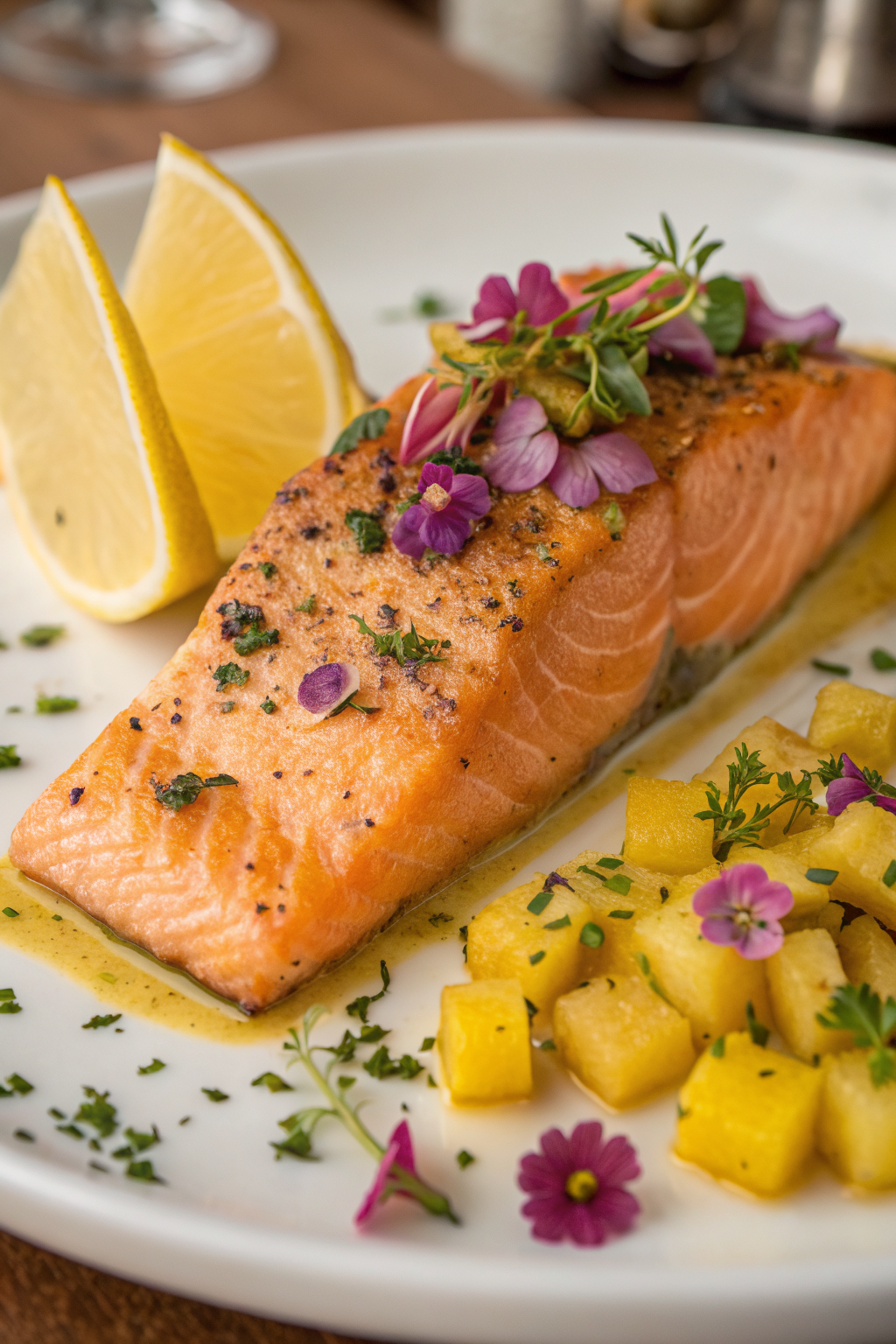
Crispy Skin Salmon with Lemon Beurre Blanc
Ingredients
Instructions
- Pat the salmon fillets very dry on both sides with paper towels, then place them skin-side up and leave uncovered for 5–10 minutes to dry the skin further.
- Season both sides of the salmon with kosher salt and freshly ground black pepper.
- Heat the olive oil in a large nonstick or stainless-steel skillet over medium to medium-high heat until the oil is hot and shimmering.
- Carefully place the salmon fillets in the pan skin-side down. Use a spatula to press gently on each fillet for the first 20–30 seconds to prevent the skin from curling.
- Cook without moving the salmon for 5–7 minutes, adjusting heat as needed, until the skin is deeply golden and very crisp and the salmon is mostly opaque with just a small translucent layer on top.
- Flip the fillets and add the tablespoon of butter to the pan. Cook for 1–2 minutes more, basting with the melted butter, until the salmon reaches your desired doneness (about 125–130°F / 52–54°C for medium). Transfer the salmon to a warm plate to rest while you make the sauce.
- In a small saucepan, combine the white wine, lemon juice, and minced shallot. Bring to a simmer over medium heat and cook until the liquid is reduced to 2–3 tablespoons.
- Reduce the heat to low. Whisk in a few cubes of cold butter at a time, allowing each addition to almost fully melt and emulsify before adding more. Keep the sauce just warm, not boiling, to prevent it from separating.
- When all the butter has been incorporated and the sauce is thick and glossy, season with salt and pepper to taste. If desired, strain the sauce to remove the shallots for a smoother texture.
- Place the crispy skin salmon fillets on warm plates, skin-side up to keep the skin crisp.
- Spoon the warm lemon beurre blanc around or just over the flesh side of the salmon, avoiding the skin so it stays crunchy.
- Garnish with chopped fresh parsley or chives and serve with lemon wedges, if desired.
Notes
Approximate per serving (1 salmon fillet with sauce): 520 calories; fat 39 g; saturated fat 19 g; carbohydrates 4 g; fiber 0 g; sugars 2 g; protein 36 g; sodium 320 mg. Values are estimates and will vary based on exact salmon size, butter brand, wine, and portion size.
Leave a Reply