
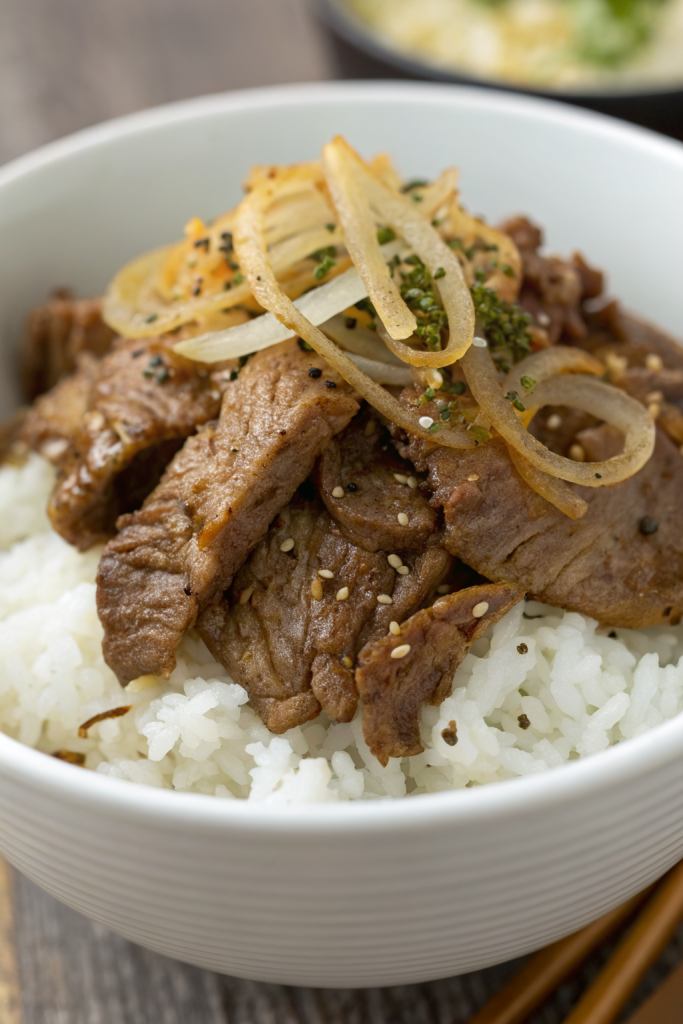
Gyudon Japanese Beef Rice Bowl Recipe tastes savory, slightly sweet, and deeply beefy with tender onions and fluffy rice soaking up every drop of sauce. It works perfectly for busy weeknights because it comes together in about 30 minutes from start to finish. I fell in love with gyudon during late-night college study sessions, and I still cook it when life feels hectic and I want comfort in a bowl.
Why Make This Gyudon Japanese Beef Rice Bowl Recipe at Home
Homemade gyudon costs less than takeout, and you control the quality of the beef and the amount of sugar and salt. You also adjust the sweetness and broth level to match your exact taste, which restaurant versions rarely allow.
You cook everything in one pan, so cleanup stays easy and weeknight friendly. The kitchen smells like a cozy Japanese diner, and everyone usually appears at the table before you even call them.
“This Gyudon Japanese Beef Rice Bowl Recipe tastes like a cozy Tokyo lunch spot in your own kitchen, and it disappears from bowls in minutes. ★★★★★”
Ingredients You Need
Beef and Rice
-
Thinly sliced beef
- Use ribeye, chuck, or sirloin.
- Ask the butcher to slice it very thin, or buy pre-sliced “shabu shabu” or “hot pot” beef.
- If you slice at home, chill the meat until firm but not frozen so your knife glides easily.
-
Cooked Japanese short-grain rice
- Use sushi rice or any short-grain white rice.
- Rinse the rice until the water runs mostly clear for the best texture.
- A rice cooker keeps this simple, but a pot with a tight lid also works.
Broth and Seasoning Base
-
Dashi stock
- Use instant dashi granules with hot water as a shortcut.
- If you cannot find dashi, use low-sodium chicken broth plus a small splash of fish sauce for extra umami.
- Follow package directions for strength, then adjust to taste.
-
Soy sauce
- Use Japanese-style soy sauce if possible, since it tastes slightly lighter and more balanced.
- Choose low-sodium if you like more control over saltiness.
-
Mirin
- Mirin adds sweetness and a mild tang.
- If you cannot find it, mix 2 parts sake or rice vinegar with 1 part sugar as a rough stand-in.
- Some “aji-mirin” brands taste sweeter, so reduce any extra sugar a bit.
-
Sugar
- Regular white sugar works best and dissolves quickly.
- Adjust the amount to match how sweet you like your gyudon.
Vegetables and Toppings
-
Onions
- Use yellow or sweet onions, sliced thin.
- They cook until soft and slightly translucent, which gives the sauce a mellow sweetness.
-
Green onions (scallions)
- Slice them thin for a fresh, sharp finish on top of the bowls.
-
Pickled red ginger (beni shoga)
- This classic gyudon topping cuts through the richness.
- If you cannot find it, use a small amount of any mild pickled ginger.
-
Eggs (optional but highly recommended)
- Use very fresh eggs if you top the bowl with a raw or soft yolk.
- You can also serve with a soft-boiled or poached egg.
Oil and Seasoning
-
Neutral oil
- Use canola, vegetable, or light olive oil.
- You only need a small amount to start the onions.
-
Salt and pepper
- Season lightly at the end, since soy sauce already brings salt.
Equipment List
- Sharp chef’s knife and cutting board
- Medium or large skillet or shallow saucepan
- Rice cooker or pot with lid for rice
- Measuring cups and spoons
- Small bowl for mixing sauce
- Chopsticks or tongs for stirring the beef
Tips & Mistakes
- Slice the beef very thin so it cooks quickly and stays tender.
- Chill the beef slightly before slicing so you avoid ragged, uneven pieces.
- Do not overcrowd the pan or the beef will steam instead of sear.
- Add the beef to hot broth and onions so it cooks fast and stays juicy.
- Taste the broth before adding the beef and adjust soy sauce, mirin, and sugar.
- Keep the heat at a gentle simmer so the sauce reduces without burning.
- Do not overcook the onions or they will disappear into mush.
- Cook the rice slightly firm so it holds up under the saucy topping.
- Spoon some sauce over the rice so the flavor reaches every bite.
- Add pickled ginger at the table so each person controls how tangy the bowl tastes.
- Use low-sodium soy sauce if you worry about salt, then season up as needed.
- Store rice and beef separately so reheated bowls keep better texture.
How to Make Gyudon Japanese Beef Rice Bowl Recipe
Step 1: Cook the Rice
Rinse the short-grain rice under cold water until the water runs mostly clear. Drain well, then cook it in a rice cooker or pot according to package directions. Keep the rice warm and covered while you prepare the beef and sauce.
Step 2: Slice the Beef and Onions
Place the beef in the freezer for about 20 to 30 minutes until it feels firm but not rock solid. Slice the beef across the grain into very thin strips. Peel the onions and slice them into thin half-moons so they soften quickly and evenly.
Step 3: Mix the Sauce Base
In a small bowl or measuring cup, combine dashi stock, soy sauce, mirin, and sugar. Stir until the sugar dissolves. Taste the mixture and adjust sweetness or saltiness before you start cooking.
Step 4: Cook the Onions
Heat a little neutral oil in a medium skillet over medium heat. Add the sliced onions and cook until they soften and turn translucent, about 5 to 7 minutes. Stir often so they cook evenly and do not scorch.
Step 5: Add the Sauce and Simmer
Pour the sauce mixture into the pan with the onions. Bring it to a gentle simmer, then lower the heat slightly. Let the onions simmer in the sauce for 3 to 5 minutes so they soak up flavor and the broth reduces a bit.
Step 6: Cook the Beef
Spread the sliced beef over the simmering onions and sauce in an even layer. Use chopsticks or tongs to separate the slices so they cook quickly. Simmer for 3 to 5 minutes until the beef turns brown and just cooks through, then turn off the heat so it does not overcook.
Step 7: Taste and Adjust
Taste a spoonful of the broth and a piece of beef. Add a splash of soy sauce if you want more salt, or a pinch of sugar if you prefer more sweetness. Stir gently and let the flavors settle for a minute.
Step 8: Assemble the Bowls
Scoop hot rice into individual bowls and fluff it slightly. Spoon the beef and onions over the rice, then ladle some of the sauce on top. Add green onions, pickled red ginger, and an egg yolk or soft-cooked egg if you like.
Step 9: Final Touches
Sprinkle a little black pepper or shichimi togarashi if you enjoy a mild kick. Serve the bowls immediately while the rice stays hot and the beef feels tender. Encourage everyone to mix the egg into the hot beef and rice so it turns silky.
Variations I've Tried
I sometimes add thin slices of mushrooms to the onions for extra umami and a little more volume. I also swap part of the beef with tofu cubes when I want a lighter bowl that still tastes rich. On busy nights, I use ground beef instead of sliced beef and cook it directly in the sauce for a quicker, more rustic version.
You can add shredded carrots or napa cabbage for extra vegetables without changing the core flavor much. If you like spice, a spoonful of chili crisp on top turns the bowl into a slightly fiery version that still tastes like classic gyudon at heart.
How to Serve Gyudon Japanese Beef Rice Bowl Recipe
Serve gyudon piping hot over freshly cooked rice so the grains soak up the sauce. Add toppings like green onions, pickled red ginger, and a soft egg to give each bowl color and contrast. A side of miso soup, cucumber salad, or steamed broccoli rounds out the meal without much extra work. Kids usually enjoy this dish because it tastes slightly sweet, and adults appreciate how fast it reaches the table.
How to store
- Cool the beef and onions to room temperature, then store them in an airtight container in the fridge for up to 3 days.
- Keep cooked rice in a separate sealed container in the fridge for up to 2 days.
- Freeze the beef and onion mixture in freezer-safe containers or bags for up to 2 months, and label with the date.
- Reheat the beef gently in a small pan over medium-low heat with a splash of water or dashi until hot, then serve over freshly reheated rice from the microwave or steamer.
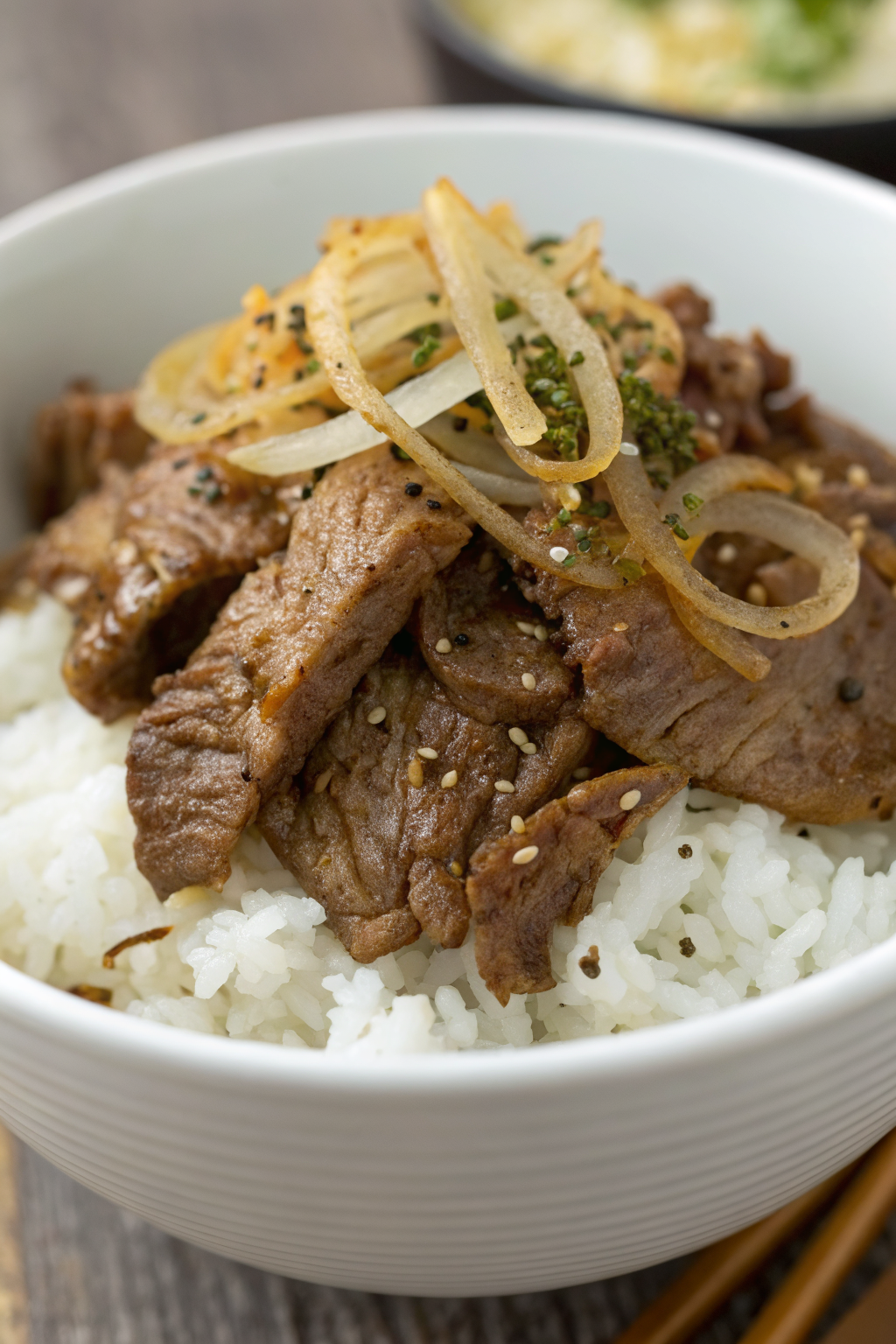
Gyudon Japanese Beef Rice Bowl Recipe
Ingredients
Instructions
- Prepare the cooked Japanese short-grain rice and keep it hot in serving bowls.
- In a medium saucepan, combine the dashi stock, soy sauce, mirin, sake, and sugar. Add grated ginger if using, and bring to a gentle simmer over medium heat, stirring to dissolve the sugar.
- Add the sliced onion to the simmering sauce and cook for 5–7 minutes, until the onion is tender and slightly translucent.
- Add the thinly sliced beef to the pan, spreading it out so it cooks evenly. Simmer for 3–5 minutes, just until the beef is cooked through and still tender. Skim off any foam if needed.
- Taste and adjust seasoning with a little more soy sauce or sugar if desired, keeping the balance sweet-savory.
- Spoon the hot beef and onions, along with some of the cooking sauce, over the bowls of steamed rice.
- Top each bowl with a soft-poached or onsen-style egg if using, and garnish with sliced green onions and beni shoga.
- Serve immediately while hot.
Notes
Approximate per serving (without optional egg toppings): 600 calories; fat 17 g; saturated fat 6 g; carbohydrates 78 g; fiber 2 g; sugars 14 g; protein 30 g; sodium 1450 mg. Adding a soft-poached egg increases calories by about 70 and protein by about 6 g. Values will vary based on specific beef cut, rice type, and seasoning brands.
Leave a Reply