
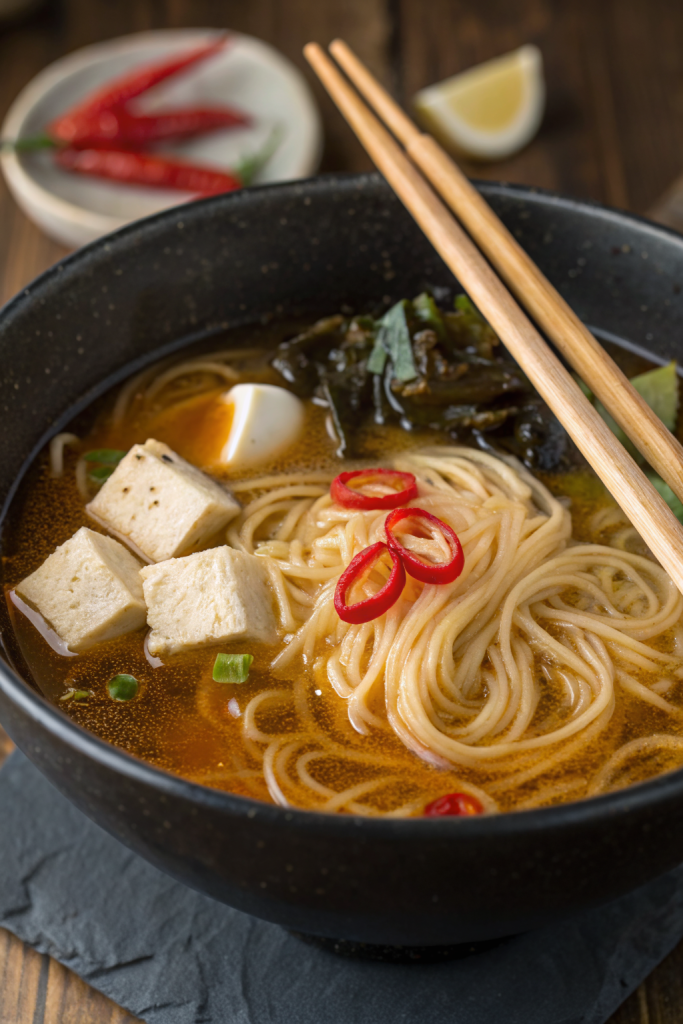
Harusame Japanese Glass Noodle Soup Recipe tastes light, savory, and a little bit gingery, with slippery noodles that feel like a cozy hug in a bowl. It works perfectly for busy weeknights because it comes together in about 25–30 minutes, start to finish. I started making this on cold Chicago nights when my tiny apartment kitchen steamed up like a ramen shop, and it still hits that same comfort spot.
Why Harusame Japanese Glass Noodle Soup Recipe Is Worth It
This soup gives you serious comfort with almost no effort. The glass noodles soak up broth flavor, stay bouncy, and feel satisfying without weighing you down.
You toss everything into one pot, so cleanup stays easy. The recipe also uses flexible ingredients, so you can use leftover veggies, rotisserie chicken, or frozen shrimp and still get a bowl that tastes restaurant-level.
“Clean, cozy, and full of flavor—this Harusame Japanese Glass Noodle Soup Recipe became my weeknight favorite after one bite. ★★★★★”
Ingredients You Need
Glass noodles (harusame)
- 3–4 ounces dried harusame (Japanese glass noodles, usually from potato or mung bean starch)
- Look for clear, thin bundles labeled “harusame” in Asian markets or the Asian aisle.
- If you only find mung bean vermicelli or Korean glass noodles, those work too; just adjust cooking time per the package.
Broth and seasonings
- 4 cups low-sodium chicken broth
- Use vegetable broth for a vegetarian or vegan version.
- I like Kettle & Fire or a good-quality store brand with low sodium so you control the salt.
- 1 cup water (to thin the broth slightly and keep the flavor balanced)
- 2 tablespoons soy sauce or tamari
- Use tamari or certified gluten-free soy sauce if you avoid gluten.
- 1 tablespoon mirin (Japanese sweet rice seasoning)
- If you do not have mirin, use 1 teaspoon sugar plus 2 teaspoons rice vinegar.
- 1 teaspoon toasted sesame oil
- 1–2 teaspoons fish sauce (optional but tasty for depth)
- Skip for vegetarian or vegan.
- 1-inch piece fresh ginger, peeled and finely sliced or grated
- 2 cloves garlic, minced
- 1 teaspoon sugar (optional, to balance saltiness)
- Salt and white pepper or black pepper, to taste
Protein options
Pick one or mix a couple:
- 6 ounces thinly sliced chicken thigh or breast
- 6 ounces thinly sliced pork (hot pot style works great)
- 6–8 medium shrimp, peeled and deveined
- 1 cup firm or extra-firm tofu, cubed (press it a bit with paper towels)
- 1 egg, lightly beaten (for egg ribbons, optional)
Vegetables and add-ins
Use what you like or what sits in your fridge:
- 1 cup napa cabbage, thinly sliced (or green cabbage)
- 1 small carrot, julienned or sliced into thin matchsticks
- 3–4 shiitake mushrooms, stems removed and caps sliced
- Dried shiitake work too; soak them in warm water 20 minutes, then slice.
- 2–3 green onions, thinly sliced (white and green parts separated)
- 1 small handful spinach or baby bok choy leaves
- 1 tablespoon neutral oil (canola, avocado, or light olive oil) for sautéing
Toppings (optional but highly recommended)
- Extra sliced green onions
- Toasted sesame seeds
- Chili oil or shichimi togarashi (Japanese chili seasoning)
- Lime wedge or a splash of rice vinegar if you like a tangy finish
Equipment
- Medium saucepan or small Dutch oven (about 3–4 quart size)
- Cutting board and sharp knife
- Small bowl for beaten egg (if using)
- Tongs or chopsticks for handling noodles
- Ladle for serving
Quick Tips & substitutions
- Soak dried harusame in warm water 10 minutes before cooking if the package suggests it; this keeps the texture springy.
- Use pre-shredded coleslaw mix as a shortcut instead of slicing cabbage and carrots.
- Swap chicken broth with vegetable broth and tofu for a fully vegan bowl.
- Use rotisserie chicken or leftover roast meat to save time; add it near the end just to warm through.
- Season the broth lightly at first, then taste after the noodles cook; noodles soak up salt, so adjust at the end.
- Keep the noodles slightly undercooked if you plan leftovers, since they soften more in the fridge.
- Add a spoon of miso paste at the end (off the heat) for extra umami; do not boil miso or it turns dull.
- Use kitchen scissors to cut the noodles in the pot if they feel too long and messy.
How to Make Harusame Japanese Glass Noodle Soup Recipe
Step 1: Prep the noodles and ingredients
Place the dried harusame in a bowl and cover with warm water if the package suggests soaking. Let them sit while you prep the rest. Slice the cabbage, carrot, mushrooms, green onions, and protein so everything cooks quickly and evenly.
Mince the garlic and slice or grate the ginger. Keep the white parts of the green onions separate from the green tops, since you add them at different times. Beat the egg in a small bowl if you plan to add egg ribbons.
Step 2: Build the aromatic base
Heat the neutral oil in your saucepan over medium heat. Add garlic, ginger, and the white parts of the green onions. Stir and cook about 30–60 seconds until fragrant, and keep the heat moderate so the garlic does not burn.
Add sliced mushrooms and carrot. Stir and cook another 2–3 minutes until the mushrooms soften slightly. This step builds flavor in the broth and keeps the soup from tasting flat.
Step 3: Add broth and seasonings
Pour in the chicken broth and water. Stir in soy sauce or tamari, mirin, sesame oil, and fish sauce if you use it. Add the sugar if you want a touch of sweetness to balance the salt.
Bring the pot to a gentle boil, then lower to a steady simmer. Taste the broth and adjust with a bit more soy sauce or a pinch of salt if it tastes bland. Keep in mind the noodles and veggies will add a little flavor too.
Step 4: Cook the protein
Slide in your sliced chicken, pork, shrimp, or tofu. Stir gently so the pieces separate and cook evenly. Simmer 3–5 minutes until the meat cooks through or the shrimp turn pink and firm.
If you use tofu, simmer it gently so it soaks up flavor but does not break apart. Skim any foam that rises to the top with a spoon for a cleaner broth. Keep the heat at a low simmer, not a rolling boil.
Step 5: Add vegetables and noodles
Drain the soaked harusame if you pre-soaked them. Add the cabbage, spinach or bok choy, and the noodles to the pot. Use tongs or chopsticks to nudge the noodles under the broth so they soften evenly.
Simmer 3–5 minutes until the noodles turn clear and tender but still springy. Taste a strand to check the texture. Add more water or broth if the soup looks too thick or the noodles drink up too much liquid.
Step 6: Optional egg ribbons
If you want egg ribbons, lower the heat so the soup barely simmers. Stir the soup gently in one direction to create a little whirlpool. Slowly drizzle in the beaten egg in a thin stream while you keep stirring.
The egg will set into soft ribbons in about 30 seconds. Stop stirring and let them finish cooking another 30 seconds. This step adds protein and a silky texture without much effort.
Step 7: Final seasoning and toppings
Turn off the heat and taste the broth again. Add pepper, more soy sauce, or a splash of rice vinegar if you want brightness. Stir in the green parts of the green onions.
Ladle the soup into bowls, making sure each bowl gets plenty of noodles, veggies, and protein. Top with extra green onions, toasted sesame seeds, and a drizzle of chili oil if you like heat. Serve hot while the noodles stay bouncy.
Recipe Variations
- Gluten-free: Use tamari or certified gluten-free soy sauce and gluten-free broth; check your noodles and seasonings for hidden wheat.
- Vegan: Use vegetable broth, tofu as the protein, skip fish sauce, and add a spoon of white or yellow miso at the end.
- Low carb: Use shirataki noodles or spiralized zucchini instead of harusame, and load up on cabbage, mushrooms, and leafy greens.
- Extra protein: Add more tofu, shrimp, or thinly sliced chicken; just keep the pot from crowding so everything cooks evenly.
- Spicy version: Add chili oil, sliced fresh chili, or shichimi togarashi to the broth and as a topping.
- Miso twist: Stir in 1–2 tablespoons miso paste after you turn off the heat for a deeper, savory flavor.
Ways to Serve Harusame Japanese Glass Noodle Soup Recipe
- Serve as a light main dish with a side of steamed edamame or a simple cucumber salad.
- Pack in a thermos for a warm work lunch; keep extra chili oil in a tiny container to add at your desk.
- Pair with grilled chicken skewers or pan-fried tofu for a more filling dinner.
- Offer small bowls as a starter before a bigger Japanese-style meal with rice and veggies.
Storage Success
Let the soup cool until it reaches room temperature, then move it to airtight containers and store it in the fridge for up to 3 days. Keep the noodles in a separate container if you plan ahead, because they keep soaking broth and turn too soft. Reheat on the stove over medium heat and add a splash of water or broth to loosen the soup. Taste and re-season with a bit of soy sauce, sesame oil, or chili oil after reheating to bring the flavors back to life.
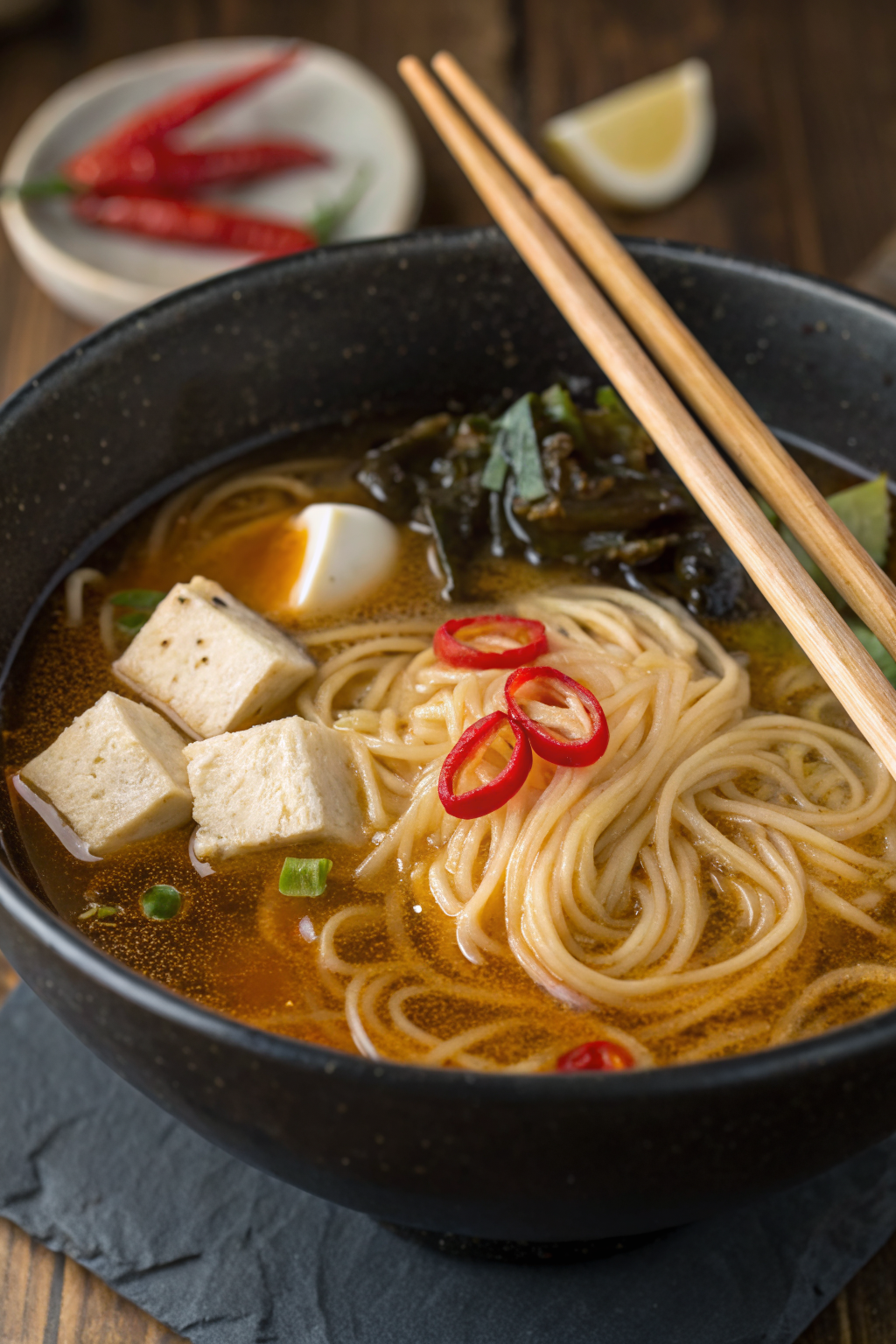
Harusame Japanese Glass Noodle Soup
Ingredients
Instructions
- Soak the harusame glass noodles in warm water for 10 minutes or until softened, then drain and set aside.
- In a medium pot, bring the dashi stock to a gentle boil over medium heat.
- Add the soy sauce, mirin, and sesame oil to the pot and stir to combine.
- Add the napa cabbage, carrot, and sliced chicken (if using). Simmer for 5–7 minutes, or until the vegetables are tender and the chicken is cooked through.
- Add the soaked glass noodles to the pot and cook for 2–3 minutes, just until the noodles are heated through and translucent.
- Taste and adjust seasoning with a little salt if needed.
- Ladle the soup into bowls and top with sliced green onions and toasted sesame seeds if desired. Serve hot.
Notes
Approximate per serving (4 servings): 190 calories; fat 4 g; saturated fat 1 g; carbohydrates 30 g; fiber 2 g; sugars 5 g; protein 9 g; sodium 820 mg. Values will vary based on brands, optional chicken, and portion size.
Leave a Reply