
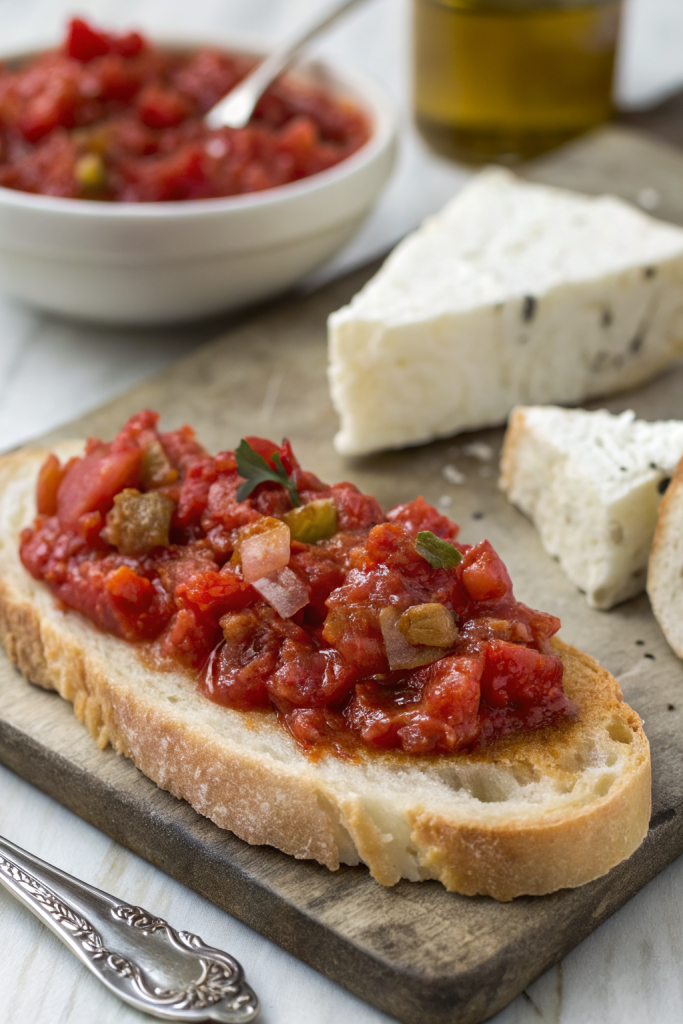
How to Make Tomato Relish tastes tangy, a little sweet, and just spicy enough to wake up anything you spoon it on. It works for busy home cooks who want a quick condiment in about 45–60 minutes that tastes like it simmered all afternoon. I grew up in a small Midwestern town, and my grandma measured relish success by how fast it disappeared at cookouts… which meant it vanished pretty fast.
Why Tomato Relish Is Worth It
Tomato relish turns basic meals into “wait, what did you put on this?” moments. You stir it together with simple pantry ingredients, and it rewards you with layers of flavor that taste way more complex than the effort.
You also control the sweetness, heat, and texture, which store-bought jars rarely nail. One batch of homemade tomato relish can cover burgers, eggs, grilled chicken, sandwiches, and snack boards all week.
“This tomato relish tastes like a backyard cookout in a jar and upgrades every single thing on the plate. ★★★★★”
Ingredients You Need
Tomatoes
- 2 pounds ripe tomatoes, chopped small
- Use Roma or plum tomatoes for thicker relish.
- Use vine-ripened or heirloom tomatoes for juicier, brighter flavor.
- In winter, use good-quality canned whole tomatoes (drain well before chopping).
Vegetables & Aromatics
- 1 medium yellow onion, finely diced
- 1 red bell pepper, finely diced
- 2 cloves garlic, minced (use jarred minced garlic if you feel tired or rushed)
- 1 small jalapeño or serrano, minced (seed it for mild heat, keep seeds for extra kick)
Sweetness & Acid
- ½ cup apple cider vinegar (Bragg or any raw, unfiltered brand tastes great)
- ⅓–½ cup sugar
- Use white sugar for clean flavor.
- Use light brown sugar for a deeper, caramel note.
- Use coconut sugar if you avoid refined sugar, but expect a slightly darker color.
Seasonings
- 1½ teaspoons kosher salt (use less if you use table salt)
- ½ teaspoon black pepper
- ½ teaspoon smoked paprika (adds a subtle smoky flavor without a grill)
- ½ teaspoon mustard seeds (optional but adds a classic relish vibe)
- ¼ teaspoon red pepper flakes (optional, for extra heat)
Thickening & Texture Helpers (Optional)
- 1–2 tablespoons tomato paste, if you want a thicker, richer relish
- 1 tablespoon cornstarch mixed with 1 tablespoon water, only if the relish stays too thin after simmering
Pantry Shortcuts
- Use canned diced tomatoes when fresh ones taste bland or cost too much.
- Use frozen chopped onions and peppers to save time on knife work.
- Use pre-minced garlic and jarred jalapeños if you want a low-effort batch on a weeknight.
Equipment List
- Large, heavy-bottomed saucepan or Dutch oven
- Cutting board and sharp knife
- Wooden spoon or silicone spatula
- Measuring cups and spoons
- Small bowl for cornstarch slurry (if you use it)
- Clean glass jars or containers with tight lids for storage
Quick Tips & substitutions
- Chop tomatoes small so the relish cooks down evenly and spreads nicely on sandwiches.
- Taste your tomatoes; if they taste bland, bump up vinegar and salt slightly to wake up the flavor.
- Use canned tomatoes when fresh ones look pale or out of season.
- Swap red bell pepper with yellow or orange if that is what you have.
- Skip jalapeño for a kid-friendly batch, or add extra for a taco-night version.
- Use maple syrup or honey instead of sugar, but simmer a bit longer since liquid sweeteners thin the mixture.
- Use white vinegar instead of apple cider vinegar if needed, but reduce it by a tablespoon since it tastes sharper.
- Stir often near the end of cooking so the natural sugars do not scorch on the bottom of the pan.
- Adjust thickness at the end: simmer longer to thicken, or add a splash of water if it tightens too much.
- Cool the relish completely before you taste for final seasoning, since flavors settle and mellow as it cools.
How to Make Tomato Relish
Step 1: Prep the Vegetables
Wash and dry the tomatoes, onion, peppers, and jalapeño. Core the tomatoes and chop them into small, even pieces about ¼ inch. Dice the onion and bell pepper the same size so they cook at the same rate. Mince the garlic and jalapeño very fine so they melt into the relish instead of leaving big spicy chunks.
Step 2: Start the Base
Place your saucepan over medium heat. Add a drizzle of neutral oil if your pan tends to stick. Add the onion and bell pepper, then cook and stir until they soften and turn translucent, about 5–7 minutes. Add the garlic and jalapeño and cook another 1–2 minutes until they smell fragrant.
Step 3: Add Tomatoes and Seasonings
Add the chopped tomatoes to the pan and stir to combine with the softened vegetables. Pour in the apple cider vinegar and add sugar, salt, pepper, smoked paprika, mustard seeds, and red pepper flakes. Stir well so the sugar dissolves and the spices coat everything. If you want a richer color and flavor, stir in the tomato paste now.
Step 4: Simmer and Thicken
Bring the mixture to a gentle bubble over medium heat. Lower the heat to medium-low and let it simmer uncovered, stirring every few minutes. Aim for 25–35 minutes of simmer time, until the tomatoes break down and the mixture thickens to a spoonable, jammy consistency. Scrape the bottom of the pan as you stir so nothing sticks or burns.
Step 5: Adjust Texture
Check the texture near the 25-minute mark. If the relish looks thin and watery, keep simmering until it thickens naturally. If you feel impatient, stir together cornstarch and water in a small bowl, then drizzle a little into the simmering relish while you stir. Let it cook 2–3 more minutes so the cornstarch cooks out and the relish turns glossy and thick.
Step 6: Taste and Season
Turn off the heat and let the tomato relish sit for 5 minutes. Taste a small spoonful and check salt, sweetness, and heat. Add a pinch more salt if it tastes flat, a teaspoon of sugar if it tastes too sharp, or a pinch of red pepper flakes if you want more kick. Stir after each adjustment and taste again until it hits your sweet-spot flavor.
Step 7: Cool
Let the relish cool to room temperature in the pan. Spoon it into clean jars or containers, leaving a little space at the top. Wipe the rims, seal with lids, and move the jars to the fridge. The flavor deepens overnight, so plan to make it a few hours before you want your best-tasting batch.
Recipe Variations
- Gluten-free: Use gluten-free vinegar and double-check spice blends for hidden wheat.
- Vegan: Use sugar that lists vegan or organic on the label if you avoid bone-char processed sugar.
- Low sugar: Cut sugar to 2–3 tablespoons and rely on very ripe tomatoes; add a pinch of stevia or monk fruit if you want more sweetness.
- Low carb: Skip sugar and use a low-carb sweetener like erythritol or allulose, then simmer a bit longer to reduce extra liquid.
- Extra smoky: Add ½ teaspoon more smoked paprika or a dash of chipotle powder.
- Herb-forward: Stir in fresh basil, cilantro, or parsley at the end of cooking for a fresh, green note.
- Chunky style: Cut the vegetables slightly larger and shorten the simmer time so they hold more shape.
- Super smooth: Blend the cooled relish with an immersion blender for a spreadable, ketchup-like texture.
Ways to Serve Tomato Relish
- Spoon over burgers, grilled chicken, or turkey patties.
- Swirl into scrambled eggs, omelets, or breakfast burritos.
- Spread on sandwiches, wraps, and panini instead of plain ketchup.
- Serve with roasted potatoes, sweet potato fries, or baked fries.
- Use as a topping for veggie bowls, rice bowls, or grain salads.
- Pair with cheese boards, crackers, and sliced cucumbers.
- Stir into mayo or Greek yogurt for a quick dipping sauce.
Storage Success
Cool the tomato relish completely before you move it to the fridge so condensation does not water it down. Store it in clean, airtight glass jars or containers, and keep it chilled for up to 2 weeks. Use a clean spoon every time you scoop some out so it stays fresh longer. If you want to freeze it, portion it into small containers, freeze up to 3 months, and thaw overnight in the fridge before you use it.
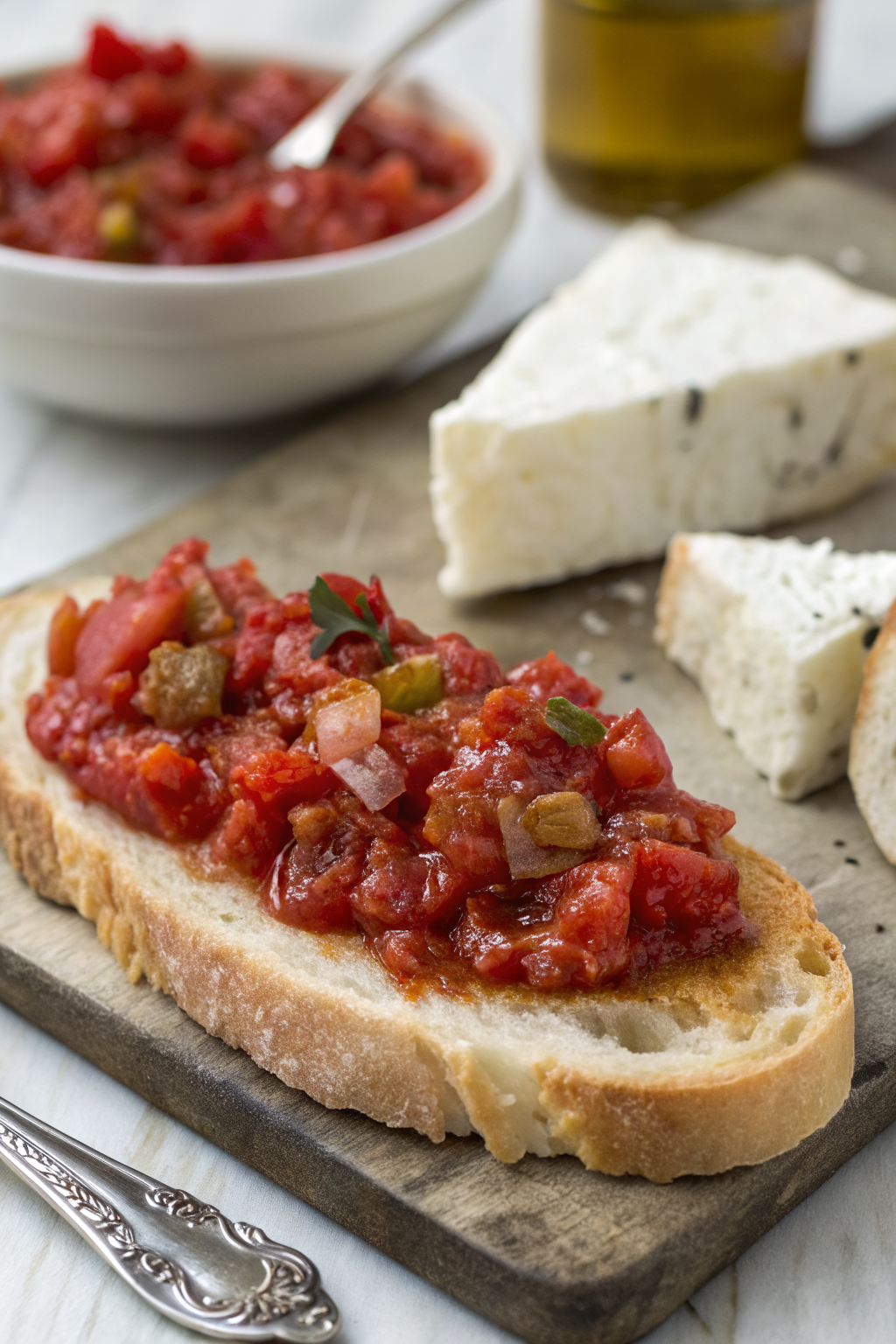
How to Make Tomato Relish
Ingredients
Instructions
- Prep the vegetables: Wash and dry the tomatoes, onion, bell pepper, and jalapeño. Core the tomatoes and chop them into small, even 1/4-inch pieces. Finely dice the onion and bell pepper to a similar size. Mince the garlic and jalapeño very finely so they melt into the relish.
- Start the base: Set a large, heavy-bottomed saucepan over medium heat and add a light drizzle of neutral oil if your pan tends to stick. Add the onion and bell pepper and cook, stirring often, until softened and translucent, about 5–7 minutes. Stir in the garlic and jalapeño and cook 1–2 minutes more, just until fragrant.
- Add tomatoes and seasonings: Stir in the chopped tomatoes. Pour in the apple cider vinegar, then add the sugar, salt, black pepper, smoked paprika, mustard seeds, and red pepper flakes. Stir well to dissolve the sugar and coat the vegetables with the seasonings. If using, add the tomato paste and mix until fully incorporated.
- Simmer and thicken: Bring the mixture to a gentle bubble over medium heat. Reduce the heat to medium-low and simmer uncovered for 25–35 minutes, stirring every few minutes and scraping the bottom of the pan so nothing sticks or burns, until the tomatoes have broken down and the relish is thick and spoonable.
- Adjust texture: Check the consistency near the 25-minute mark. Continue simmering if the relish looks thin and watery. If you prefer to thicken it faster, stir the cornstarch and water together, then drizzle a little into the simmering relish while stirring. Let it cook 2–3 minutes more until glossy and thickened.
- Taste and season: Remove the pan from the heat and let the relish sit for about 5 minutes. Taste and adjust the flavor with a pinch more salt if it tastes flat, a little extra sugar if it is too sharp, or more red pepper flakes if you want extra heat. Stir well and taste again until balanced to your liking.
- Cool and store: Let the tomato relish cool to room temperature in the pan. Transfer to clean glass jars or containers, leaving a bit of headspace at the top. Seal with lids and refrigerate. The flavor deepens overnight, and the relish will keep in the fridge for up to about 2 weeks.
Notes
Approximate per 2-tablespoon serving (about 1/12 of recipe): 35 calories; fat 0.5 g; saturated fat 0 g; carbohydrates 7 g; fiber 1 g; sugars 5 g; protein 1 g; sodium 210 mg. Values will vary based on exact sugar amount, tomato variety, and portion size.
Leave a Reply