

Italian Seafood Salad tastes bright, briny, lemony, and a little luxurious, like a seaside vacation in a bowl. It works perfectly for anyone who wants a make-ahead, crowd-pleasing dish that feels special yet comes together in about 45 to 60 minutes, depending on your seafood mix. I first learned this version from an old Italian neighbor in New Jersey, and I still hear her voice in my head every time I zest a lemon over the bowl.
Why Make This Italian Seafood Salad at Home
Homemade Italian Seafood Salad gives you tender, perfectly cooked seafood instead of rubbery mystery bites from a deli case. You control the acidity, the olive oil, the salt, and the spice, so the flavors match your taste and your guests.
You also save money when you buy and cook your own seafood mix. You can prep it ahead, chill it, and pull it out when guests walk in, which makes you look far more organized than you feel.
“This Italian Seafood Salad tastes like something from a coastal trattoria, only fresher, brighter, and tailored to your own kitchen.”
Ingredients You Need
Here is a classic, flexible ingredient list for Italian Seafood Salad. I will note easy substitutions and pantry shortcuts as we go.
Seafood
- Shrimp: 1 pound, medium (21–25 count), peeled and deveined, tails on or off
- Use frozen raw shrimp that you thaw in the fridge; it usually tastes fresher than “fresh” seafood in many grocery stores.
- Calamari: 1 pound, tubes and tentacles, cleaned and sliced into rings
- Many stores sell frozen cleaned calamari; that shortcut saves a lot of time.
- Scallops: 1/2 pound, small bay scallops or quartered sea scallops
- Mussels or clams (optional): 1 pound, scrubbed and debearded if needed
- You can skip shellfish if you have allergy concerns and just increase shrimp and calamari.
- Firm white fish: 1/2 pound, such as cod, halibut, or haddock, cut into 1-inch chunks
- Choose a firm fish so it holds its shape in the salad.
Use any combination, but aim for about 2.5 to 3 pounds of seafood total. Balance texture: something firm (shrimp), something tender (calamari), and something rich (scallops or fish).
Vegetables, Herbs, and Aromatics
- Celery: 3 ribs, finely sliced
- Red onion: 1 small, very thinly sliced
- Roasted red peppers: 1/2 cup, sliced (jarred works great and saves time)
- Fresh parsley: 1/2 cup, chopped
- Fresh basil: 1/4 cup, torn or thinly sliced
- Garlic: 3 to 4 cloves, finely minced
- Lemon zest: from 2 lemons
- Lemon juice: from 3 to 4 lemons (about 1/2 to 2/3 cup, adjust to taste)
Dressing & Seasoning
- Extra virgin olive oil: 1/2 to 2/3 cup
- Use a good, fruity brand since it carries a lot of flavor.
- Red wine vinegar: 2 to 3 tablespoons
- Crushed red pepper flakes: 1/2 to 1 teaspoon, to taste
- Dried oregano: 1 teaspoon
- Kosher salt: to taste (start with about 1.5 teaspoons)
- Freshly ground black pepper: to taste
- Optional briny add-ins:
- Capers: 2 tablespoons, drained
- Pitted olives: 1/3 cup, sliced (Kalamata or Castelvetrano work very well)
Pantry Shortcuts & Substitutions
- Frozen seafood mix: Many stores sell a “seafood medley” with shrimp, calamari, and scallops. Use about 2.5 to 3 pounds, thaw in the fridge, and pat dry.
- Bottled lemon juice: Fresh juice tastes brighter, but in a pinch, use half fresh, half bottled.
- Pre-chopped garlic: Use if you must; sauté it briefly to mellow the flavor before mixing into the salad.
- Jarred roasted peppers and olives: They add flavor and color with zero extra cooking.
Equipment List
- Large pot: For poaching seafood
- Slotted spoon or spider strainer: To lift seafood from the cooking liquid
- Large mixing bowl: To toss and chill the salad
- Small bowl or jar with lid: To mix and shake the dressing
- Sharp knife and cutting board
- Citrus juicer or reamer: To get every drop from your lemons
- Colander: To rinse seafood if needed
- Plastic wrap or airtight container: For chilling and storing
Tips & Mistakes
- Use cold seafood before cooking so it cooks evenly and stays tender.
- Pat seafood dry before poaching so it does not water down the cooking liquid or salad.
- Salt the poaching water generously so the seafood tastes seasoned from the inside.
- Poach seafood gently; keep the water at a bare simmer, not a rolling boil, to avoid rubbery texture.
- Cook each type of seafood separately, since shrimp, calamari, and fish all need different times.
- Shock cooked seafood briefly in ice water, then drain very well, so it stops cooking and stays firm.
- Do not overdo the lemon juice at the start; add part of it, taste after chilling, then adjust.
- Use high-quality extra virgin olive oil because it acts as the main flavor base.
- Slice onions very thin and soak them in cold water for 10 minutes if you want a milder bite.
- Toss the salad while the seafood still feels slightly warm so it absorbs the dressing better.
- Chill the salad at least 2 hours so flavors meld and the texture sets.
- Taste and adjust salt, acid, and heat right before serving, since flavors mellow in the fridge.
- Avoid overcrowding the pot when poaching; cook in batches so pieces do not steam unevenly.
- Do not skip herbs; fresh parsley and basil keep the salad from tasting flat or heavy.
- Stir gently to avoid breaking the fish into mush; fold from the bottom of the bowl.
- Keep shellfish in the shell if you want drama, or remove them for easier eating at parties.
- Do not store the salad at room temperature; chill it promptly for food safety.
- Use a glass or stainless steel bowl to avoid any reaction with the acidic dressing.
- If you serve it the next day, drizzle a little extra olive oil and lemon juice to wake up the flavors.
How to Make Italian Seafood Salad
Step 1: Prep the Seafood and Aromatics
Peel and devein the shrimp, clean and slice the calamari, and cut the fish into 1-inch chunks. Rinse mussels or clams, scrub the shells, and discard any that stay open when you tap them. Pat everything dry with paper towels so it cooks evenly and does not dilute the salad.
Slice the celery and red onion thinly and chop the parsley and basil. Mince the garlic and zest the lemons before you juice them. Set all the aromatics aside so you can move quickly once the seafood cooks.
Step 2: Set Up the Poaching Liquid
Fill a large pot with water and add a generous handful of kosher salt. The water should taste pleasantly salty, like the sea. You can toss in a few lemon slices, a bay leaf, and some parsley stems if you want extra aroma.
Bring the water to a gentle simmer over medium heat. Keep the heat low enough that the surface barely moves. This gentle heat keeps the seafood tender.
Step 3: Poach the Seafood in Batches
Add the shrimp to the simmering water and cook until they turn pink and opaque, about 2 to 3 minutes. Use a slotted spoon to transfer them to a bowl of ice water. Once cool, drain very well and move them to a large mixing bowl.
Cook the calamari next, about 1 to 2 minutes, until the rings turn opaque and slightly firm. Shock in ice water, drain thoroughly, and add to the bowl. Poach the scallops and fish in small batches, about 2 to 4 minutes depending on size, until opaque in the center, then cool and drain the same way.
If you use mussels or clams, add them to the simmering water and cook until the shells open, about 4 to 6 minutes. Discard any that stay closed. Remove the meat from the shells if you want a cleaner salad, or keep some in the shell for presentation, then add them to the mixing bowl.
Step 4: Mix the Dressing
In a small bowl or jar, combine lemon juice, red wine vinegar, minced garlic, dried oregano, crushed red pepper flakes, salt, and black pepper. Whisk or shake until the salt dissolves. Slowly stream in the olive oil while whisking, or add it to the jar and shake until the dressing looks emulsified.
Taste the dressing and adjust. Add more lemon juice for brightness, more salt for depth, or more red pepper for heat. The dressing should taste slightly stronger than you want the finished salad, since the seafood will mellow it.
Step 5: Toss the Salad
Add celery, red onion, roasted red peppers, capers, olives, parsley, and basil to the bowl with the cooled seafood. Pour about two thirds of the dressing over the top. Gently toss, folding from the bottom, until everything coats evenly.
Taste a piece of each type of seafood. Add more dressing, lemon zest, salt, or pepper as needed. The salad should taste bright, well seasoned, and lightly glossy with olive oil, not greasy.
Step 6: Chill and Let the Flavors Set
Cover the bowl tightly with plastic wrap or transfer the salad to an airtight container. Chill for at least 2 hours, and up to 24 hours. Stir once or twice during chilling if you can, so the dressing redistributes.
Right before serving, taste again. Citrus and salt often soften a bit in the fridge, so adjust with a splash of lemon juice, a drizzle of olive oil, and a pinch of salt if needed. Garnish with a little extra parsley or basil for color.
Variations I’ve Tried
I sometimes add small chunks of boiled or steamed potatoes to stretch the salad for a bigger crowd. The potatoes soak up the lemony dressing and make the dish feel a bit more hearty. Just cook them until tender, cool them, and fold them in gently.
I also like a spicy version with extra crushed red pepper, a spoonful of Calabrian chili paste, and more garlic. That version works well for people who love a little kick with their seafood. You can balance the heat with a touch more olive oil.
If I cook for guests who avoid shellfish, I use only shrimp, calamari, and firm white fish. I bulk it up with extra roasted peppers, olives, and sometimes artichoke hearts from a jar. The salad still tastes very Italian and very satisfying.
During summer, I toss in halved cherry tomatoes right before serving. They add sweetness and juice without extra effort. In winter, I keep it more classic with just celery, onion, and roasted peppers.
How to Serve Italian Seafood Salad
Serve Italian Seafood Salad well chilled or at cool room temperature, piled high on a large platter with lemon wedges on the side. It pairs beautifully with crusty bread, focaccia, or simple garlic-rubbed toast to soak up the juices. You can spoon it over a bed of mixed greens, arugula, or shredded romaine for a light main dish.
It also works as part of a larger spread with marinated vegetables, olives, and fresh mozzarella. For a lighter option, serve small portions in lettuce cups or endive leaves as a fun appetizer. Kids often enjoy the shrimp the most, so keep a few extra on top for them.
How to store
- Fridge: Store Italian Seafood Salad in an airtight container in the refrigerator for up to 2 days; the flavor often improves on day one, then starts to fade after day two.
- Freezer: Avoid freezing the finished salad, since the texture of the seafood and vegetables turns mushy; instead, freeze raw seafood separately and thaw before cooking next time.
- Reheating: Serve the salad chilled or at cool room temperature; do not reheat, since reheating overcooks the seafood and toughens it.
- Make-ahead: Prep and dress the salad up to 24 hours in advance, then taste and refresh with a little extra lemon juice, olive oil, and herbs right before serving.
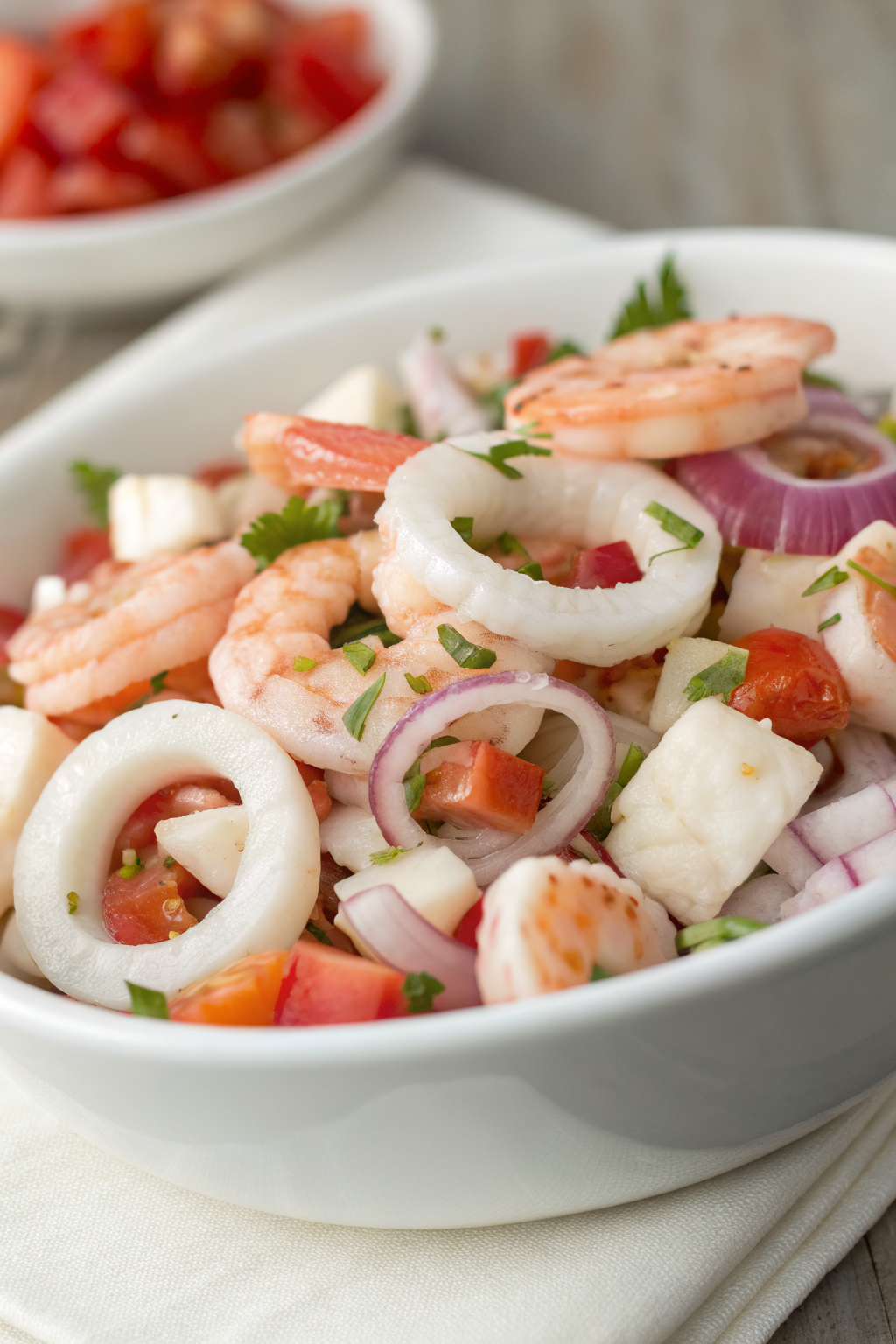
Italian Seafood Salad
Ingredients
Instructions
- In a large pot, combine water, white wine, lemon slices, garlic, salt, and parsley stems. Bring to a gentle boil, then reduce to a simmer.
- Add the shrimp and cook for 2–3 minutes, until just pink and opaque. Remove with a slotted spoon to a large bowl of ice water to stop cooking.
- Add the calamari rings and bay scallops (and white fish, if using) to the simmering liquid. Poach for 2–3 minutes, until just cooked through and tender. Transfer them to the same ice water bath.
- Once cooled, drain the seafood well and pat dry with paper towels. Place in a large mixing bowl.
- In a small bowl or jar, whisk together olive oil, lemon juice, red wine vinegar, minced garlic, Dijon mustard (if using), salt, black pepper, and red pepper flakes until emulsified.
- Add the celery, red bell pepper, red onion, olives, capers, parsley, and basil to the bowl with the drained seafood.
- Pour the dressing over the salad and gently toss until all ingredients are evenly coated.
- Taste and adjust seasoning with additional salt, pepper, or lemon juice as desired.
- Cover and refrigerate for at least 1 hour to allow flavors to meld. Toss again before serving.
- Serve chilled or at cool room temperature, optionally over a bed of mixed greens.
Notes
Approximate per serving (1/6 of recipe): 260 calories; fat 14 g; saturated fat 2 g; carbohydrates 7 g; fiber 1 g; sugars 2 g; protein 27 g; sodium 780 mg. Values will vary based on specific seafood types, added salt, and portion size.
Leave a Reply