
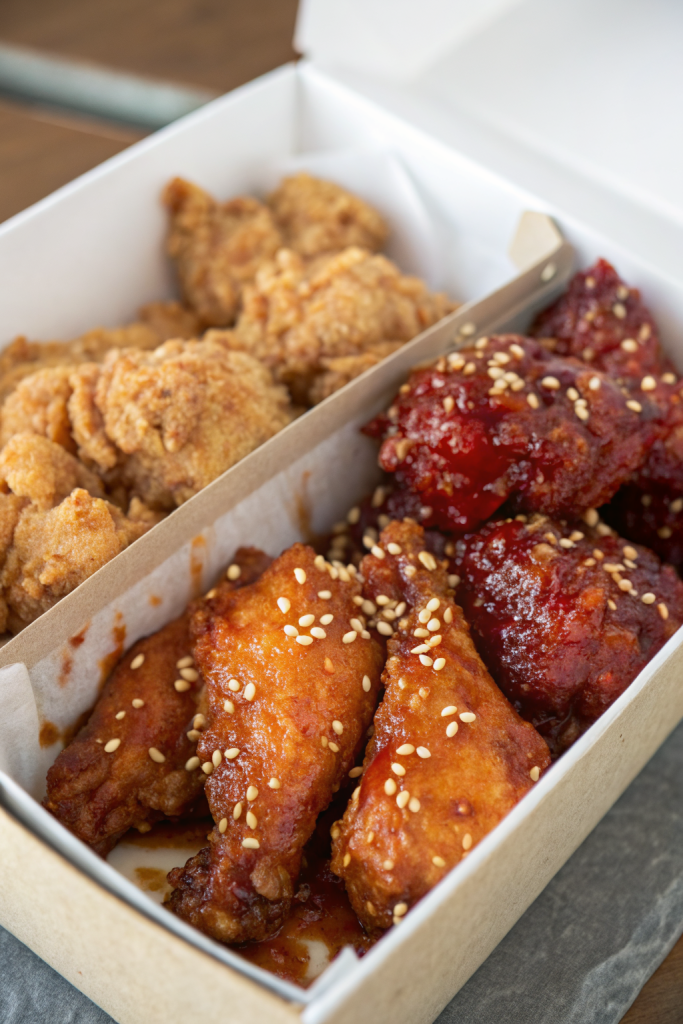
Korean Fried Chicken Recipe hits that perfect sweet, salty, crunchy, sticky combo that makes you forget every other fried chicken you ever met. It works for weeknight comfort food, game day, or a fun dinner party, and you can finish everything in about 1 hour. I first tried it in a tiny New York shop after a long shift in a restaurant kitchen, and it absolutely rewired my brain about what fried chicken could taste like.
Why Korean Fried Chicken Recipe Is Worth It
Korean Fried Chicken Recipe gives you shatteringly crisp crust that stays crunchy under sauce, thanks to a light starch coating and a double fry. The sauce hits gochujang heat, garlicky depth, and a sticky caramel vibe that clings to every craggy edge.
You can pull this off with basic pantry ingredients plus a quick grocery run for gochujang and gochugaru. The recipe scales easily, works with wings, drumettes, or boneless bites, and reheats better than most fried chicken.
“This Korean Fried Chicken Recipe tastes like takeout from your favorite K‑chicken spot, but hotter, crispier, and way more addictive at home. ★★★★★”
Ingredients You Need
Chicken
- 2 pounds chicken wings or drumettes
- Split wings into flats and drumettes if needed.
- You can also use boneless skinless thighs cut into 1.5 inch chunks for easier eating.
Marinade
- 1 teaspoon kosher salt
- 1 teaspoon black pepper
- 1 tablespoon soy sauce
- 1 tablespoon rice vinegar or apple cider vinegar
- 1 tablespoon grated fresh ginger or 1 teaspoon ginger paste
- 3 cloves garlic, grated or very finely minced
- 1 tablespoon mirin or 1 teaspoon sugar plus 2 teaspoons water
Mix these in a large bowl and coat the chicken well. This step seasons the meat and helps the coating cling.
Coating
- 1 cup potato starch or cornstarch
- Potato starch gives the crunchiest crust, but cornstarch still works great.
- 2 tablespoons all purpose flour
- Use gluten free all purpose flour if needed.
- 1 teaspoon baking powder
- 1 teaspoon kosher salt
- 1 teaspoon garlic powder
- 1 teaspoon onion powder
Toss the chicken in the dry mix right before frying. Aim for a thin, even, slightly clumpy coating.
Sauce
- 2 tablespoons unsalted butter or neutral oil
- 4 cloves garlic, minced
- 1 tablespoon grated ginger
- 3 tablespoons gochujang (Korean red chili paste)
- I like brands such as Chung Jung One or CJ Haechandle, but any mild to medium one works.
- 1 to 2 tablespoons gochugaru (Korean red pepper flakes), to taste
- 3 tablespoons soy sauce
- 3 tablespoons honey
- 2 tablespoons brown sugar
- 2 tablespoons rice vinegar
- 1 tablespoon ketchup
- 1 tablespoon toasted sesame oil
Adjust sweetness and heat to your preference. If you use a very salty soy sauce, taste and add a splash of water if needed.
Garnishes
- Toasted sesame seeds
- Thinly sliced green onions
- Optional: thinly sliced fresh red chili for extra heat
Oil and Equipment
- 5 to 6 cups neutral oil with high smoke point
- Use canola, peanut, vegetable, or sunflower oil.
- Heavy pot or Dutch oven
- Wire rack set over a sheet pan
- Tongs or chopsticks
- Instant read thermometer for oil
- Large mixing bowl for saucing the chicken
Quick Tips & substitutions
- Pat the chicken very dry before marinating so the coating sticks better.
- Use potato starch if possible, since it gives extra crisp crust compared to cornstarch.
- Keep the oil between 325 and 350°F; adjust the burner often and avoid crowding the pot.
- Fry in small batches so the chicken browns evenly and stays crunchy.
- Double fry every piece; the second fry at higher heat locks in that shatter effect.
- Swap honey with maple syrup or extra brown sugar if you run out.
- Use gluten free tamari and gluten free flour mix to keep the recipe gluten free.
- Skip gochugaru and use only gochujang if you prefer milder heat.
- Bake the coated chicken on a rack at 425°F with a light oil spray if you avoid deep frying, then sauce as written.
How to Make Korean Fried Chicken Recipe
Step 1: Prep and marinate the chicken
Place the chicken in a large bowl and pat it dry with paper towels. Add salt, pepper, soy sauce, rice vinegar, ginger, garlic, and mirin. Toss until every piece looks coated, then cover and chill for 20 to 30 minutes while you prep the sauce and coating.
Step 2: Mix the coating
In another large bowl, whisk together potato starch, flour, baking powder, salt, garlic powder, and onion powder. Take the chicken out of the fridge and let it sit at room temperature for about 10 minutes so it does not go into the oil ice cold. Toss a few pieces of chicken at a time in the starch mix and press the coating onto the surface so it clings.
Shake off excess starch and place coated pieces on a wire rack. Let them rest for 5 to 10 minutes so the coating hydrates slightly and sets.
Step 3: Heat the oil
Pour the oil into a heavy pot, leaving several inches of space at the top for safety. Clip on a thermometer and heat the oil to 325°F over medium heat. Keep a sheet pan lined with a wire rack nearby for the fried chicken.
Step 4: First fry
Add a small test piece of chicken; it should bubble steadily right away. Add 6 to 8 pieces of chicken, depending on the size of your pot, and keep them in a single layer. Fry for 6 to 8 minutes, turning occasionally, until the coating looks pale golden and set.
Lift the chicken out with tongs and place it on the wire rack to drain. Let the oil return to 325°F before you start the next batch. Repeat until you fry all the chicken once.
Step 5: Make the sauce
While the chicken rests, start the sauce in a medium saucepan. Melt the butter over medium heat, then add garlic and ginger and stir until they smell fragrant, about 30 seconds. Add gochujang, gochugaru, soy sauce, honey, brown sugar, rice vinegar, ketchup, and sesame oil.
Stir until the sauce bubbles gently and thickens slightly, about 3 to 5 minutes. Taste and adjust sweetness, salt, and heat. Turn the heat to low and keep the sauce warm.
Step 6: Second fry for extra crunch
Raise the oil temperature to 350 to 365°F. Add the chicken back in batches and fry for 2 to 3 minutes per batch until deep golden and very crisp. The crust should feel firm and sound almost glassy when you tap it with tongs.
Return the chicken to the rack and let excess oil drip off for a minute. Keep the batches close together in time so everything stays hot for saucing.
Step 7: Sauce and finish
Transfer the hot chicken to a large mixing bowl. Pour the warm sauce over the top and toss quickly until every piece glistens and looks evenly coated. Sprinkle with toasted sesame seeds and sliced green onions.
Serve right away while the crust still crunches loudly. Add extra sauce on the side if you like things extra sticky.
Recipe Variations
- Gluten free: Use gluten free all purpose flour, potato starch, and tamari instead of soy sauce.
- Extra spicy: Add more gochugaru, a spoonful of Korean chili oil, or a chopped fresh chili to the sauce.
- Mild version: Cut the gochujang in half and skip gochugaru, then add more ketchup and honey to balance.
- Boneless bites: Use boneless thigh chunks, fry as written, and serve as Korean fried chicken nuggets.
- Dairy free: Use oil instead of butter in the sauce and check labels on gochujang for hidden dairy.
- Lower carb: Use a low carb sweetener like allulose or monk fruit in place of sugar and honey, and reduce the ketchup.
Ways to Serve Korean Fried Chicken Recipe
- Pile over hot steamed rice with extra sauce and kimchi on the side.
- Serve with crisp lettuce leaves and rice, then wrap chicken pieces like little ssam bundles.
- Pair with pickled radish cubes and simple cucumber salad for contrast.
- Add to a bento style lunch box with rice, sliced fruit, and crunchy veggies.
- Turn leftovers into a Korean fried chicken rice bowl with shredded cabbage and a drizzle of mayo mixed with gochujang.
Storage Success
Cool leftover Korean Fried Chicken Recipe pieces on a rack so the crust does not steam and soften too much. Store them in an airtight container in the fridge for up to 3 days. Reheat in a 375°F oven or air fryer until hot and crisp again, about 8 to 12 minutes.
Keep extra sauce in a small jar in the fridge for up to a week and warm it gently on the stove or in the microwave. Toss reheated chicken in a light amount of sauce so the crust keeps some crunch.
Leave a Reply