
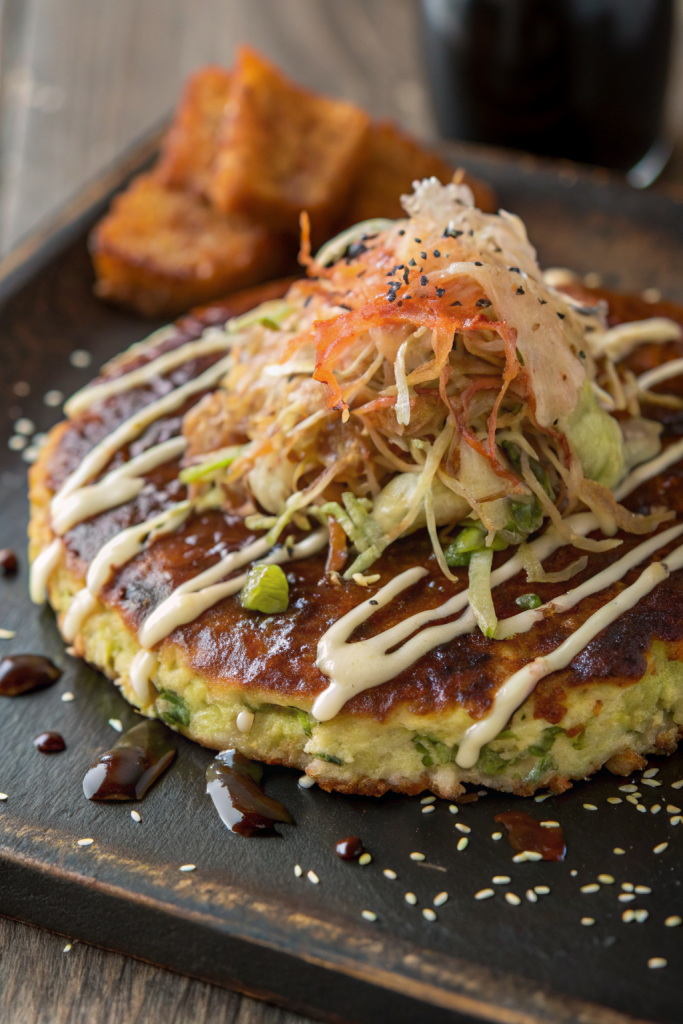
Okonomiyaki Japanese Pancakes Recipe hits that perfect spot between cozy comfort food and fun, customizable dinner, and you can get it on the table in about 35 minutes. It works for busy weeknights, picky eaters, and anyone who loves savory pancakes loaded with toppings. I still remember the first time I flipped one in a tiny apartment kitchen and almost cheered when the cabbage stayed inside the batter.
Why Make This Okonomiyaki Japanese Pancakes Recipe at Home
You control everything at home, from how thick you like the batter to how saucy you go on top. You also get restaurant-level flavor without hunting down a specialty shop or waiting in line.
Homemade okonomiyaki Japanese pancakes also use simple, budget friendly ingredients. You can clean out your fridge and still end up with something that tastes like comfort food from a street stall in Osaka.
“Crispy edges, tender cabbage, and all the toppings made this okonomiyaki Japanese pancakes recipe an instant family favorite.” ★★★★★
Ingredients You Need
Here is what you need for a classic Osaka-style okonomiyaki Japanese pancakes recipe.
Batter and Vegetables
- 1 cup all-purpose flour
- You can swap up to 25% with whole wheat flour, though the texture turns slightly denser.
- 2 tablespoons potato starch or cornstarch
- Potato starch gives a slightly bouncier texture, but cornstarch works fine.
- 1 teaspoon baking powder
- 1 teaspoon sugar
- 1/2 teaspoon fine sea salt
- 3/4 cup dashi stock (instant dashi granules + water works great)
- If you do not have dashi, use low-sodium chicken broth or vegetable broth and add an extra pinch of salt.
- 2 large eggs
- 3 cups finely shredded green cabbage
- Use regular green cabbage, not Napa, for better crunch.
- 1/4 cup finely sliced green onions, plus extra for topping
Protein and Mix-ins
- 4 to 6 strips thinly sliced pork belly or bacon
- I prefer pork belly for a more authentic feel, but bacon gives a smoky twist.
- 1/4 cup tenkasu (tempura scraps)
- Pantry shortcut: use crushed plain prawn crackers or crunchy fried onions if you cannot find tenkasu.
- 2 tablespoons pickled red ginger (beni shoga), chopped
- Skip it if you dislike pickles, but it adds a classic tang and color.
Toppings
- Okonomiyaki sauce
- I like Otafuku brand. Shortcut: mix 2 tablespoons ketchup, 2 tablespoons Worcestershire sauce, and 1 tablespoon oyster sauce if you cannot find it.
- Japanese mayonnaise (Kewpie)
- Regular mayo works, but Kewpie tastes richer and smoother.
- Aonori (dried green seaweed flakes)
- Katsuobushi (bonito flakes)
- Extra sliced green onions
Use as many or as few toppings as you like. The toppings turn a simple cabbage pancake into a full flavor party.
Equipment
- Large mixing bowl
- Whisk or chopsticks
- Cutting board and sharp knife
- Nonstick skillet or flat griddle (10 to 12 inch)
- Spatula (a wide one helps with flipping)
- Measuring cups and spoons
A nonstick surface makes life easier here. Cast iron works too if you oil it well and preheat it properly.
Tips & Mistakes
- Slice cabbage very thin so it softens quickly and blends into the batter.
- Do not overmix the batter; stir until no dry flour shows, then stop to keep the pancakes tender.
- Let the batter rest 5 to 10 minutes so the flour hydrates and the texture turns smoother.
- Keep the heat at medium or medium-low so the inside cooks through while the surface browns.
- Press the pancake gently with a spatula while it cooks to keep it even, but do not smash it flat.
- Use enough oil to lightly coat the pan so the edges crisp instead of steaming.
- Flip only once; constant flipping knocks out air and makes the pancake tough.
- Add pork belly or bacon on top of the batter in the pan, not mixed inside, so it crisps nicely.
- Taste your okonomiyaki sauce before you drown the pancake; it runs salty, so drizzle lightly, then add more if needed.
- Do not skip the toppings; even a simple combo of mayo and green onions lifts the whole dish.
How to Make Okonomiyaki Japanese Pancakes Recipe
Mix the Batter
- Add flour, potato starch, baking powder, sugar, and salt to a large bowl. Whisk to combine so everything distributes evenly.
- Pour in the dashi stock and whisk until you see a smooth batter with no dry pockets. Scrape the sides and bottom of the bowl so no flour hides there.
- Crack in the eggs and whisk again until the batter turns glossy and slightly thick. Let the mixture sit while you prep the vegetables.
Prep the Vegetables and Mix-ins
- Core the cabbage and slice it into very thin shreds, then chop the shreds into shorter pieces so they mix easily.
- Slice the green onions finely, both white and green parts.
- Add cabbage, green onions, tenkasu, and chopped pickled red ginger to the bowl with the batter.
- Use chopsticks or a spatula to fold everything together until the cabbage coats evenly with batter. The mixture should look heavy on cabbage with just enough batter to hold it together.
Portion and Preheat
- Heat a nonstick skillet over medium heat. Add about 1 tablespoon of neutral oil and swirl to coat the surface.
- While the pan heats, divide the batter mixture into two or three portions, depending on how large you want each pancake. I usually make two big ones for a main dish or three smaller ones for sharing.
Cook the First Side
- Spoon one portion of the batter into the hot pan and shape it into a round about 3/4 inch thick.
- Lay 2 to 3 slices of pork belly or bacon across the top of the pancake, covering as much surface as you can.
- Cook for 4 to 5 minutes, until the edges look set and the bottom turns golden brown. Adjust the heat if it browns too quickly.
Flip and Finish Cooking
- Slide a wide spatula under the pancake, support the top lightly with your other hand or a second spatula, and flip it in one confident motion.
- Cook the second side for another 4 to 5 minutes, until the pork turns cooked through and crisp and the center feels firm when you press it.
- If the outside browns before the inside cooks, lower the heat and cover the pan for 1 to 2 minutes to help the center finish.
- Transfer the cooked okonomiyaki to a plate and repeat with the remaining batter, adding more oil to the pan as needed.
Sauce and Toppings
- While the pancake still feels hot, brush or spoon okonomiyaki sauce over the surface. Cover it, but do not flood it.
- Squeeze Japanese mayonnaise over the top in thin lines, then drag a chopstick across to create a simple pattern if you feel fancy.
- Sprinkle with aonori, katsuobushi, and extra green onions. Watch the bonito flakes dance in the heat and try not to eat it straight from the pan.
Variations I've Tried
I swap the pork belly for small shrimp or squid pieces when I crave seafood okonomiyaki. I just scatter the seafood on top of the batter in the pan, just like the pork, and cook until it turns opaque and slightly browned.
I also make a vegetarian version with extra cabbage, corn, and sliced shiitake mushrooms. I skip the katsuobushi and use a little extra aonori for that savory note.
On busy nights, I chop leftover rotisserie chicken or cooked sausage and fold it into the batter. It turns into a fridge-cleanout pancake that still tastes intentional and comforting.
How to Serve Okonomiyaki Japanese Pancakes Recipe
Serve okonomiyaki Japanese pancakes hot off the pan while the edges stay crisp and the toppings still feel warm. Cut each pancake into wedges, almost like a pizza, so everyone can grab a slice. I like to add a simple side of cucumber salad or miso soup to keep the meal balanced and fresh.
You can also set up a topping bar with extra okonomiyaki sauce, mayo, green onions, and aonori so everyone customizes their own slice. Kids usually enjoy the drizzle and sprinkle part almost as much as the eating.
How to store
- Let leftover okonomiyaki cool to room temperature, then wrap each piece tightly or place in an airtight container. Store in the fridge for up to 3 days.
- For longer storage, wrap individual portions in plastic wrap, then place them in a freezer bag and freeze for up to 1 month.
- Reheat in a lightly oiled skillet over medium-low heat for 4 to 5 minutes per side until hot and crisp again. You can also use an air fryer at 350°F for 5 to 7 minutes, which keeps the edges nicely crunchy.
- If you use a microwave, heat in short bursts and then finish in a dry skillet for a minute to bring back some crispness.
Okonomiyaki Japanese Pancakes Recipe
Ingredients
Instructions
- In a large bowl, whisk together the flour, dashi stock, eggs, salt, and baking powder until a smooth batter forms.
- Fold in the shredded cabbage, green onions, and tenkasu (if using) until everything is evenly coated with batter.
- Heat 1 tablespoon of vegetable oil in a large nonstick skillet over medium heat. Spoon in half of the batter and shape it into a thick round pancake about 3/4-inch (2 cm) thick.
- Arrange half of the bacon or pork belly pieces over the top of the pancake and press them gently into the surface.
- Cook for 4–5 minutes, until the bottom is golden brown, then carefully flip the pancake so the meat side is down. Cook for another 4–5 minutes, pressing gently with a spatula, until the pork is cooked through and the center of the pancake is set.
- Transfer the cooked okonomiyaki to a plate and repeat with the remaining oil, batter, and pork to make the second pancake.
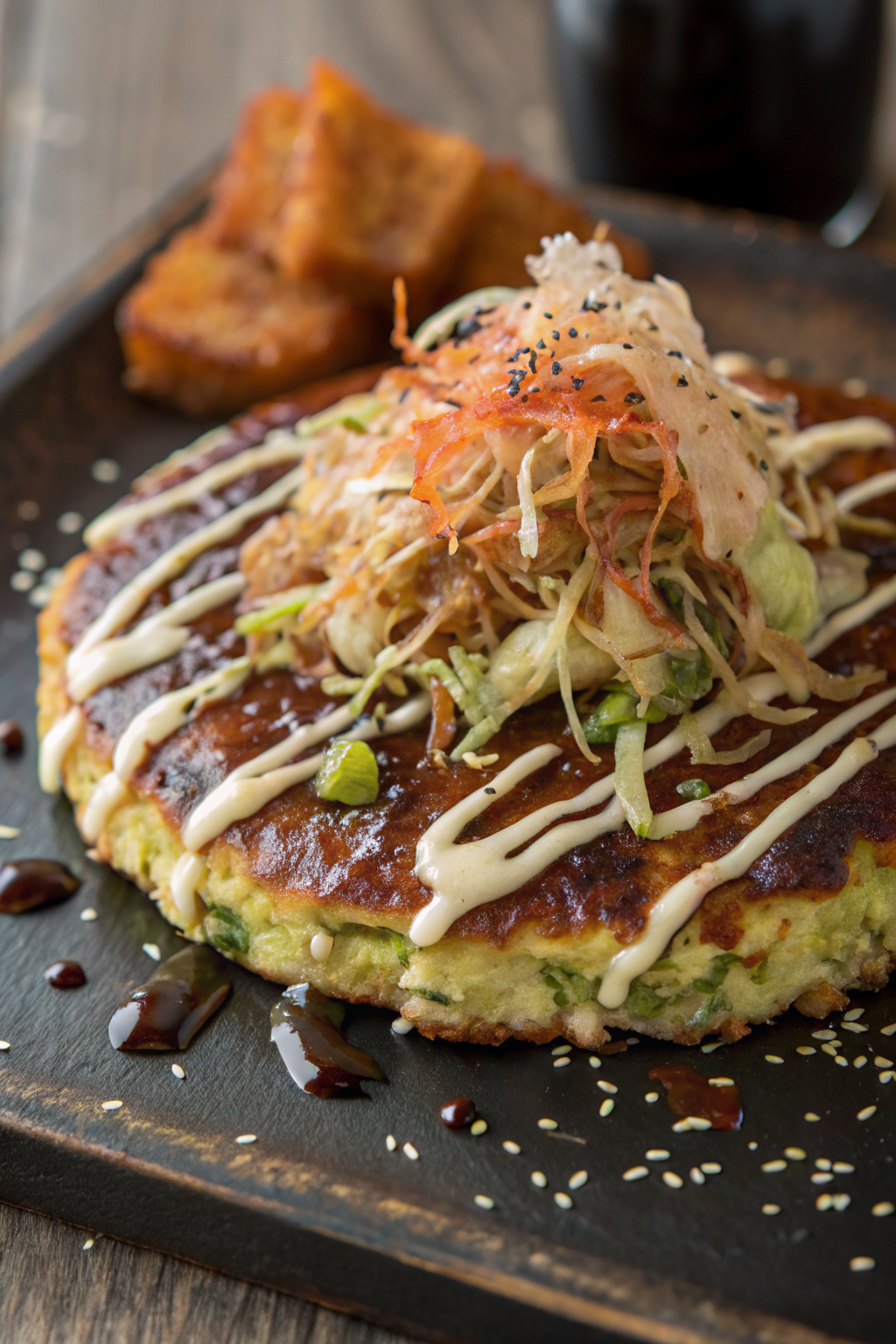
- Drizzle the top of each okonomiyaki generously with okonomiyaki sauce and Japanese mayonnaise. Sprinkle with aonori, katsuobushi, and extra green onions if desired.
- Slice into wedges and serve hot.
Notes
Approximate per serving (1/4 of recipe, including sauces and pork): 430 calories; fat 25 g; saturated fat 6 g; carbohydrates 34 g; fiber 4 g; sugars 6 g; protein 17 g; sodium 890 mg. Values are estimates and will vary based on specific brands, toppings, and portion size.
Leave a Reply