

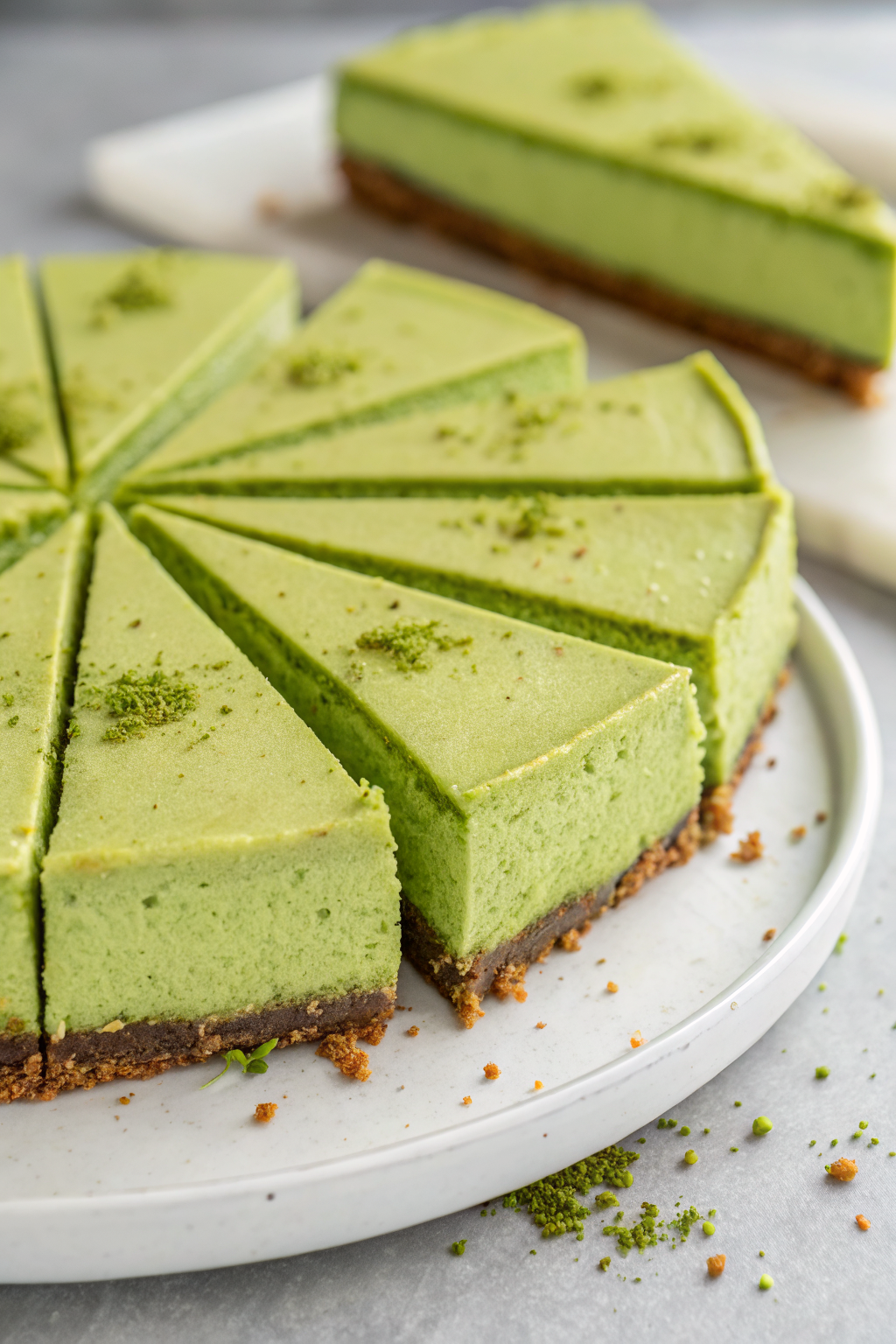
Original Matcha Japanese Cheesecake Recipe tastes like a cloud of creamy green tea custard with the gentle wobble of a soufflé and the richness of classic cheesecake. It suits matcha lovers, light-dessert fans, and anyone who wants an impressive dessert in about 2 hours total, including baking and cooling time. I tested this on my own family of picky dessert critics, and they now request it more often than my chocolate cake.
Why Make This Original Matcha Japanese Cheesecake Recipe at Home
You control the matcha flavor, sweetness, and texture at home, so the cheesecake turns out exactly how you like it. Cafes often charge a premium for a tiny slice, while one homemade cake serves a crowd and costs much less.
You also skip sketchy green food coloring because high quality matcha powder gives a natural, vibrant color. The baking process feels relaxing, and the final jiggle test always brings a little thrill.
“This Original Matcha Japanese Cheesecake Recipe tastes like a fluffy matcha cloud that melts in your mouth and somehow still feels rich and special. ★★★★★”
Ingredients You Need
Main ingredients
-
Cream cheese:
- 250 g (about 9 oz) full-fat block cream cheese, room temperature
- Use Philadelphia or a similar brand that feels firm, not whipped.
- Avoid low-fat cream cheese because it turns the texture grainy and watery.
-
Butter:
- 50 g (about 3.5 tbsp) unsalted butter, melted and slightly cooled
- Salted butter works in a pinch; just reduce added salt.
-
Milk:
- 100 ml (about 7 tbsp) whole milk, room temperature
- You can use 2% milk, but whole milk gives a smoother crumb.
-
Eggs:
- 4 large eggs, separated, at room temperature
- Room temperature whites whip more easily and give better volume.
-
Sugar:
- 90 g (about 7 tbsp) granulated sugar, divided
- 40 g for the cream cheese mixture, 50 g for the meringue
- Caster sugar dissolves faster, but regular granulated sugar works fine.
-
Cake flour:
- 60 g (about 1/2 cup) cake flour, sifted
- If you only have all-purpose flour, measure 1/2 cup, remove 1 tbsp, and add 1 tbsp cornstarch, then sift well.
-
Cornstarch:
- 20 g (about 2.5 tbsp) cornstarch
- Helps keep the texture soft and prevents cracking.
-
Matcha powder:
- 2 to 3 tbsp high quality culinary or ceremonial grade matcha
- I like a slightly stronger matcha flavor, so I use 3 tbsp.
- Look for a bright green color and a fresh, grassy aroma, not dull olive.
-
Salt:
- 1/4 tsp fine sea salt
- Balances sweetness and boosts flavor.
-
Lemon juice (optional but helpful):
- 1/2 tsp lemon juice or white vinegar
- Helps stabilize the egg whites.
Equipment list
- 8 inch round cake pan or springform pan, at least 3 inches tall
- Larger roasting pan or deep baking tray for the water bath
- Parchment paper
- Electric hand mixer or stand mixer with whisk attachment
- Medium and large mixing bowls
- Fine mesh sieve for flour and matcha
- Rubber spatula
- Small saucepan or microwave safe bowl for melting butter
- Kitchen scale for best accuracy (cups work, but a scale gives more consistent results)
- Toothpick or skewer to check doneness
- Aluminum foil
Pantry shortcuts and notes
- Use pre-sifted cake flour if you find it, and still sift it with matcha for extra lightness.
- If you store matcha in the fridge, bring it to room temperature before baking to avoid clumps.
- You can line only the sides of the pan with parchment and leave the bottom bare if you want a smoother surface, but lining the bottom makes removal easier.
Tips & Mistakes
- Use room temperature cream cheese, eggs, and milk so the batter mixes smoothly and does not form lumps.
- Sift matcha with flour and cornstarch at least twice to avoid green clumps and streaks.
- Avoid overbeating egg whites; stop at soft to medium peaks so the cheesecake rises evenly and does not crack.
- Fold the meringue gently from bottom to top; do not stir vigorously or you will knock out the air and lose the fluffy texture.
- Wrap the outside of the cake pan with foil to prevent water from the bath from sneaking in and soaking the crust.
- Bake low and slow; high heat makes the top crack and the sides overcook while the center stays underdone.
- Do not open the oven door during the first 45 minutes, or the sudden temperature change can cause a collapse.
- Let the cheesecake cool in the oven with the door slightly open so it settles gradually and keeps its height.
- Chill the cake for at least 4 hours before slicing; if you cut it warm, it feels too soft and sticky.
- Use a hot, clean knife for each slice to keep those pretty green layers neat.
How to Make Original Matcha Japanese Cheesecake Recipe
Step 1: Prepare the pan and oven
Preheat the oven to 320°F (160°C).
Line the bottom and sides of an 8 inch round cake pan with parchment paper, letting the paper rise about 1 inch above the rim.
Wrap the outside of the pan tightly with two layers of aluminum foil to protect it from the water bath.
Set a large roasting pan on the middle rack and start heating water in a kettle.
Step 2: Warm and mix the cream cheese base
Place cream cheese, butter, and milk in a heatproof bowl.
Set the bowl over a pot of gently simmering water and stir until the mixture turns smooth and glossy, then remove from heat.
Whisk in 40 g of sugar and the salt until the mixture looks creamy.
Let it cool for a few minutes so it feels warm but not hot to the touch.
Step 3: Add yolks and dry ingredients
Whisk the egg yolks into the warm cream cheese mixture one at a time until fully combined.
In a separate bowl, sift together cake flour, cornstarch, and matcha powder at least twice.
Add the dry mixture to the cream cheese batter in two additions and whisk gently until no streaks of flour remain.
You should see a smooth, thick, pale green batter.
Step 4: Whip the egg whites
Place egg whites in a clean, dry large bowl.
Beat on low speed until they look foamy, then add lemon juice.
Gradually sprinkle in the remaining 50 g of sugar while you beat on medium speed.
Stop when the meringue forms soft to medium peaks that hold their shape but still curl at the tips.
Step 5: Fold the meringue into the matcha batter
Add one third of the meringue to the matcha batter and whisk gently to lighten it.
Switch to a rubber spatula and fold in the next third with slow, sweeping motions from bottom to top.
Fold in the final third until no white streaks remain and the batter looks airy and even in color.
Avoid overmixing so you keep as much volume as possible.
Step 6: Fill the pan and set up the water bath
Pour the batter into the prepared cake pan and tap the pan lightly on the counter to pop large air bubbles.
Place the pan inside the larger roasting pan in the oven.
Carefully pour hot water into the roasting pan until it reaches about halfway up the sides of the cake pan.
Close the oven door gently so the water does not splash into the batter.
Step 7: Bake
Bake at 320°F (160°C) for 20 minutes.
Lower the oven temperature to 285°F (140°C) and continue baking for 40 to 45 minutes.
The top should look set and lightly browned, and a skewer inserted in the center should come out mostly clean with a few moist crumbs.
If the top browns too quickly, tent it loosely with foil.
Step 8: Cool gradually
Turn off the oven and open the door slightly.
Leave the cheesecake inside for 15 to 20 minutes so it cools slowly and does not shrink too fast.
Remove the pan from the water bath, then remove the foil from the outside of the cake pan.
Set the cake on a wire rack and let it cool to room temperature.
Step 9: Chill and unmold
Once the cheesecake reaches room temperature, cover the top with plastic wrap.
Refrigerate for at least 4 hours, or overnight for the best texture and flavor.
To unmold, run a thin knife around the edge, then lift the cake out using the parchment or release the springform ring.
Peel off the parchment and transfer the cake to a serving plate.
Step 10: Slice and serve
Use a long, sharp knife dipped in hot water and wiped dry for each cut.
Slice straight down without sawing to keep the sides clean.
Serve chilled or let slices sit at room temperature for 10 minutes for a softer, custard-like feel.
Dust a little extra matcha through a fine sieve on top if you want a stronger green tea aroma.
Variations I've Tried
- Vanilla swirl matcha cheesecake: Reserve 1/2 cup of the plain cream cheese batter before you add matcha. Swirl it into the top of the matcha batter with a chopstick for a marbled look.
- Matcha chocolate chip cheesecake: Fold 1/3 cup mini chocolate chips into the finished batter. The chocolate adds sweetness and pairs nicely with the slight bitterness of matcha.
- Black sesame matcha cheesecake: Sprinkle toasted black sesame seeds on the bottom of the pan before pouring in the batter. The seeds add a nutty crunch and a pretty contrast against the green.
- Matcha citrus cheesecake: Add 1 tsp finely grated lemon or yuzu zest to the yolk mixture. The citrus brightens the flavor and cuts through the richness.
How to Serve Original Matcha Japanese Cheesecake Recipe
Serve this Original Matcha Japanese Cheesecake Recipe chilled, with slices about 1 to 1.5 inches thick so the texture feels light but still indulgent. Add a small dollop of lightly sweetened whipped cream and a few fresh berries for color and a little tartness. A cup of hot green tea, jasmine tea, or a simple latte pairs perfectly with the creamy matcha flavor. If you host a dessert table, cut the cake into small squares and place them in mini cupcake liners for easy finger food.
How to store
- Room temperature: Keep the cheesecake at room temperature for no longer than 2 hours when serving.
- Fridge: Store leftover cheesecake covered in an airtight container in the refrigerator for up to 4 days.
- Freezer: Freeze individual slices on a tray until firm, then wrap each slice tightly in plastic wrap and place them in a freezer bag for up to 1 month.
- Thawing: Thaw frozen slices in the refrigerator overnight, or for about 2 hours, until they feel soft but still chilled.
- Reheating / serving: Do not heat in the microwave; instead, let slices sit at room temperature for 10 to 15 minutes before serving so the texture turns silky again.
Original Matcha Japanese Cheesecake
Ingredients
Instructions
- Preheat the oven to 320°F (160°C). Line the bottom of an 8-inch round cake pan with parchment paper and lightly grease the sides. Wrap the outside of the pan with foil to prevent water from seeping in.
- In a heatproof bowl set over a pot of gently simmering water, combine cream cheese, butter, and milk. Stir until smooth and just warm, then remove from heat and let cool slightly.
- Whisk in the egg yolks, vanilla, and salt until fully incorporated.
- In a separate bowl, sift together cake flour, cornstarch, and matcha powder. Gently whisk the dry ingredients into the cream cheese mixture until smooth and free of lumps.
- In a clean large bowl, beat the egg whites with an electric mixer until foamy. Gradually add the remaining granulated sugar and continue beating until soft to medium peaks form.
- Fold one-third of the meringue into the matcha batter to lighten it, then gently fold in the remaining meringue in two additions, taking care not to deflate the mixture.
- Pour the batter into the prepared pan and tap the pan lightly on the counter to release large air bubbles.
- Place the cake pan in a larger roasting pan. Pour hot water into the roasting pan until it reaches about halfway up the sides of the cake pan to create a water bath.
- Bake at 320°F (160°C) for 20 minutes, then reduce the temperature to 300°F (150°C) and bake for an additional 30–40 minutes, or until the top is lightly browned and a skewer inserted in the center comes out mostly clean.
- Turn off the oven, crack the door slightly, and let the cheesecake cool in the oven for 10–15 minutes to minimize shrinking.
- Remove the pan from the water bath and let the cake cool completely on a rack. Run a thin knife around the edge to release, then invert and remove the parchment paper. Dust with powdered sugar or matcha if desired, slice, and serve.
Notes
Approximate per 1 slice (1/12 of cake): 210 calories; fat 15 g; saturated fat 9 g; carbohydrates 15 g; fiber 0 g; sugars 11 g; protein 5 g; sodium 140 mg. Values will vary based on brands, add-ins, and portion size.
Leave a Reply