
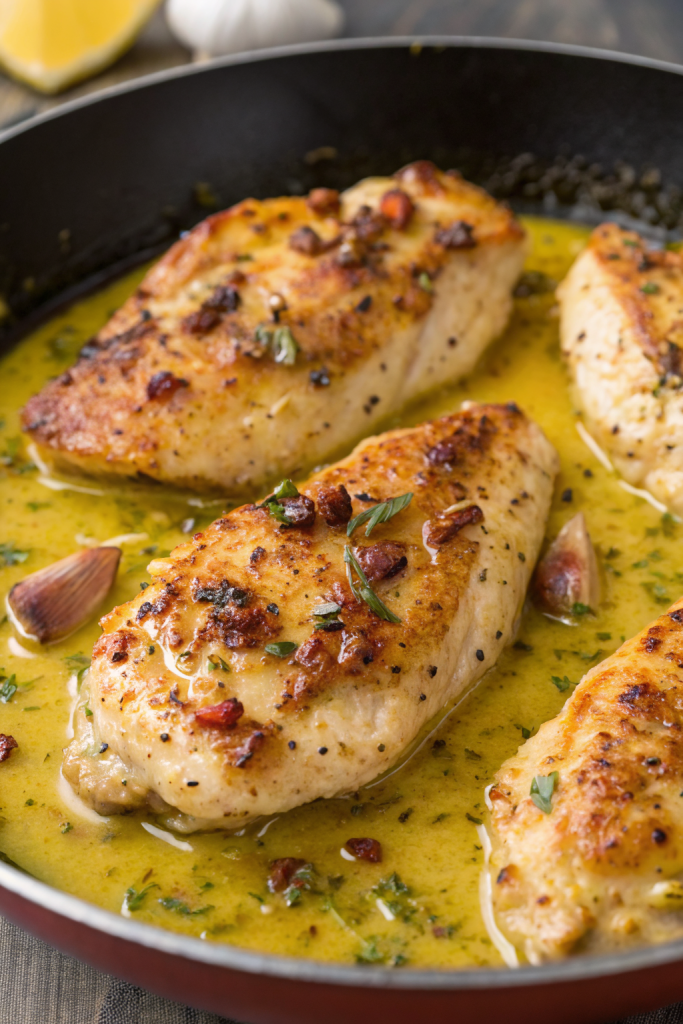
Pan Seared Chicken with zesty Lemon Mustard Sauce tastes bright, savory, and a little tangy, with crispy golden edges and a silky sauce that begs for bread or rice. It works perfectly for busy weeknights or casual dinner guests, and you can get it on the table in about 30 minutes. I cook some version of this dish at least twice a month, usually when I crave something that feels restaurant-level without restaurant effort.
Why You Should Try This Pan Seared Chicken with zesty Lemon Mustard Sauce
This recipe gives you juicy chicken with a browned crust and a sauce that hits salty, tangy, and slightly creamy notes all at once. The lemon cuts through the richness, while the mustard adds a gentle kick that keeps each bite interesting.
You cook everything in one skillet, so cleanup stays simple. The ingredients stay budget friendly and flexible, so you can swap a few things and still get a great result.
“This Pan Seared Chicken with zesty Lemon Mustard Sauce tastes like a bistro meal at home, but comes together faster than takeout ★★★★★”
Ingredients You’ll Need
Chicken
-
4 small boneless skinless chicken breasts
- Pound to an even ½ inch thickness for quick, even cooking.
- Use thighs instead if you prefer richer flavor; just adjust cook time slightly longer.
-
1 teaspoon kosher salt
-
½ teaspoon black pepper
-
½ teaspoon garlic powder
-
½ teaspoon onion powder
-
2 tablespoons all purpose flour
- This light coating helps the crust brown and thickens the sauce.
- Use a gluten free blend if you avoid regular flour.
Cooking fats
- 1 tablespoon olive oil
- Use a neutral oil if you like, but olive oil adds nice flavor.
- 1 tablespoon unsalted butter
- Butter helps the chicken brown and adds richness to the sauce.
Lemon Mustard Sauce
- 3 cloves garlic, minced
- ½ cup low sodium chicken broth
- Use homemade or a good quality boxed broth; I like Kitchen Basics or Pacific.
- 2 tablespoons Dijon mustard
- Dijon gives the best balance of heat and tang; avoid yellow mustard here.
- 1 tablespoon whole grain mustard (optional but tasty)
- Adds texture and a deeper mustard flavor.
- 2 tablespoons fresh lemon juice
- About 1 large lemon; bottled juice works in a pinch, but fresh tastes brighter.
- 1 teaspoon lemon zest
- Zest adds intense lemon flavor without extra acidity.
- ¼ cup heavy cream
- Swap with half and half for a lighter sauce; it will taste slightly less rich.
- 1 teaspoon honey or maple syrup
- Balances the acidity and sharp mustard flavor.
- 1 tablespoon chopped fresh parsley or chives
- Dried herbs work if needed; use 1 teaspoon dried.
- Salt and pepper to taste
Equipment List
- Large heavy skillet (cast iron or stainless steel works best)
- Tongs
- Small whisk or fork
- Cutting board and sharp knife
- Meat thermometer (helps avoid overcooked chicken)
- Small bowl and spoon for mixing seasonings
Tips & Tricks
- Pat the chicken dry with paper towels so the surface browns instead of steaming.
- Pound thicker parts of the chicken to match the thinner parts so everything cooks at the same speed.
- Season the flour, not just the chicken, so the crust tastes flavorful and not bland.
- Heat the pan until the oil shimmers; if the oil sits dull and still, the chicken will not sear properly.
- Place the chicken in the pan and resist the urge to move it for a few minutes so a crust forms.
- Use medium heat, not blazing high, so the outside browns and the inside cooks through.
- Deglaze the pan with broth and scrape up the browned bits; those bits carry huge flavor into the sauce.
- Add the lemon juice at the end of cooking and taste; adjust with a tiny splash more if you want extra tang.
- Keep the sauce at a gentle simmer so the cream stays smooth and does not curdle.
- Rest the chicken a few minutes before slicing so the juices stay inside the meat.
How to Make Pan Seared Chicken with zesty Lemon Mustard Sauce
Step 1: Prep and season the chicken
Lay the chicken breasts on a cutting board and cover them with plastic wrap. Pound them gently with a meat mallet or rolling pin until they reach about ½ inch thickness. Pat them dry with paper towels, then season both sides with salt, pepper, garlic powder, and onion powder.
Sprinkle the flour over the chicken and rub it lightly so it coats both sides in a thin, even layer. Shake off any extra flour so it does not clump in the pan. Set the chicken aside while you heat the skillet.
Step 2: Sear the chicken
Place your skillet over medium heat and add the olive oil and butter. Swirl the pan until the butter melts and the fat looks hot and shimmery. Add the chicken in a single layer without crowding the pan.
Cook the chicken for about 4 to 5 minutes on the first side until the bottom turns deep golden brown. Flip the chicken and cook another 3 to 5 minutes, depending on thickness, until a thermometer reads 165°F in the thickest part. Move the cooked chicken to a plate and tent it loosely with foil to keep it warm.
Step 3: Build the flavor base
Keep the skillet on medium heat and check the fat level; add a tiny splash of oil if the pan looks dry. Add the minced garlic and stir constantly for about 30 seconds until it smells fragrant and just turns lightly golden. Do not walk away, because garlic burns fast and tastes bitter.
Pour in the chicken broth while you scrape the bottom of the pan with a wooden spoon. Lift all those browned bits into the liquid so they dissolve into the sauce. Let the broth bubble for 2 to 3 minutes so it reduces slightly and concentrates.
Step 4: Add mustard and lemon
Whisk in the Dijon mustard and whole grain mustard until the broth looks smooth and creamy. Stir in the lemon juice and lemon zest. Taste the sauce at this point so you can adjust the tang level to your preference.
If the sauce tastes too sharp, add the honey and stir until it dissolves. If you want more mustard punch, add another teaspoon of Dijon. Keep the sauce at a gentle simmer so it thickens slightly before you add the cream.
Step 5: Finish with cream and herbs
Lower the heat to medium low and pour in the heavy cream while you stir. Let the sauce bubble softly for 2 to 3 minutes until it thickens enough to coat the back of a spoon. Stir in the chopped parsley or chives.
Taste again and adjust salt and pepper. The sauce should taste bright, savory, and balanced, not too sour or too salty. If it tastes too thick, thin it with a splash of broth; if it tastes too thin, simmer another minute.
Step 6: Return chicken to the pan
Add the chicken and any juices from the plate back into the skillet. Spoon the sauce over the chicken so each piece gets coated. Let everything simmer together for 2 minutes so the chicken absorbs some of the sauce flavor.
Turn off the heat and give the sauce one last stir. Sprinkle a little extra fresh herb on top if you like a pretty finish. Serve the chicken hot with extra sauce spooned over each portion.
What to Serve with Pan Seared Chicken with zesty Lemon Mustard Sauce
This Pan Seared Chicken with zesty Lemon Mustard Sauce pairs beautifully with fluffy white rice, brown rice, or buttery mashed potatoes that soak up every drop of sauce. You can also serve it with simple buttered noodles or quinoa for a lighter base. Add a side of roasted broccoli, green beans, or a crisp green salad to balance the richness.
If you want something extra cozy, serve it with garlic bread or warm pita to swipe through the sauce. A cold sparkling water with lemon or a light iced tea matches the bright flavors nicely.
Storage Options
- Store leftover chicken and sauce together in an airtight container in the fridge for up to 3 days.
- Reheat gently in a skillet over low heat with a splash of broth or water until the chicken warms through and the sauce loosens.
- Use the microwave in short bursts, stirring the sauce between bursts so it heats evenly and stays creamy.
- Freeze cooked chicken with sauce in a freezer safe container for up to 2 months, then thaw overnight in the fridge and reheat on the stove with a bit of extra broth.
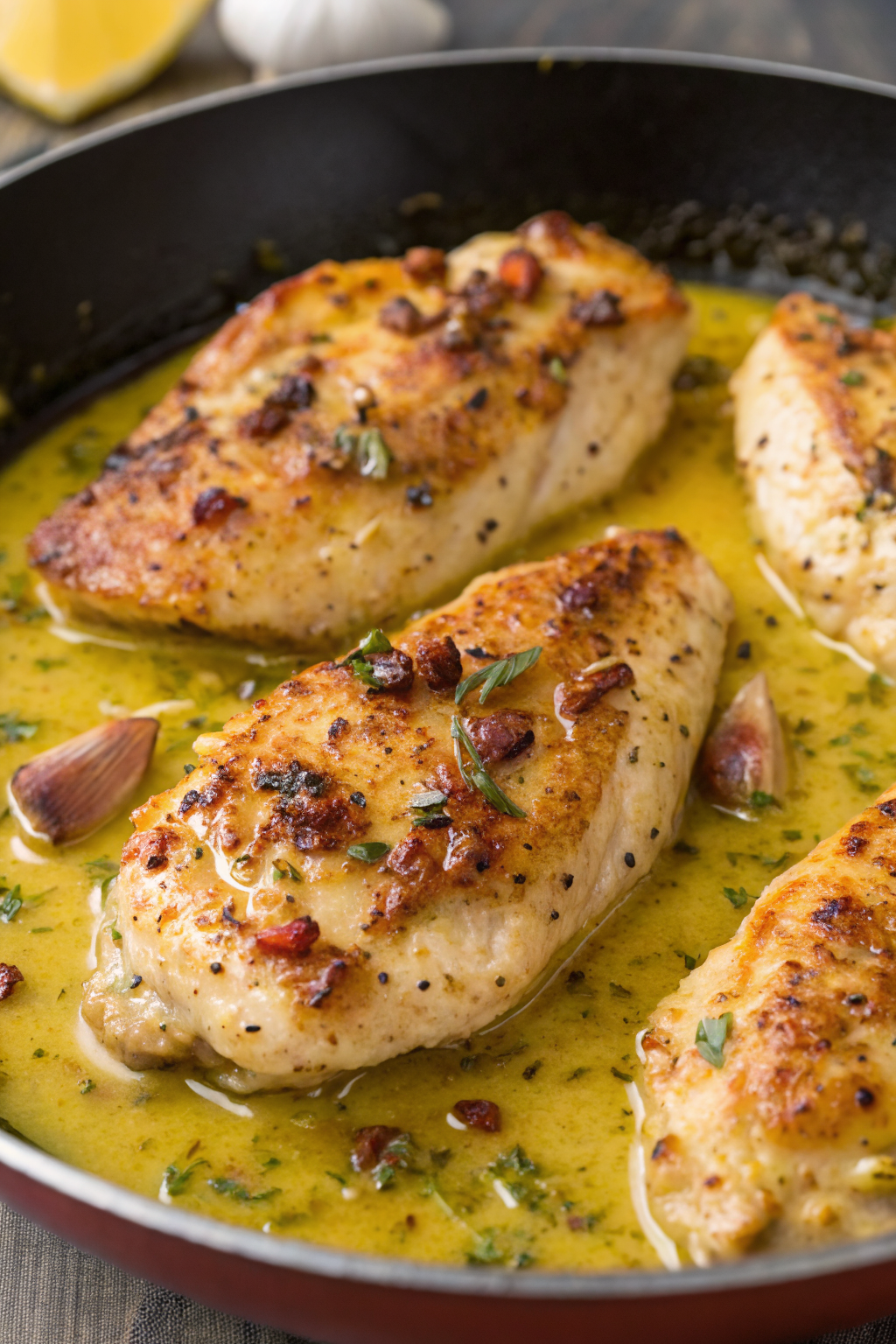
Pan Seared Chicken with Zesty Lemon Mustard Sauce
Ingredients
Instructions
- Lay the chicken breasts on a cutting board, cover with plastic wrap, and gently pound them to about 1/2 inch thickness. Pat dry with paper towels.
- Season both sides of the chicken with kosher salt, black pepper, garlic powder, and onion powder. Sprinkle the flour over the chicken and rub it lightly so it coats both sides in a thin, even layer, then shake off any excess.
- Heat a large heavy skillet over medium heat and add the olive oil and butter. Swirl until the butter melts and the fat looks hot and shimmery.
- Add the chicken in a single layer without crowding. Sear for 4 to 5 minutes on the first side until deep golden brown, then flip and cook another 3 to 5 minutes, or until a thermometer reads 165°F in the thickest part. Transfer the chicken to a plate and tent loosely with foil.
- With the skillet still over medium heat, add a splash of oil if the pan looks dry. Add the minced garlic and cook, stirring constantly, for about 30 seconds until fragrant and just lightly golden.
- Pour in the chicken broth and scrape the bottom of the pan to lift up any browned bits. Let the broth bubble for 2 to 3 minutes to reduce slightly.
- Whisk in the Dijon mustard and whole grain mustard until the sauce looks smooth. Stir in the lemon juice and lemon zest, then taste and adjust the tang if needed.
- If the sauce tastes too sharp, stir in the honey or maple syrup until dissolved. Keep the sauce at a gentle simmer so it begins to thicken slightly.
- Reduce the heat to medium-low and pour in the heavy cream while stirring. Let the sauce simmer softly for 2 to 3 minutes, until it thickens enough to coat the back of a spoon. Stir in the chopped parsley or chives, then taste and season with salt and pepper as needed.
- Return the chicken and any accumulated juices on the plate to the skillet. Spoon the sauce over the chicken and let everything simmer together for about 2 minutes so the flavors meld.
- Turn off the heat, give the sauce a final stir, and serve the chicken hot with extra sauce spooned over each portion.
Notes
Approximate per serving (1 of 4): 330 calories; fat 17 g; saturated fat 7 g; carbohydrates 7 g; fiber 0 g; sugars 3 g; protein 35 g; sodium 650 mg. Values are estimates and will vary based on brands, exact ingredient amounts, and portion size.
Leave a Reply