
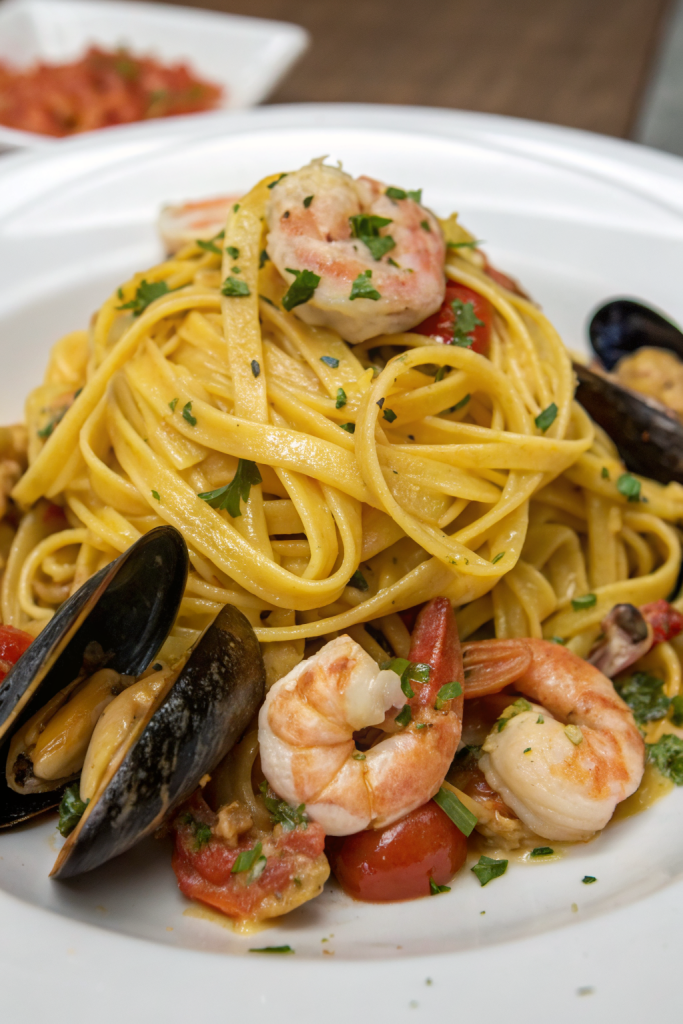
Seafood Pasta with Linguine Shrimp Mussels tastes rich, briny, garlicky, and just a little spicy, like a cozy Italian seaside dinner at your own table. It works perfectly for seafood lovers who want a restaurant-style pasta in about 40 minutes on a weeknight. I first made this on a Tuesday when my kids requested “fancy noodles,” and it has stayed in our regular rotation ever since.
Why Make This Seafood Pasta with Linguine Shrimp Mussels at Home
You control everything at home: how much garlic, how spicy, how saucy, and how many shrimp and mussels land in each bowl. Restaurants often skimp on seafood, but your pot can overflow with it.
You also save money and skip long waits at crowded spots. The whole dish comes together in under an hour, and you only use one big pot plus a skillet, which makes cleanup painless.
“This Seafood Pasta with Linguine Shrimp Mussels tastes like a special-occasion restaurant dish, but I whipped it up on a random weeknight and everyone asked for seconds.”
Ingredients You Need
Seafood
- Large shrimp, peeled and deveined
- I like 16/20 or 21/25 size so they stay juicy and don’t overcook in a flash.
- Frozen shrimp work great; thaw them in cold water and pat dry.
- Fresh mussels, scrubbed and debearded
- Choose tightly closed mussels that smell like the ocean, not fishy.
- If a mussel stays open after a firm tap, toss it.
- Optional: a handful of calamari rings or bay scallops
- They cook quickly and stretch the seafood mix without much extra cost.
Pasta
- Linguine
- Dry linguine holds the sauce nicely and feels classic for seafood pasta.
- You can swap with spaghetti or fettuccine if that’s what your pantry holds.
Aromatics and Veggies
- Yellow onion, finely chopped
- Garlic cloves, minced
- Crushed red pepper flakes
- Cherry tomatoes or canned diced tomatoes
- Cherry tomatoes taste sweeter and fresher, but canned tomatoes work perfectly in winter.
- Tomato paste
- This adds depth and a slightly sweet richness.
Liquids and Fats
- Olive oil
- Use a decent extra virgin olive oil for sautéing and finishing.
- Seafood stock or low-sodium chicken broth
- Seafood stock gives the best flavor; boxed chicken broth works in a pinch.
- Pasta cooking water
- Starchy water helps the sauce cling to the linguine.
Herbs, Citrus, and Seasoning
- Fresh parsley, chopped
- Fresh basil, torn (optional but lovely)
- Lemon zest and lemon juice
- Zest brightens the sauce; juice cuts through richness.
- Salt and freshly ground black pepper
Optional Add-ins
- A small pinch of sugar if your tomatoes taste too acidic
- A knob of butter at the end for a silkier sauce
- A pinch of smoked paprika for a subtle smoky note
Equipment
- Large pot for boiling linguine
- Large deep skillet or wide Dutch oven for the sauce and seafood
- Tongs for tossing pasta
- Fine mesh strainer or colander
- Large bowl for soaking and checking mussels
Tips & Mistakes
- Salt the pasta water generously so the linguine tastes seasoned from the inside.
- Keep shrimp and mussels cold in the fridge until you cook them so they stay fresh.
- Pat shrimp dry before cooking so they sear instead of steaming.
- Scrub and rinse mussels well and toss any cracked or stubbornly open ones.
- Do not overcook the shrimp; pull them as soon as they turn opaque and curl slightly.
- Add mussels near the end and cover the pan so they steam and open quickly.
- Scoop out and discard any mussels that do not open after cooking.
- Save at least 1 cup of pasta water so you can adjust the sauce consistency.
- Toss the pasta with the sauce over heat so the starch and sauce cling together.
- Taste and adjust salt, pepper, and lemon at the very end so the flavors pop.
- Do not drown the pasta in sauce; aim for a glossy coating, not soup.
- Serve immediately after cooking because seafood continues to cook in the hot sauce.
How to Make Seafood Pasta with Linguine Shrimp Mussels
Step 1: Sauté veggies and aromatics
Heat olive oil in a large deep skillet or Dutch oven over medium heat. Add chopped onion and a pinch of salt and cook until the onion turns soft and translucent, about 6 to 8 minutes. Stir in minced garlic and crushed red pepper flakes and cook 1 to 2 minutes until the garlic smells fragrant but not burnt.
Step 2: Build the tomato base
Add tomato paste to the pan and stir it into the onions and garlic. Cook the paste for 2 to 3 minutes so it darkens slightly and tastes richer. Add cherry tomatoes or canned tomatoes and stir to combine, then season with salt and black pepper.
Step 3: Add stock and simmer
Pour in seafood stock or broth and stir well, scraping up any browned bits from the bottom of the pan. Bring the mixture to a gentle simmer. Let it bubble for about 10 minutes so the flavors concentrate and the sauce thickens slightly.
Step 4: Cook the linguine
While the sauce simmers, bring a large pot of salted water to a boil. Add linguine and cook until just shy of al dente, usually 1 minute less than the package suggests. Reserve at least 1 cup of pasta water, then drain the linguine.
Step 5: Cook the shrimp
Taste the sauce and adjust seasoning with more salt or pepper if needed. Add the shrimp to the simmering sauce in a single layer. Cook 2 to 3 minutes, turning once, until the shrimp turn opaque and just firm, then transfer them to a bowl so they do not overcook.
Step 6: Steam the mussels
Add the cleaned mussels to the same pan with the sauce. Cover the pan with a lid and cook over medium-high heat for about 4 to 5 minutes. Check and remove mussels as they open, then discard any that stay closed.
Step 7: Toss pasta with sauce and seafood
Return the shrimp to the pan with the mussels and sauce. Add the drained linguine and a splash of pasta water. Toss everything over medium heat for 1 to 2 minutes until the pasta absorbs some sauce and looks glossy, adding more pasta water as needed.
Step 8: Finish with herbs and lemon
Turn off the heat and stir in chopped parsley, optional basil, lemon zest, and a squeeze of lemon juice. Taste again and adjust seasoning; you might want another pinch of salt or a bit more lemon. If you like a richer finish, stir in a small knob of butter until it melts into the sauce.
Variations I’ve Tried
I sometimes swap half the shrimp for scallops and sear them separately in a hot pan, then add them at the end so they stay caramelized and sweet. On busy nights, I use a frozen seafood mix with shrimp, mussels, and calamari and it still tastes fantastic. If you like more heat, you can add extra crushed red pepper or a spoon of chili paste with the garlic.
You can also make a lighter version and skip the tomato paste, then use more stock and lemon for a brothy, almost soup-like seafood pasta. Whole wheat linguine or gluten-free pasta both work; just cook them carefully and keep an eye on texture. If you want extra veggies, toss in baby spinach or chopped kale during the last few minutes so the greens wilt into the sauce.
How to Serve Seafood Pasta with Linguine Shrimp Mussels
Serve this seafood pasta in warm shallow bowls so the sauce stays hot and the mussels sit nicely on top. I like to sprinkle extra parsley and a bit of lemon zest over each bowl for color and freshness. Add a side of crusty bread or garlic bread so everyone can scoop up the sauce. A simple green salad or steamed vegetables rounds out the meal without stealing the spotlight from the shrimp and mussels.
How to store
- Cool leftovers to room temperature within 1 hour, then transfer to an airtight container and refrigerate for up to 2 days.
- Reheat gently in a skillet over low heat with a splash of water or broth until the pasta loosens and the seafood warms through.
- Avoid reheating multiple times because shrimp and mussels turn rubbery if you heat them too often.
- I do not recommend freezing this dish since mussels and shrimp lose their tender texture after thawing.
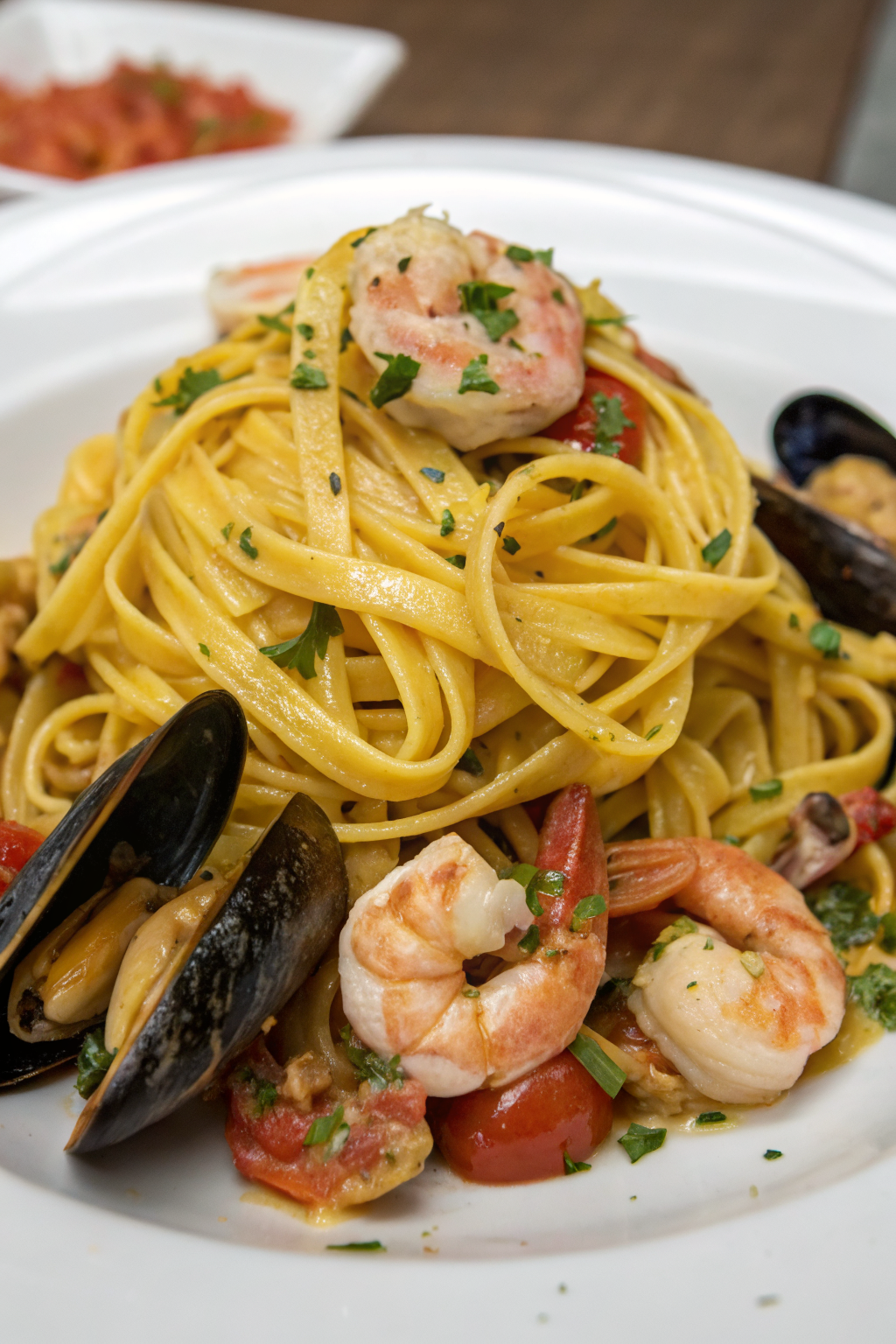
Seafood Pasta with Linguine, Shrimp, and Mussels
Ingredients
Instructions
- Bring a large pot of salted water to a boil. Cook the linguine according to package directions until al dente. Reserve 1/2 cup of pasta water, then drain and set aside.
- While the pasta cooks, heat the olive oil and 2 tablespoons of the butter in a large deep skillet over medium heat.
- Add the minced garlic and red pepper flakes, and sauté for 1 to 2 minutes until fragrant, being careful not to burn the garlic.
- Add the shrimp to the skillet in a single layer. Cook for about 1 to 2 minutes per side until just turning pink, then remove the shrimp to a plate and set aside.
- Pour the white wine and seafood or chicken broth into the skillet. Bring to a simmer and add the cleaned mussels.
- Cover the skillet and cook the mussels for 4 to 6 minutes, shaking the pan occasionally, until the mussels open. Discard any mussels that do not open.
- Return the cooked shrimp to the skillet. Add the cooked linguine, remaining 1 tablespoon butter, salt, black pepper, lemon juice, and lemon zest.
- Toss everything together over low heat for 1 to 2 minutes, adding a splash of reserved pasta water as needed to loosen the sauce and coat the pasta.
- Remove from heat and sprinkle with chopped fresh parsley and grated Parmesan cheese if using.
- Serve the seafood pasta hot, making sure each serving includes both shrimp and mussels.
Notes
Approximate per serving (4 servings): 610 calories; fat 20 g; saturated fat 7 g; carbohydrates 70 g; fiber 3 g; sugars 3 g; protein 32 g; sodium 780 mg. Values will vary based on specific ingredients, brands, and portion size.
Leave a Reply