
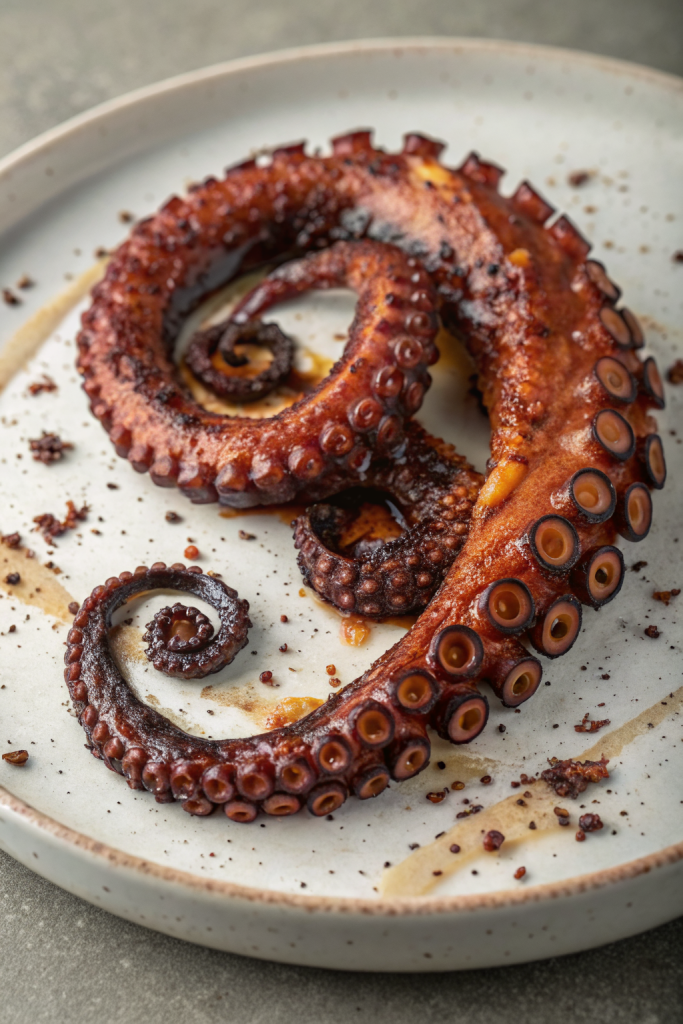
Sous Vide Octopus Recipe tastes incredibly tender, almost buttery, with a gentle ocean flavor and a smoky-charred edge from a quick grill finish, and it works perfectly for adventurous home cooks who want restaurant-level seafood in about 4 hours total. This recipe fits anyone who loves Mediterranean flavors, seafood tapas, or just wants to impress guests without babysitting a pot all day. I still remember the first time I served this to friends and they quietly stopped talking mid-bite, which ranks as a top life achievement in my food-nerd world.
Why Make This Sous Vide Octopus Recipe at Home
Sous vide octopus turns out fork-tender every single time, which solves the usual rubbery-octopus problem. The low, controlled temperature gently breaks down the collagen so the flesh stays juicy, not chewy.
You also control the flavor from start to finish. You choose the aromatics, the level of char, and the final seasoning, instead of guessing what a restaurant tossed in the pot.
“This sous vide octopus came out as tender as scallops with crispy edges, and tasted like something from a high-end coastal restaurant.”
Ingredients You Need
Octopus
- 2 to 3 pounds whole octopus, cleaned
- Fresh or frozen both work; frozen often turns out more tender because ice crystals help break down fibers.
- Ask the fishmonger to remove the beak and eyes if they have not already.
Aromatics & Flavor Base
- 4 cloves garlic, smashed
- 1 small onion, quartered
- 1 small lemon, sliced
- 2 bay leaves
- 1 teaspoon whole black peppercorns
- 1 teaspoon smoked paprika
- 1 teaspoon dried oregano or thyme
- 2 tablespoons extra-virgin olive oil
You can swap lemon for orange slices for a sweeter, rounder flavor. Use smoked paprika from a good Spanish brand like La Chinata if you want that classic tapas vibe.
Finishing & Serving
- 2 tablespoons olive oil, for searing or grilling
- Flaky sea salt, to finish
- Fresh parsley, chopped
- Extra lemon wedges
- Optional: a pinch of red pepper flakes or Aleppo pepper for gentle heat
Pantry Shortcuts & Substitutions
- Use garlic powder and onion powder if you run out of fresh aromatics: 1 teaspoon garlic powder and 1 teaspoon onion powder in the bag.
- Use dried bay leaf from a jar; it works just fine.
- If you do not like smoked paprika, use sweet paprika and add a tiny pinch of cumin for depth.
Equipment
- Sous vide immersion circulator
- Large pot or heatproof container for the water bath
- Heavy-duty vacuum bag or high-quality freezer zip-top bags
- Large skillet, grill pan, or outdoor grill for finishing
- Tongs
- Paper towels for drying the octopus before searing
- Instant-read thermometer (helpful but optional)
Tips & Mistakes
- Set the sous vide temperature to 171°F (77°C) for very tender octopus with a bit of bite; go to 175°F (79°C) if you want it extra soft.
- Cook at least 4 hours; do not rush it or the texture stays rubbery.
- Chill the cooked octopus in the bag in an ice bath before grilling or searing so the pieces stay firm and do not fall apart.
- Pat the tentacles very dry before searing; moisture blocks browning and you lose that nice char.
- Do not overcrowd the pan; work in batches so each piece browns instead of steaming.
- Season lightly with salt in the bag and finish with flaky salt at the end so you avoid over-salting.
- Use frozen octopus if fresh looks sketchy; quality frozen product often tastes cleaner and more consistent.
- Cut the head off and cook it separately if you feel unsure about serving it; the tentacles usually win the popularity contest anyway.
- Do not crank the grill or pan to max heat; use medium-high so the exterior chars without burning while the interior stays tender.
- Keep the bag fully submerged with a clip or a plate; floating bags lead to uneven cooking.
How to Make Sous Vide Octopus Recipe
Step 1: Prep the Octopus
Rinse the octopus under cold water and remove any visible bits of grit. Check that the beak and eyes are gone; trim them out if needed. Pat the octopus dry with paper towels.
Step 2: Bag with Aromatics
Place the octopus in a vacuum bag or sturdy zip-top freezer bag. Add garlic, onion, lemon slices, bay leaves, peppercorns, smoked paprika, oregano, and olive oil. Spread everything around the octopus so the aromatics touch different parts of the flesh.
If you use a zip-top bag, use the water displacement method. Slowly lower the bag into a pot of water, let the water push the air out, then seal the top just above the waterline.
Step 3: Set Up the Sous Vide Bath
Fill a large pot or container with water and attach your immersion circulator. Set the temperature to 171°F (77°C). Wait until the water reaches the target temperature.
Lower the bagged octopus into the water and clip the top to the side so it stays fully submerged. Make sure water can circulate around the bag.
Step 4: Cook the Octopus
Cook the octopus for 4 to 5 hours. At 4 hours, the tentacles should feel very tender when you press them through the bag. If you want them softer, let them go to 5 hours.
When the time ends, transfer the sealed bag to an ice bath. Chill for 15 to 20 minutes so the octopus firms up and becomes easier to slice and sear.
Step 5: Remove and Portion
Open the bag and gently lift out the octopus. Save a bit of the flavorful cooking liquid if you want to drizzle it over potatoes or vegetables. Cut off the head if you do not plan to serve it.
Slice the tentacles apart where they meet at the center. Trim any loose bits that might burn in the pan. Pat each tentacle completely dry with paper towels.
Step 6: Sear or Grill
Heat 2 tablespoons of olive oil in a large skillet or grill pan over medium-high heat. When the oil shimmers, add the tentacles in a single layer. Cook 2 to 3 minutes per side until the skin crisps and charred spots appear.
If you use an outdoor grill, oil the grates lightly and grill the tentacles over medium-high heat. Turn them every couple of minutes until you see nice grill marks and the edges crisp.
Step 7: Season and Finish
Transfer the seared octopus to a platter. Sprinkle with flaky sea salt, chopped parsley, and a pinch of red pepper flakes if you like heat. Squeeze fresh lemon juice over the top.
Drizzle with a little extra olive oil. Taste and adjust salt or acidity with more lemon. Serve warm or at room temperature.
Variations I’ve Tried
- Garlic-herb Mediterranean style: Add fresh thyme, rosemary, and a strip of orange peel to the bag, then finish with olive oil, lemon, and a sprinkle of chopped olives. This version tastes like it came from a seaside taverna.
- Spicy harissa version: Whisk 1 tablespoon harissa paste with olive oil and rub it over the octopus before bagging. Finish with more harissa, lemon, and chopped cilantro for a bold, smoky kick.
- Japanese-inspired: Add sliced ginger, a splash of soy sauce, and a piece of kombu to the bag. After searing, brush lightly with a mix of soy sauce, honey, and rice vinegar.
- Simple garlic-lemon: Skip most spices and just use garlic, lemon, olive oil, and a little black pepper. This version highlights the natural flavor of the octopus and works great for picky eaters.
How to Serve Sous Vide Octopus Recipe
Serve the sous vide octopus over a bed of smashed potatoes tossed with olive oil, garlic, and parsley for a hearty plate. You can slice the tentacles into bite-size pieces and serve them as tapas with crusty bread, lemon wedges, and a bright herb salad. I also like to lay the tentacles over a simple chickpea salad with tomatoes, cucumbers, and red onion. If you want a light meal, pair the octopus with grilled vegetables and a citrusy yogurt or tahini sauce.
How to store
- Fridge: Store cooked, unseared octopus in an airtight container with a little of the cooking liquid for up to 3 days.
- Freezer: Freeze cooked octopus in a freezer-safe bag or container for up to 2 months; label with the date so you do not lose track.
- Reheating for serving: Thaw overnight in the fridge if frozen, then pat dry and quickly sear or grill over medium-high heat until warmed through and crisp on the outside.
- Reheating without searing: Warm gently in a covered skillet with a splash of the cooking liquid or broth over low heat until heated through, so the texture stays tender.
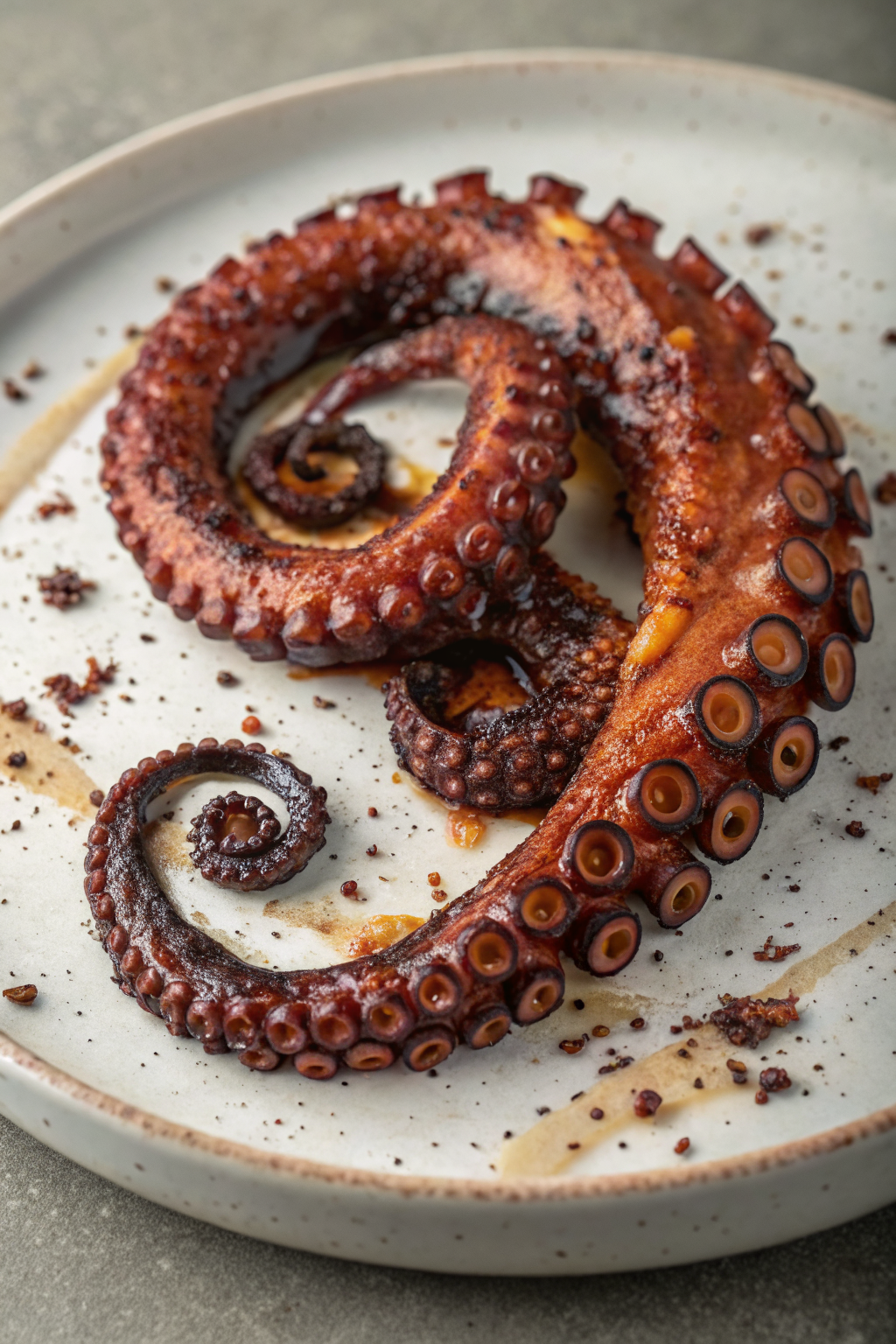
Sous Vide Octopus Recipe
Ingredients
Instructions
- Set your sous vide circulator to 171°F (77°C). Fill a large container with water and allow it to come to temperature.
- Pat the cleaned octopus dry with paper towels. If very large, cut into 2–3 manageable pieces.
- Season the octopus with salt, pepper, and smoked paprika. Drizzle with 2 tablespoons of olive oil and rub to coat evenly.
- Place the octopus into a large vacuum bag or heavy-duty zip-top bag along with the garlic, thyme, parsley, and lemon peel. Seal the bag, using the water displacement method if not vacuum sealing.
- Submerge the sealed bag in the preheated water bath, ensuring the octopus is fully under water and the bag is weighted or clipped to prevent floating.
- Cook sous vide for 4 to 4 1/2 hours, until the octopus is very tender when pierced with a knife.
- Remove the bag from the water bath and carefully transfer the octopus to a plate. Discard the herbs and aromatics and gently pat the octopus dry.
- Heat the remaining 1 tablespoon of olive oil (and butter, if using) in a large skillet over medium-high heat.
- Sear the octopus for 1–2 minutes per side until lightly charred and crisp on the edges.
- Transfer to a serving platter, drizzle with fresh lemon juice, garnish with chopped parsley, and serve warm.
Notes
Approximate per serving (1/4 of recipe): 260 calories; fat 15 g; saturated fat 3 g; carbohydrates 4 g; fiber 0 g; sugars 1 g; protein 27 g; sodium 620 mg. Values will vary based on exact octopus size, brands used, and portion size.
Leave a Reply