
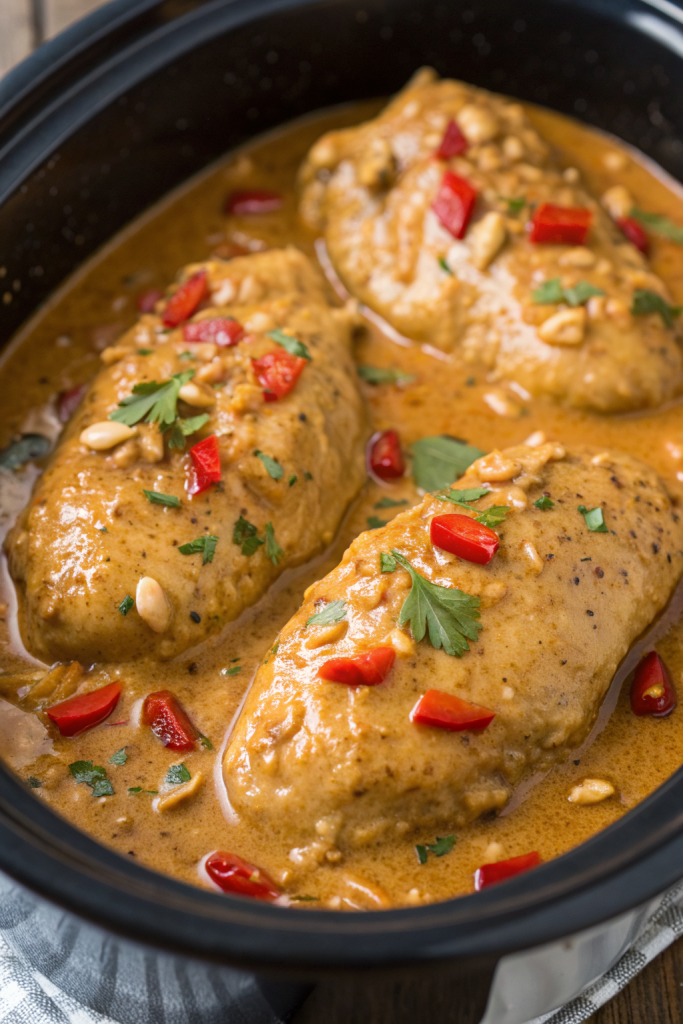
Thai Peanut Chicken Recipe hits every craving at once: salty, sweet, tangy, a little spicy, and super saucy over fluffy rice or noodles. It works perfectly for busy weeknights because you can get it on the table in about 30–35 minutes, but it still feels special enough for a weekend dinner. I first fell in love with this combo in a tiny Thai spot near my first apartment, then spent years tinkering at home until this version finally made my family stop talking and just eat.
Why Thai Peanut Chicken Recipe Is Worth It
This Thai Peanut Chicken Recipe brings restaurant-level flavor with simple pantry ingredients like peanut butter, soy sauce, and a splash of lime. The sauce clings to every bite of chicken, so you get bold flavor in each forkful without complicated techniques.
You whisk the peanut sauce in one bowl, cook chicken in one pan, then combine everything and simmer. Cleanup stays easy, and leftovers taste even better the next day, which always feels like a small life win.
“This Thai Peanut Chicken Recipe tastes like takeout in the best way, but cleaner and brighter, and my whole family licked their plates clean. ★★★★★”
Ingredients You Need
Chicken and Marinade
- 1.5 pounds boneless skinless chicken thighs, cut into bite-size pieces
- Use thighs for juicy results; use chicken breast if you prefer leaner meat and shorten cook time slightly.
- 2 tablespoons soy sauce or tamari
- 1 tablespoon lime juice or rice vinegar
- 1 tablespoon neutral oil (avocado, canola, or light olive oil)
- 2 cloves garlic, minced
- 1 teaspoon grated fresh ginger or 1/4 teaspoon ground ginger
Peanut Sauce
- 1/2 cup creamy peanut butter
- Use a natural peanut butter and stir well, or use a no-stir brand if that is what you keep in the pantry.
- 1/4 cup soy sauce or tamari
- 2–3 tablespoons honey or maple syrup
- 2 tablespoons lime juice
- 1 tablespoon rice vinegar
- 1–2 tablespoons sriracha or other chili sauce, to taste
- 1/2 cup coconut milk or warm water
- Coconut milk gives a richer sauce; water keeps it lighter and cheaper.
- 1 teaspoon toasted sesame oil
- 1 clove garlic, minced
- 1 teaspoon grated fresh ginger
Veggies and Garnishes
- 1 tablespoon neutral oil
- 1 red bell pepper, sliced into thin strips
- 1 cup snap peas or green beans, trimmed
- 2 green onions, sliced
- 1/4 cup chopped roasted peanuts
- Fresh cilantro or Thai basil, chopped
- Lime wedges for serving
Pantry Shortcuts and Notes
- Use pre-minced garlic and ginger from a jar if that saves time; the flavor still hits nicely in a bold sauce like this.
- Frozen stir fry veggie blends work well; toss them in straight from the freezer and cook until hot.
- If you keep bottled Thai peanut sauce, you can stretch it with extra peanut butter and lime juice to boost flavor and save money.
Equipment List
- Large skillet or wok
- Cutting board and sharp knife
- Medium mixing bowl for marinade
- Small bowl or jar for peanut sauce
- Whisk or fork
- Measuring cups and spoons
- Spatula or wooden spoon
Quick Tips & substitutions
- Slice chicken into even pieces so everything cooks at the same speed.
- Pat chicken dry with paper towels before marinating so the sauce sticks better.
- Use chicken breast instead of thighs and reduce cook time a bit to keep it juicy.
- Swap peanut butter with almond butter or sunflower seed butter if you avoid peanuts.
- Use tamari or coconut aminos instead of soy sauce to keep it gluten free.
- Thin a thick sauce with a splash of warm water or coconut milk until it coats a spoon smoothly.
- Taste the sauce before cooking and adjust salt, sweetness, and heat so it matches your preference.
- Use frozen veggies when you feel tired or rushed; toss them in straight from the freezer and cook until crisp tender.
- Keep leftovers from drying out by stirring in a spoonful of water or coconut milk while reheating.
How to Make Thai Peanut Chicken Recipe
Step 1: Marinate the Chicken
Add the chicken pieces to a medium bowl. Pour in soy sauce, lime juice, oil, garlic, and ginger. Toss until every piece of chicken looks coated, then let it sit while you prep the sauce and veggies, about 10–15 minutes.
Step 2: Mix the Peanut Sauce
In a small bowl or jar, add peanut butter, soy sauce, honey, lime juice, rice vinegar, sriracha, coconut milk, sesame oil, garlic, and ginger. Whisk until the mixture turns smooth and creamy. If it looks too thick, add a tablespoon of warm water at a time until it reaches a pourable but clingy consistency.
Taste the sauce and adjust it. Add more honey for sweetness, more lime for brightness, or more sriracha for extra kick. Set the bowl near the stove so you can grab it quickly.
Step 3: Cook the Veggies
Heat 1 tablespoon of oil in a large skillet over medium high heat. Add bell pepper and snap peas. Stir and cook until the veggies turn crisp tender, about 3–4 minutes.
Scoop the veggies onto a plate and keep them nearby. The skillet now holds a bit of flavor from the veggies, which helps the chicken taste even better. No one complains about extra flavor.
Step 4: Sear the Chicken
In the same skillet, keep the heat at medium high. Add the marinated chicken in a single layer and spread it out so the pieces do not crowd too much. Let the chicken cook without moving it for 2–3 minutes so it browns.
Stir and cook the chicken until it turns golden on the outside and cooks through, about 6–8 minutes total, depending on the size of the pieces. Cut one piece to check that the center looks opaque and juicy. If the pan looks dry, splash in a tablespoon of water to loosen any browned bits.
Step 5: Add Sauce and Veggies
Lower the heat to medium. Pour the peanut sauce over the chicken and stir so every piece gets coated. The sauce will look loose at first, then it will thicken as it heats.
Add the cooked veggies back into the skillet and toss everything together. Let the mixture bubble gently for 2–3 minutes so the flavors mingle and the sauce thickens to your liking. If it thickens too much, stir in a splash of water or coconut milk.
Step 6: Finish and Garnish
Turn off the heat. Stir in half of the green onions and half of the chopped peanuts. This adds crunch and a fresh onion bite right into the pan.
Taste one last time and adjust with a squeeze of lime or a pinch of salt. Top with remaining green onions, peanuts, and chopped cilantro or Thai basil. Serve hot over rice, noodles, or veggies, and add lime wedges on the side.
Recipe Variations
- Gluten free: Use tamari or certified gluten free soy sauce and check labels on sriracha and vinegar.
- Peanut free: Swap peanut butter with sunflower seed butter or almond butter and use pumpkin seeds or cashews on top.
- Vegan: Use tofu or tempeh instead of chicken, press tofu to remove moisture, and use maple syrup instead of honey.
- Low carb: Serve over cauliflower rice or sautéed cabbage and use a little less honey.
- Extra veggies: Add shredded carrots, broccoli florets, or baby spinach during the last few minutes of cooking.
- Extra spicy: Add chili flakes or a spoonful of chili crisp along with the sriracha.
Ways to Serve Thai Peanut Chicken Recipe
- Spoon over jasmine rice, brown rice, or coconut rice.
- Toss with rice noodles or whole wheat spaghetti for a saucy noodle bowl.
- Serve on top of cauliflower rice or zucchini noodles for a lighter option.
- Stuff into lettuce cups and top with extra peanuts and herbs.
- Pair with cucumber salad or simple sliced cucumbers for a cool contrast.
- Serve with steamed broccoli or bok choy on the side for more greens.
Storage Success
Let the Thai Peanut Chicken Recipe cool to room temperature, then store it in an airtight container in the fridge for up to 4 days. The sauce thickens in the fridge, so stir in a splash of water or coconut milk while reheating on the stove or in the microwave. Reheat gently over medium heat and stir often so the sauce stays smooth and the chicken stays tender. You can freeze portions for up to 2 months, then thaw overnight in the fridge before reheating with a little extra liquid.
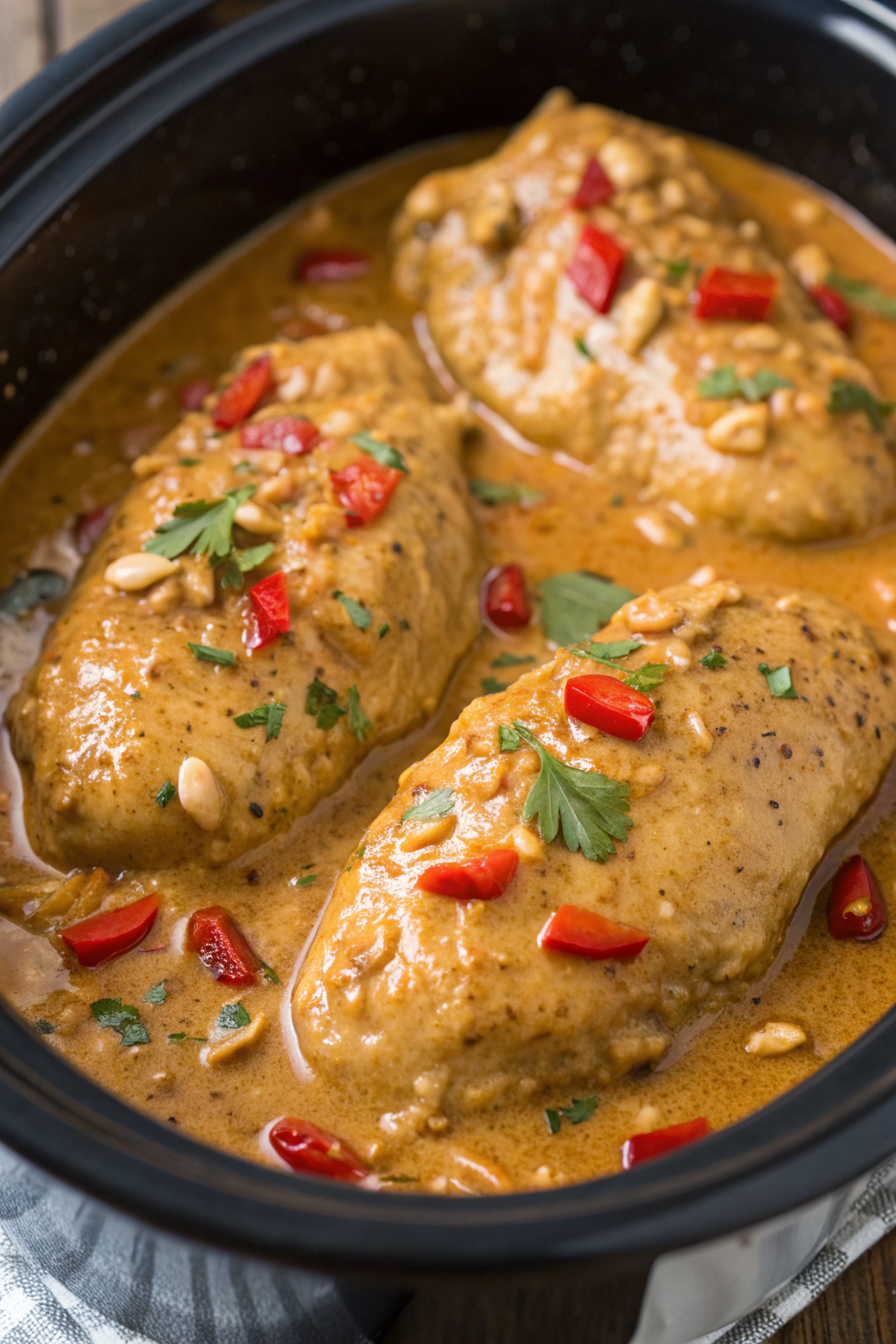
Thai Peanut Chicken Recipe
Ingredients
Instructions
- Add the chicken pieces to a medium bowl. Pour in the soy sauce, lime juice, oil, garlic, and ginger. Toss until every piece of chicken is coated, then let it sit to marinate while you prepare the sauce and veggies, about 10–15 minutes.
- In a small bowl or jar, combine the peanut butter, soy sauce, honey, lime juice, rice vinegar, sriracha, coconut milk, sesame oil, garlic, and ginger. Whisk until smooth and creamy, adding a tablespoon of warm water at a time if needed until the sauce is pourable but still clings to a spoon. Taste and adjust sweetness, lime, and heat to your preference.
- Heat 1 tablespoon of neutral oil in a large skillet over medium-high heat. Add the red bell pepper and snap peas or green beans. Stir and cook until the vegetables are crisp-tender, about 3–4 minutes. Transfer the veggies to a plate and set aside.
- In the same skillet over medium-high heat, add the marinated chicken in a single layer without crowding. Let it cook undisturbed for 2–3 minutes to brown, then stir and continue cooking until the chicken is golden on the outside and cooked through, about 6–8 minutes total. If the pan becomes too dry, add a tablespoon of water to loosen any browned bits.
- Reduce the heat to medium. Pour the peanut sauce over the chicken and stir until all the pieces are well coated. The sauce will look loose at first and then thicken as it heats. Return the cooked veggies to the skillet and toss everything together. Let it bubble gently for 2–3 minutes so the flavors meld and the sauce thickens to your liking, adding a splash of water or coconut milk if it becomes too thick.
- Turn off the heat and stir in half of the sliced green onions and half of the chopped peanuts. Taste and adjust with a squeeze of lime or a pinch of salt if needed. Top with the remaining green onions, peanuts, and a sprinkle of chopped cilantro or Thai basil. Serve hot over rice, noodles, or vegetables with lime wedges on the side.
Notes
Approximate per serving (1/4 of recipe, without rice): 520 calories; fat 33 g; saturated fat 9 g; carbohydrates 21 g; fiber 3 g; sugars 13 g; protein 37 g; sodium 1150 mg. Values are estimates and will vary based on brands, substitutions, and portion size.
Leave a Reply