
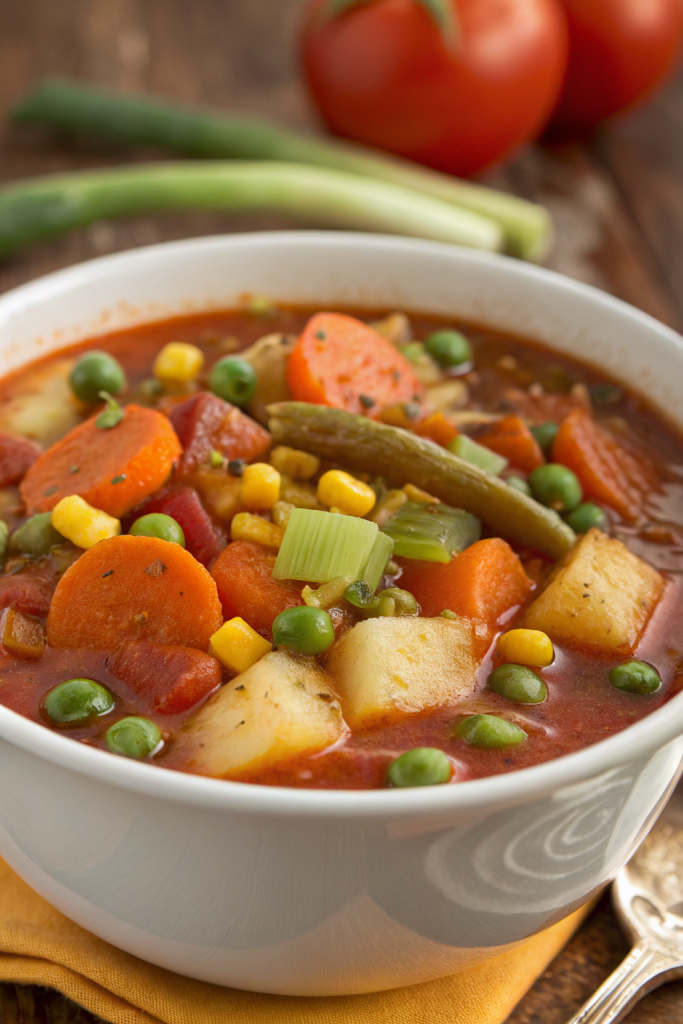
Vegetable Soup Recipe tastes cozy, savory, and bright, with tender veggies in a rich tomato-herb broth that feels like a hug in a bowl. It works for busy weeknights, meal prep fans, and anyone who wants a healthy dinner on the table in about 45 minutes. I have slurped some version of this soup at least once a week for years, so you can say I take this bowl pretty seriously.
Why Make This Vegetable Soup Recipe at Home
Homemade vegetable soup gives you control over salt, oil, and the amount of veggies, so you can pack in flavor without mystery ingredients. You also use up those half-forgotten carrots and celery in the crisper, which saves money and cuts food waste.
You also customize it to match your mood and pantry. Want more protein, more spice, or a thicker broth? You tweak one or two ingredients and the soup happily cooperates.
“This vegetable soup recipe tastes like something from a cozy café, only fresher and way more loaded with veggies. ★★★★★”
Ingredients You Need
Here is what you need for a classic, hearty vegetable soup recipe that tastes rich and satisfying.
Base & aromatics
- Olive oil, 2–3 tablespoons (use avocado oil if you prefer)
- Yellow onion, 1 large, diced
- Carrots, 3 medium, sliced
- Celery stalks, 3, sliced
- Garlic, 4 cloves, minced (jarred minced garlic works in a pinch)
Veggies
- Russet or Yukon gold potatoes, 2 medium, peeled and diced
- Green beans, 1 cup, trimmed and cut into 1-inch pieces (fresh or frozen)
- Zucchini, 1 medium, diced
- Corn kernels, 1 cup (frozen or canned, drained)
- Peas, 1 cup (frozen peas hold texture best)
- Cabbage, 2 cups, shredded (green or savoy)
- Optional: 1 red bell pepper, diced, for sweetness and color
- Optional: handful of baby spinach or kale at the end for extra greens
Tomato & broth
- Crushed tomatoes, 1 can (28 ounces)
- I like brands like Muir Glen or San Marzano style for deeper flavor.
- Vegetable broth, 6 cups
- Use low-sodium broth so you control the salt.
- Water, 1–2 cups as needed to thin the soup
Herbs & seasoning
- Bay leaves, 2
- Dried oregano, 1 teaspoon
- Dried thyme, 1 teaspoon
- Dried basil, 1 teaspoon or Italian seasoning, 1 teaspoon
- Smoked paprika, 1 teaspoon (adds a subtle smoky depth)
- Kosher salt, about 1½–2 teaspoons to taste
- Black pepper, ½ teaspoon, plus more to taste
- Red pepper flakes, pinch, if you like a little heat
- Fresh parsley, ¼ cup, chopped, for serving
- Optional: squeeze of fresh lemon juice or 1 teaspoon red wine vinegar at the end to brighten the flavor
Pantry shortcuts & swaps
- Use frozen mixed vegetables to replace peas, corn, and green beans if that makes life easier.
- Use canned potatoes in water if you feel short on time, just rinse them first.
- Use tomato sauce instead of crushed tomatoes if that is what you have, then simmer the soup a bit longer to thicken.
Equipment
- Large heavy-bottomed pot or Dutch oven, at least 6-quart
- Cutting board and sharp chef’s knife
- Wooden spoon or heat-safe spatula
- Ladle
- Measuring cups and spoons
Tips & Mistakes
- Sauté the aromatics until they look soft and lightly golden to build flavor right from the start.
- Cut veggies into similar sizes so they cook evenly and you avoid mushy bits next to crunchy chunks.
- Add delicate veggies like peas, corn, and spinach near the end so they keep color and texture.
- Taste and season at the end, since broth brands vary a lot in salt level.
- Use low heat for simmering so the soup gently bubbles and the veggies stay tender, not blown apart.
- Avoid overloading the pot with too many different veggies at once, or the flavors turn muddy instead of bright.
- Add acid like lemon juice or vinegar at the end to wake up the flavors instead of dumping in more salt.
- Cool the soup before you chill it, so steam does not collect on the lid and water down the broth.
How to Make Vegetable Soup Recipe
Step 1: Sauté the aromatics
Heat the olive oil in a large pot over medium heat. Add the diced onion, carrots, and celery, then stir and cook for 6–8 minutes until the veggies soften and the onion turns translucent with light golden edges. Add the minced garlic and cook 1 minute, stirring so it does not burn.
Step 2: Build the base
Add the crushed tomatoes to the pot and stir to coat the veggies. Pour in the vegetable broth and 1 cup of water. Add the bay leaves, oregano, thyme, basil or Italian seasoning, smoked paprika, salt, black pepper, and red pepper flakes if you use them, then stir again.
Step 3: Add hearty vegetables
Add the diced potatoes, green beans, cabbage, and bell pepper if you use it. Stir everything together so the veggies sit mostly under the liquid. Bring the pot to a gentle boil over medium-high heat, then lower the heat to maintain a steady simmer.
Step 4: Simmer until tender
Simmer the soup for about 20 minutes, stirring occasionally so nothing sticks to the bottom. Check the potatoes and green beans; they should feel tender when you poke them with a fork. If the soup looks too thick, add a bit more water or broth until you like the consistency.
Step 5: Add quick-cooking veggies
Stir in the zucchini, corn, and peas. Simmer another 5–10 minutes until the zucchini turns tender but not mushy and the peas and corn heat through. Add the spinach or kale in the last 2–3 minutes so the greens wilt but keep their color.
Step 6: Finish and adjust seasoning
Turn off the heat and remove the bay leaves. Stir in the fresh parsley and a squeeze of lemon juice or a splash of vinegar. Taste and adjust with more salt and pepper if you want, then let the soup sit for 5 minutes so the flavors settle before you serve.
Variations I've Tried
I add a can of drained chickpeas or white beans when I want extra protein and a more filling bowl. I toss in small pasta shapes like ditalini or elbow macaroni for a minestrone-style version, and I cook the pasta directly in the soup so it soaks up flavor. I stir in a spoonful of pesto at the end sometimes, which gives the soup a herby, slightly nutty twist that tastes amazing.
I swap potatoes for butternut squash in the fall and add a pinch of nutmeg for a cozy vibe. I go spicy by adding more red pepper flakes and a diced jalapeño with the aromatics. I also use leftover roasted vegetables from earlier in the week and add them near the end, which gives the soup a deeper, caramelized flavor.
How to Serve Vegetable Soup Recipe
Serve this vegetable soup recipe hot in big bowls with crusty bread, garlic toast, or simple buttered toast on the side. Top each bowl with extra chopped parsley, a sprinkle of grated Parmesan or nutritional yeast, and a crack of black pepper. Pair it with a green salad or a grilled cheese sandwich for a full meal. Kids often like it with a side of crackers so they can crumble them into the soup.
How to store
- Cool the soup to room temperature within 1–2 hours, then transfer it to airtight containers.
- Store in the fridge for up to 4 days; the flavors deepen and taste even better the next day.
- Freeze in portioned containers or freezer bags for up to 3 months, leaving a little space at the top for expansion.
- Reheat on the stove over medium heat until hot, or use the microwave in short bursts, stirring between each, and add a splash of water or broth if the soup thickened too much.
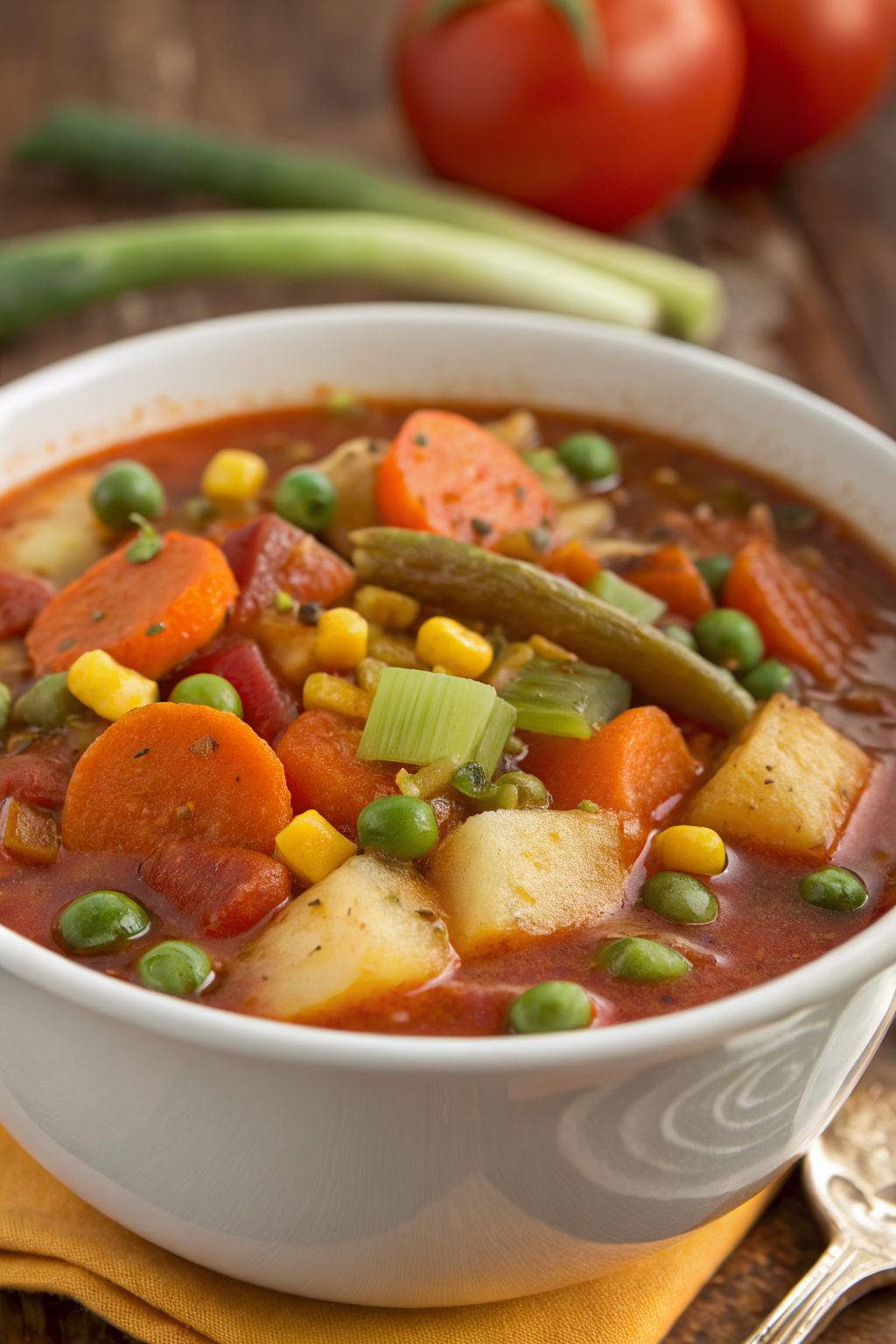
Vegetable Soup Recipe
Ingredients
Instructions
- Heat the olive oil in a large pot over medium heat.
- Add the chopped onion and cook for 3–4 minutes until softened and translucent.
- Stir in the minced garlic and cook for 30 seconds until fragrant, stirring constantly to avoid burning.
- Add the diced carrots, celery, and potato. Cook for 5 minutes, stirring occasionally.
- Stir in the green beans, corn, peas, diced tomatoes with their juice, and vegetable broth.
- Season with dried thyme, dried oregano, salt, and black pepper. Mix well.
- Bring the soup to a boil over medium-high heat, then reduce the heat to low and simmer uncovered for 20–25 minutes, or until the vegetables are tender.
- Taste and adjust seasoning with additional salt and pepper if needed.
- Stir in chopped fresh parsley just before serving, if using.
- Serve hot as a comforting soup course or a light meal.
Notes
Approximate per serving (1/4 of recipe): 150–180 calories; fat 6 g; saturated fat 1 g; carbohydrates 25 g; fiber 5 g; sugars 8 g; protein 5 g; sodium 520 mg. Values will vary based on brands, specific vegetables used, and portion size.
Leave a Reply