
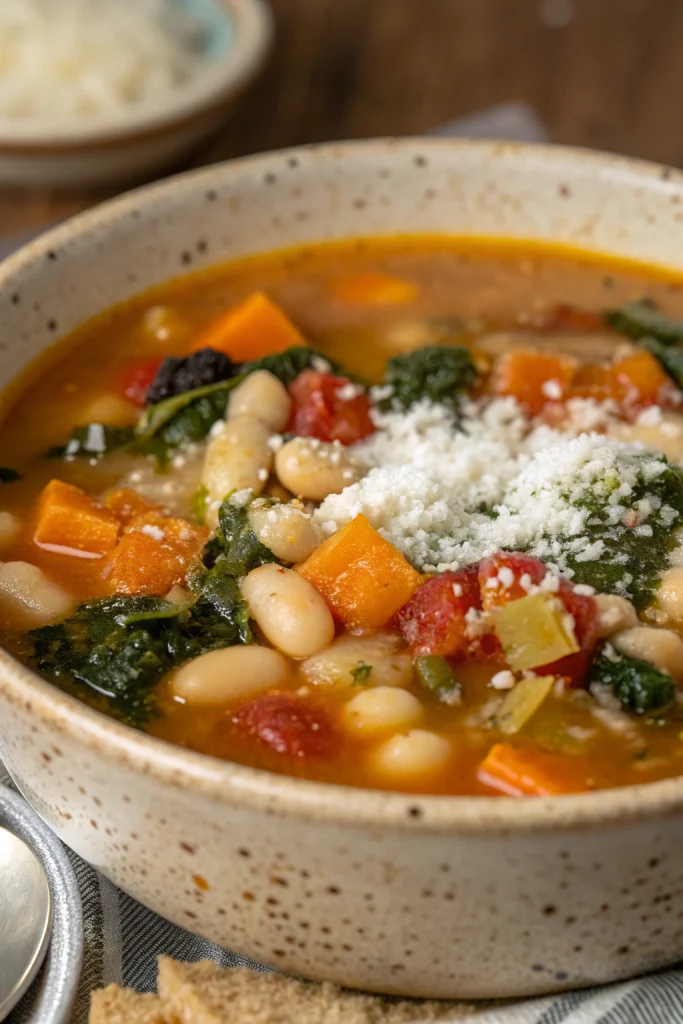
Winter Minestrone Soup Recipe tastes hearty, cozy, and veggie-packed with a rich tomato broth and tender beans that feel like a hug in a bowl. It works perfectly for busy weeknights or lazy Sundays, and you can get it on the table in about 55–65 minutes, start to finish. I started making this version in my tiny first apartment kitchen, and it still saves my sanity every winter.
Why Make This Winter Minestrone Soup Recipe at Home
Homemade winter minestrone tastes brighter and fresher than anything from a can, with real vegetables that still have texture. You control the salt, the spice, and the veggies, so picky eaters and adventurous ones can both win at the same table.
You also stretch a few pantry staples into a big pot that feeds a crowd or gives you lunches all week. The recipe uses simple, affordable ingredients, so you get comfort food that feels nourishing instead of heavy.
“This Winter Minestrone Soup Recipe tastes like a cozy Italian-inspired stew that somehow makes a fridge full of odds and ends feel intentional and special.”
Ingredients You Need
Vegetables
- 2 tablespoons olive oil (use extra-virgin if you like a stronger flavor)
- 1 large yellow onion, diced
- 2 medium carrots, diced
- 2 celery stalks, diced
- 1 small fennel bulb, cored and diced (optional, but adds great flavor)
- 2 cups chopped green cabbage or kale (Tuscan kale holds texture best)
- 1 medium russet or Yukon gold potato, peeled and diced
- 1 small zucchini, diced (add near the end so it stays tender, not mushy)
- 1 cup fresh or frozen green beans, cut into 1-inch pieces
Aromatics & Seasoning
- 4 cloves garlic, minced
- 1 tablespoon tomato paste (tube tomato paste works great for small amounts)
- 1 teaspoon dried oregano
- 1 teaspoon dried basil
- 1 teaspoon dried thyme or Italian seasoning
- 1 bay leaf
- 1 to 1½ teaspoons kosher salt, plus more to taste
- ½ teaspoon freshly ground black pepper
- ¼ to ½ teaspoon red pepper flakes (optional, for gentle heat)
- 1 small Parmesan rind (optional, adds depth; skip for a vegetarian version)
Beans, Pasta & Liquids
- 1 can (15 ounces) cannellini beans, drained and rinsed
- Use Great Northern or navy beans if that is what you have.
- 1 can (15 ounces) red kidney beans, drained and rinsed
- You can swap with chickpeas for a slightly nuttier bite.
- 1 cup small pasta, such as ditalini, small shells, or elbow macaroni
- Whole wheat pasta works, but check early so it does not overcook.
- 1 can (14.5 ounces) diced tomatoes with their juices
- Fire-roasted tomatoes add a subtle smoky note.
- 6 cups vegetable broth or chicken broth
- Use low-sodium broth so you control the seasoning.
- 1 cup water, as needed, to thin the soup if it thickens too much
Finishing Touches
- 2 tablespoons chopped fresh parsley
- 2 tablespoons chopped fresh basil (optional, but lovely)
- Freshly grated Parmesan cheese, for serving
- Use a microplane for fluffy, melty shreds.
- Extra olive oil, for drizzling on top
Pantry Shortcuts & Brand Notes
- Use frozen mixed vegetables in place of some fresh veggies when you feel short on time.
- Jarred minced garlic works in a pinch, though fresh garlic gives better flavor.
- Use canned beans from any reliable brand; rinse them well to remove extra starch and salt.
- Boxed broth works fine; choose low-sodium and taste as you go.
Equipment List
- Large heavy-bottomed pot or Dutch oven (at least 6-quart)
- Cutting board and sharp chef’s knife
- Wooden spoon or heat-safe spatula
- Ladle
- Measuring cups and spoons
- Small grater or microplane for Parmesan
Tips & Mistakes
- Chop vegetables in similar sizes so they cook evenly and you avoid mushy bits next to crunchy ones.
- Sauté the onions, carrots, and celery long enough to soften and sweeten; rush this step and the soup tastes flat.
- Taste the broth before adding more salt, since canned beans and Parmesan already bring saltiness.
- Add pasta near the end and cook it just to al dente so it does not turn soft and soggy.
- Keep the soup at a gentle simmer instead of a hard boil to protect the vegetables and beans.
- Stir occasionally and scrape the bottom so pasta and beans do not stick and scorch.
- Use sturdy greens like kale or cabbage; tender spinach goes in during the last 2 minutes only.
- Remove the Parmesan rind and bay leaf before serving so no one bites into a surprise chunk.
- Thin leftovers with a splash of broth or water, since the pasta keeps soaking up liquid in the fridge.
- Cool the soup before freezing so ice crystals stay small and the texture holds up better.
How to Make Winter Minestrone Soup Recipe
Step 1: Sauté veggies and aromatics
Heat oil in a large stock pot or Dutch oven over medium heat. Once hot, add onions, carrots, and celery; cook until soft and lightly golden, about 8 to 10 minutes, stirring occasionally. Stir in garlic and tomato paste; cook 1 to 2 minutes, until the tomato paste darkens slightly and smells sweet. Season with a pinch of salt and pepper.
Step 2: Build the flavor base
Add fennel, cabbage or kale, and potato to the pot and stir to coat in the tomato-garlic mixture. Sprinkle in oregano, basil, thyme, red pepper flakes, and another small pinch of salt. Cook 3 to 4 minutes so the herbs wake up and the veggies start to soften.
Step 3: Add liquids and simmer
Pour in the diced tomatoes with their juices and the broth. Add the bay leaf and Parmesan rind if you use them, then stir well and bring the pot to a gentle simmer. Lower the heat to medium-low and let the soup simmer uncovered for about 20 minutes, until the potatoes feel almost tender when you poke them with a fork.
Step 4: Add beans, pasta, and quick-cooking veggies
Stir in the cannellini beans, kidney beans, zucchini, and green beans. Add the pasta and stir so it does not clump. Keep the soup at a gentle simmer and cook 8 to 10 minutes, until the pasta reaches al dente and the vegetables feel tender but not mushy.
Step 5: Adjust consistency and seasoning
Check the thickness of the soup. If it looks more like a stew than a soup, stir in up to 1 cup of water or extra broth until it reaches your preferred consistency. Taste and add more salt and pepper as needed, since the beans and pasta absorb seasoning.
Step 6: Finish with herbs and serve
Fish out the bay leaf and Parmesan rind and discard them. Stir in fresh parsley and basil, then let the soup sit off the heat for 5 minutes so the flavors settle. Ladle into bowls, top with grated Parmesan and a small drizzle of olive oil, and serve hot.
Variations I’ve Tried
I swap the pasta with pearled barley or farro when I want extra chew and a bit more whole grain goodness. I also use chickpeas and black beans instead of the classic white and kidney combo when I clean out the pantry. Sometimes I stir in a spoonful of pesto at the end of cooking for a bright, herby twist that feels fancy with almost no effort.
On meatier days, I brown some Italian sausage at the very beginning, then sauté the veggies in the drippings for a deeper flavor. I also make a fully vegan version by skipping the Parmesan rind and topping each bowl with nutritional yeast and a squeeze of lemon juice for tang.
How to Serve Winter Minestrone Soup Recipe
Serve this Winter Minestrone Soup Recipe in warm bowls with a sprinkle of Parmesan and a drizzle of olive oil on top. Add a side of crusty bread, garlic toast, or simple focaccia to soak up the broth. Pair it with a crisp green salad or a basic tomato-cucumber salad for a fresh contrast. Kids often enjoy it with grilled cheese sandwiches, which turns the meal into a cozy, low-effort feast.
How to store
- Cool the soup to room temperature, then store it in airtight containers in the fridge for up to 4 days.
- Keep pasta-heavy portions separate if possible; store cooked pasta in a small container and add it to hot soup when you reheat.
- Freeze the soup (without pasta, if you can) in freezer-safe containers or bags for up to 3 months.
- Reheat gently on the stove over medium-low heat, adding a splash of water or broth as needed, or warm single portions in the microwave in 1-minute bursts, stirring between each round.
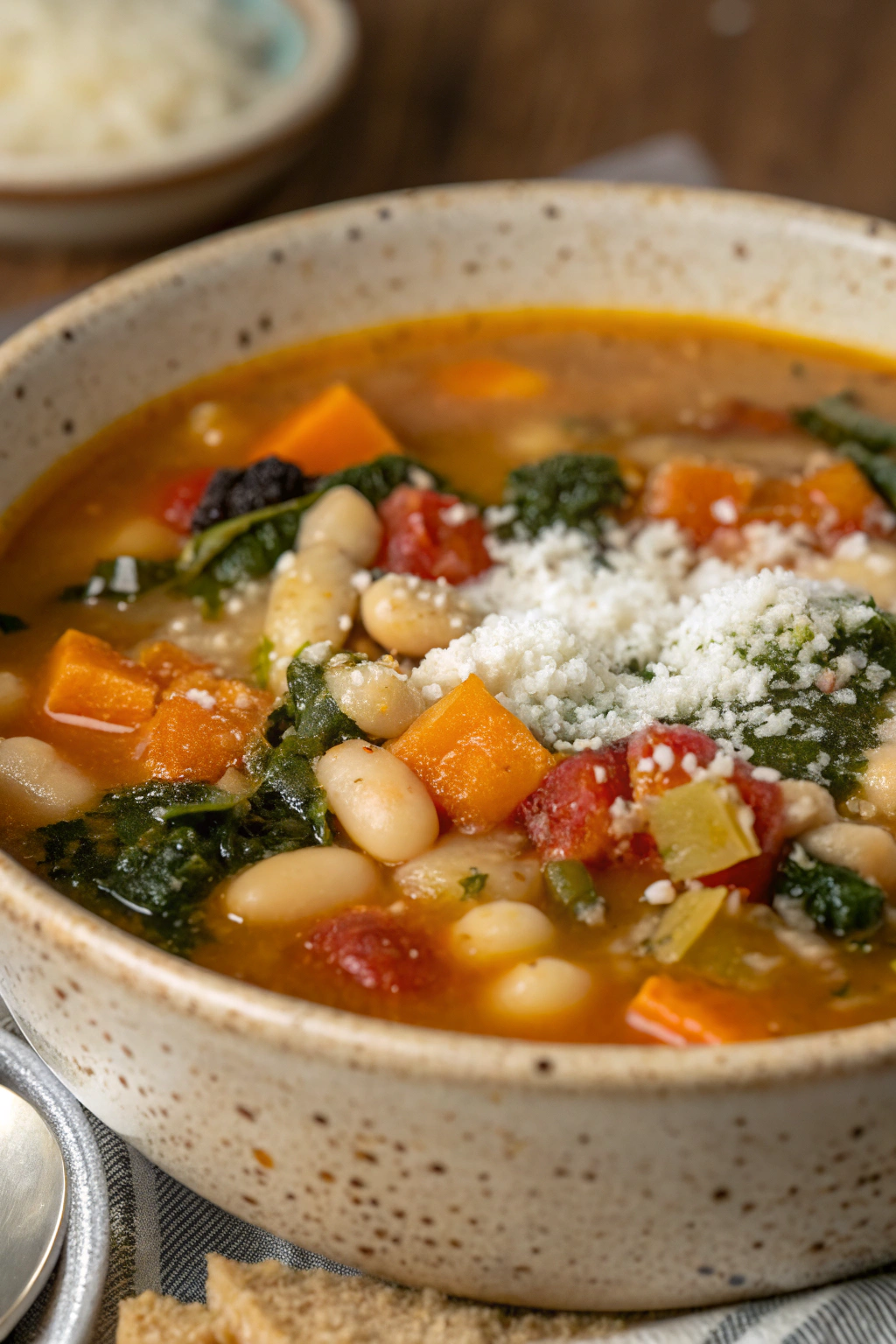
Winter Minestrone Soup Recipe
Ingredients
Instructions
- Heat the olive oil in a large pot over medium heat.
- Add the onion, carrots, celery, and fennel if using. Cook, stirring occasionally, until the vegetables begin to soften, about 5–7 minutes.
- Stir in the garlic and cook until fragrant, about 30 seconds.
- Add the butternut squash, potato, diced tomatoes with their juices, vegetable broth, oregano, thyme, salt, pepper, and bay leaf. Bring to a boil.
- Reduce heat to a simmer, cover, and cook until the vegetables are tender, about 20 minutes.
- Stir in the cannellini beans and pasta. Simmer uncovered until the pasta is al dente, about 8–10 minutes, stirring occasionally to prevent sticking.
- Add the chopped kale or Swiss chard and cook until wilted and tender, about 3–5 minutes. Remove and discard the bay leaf.
- Stir in the grated Parmesan cheese if using, and adjust seasoning with additional salt and pepper to taste.
- Serve hot, topped with extra Parmesan if desired.
Notes
Approximate per serving (1/6 of recipe): 260 calories; fat 7 g; saturated fat 2 g; carbohydrates 40 g; fiber 8 g; sugars 8 g; protein 11 g; sodium 780 mg. Values will vary based on specific ingredients, brands, and portion size.
Leave a Reply