
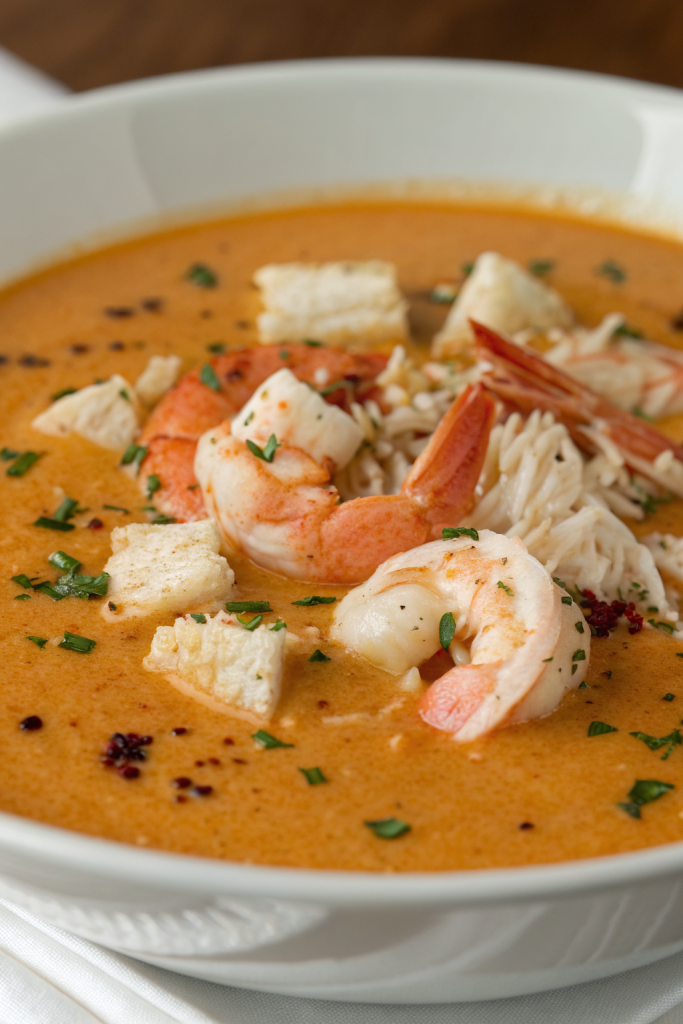
Crab and Shrimp Seafood Bisque tastes rich, creamy, and deeply seafood-forward with a gentle sweetness from shellfish and a cozy warmth from aromatics. It works perfectly for date nights at home, holidays, or anytime you want an impressive dinner in about 1 hour from chopping board to table. I first made a version of this on a tiny apartment stove in college, and I still feel smug about how fancy it looks for how simple it actually feels to cook.
Why Make This Crab and Shrimp Seafood Bisque at Home
You control the quality of the crab and shrimp, the creaminess, and the seasoning, so every spoonful hits exactly how you like it. Restaurant seafood bisque often costs a small fortune, yet this version uses smart shortcuts and still tastes like something from a white-tablecloth menu.
You also skip mystery thickeners and heavy salt. You can keep it mild for kids or add a little heat for spice fans without scaring anyone away.
“This Crab and Shrimp Seafood Bisque tastes like a special-occasion restaurant dish, but the recipe feels simple and totally doable on a weeknight.”
Ingredients You Need
Seafood
- Lump crab meat
- Use fresh or pasteurized lump crab in the refrigerated section.
- Avoid imitation crab since it changes the flavor and texture.
- Raw shrimp, peeled and deveined
- Medium or large shrimp both work.
- Keep the shells if you can, since they add great flavor to the broth.
Vegetables and aromatics
- Yellow onion, finely chopped
- Carrots, finely chopped
- Celery, finely chopped
- Garlic cloves, minced
- Tomato paste
- Crushed tomatoes or tomato puree
- Fresh thyme or dried thyme
- Bay leaf
- Fresh parsley for garnish
- Optional: a small piece of fresh ginger, minced, for a subtle warm note
Fats and liquids
- Butter
- Olive oil or neutral cooking oil
- Seafood stock or fish stock
- Use a good boxed seafood stock, or use chicken stock if you cannot find seafood stock.
- Heavy cream
- Whole milk or half-and-half
- Dry mustard powder or Dijon mustard
- Worcestershire sauce
- Lemon juice, freshly squeezed
- Water as needed to adjust thickness
Spices and seasoning
- Sweet paprika
- Smoked paprika (optional, for a light smoky edge)
- Old Bay seasoning or another seafood seasoning blend
- Ground white pepper or black pepper
- Kosher salt
Thickeners
- All-purpose flour
- Thickens the bisque and gives a silky texture.
- Optional: a small amount of cornstarch mixed with cold water if you want extra thickness without more flour.
Pantry shortcuts and brand notes
- Tomato paste in a tube helps you use small amounts without waste.
- Boxed seafood stock from brands like Kitchen Basics or a similar quality brand gives solid flavor without simmering shells for hours.
- Pre-chopped mirepoix mix (onion, carrot, celery) from the produce section saves time on busy nights.
Equipment list
- Large heavy-bottomed pot or Dutch oven
- Wooden spoon or heat-safe spatula
- Ladle
- Measuring cups and spoons
- Chef’s knife and cutting board
- Immersion blender or countertop blender
- Small bowl and whisk for slurry if you use cornstarch
Tips & Mistakes
- Sauté the vegetables until they turn soft and lightly golden to build deep flavor, not just until they look sweaty.
- Use medium heat so the garlic and tomato paste do not burn, since burnt bits taste bitter in a creamy soup.
- Add flour gradually and stir constantly so it coats the veggies and fat evenly and avoids clumps.
- Warm the stock slightly before adding if possible, since cold stock can tighten the roux and cause lumps.
- Simmer the base gently and avoid a hard boil, which can cause dairy to separate and seafood to turn rubbery.
- Add shrimp and crab near the end of cooking so they stay tender and juicy instead of overcooked.
- Taste for salt and acid after adding cream, since dairy softens flavors and often needs a pinch more seasoning and a splash of lemon.
- Use an immersion blender carefully and keep it fully submerged so it does not splatter hot soup.
- Blend only the vegetable and broth base, not the seafood, so the crab and shrimp keep their texture.
- Chill leftovers quickly and store in shallow containers so the bisque cools fast and stays safe.
How to Make Crab and Shrimp Seafood Bisque
Step 1: Sauté veggies and aromatics
Heat oil in a large stock pot or Dutch oven over medium heat. Add onions, carrots, and celery, and cook until soft and lightly golden, about 8 to 10 minutes. Stir in garlic and ginger if using, and cook 1 to 2 minutes until fragrant, while you keep the heat at medium so nothing scorches. Season with a pinch of salt.
Step 2: Build the flavor base
Add tomato paste to the pot and stir it into the vegetables. Cook the paste 2 to 3 minutes until it darkens slightly and smells sweet and rich. Sprinkle in paprika, Old Bay seasoning, thyme, and a little pepper, and stir so the spices coat the veggies. Add Worcestershire sauce and mustard, and stir again.
Step 3: Add flour and make a quick roux
Sprinkle flour evenly over the vegetables. Stir constantly for 2 to 3 minutes so the flour absorbs the fat and loses its raw taste. Keep the heat at medium and scrape the bottom of the pot so nothing sticks. The mixture should look thick and pasty.
Step 4: Add stock and simmer
Slowly pour in the seafood stock while you whisk or stir vigorously. Add enough stock to cover the vegetables and create a soup-like consistency. Drop in the bay leaf and bring the mixture to a gentle simmer. Let it bubble softly for 15 to 20 minutes so the flavors deepen and the flour thickens the broth.
Step 5: Blend the base
Turn off the heat and remove the bay leaf. Use an immersion blender to puree the soup until it turns smooth and velvety. If you use a countertop blender, work in batches, vent the lid, and blend carefully so hot liquid does not escape. Return the blended soup to the pot and place it back over low heat.
Step 6: Add cream and adjust thickness
Stir in heavy cream and a splash of milk or half-and-half. If the bisque looks too thick, add a bit more stock or water until it reaches your favorite thickness. If it looks too thin, simmer it a few more minutes, or whisk a small cornstarch slurry and stir it in while the soup simmers. Taste and adjust salt, pepper, and a little more Old Bay if needed.
Step 7: Cook the shrimp
Add the raw shrimp to the gently simmering bisque. Cook 3 to 5 minutes, stirring occasionally, until the shrimp turn pink and opaque and feel just firm. Avoid overcooking since shrimp toughen quickly. Turn the heat to low once the shrimp finish cooking.
Step 8: Fold in the crab
Gently fold in the lump crab meat. Stir softly so you keep some nice big pieces of crab. Warm the crab in the bisque for 2 to 3 minutes on low heat. Squeeze in fresh lemon juice and give one last taste for seasoning.
Step 9: Garnish and serve
Ladle the Crab and Shrimp Seafood Bisque into warm bowls. Top with chopped fresh parsley and a light sprinkle of paprika or Old Bay. Add a small drizzle of cream on top if you want a restaurant-style swirl. Serve right away while it steams and smells amazing.
Variations I’ve Tried
I sometimes swap part of the crab for chopped lobster tail when I find a good sale, which turns this into a mixed shellfish bisque that feels extra fancy. I also tried a lighter version with half-and-half instead of full heavy cream, and it still tasted rich while feeling a bit easier on the stomach. On chilly nights, I add a pinch of cayenne or a spoon of harissa to give the bisque a gentle kick that warms you from the inside out.
You can also stir in a handful of cooked rice or small pasta like orzo for a heartier bowl that eats like a full meal. When I cook for friends who avoid gluten, I skip the flour and use a cornstarch slurry to thicken, which keeps the texture silky and smooth.
How to Serve Crab and Shrimp Seafood Bisque
Serve Crab and Shrimp Seafood Bisque in warm bowls with crusty bread, garlic toast, or simple buttered baguette slices for dunking. Add a crisp green salad with lemony dressing or a basic Caesar-style salad to balance the richness. You can also spoon the bisque over plain rice or mashed potatoes for a more filling dinner. I like to finish each bowl with extra herbs, a squeeze of lemon, and a small pinch of Old Bay on top.
How to store
- Store leftovers in an airtight container in the fridge for up to 3 days, and cool the bisque to room temperature before you cover it.
- Reheat gently on the stove over low to medium-low heat, and stir often so the cream stays smooth and the seafood does not overcook.
- Avoid boiling during reheating, since a strong boil can split the dairy and toughen the shrimp and crab.
- Freeze the bisque without the seafood for up to 2 months, then thaw in the fridge and add fresh shrimp and crab while you reheat for best texture.
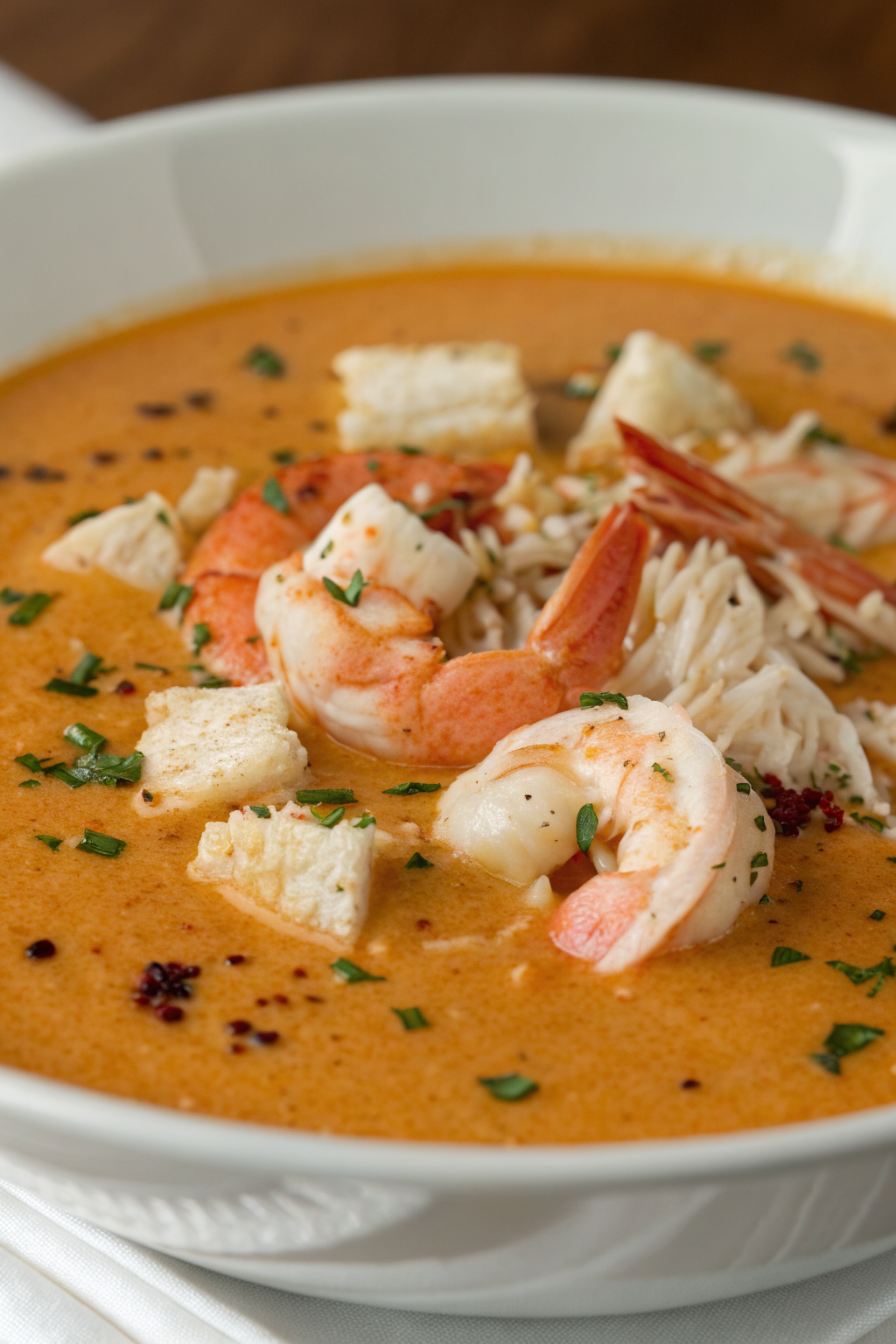
Crab and Shrimp Seafood Bisque
Ingredients
Instructions
- In a large pot over medium heat, melt the butter. Add the onion, celery, and carrot and cook, stirring occasionally, until softened, about 6–8 minutes.
- Add the garlic and cook for 1 minute until fragrant. Sprinkle the flour over the vegetables and cook, stirring constantly, for 1–2 minutes to form a light roux.
- Slowly pour in the white wine, if using, scraping up any browned bits from the bottom of the pot. Cook for 2–3 minutes to reduce slightly.
- Whisk in the seafood or chicken stock and add the crushed tomatoes, paprika, cayenne (if using), salt, and black pepper. Bring to a gentle simmer and cook for 10–12 minutes.
- Using an immersion blender, carefully puree the soup until smooth. (Alternatively, blend in batches in a countertop blender and return to the pot.)
- Reduce the heat to low and stir in the heavy cream. Bring back to a gentle simmer without boiling.
- Add the chopped shrimp and crab meat to the pot. Simmer gently for 5–7 minutes, or until the shrimp are just cooked through and the seafood is heated.
- Stir in the parsley and lemon juice. Taste and adjust seasoning with additional salt and pepper if needed.
- Ladle the bisque into warm bowls and serve immediately, garnished with extra parsley if desired.
Notes
Approximate per serving (1/6 of recipe): 320 calories; fat 23 g; saturated fat 12 g; carbohydrates 14 g; fiber 1 g; sugars 5 g; protein 15 g; sodium 840 mg. Values are estimates and will vary based on specific ingredients, brands, and portion size.
Leave a Reply