
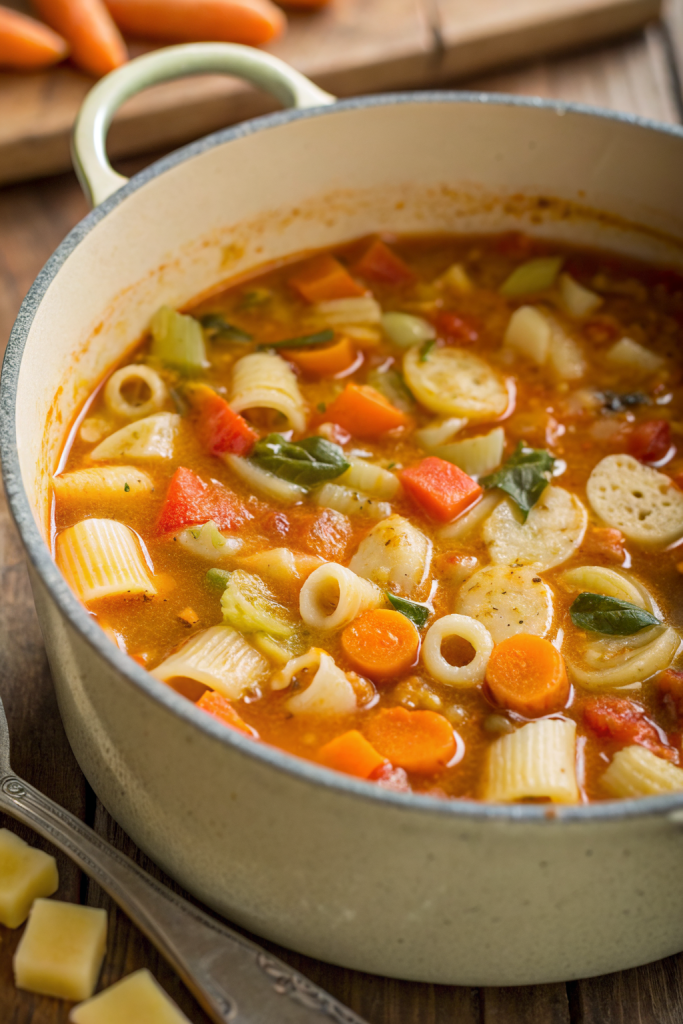
Minestrone Soup Recipe tastes rich and tomatoey with tender vegetables, soft beans, and pasta in a cozy Italian-style broth, perfect for anyone who wants a hearty, veggie-packed meal in about 50 minutes. This Minestrone Soup Recipe works well for busy weeknights, meal prep lovers, and anyone who wants a big pot of comfort that still feels pretty healthy. I grew up in a house where soup meant “clean out the fridge,” and this version became my favorite way to do exactly that.
Why Make This Minestrone Soup Recipe at Home
Homemade minestrone gives you control over salt, veggies, and texture, so every spoonful tastes exactly how you like it. You skip the canned-soup salt bomb and enjoy fresh herbs, real vegetables, and beans that actually taste like beans.
You also stretch your grocery budget because this Minestrone Soup Recipe turns cheap pantry staples into a big pot that feeds a crowd. Leftovers taste even better the next day, which makes your future self very happy.
“This Minestrone Soup Recipe tastes like something from a tiny Italian café, but my wallet still thinks I cooked at home. ★★★★★”
Ingredients You Need
Here is everything you need to make this Minestrone Soup Recipe.
Vegetables
- 2 tablespoons olive oil (extra virgin if possible, but any good-tasting olive oil works)
- 1 large yellow onion, diced
- 2 medium carrots, diced
- 2 celery stalks, diced
- 3 cloves garlic, minced
- 1 medium zucchini, diced
- 1 cup green beans, trimmed and cut into 1-inch pieces
- Use fresh if possible; frozen works fine, just add them straight from the freezer.
- 1 medium russet or Yukon gold potato, peeled and diced small
- Yukon gold holds shape better; russet gives a slightly thicker broth.
- 1 cup chopped green cabbage or baby spinach
- Use bagged coleslaw mix as a shortcut.
Canned & Pantry Items
- 1 can (14.5 ounces) diced tomatoes
- Fire-roasted tomatoes add a nice smoky depth.
- 1 can (15 ounces) kidney beans, drained and rinsed
- 1 can (15 ounces) cannellini beans or great northern beans, drained and rinsed
- Use any white bean you like.
- 6 cups low-sodium vegetable broth or chicken broth
- Low-sodium broth gives you more control over seasoning.
- 1 cup small pasta, such as ditalini, elbow, or small shells
- Use gluten-free pasta if needed.
- 2 tablespoons tomato paste
- Tube tomato paste works great and stores easily in the fridge.
- 1 teaspoon sugar (optional, to balance acidity if your tomatoes taste sharp)
Herbs & Seasoning
- 1 ½ teaspoons kosher salt, plus more to taste
- ½ teaspoon black pepper
- 1 teaspoon dried oregano
- 1 teaspoon dried basil
- ½ teaspoon dried thyme
- 1–2 bay leaves
- ¼ teaspoon red pepper flakes (optional, for a little heat)
- 2 tablespoons chopped fresh parsley or basil for serving
- Freshly grated Parmesan cheese for serving
- Use a wedge and grate it yourself for best flavor; pre-grated works in a pinch.
Equipment
- Large heavy-bottomed pot or Dutch oven (at least 5–6 quarts)
- Cutting board and sharp knife
- Wooden spoon or spatula
- Ladle
- Measuring cups and spoons
Tips & Mistakes
- Sauté the veggies long enough to soften and brown slightly, since that browning builds flavor in the broth.
- Salt in layers: add a pinch when you sauté, another when you add broth, and adjust at the end so the soup tastes seasoned, not salty.
- Cut vegetables into similar bite-size pieces so they cook evenly and feel nice on the spoon.
- Add pasta near the end so it stays al dente and does not turn mushy.
- Cook the pasta separately if you plan to store leftovers for several days, then add it to each bowl before serving.
- Use low-sodium broth so you avoid oversalting the soup once it reduces a bit.
- Taste the tomatoes; if they taste very acidic, stir in a teaspoon of sugar to balance the flavor.
- Keep the heat at a gentle simmer, not a hard boil, so the vegetables stay tender and the beans stay intact.
- Stir occasionally to keep pasta and beans from sticking to the bottom of the pot.
- Add delicate greens like spinach or kale at the very end so they stay bright and tender, not gray and overcooked.
How to Make Minestrone Soup Recipe
Step 1: Prep the Vegetables
Chop the onion, carrots, celery, zucchini, potato, and green beans into small, even pieces. Mince the garlic and chop the cabbage or measure the baby spinach. Rinse and drain the beans so they lose that thick canning liquid.
Step 2: Sauté the Aromatics
Heat the olive oil in your large pot over medium heat. Add onion, carrots, and celery, then cook and stir for about 6–8 minutes until the vegetables soften and the onion turns translucent with a few golden edges. Add the garlic and cook 30–60 seconds until it smells fragrant, not burnt.
Step 3: Build the Flavor Base
Stir in the tomato paste and cook it with the vegetables for 1–2 minutes so it darkens slightly and tastes richer. Add the dried oregano, dried basil, dried thyme, red pepper flakes if you use them, salt, and pepper. Stir everything so the spices coat the vegetables.
Step 4: Add Tomatoes, Broth, and Sturdy Veggies
Pour in the diced tomatoes with their juices and the broth. Add the diced potato, green beans, bay leaves, and cabbage if you use it. Stir, bring the pot to a gentle simmer over medium-high heat, then lower the heat so it simmers quietly.
Step 5: Simmer Until Vegetables Turn Tender
Let the soup simmer for about 15–20 minutes, uncovered, until the potatoes and green beans feel tender when you poke them with a fork. Stir occasionally so nothing sticks. Taste the broth and adjust salt and pepper if needed.
Step 6: Add Beans, Zucchini, and Pasta
Stir in the kidney beans, white beans, and zucchini. Add the small pasta and stir again. Keep the soup at a gentle simmer for 8–10 minutes, or until the pasta cooks to al dente and the zucchini softens.
Step 7: Finish With Greens and Fresh Herbs
Add the spinach or remaining cabbage during the last 2–3 minutes of cooking so it wilts but stays bright. Remove the bay leaves. Taste again and adjust seasoning, adding more salt, pepper, or a pinch of sugar if the tomatoes taste too sharp.
Step 8: Serve
Ladle the Minestrone Soup Recipe into bowls. Top with chopped fresh parsley or basil and a generous sprinkle of grated Parmesan. Serve hot with crusty bread or a simple green salad.
Variations I've Tried
I sometimes swap the pasta for cooked barley or farro, which gives the soup a slightly nutty chew and makes it feel extra hearty. I also use sweet potato instead of regular potato when I want a touch of natural sweetness. If I have extra vegetables like bell peppers, leeks, or mushrooms, I toss them in with the onion, carrot, and celery.
I also tried a version with Italian turkey sausage that I browned at the start, which turned the soup into more of a full-on meal in a bowl. On busy nights, I use frozen mixed vegetables and canned green beans and still get a very satisfying pot of minestrone. You can also skip the Parmesan and use vegetable broth to keep the recipe fully vegetarian.
How to Serve Minestrone Soup Recipe
Serve this Minestrone Soup Recipe steaming hot with a sprinkle of Parmesan and a drizzle of good olive oil on top. Add a side of crusty bread, garlic bread, or warm focaccia so you can soak up every last bit of broth. Pair it with a simple green salad, chopped salad, or a plate of sliced cucumbers and tomatoes for freshness.
You can also serve smaller bowls as a starter before a main course like roasted chicken, grilled vegetables, or a simple pasta with olive oil and garlic. Kids usually enjoy the pasta and beans, so I sometimes top their bowls with extra noodles and a little extra cheese.
How to store
- Fridge: Cool the Minestrone Soup Recipe to room temperature, then store it in airtight containers in the fridge for up to 4 days.
- Freezer: Freeze the soup (ideally without pasta) in freezer-safe containers or bags for up to 3 months.
- Pasta tip: If you plan to freeze, cook and store pasta separately, then add it to each bowl when you reheat so it stays firm.
- Reheating on stove: Reheat gently in a pot over medium heat, stirring occasionally, until hot; add a splash of broth or water if it thickened in the fridge.
- Reheating in microwave: Heat individual portions in a microwave-safe bowl, covered loosely, in 60–90 second bursts, stirring between each, until hot all the way through.
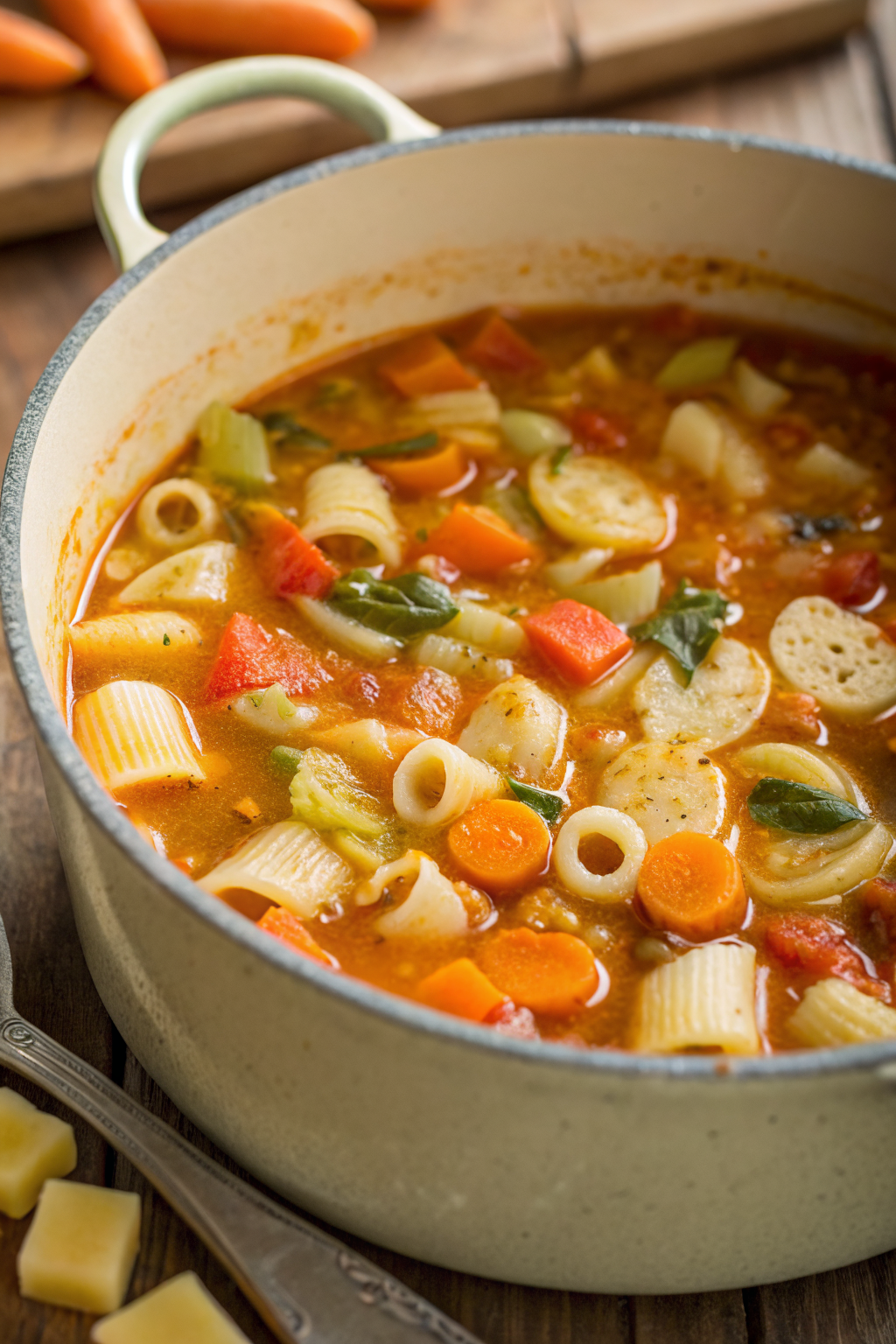
Minestrone Soup Recipe
Ingredients
Instructions
- Heat the olive oil in a large pot over medium heat. Add the onion, celery, and carrots and cook, stirring occasionally, until softened, about 5–7 minutes.
- Stir in the garlic, zucchini, and green beans and cook for another 2–3 minutes until fragrant.
- Add the diced tomatoes with their juices, vegetable broth, cannellini beans, kidney beans, oregano, basil, thyme, bay leaf, salt, and black pepper. Stir to combine.
- Bring the soup to a boil over medium-high heat, then reduce the heat to low, cover, and simmer for 20 minutes to allow the flavors to develop.
- Stir in the pasta and continue to simmer, uncovered, until the pasta is al dente, about 8–10 minutes, stirring occasionally to prevent sticking.
- Add the chopped spinach or kale and cook for 2–3 minutes more, just until the greens are wilted and tender. Remove and discard the bay leaf.
- Taste and adjust seasoning with additional salt and pepper if needed. Stir in the grated Parmesan and parsley, if using.
- Ladle the minestrone soup into bowls and serve hot, with extra Parmesan on the side if desired.
Notes
Approximate per 1 of 6 servings: 260 calories; fat 7 g; saturated fat 1.5 g; carbohydrates 40 g; fiber 9 g; sugars 8 g; protein 11 g; sodium 780 mg. Values will vary based on brands, add-ins, and portion size.
Leave a Reply