
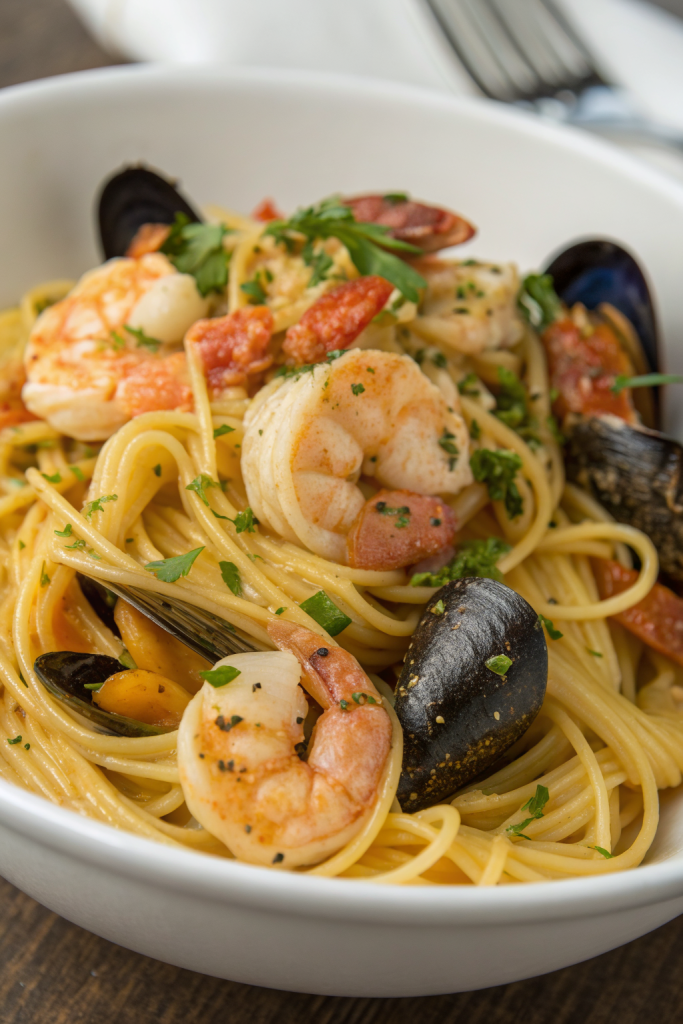
Seafood Pasta Recipe tastes rich, garlicky, a little briny from the ocean, and feels like a restaurant dish that sneaked into your kitchen in sweatpants. It suits busy home cooks who want a special-feeling dinner in about 35–40 minutes on a weeknight. I first cooked a version of this in a tiny apartment with a wobbly stove, so if your kitchen feels imperfect, you still win.
Why Make This Seafood Pasta Recipe at Home
You control everything: the amount of garlic, the spice level, how many shrimp you pile in, and how saucy you like your pasta. You also skip the heavy price tag that seafood pasta carries in most restaurants and still get that silky, luxurious texture.
You also pick the seafood quality and mix. That choice means you avoid rubbery shrimp, mystery scallops, and overcooked clams that sometimes show up in takeout.
“This Seafood Pasta Recipe tastes like a fancy coastal restaurant dinner, only quicker, cheaper, and way more generous with the seafood.”
Ingredients You Need
Pasta
- 12 ounces spaghetti, linguine, or fettuccine
- Long pasta catches the sauce nicely. Use whole wheat or gluten free pasta if you prefer; just follow the box time, not your heart.
- Kosher salt for the pasta water
- Salty like the sea, but not like the Dead Sea. Aim for about 1½–2 tablespoons in a large pot.
Seafood
Use about 1½ pounds total mixed seafood. Frozen seafood works great if you thaw it gently in the fridge.
- 8 ounces large shrimp, peeled and deveined
- Tail on looks pretty, tail off feels easier to eat. Your call.
- 6 ounces sea scallops or bay scallops
- Pat them very dry so they brown instead of steam.
- 6 ounces calamari rings or tentacles
- They cook fast, so they stay tender.
- Optional: 6–8 mussels or clams, scrubbed and debearded
- Add them if you want that classic coastal pasta vibe.
If you prefer a simpler seafood pasta, pick just shrimp or just scallops and use the full 1½ pounds of that one type.
Aromatics and Base
- 3 tablespoons extra virgin olive oil
- Use a decent everyday brand; no need for the fancy bottle you guard like a trophy.
- 4 cloves garlic, finely minced or pressed
- Jarred minced garlic works in a pinch, but fresh gives better flavor.
- 1 small yellow onion, finely chopped
- ½ teaspoon crushed red pepper flakes
- Adjust to taste; skip if cooking for spice-sensitive kids.
- ½ teaspoon dried oregano
- ½ teaspoon dried basil
- Italian seasoning mix works as a shortcut if you do not want to measure separate herbs.
- ¼ teaspoon smoked paprika
- Adds a subtle depth that tastes like you tried harder than you did.
Sauce Components
- 1 cup cherry tomatoes, halved
- Canned diced tomatoes work if you do not have fresh; drain them well.
- ½ cup tomato passata or plain tomato sauce
- Avoid heavily seasoned jarred pasta sauce, since it can overpower the seafood.
- ½ cup seafood stock, clam juice, or low sodium chicken broth
- Pantry shortcut: bottled clam juice gives great briny flavor.
- ½ cup heavy cream or half and half
- Coconut milk works if you want a dairy free version with a slightly different flavor.
- 2 tablespoons tomato paste
- Juice of ½ large lemon, plus extra wedges for serving
- 2 tablespoons unsalted butter
- Stir this in at the end for a glossy, restaurant-style finish.
Fresh Finishes
- ¼ cup chopped fresh parsley
- 2 tablespoons chopped fresh basil (optional but lovely)
- Freshly ground black pepper
- ¼–½ cup grated Parmesan or Pecorino Romano cheese
- Traditional Italian rules say no cheese with seafood; home kitchen rules say do what tastes good.
Equipment List
- Large pot for boiling pasta
- Large wide skillet or sauté pan (12 inches works well)
- Tongs for tossing pasta with sauce
- Ladle or heatproof measuring cup to scoop pasta water
- Paper towels to dry seafood
- Sharp knife and cutting board
Tips & Mistakes
- Salt the pasta water generously so the noodles carry flavor before they touch the sauce.
- Keep seafood very dry with paper towels so it browns and stays tender instead of turning watery.
- Do not crowd the pan when you sear shrimp and scallops; cook in batches if needed.
- Pull seafood from the pan as soon as it turns opaque; it keeps cooking in the hot sauce.
- Save at least 1 cup of starchy pasta water; it turns a good sauce into a silky one.
- Toss pasta with the sauce in the pan instead of just spooning sauce on top so every strand tastes seasoned.
- Taste the sauce before adding salt, since clam juice, stock, and cheese already add salinity.
- Add lemon juice at the end so it tastes bright, not dull and cooked out.
- Use medium heat, not screaming high, so garlic turns golden and fragrant instead of bitter.
- Do not walk away from the pan once seafood goes in; it cooks in minutes and turns tough if you ignore it.
How to Make Seafood Pasta Recipe
Step 1: Sauté veggies and aromatics
Heat oil in a large stock pot or Dutch oven over medium heat. Once hot, add onions and carrots; cook until soft, about 8 minutes. Stir in garlic, ginger, harissa, coriander, and turmeric; cook 2 minutes, until aromatic. Season with salt.
Step 2: Boil the pasta
Bring a large pot of water to a strong boil and add a generous handful of kosher salt. Add the pasta and cook until just shy of al dente, usually 1 minute less than the package suggests. Scoop out at least 1 cup of pasta water, then drain the pasta and keep it nearby.
Step 3: Sear the seafood
While the pasta cooks, pat shrimp, scallops, and calamari very dry with paper towels. Season them lightly with salt and black pepper. Heat 1 tablespoon olive oil in a large skillet over medium high heat, then add shrimp and scallops in a single layer and cook about 1–2 minutes per side until just opaque and lightly golden. Transfer them to a plate, add calamari to the same pan, and cook 1–2 minutes until it turns opaque, then move it to the plate with the other seafood.
Step 4: Build the sauce base
Lower the heat to medium and add the remaining olive oil if the pan looks dry. Add onion and cook 3–4 minutes until it softens and turns translucent. Stir in garlic and crushed red pepper flakes and cook about 30 seconds until fragrant. Add dried oregano, dried basil, and smoked paprika and stir so the spices wake up in the hot oil.
Step 5: Add tomatoes and liquids
Add cherry tomatoes and cook 3–4 minutes until they soften and release some juices. Stir in tomato paste and cook 1–2 minutes so it darkens slightly and tastes richer. Pour in tomato passata, seafood stock or clam juice, and stir to combine. Let the mixture simmer 4–5 minutes so it thickens slightly and the flavors meld.
Step 6: Finish with cream and butter
Reduce the heat to medium low and stir in the cream or half and half. Add butter and stir until it melts and the sauce looks glossy and smooth. Taste and adjust seasoning with salt and black pepper. Squeeze in the lemon juice and stir again to brighten the sauce.
Step 7: Combine pasta and seafood
Add the drained pasta directly into the skillet with the sauce. Toss with tongs, adding splashes of hot pasta water until the sauce clings to the noodles and looks silky. Gently fold the cooked shrimp, scallops, calamari, and any juices from the plate into the pasta. Let everything heat together 1–2 minutes so the seafood warms through without overcooking.
Step 8: Finish and serve
Turn off the heat and stir in chopped parsley and basil. Sprinkle in a small handful of grated Parmesan or Pecorino if you like cheesy seafood pasta. Plate the pasta in warm bowls, top with extra herbs, black pepper, and lemon wedges on the side. Serve right away while the sauce still feels creamy and the seafood stays tender.
Variations I’ve Tried
I swap the cream for coconut milk and add a little extra lime and cilantro for a coastal, slightly tropical spin. I use only shrimp and double the amount when I want a simpler, kid friendly version that still tastes special. I sometimes add a handful of baby spinach or chopped kale at the end and let it wilt into the sauce for a greener bowl. I also toss in a spoonful of chili crisp or extra red pepper flakes when I want a spicier seafood pasta recipe.
How to Serve Seafood Pasta Recipe
Serve this seafood pasta in warm shallow bowls so the sauce does not cool too fast. Add lemon wedges, extra chopped parsley, and a sprinkle of cheese on the table so everyone can customize. Pair it with a crisp green salad, garlic bread, or simple steamed vegetables for a full meal. A cold sparkling water with citrus slices or iced herbal tea balances the richness nicely.
How to store
- Cool leftovers to room temperature within 1 hour, then store in an airtight container in the fridge for up to 2 days.
- Freeze portions in freezer safe containers or bags for up to 2 months; seafood texture softens slightly but still tastes good.
- Reheat gently in a skillet over low heat with a splash of water, stock, or milk, stirring often until hot but not boiling.
- Avoid microwaving on high; use medium power in short bursts and stir between rounds so the seafood does not turn rubbery.
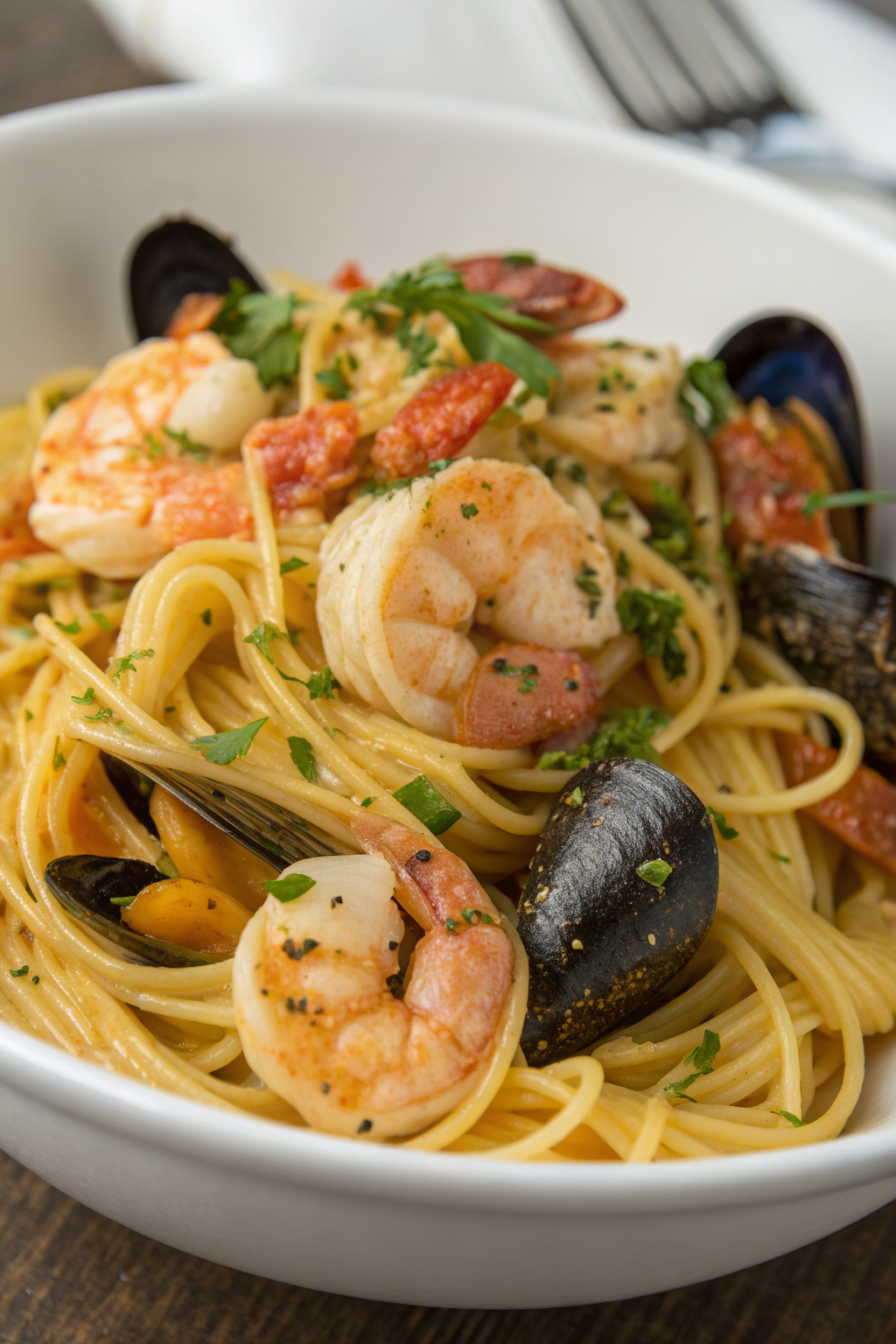
Seafood Pasta Recipe
Ingredients
Instructions
- Cook the pasta in a large pot of salted boiling water according to package directions until al dente. Reserve 1/2 cup of pasta water, then drain and set aside.
- While the pasta cooks, heat the olive oil in a large skillet over medium heat. Add the garlic and red pepper flakes and sauté for 30–60 seconds until fragrant, without browning the garlic.
- Pour in the white wine (if using) and simmer for 2–3 minutes until slightly reduced. Add the broth, diced tomatoes with their juices, salt, and black pepper. Simmer for 5 minutes.
- Add the shrimp, scallops, and calamari to the skillet in an even layer. Simmer gently for 3–5 minutes, stirring once or twice, until the seafood is just cooked through and opaque.
- Stir in the butter and lemon juice until the butter melts and the sauce becomes glossy. Add the cooked pasta and toss well to coat, adding a splash of reserved pasta water as needed to loosen the sauce.
- Remove from heat, sprinkle with chopped fresh parsley, and toss again. Taste and adjust seasoning with additional salt, pepper, or lemon juice if needed.
- Serve the seafood pasta immediately, dividing the seafood evenly among the plates.
Notes
Approximate per serving (1/4 of recipe): 520 calories; fat 17 g; saturated fat 5 g; carbohydrates 57 g; fiber 3 g; sugars 5 g; protein 32 g; sodium 620 mg. Values are estimates and will vary based on specific ingredient brands, added salt, and portion size.
Leave a Reply