
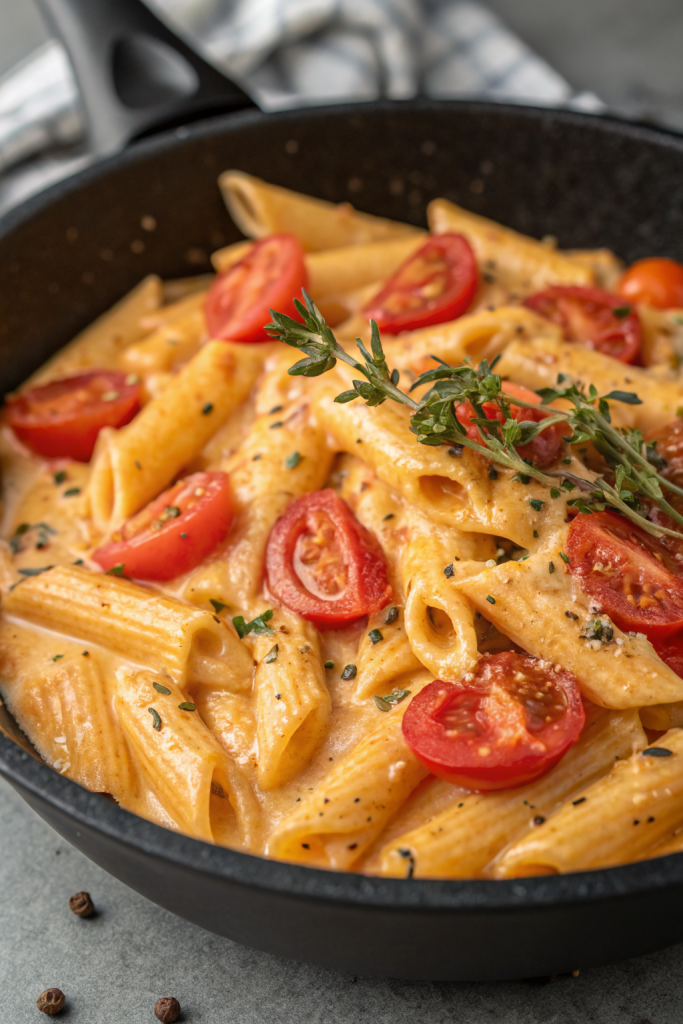
Tomato Pasta Recipe tastes bright, garlicky, and cozy, with just enough richness to feel special but still light enough for a weeknight. It works for busy home cooks who want a 30–35 minute dinner that feels restaurant-level without a culinary degree. I’ve cooked some version of this dish for over a decade, and my kids now request it more than mac and cheese, which says a lot.
Why Tomato Pasta Recipe Is Worth It
Tomato pasta hits that perfect balance of comfort and freshness. You get sweet-tangy tomatoes, fragrant garlic, a little heat from red pepper flakes, and silky pasta that soaks up every drop of sauce.
This recipe uses mostly pantry ingredients, so you can pull it together even when the fridge looks sad. It scales easily, works with different pasta shapes, and tastes even better the next day.
“This Tomato Pasta Recipe tastes like something from a tiny Italian trattoria, but I made it in 30 minutes in sweatpants. ★★★★★”
Ingredients You Need
Pasta
- 12 ounces dried pasta
- Use spaghetti, linguine, rigatoni, penne, or fusilli.
- Whole wheat pasta adds a nuttier flavor and extra fiber.
- I like De Cecco or Barilla for consistent texture.
Tomato base
- 3 tablespoons extra-virgin olive oil
- 4 cloves garlic, thinly sliced or finely minced
- 1 small yellow onion, finely chopped (about ½ cup)
- 1 can (28 ounces) crushed tomatoes or whole peeled tomatoes
- San Marzano style tomatoes give the best flavor.
- Use fire-roasted tomatoes for a deeper, slightly smoky taste.
- 2 tablespoons tomato paste
- Tube tomato paste works well and stores easily in the fridge.
- ½ teaspoon red pepper flakes (adjust to taste)
- 1 teaspoon sugar (optional, to balance acidity)
- 1 teaspoon kosher salt, plus more for pasta water
- ½ teaspoon freshly ground black pepper
Herbs & finishing touches
- 1 teaspoon dried oregano or Italian seasoning
- ½ teaspoon dried basil (if you do not have fresh)
- ¼–½ cup fresh basil leaves, torn or chopped (highly recommended)
- 2 tablespoons butter (optional, for a richer, silkier sauce)
- ½ cup freshly grated Parmesan or Pecorino Romano cheese, plus extra for serving
- Zest of ½ lemon (optional, for brightness)
- 1–2 tablespoons pasta cooking water, as needed, to loosen the sauce
Pantry shortcuts & substitutions
- Use jarred marinara in a pinch: simmer it with extra garlic, red pepper flakes, and a spoonful of tomato paste to deepen the flavor.
- Use frozen chopped onions and garlic if you want to skip knife work.
- Use pre-grated cheese on a busy night, though freshly grated melts smoother and tastes sharper.
Equipment list
- Large pot for boiling pasta
- Large deep skillet or sauté pan for the sauce
- Wooden spoon or silicone spatula
- Tongs or pasta fork
- Ladle or heatproof measuring cup to scoop pasta water
- Colander
- Cutting board and knife
- Microplane or fine grater for cheese and lemon zest
Quick Tips & substitutions
- Salt the pasta water generously; it should taste like the sea for well-seasoned pasta.
- Cook the pasta just to al dente; it will finish in the sauce.
- Scoop at least 1 cup of pasta water before draining; this starchy liquid helps the sauce cling.
- Use crushed tomatoes for a smoother sauce or whole peeled tomatoes that you crush by hand for a rustic texture.
- Add a pinch of sugar only if the sauce tastes too sharp or acidic.
- Stir in butter at the end if you want a richer, silkier tomato pasta.
- Swap Parmesan with Pecorino Romano for a saltier, tangier finish.
- Use gluten-free pasta to keep the dish gluten-free.
- Skip the cheese and butter and use olive oil only for a dairy-free, vegan tomato pasta.
- Add more red pepper flakes if you like a spicy tomato pasta recipe, or leave them out for kids.
How to Make Tomato Pasta Recipe
Step 1: Boil the pasta
Bring a large pot of water to a rolling boil. Add a generous handful of kosher salt. Add the pasta and cook until al dente, following package directions but checking 1–2 minutes early.
Scoop out at least 1 cup of pasta cooking water and set it aside. Drain the pasta but do not rinse it.
Step 2: Build the flavor base
Heat the olive oil in a large skillet over medium heat. Add the chopped onion and cook until it turns soft and lightly golden, about 5–7 minutes, stirring often. Add the garlic and cook 30–60 seconds, until it smells fragrant and just starts to turn golden at the edges.
Sprinkle in the red pepper flakes and stir them into the oil so they bloom. Add the tomato paste and cook it for 1–2 minutes, stirring, until it darkens slightly in color and smells sweet and rich.
Step 3: Add tomatoes and simmer the sauce
Pour in the crushed tomatoes (or hand-crushed whole tomatoes) and stir well. Add the dried oregano, dried basil, salt, and black pepper. If the tomatoes taste very sharp, add the sugar and stir again.
Lower the heat to medium-low and let the sauce simmer gently for 10–15 minutes. Stir occasionally so the bottom does not scorch and the flavors meld.
Step 4: Adjust consistency and season to taste
Check the thickness of the sauce. If it looks too thick, add a splash of pasta water to loosen it slightly. Taste and adjust with more salt, pepper, or red pepper flakes as needed.
If you use lemon zest, stir it in now for extra brightness. Toss in half of the fresh basil and stir.
Step 5: Combine pasta and sauce
Add the drained pasta directly into the skillet with the tomato sauce. Toss vigorously with tongs so every strand or piece of pasta gets coated. Add a small splash of pasta water if the mixture looks dry.
Sprinkle in the grated Parmesan and the butter (if using). Toss again until the cheese melts and the sauce turns glossy and clings to the pasta.
Step 6: Finish and serve
Turn off the heat. Top with the remaining fresh basil and another light shower of cheese. Give everything one last toss.
Serve the tomato pasta hot in warm bowls. Add extra grated cheese and a pinch of red pepper flakes at the table for anyone who wants more kick.
Recipe Variations
- Gluten-free: Use your favorite gluten-free pasta; brown rice or corn-based shapes hold up best.
- Vegan: Use olive oil only, skip the butter, and use a vegan Parmesan-style cheese or nutritional yeast.
- High-protein: Add cooked chicken breast, turkey sausage, or chickpeas to the sauce during the last 5 minutes of simmering.
- Creamy tomato pasta: Stir in ¼–½ cup heavy cream or half-and-half at the end for a blush sauce.
- Extra veggie: Add sautéed spinach, zucchini, mushrooms, or bell peppers to the sauce.
- Spicy arrabbiata style: Double the red pepper flakes and add a pinch of smoked paprika.
- Cheesy baked version: Transfer the sauced pasta to a baking dish, top with mozzarella and Parmesan, and bake at 400°F until bubbly and golden.
Ways to Serve Tomato Pasta Recipe
- Serve with a simple green salad with lemony dressing.
- Add garlic bread or crusty bread to soak up extra sauce.
- Top with a scoop of ricotta or burrata for extra creaminess.
- Pair with roasted vegetables like broccoli, asparagus, or green beans.
- Pack leftovers in a thermos for a warm lunch.
Storage Success
Store leftover tomato pasta in an airtight container in the fridge for up to 3–4 days. Add a tiny splash of water or broth before reheating so the sauce loosens and the pasta does not dry out. Reheat on the stove over low heat or in the microwave, stirring halfway through.
If you want to freeze the sauce, freeze the tomato sauce alone (without pasta) in freezer-safe containers for up to 3 months. Cook fresh pasta when you plan to eat and toss it with the thawed, reheated sauce for the best texture.
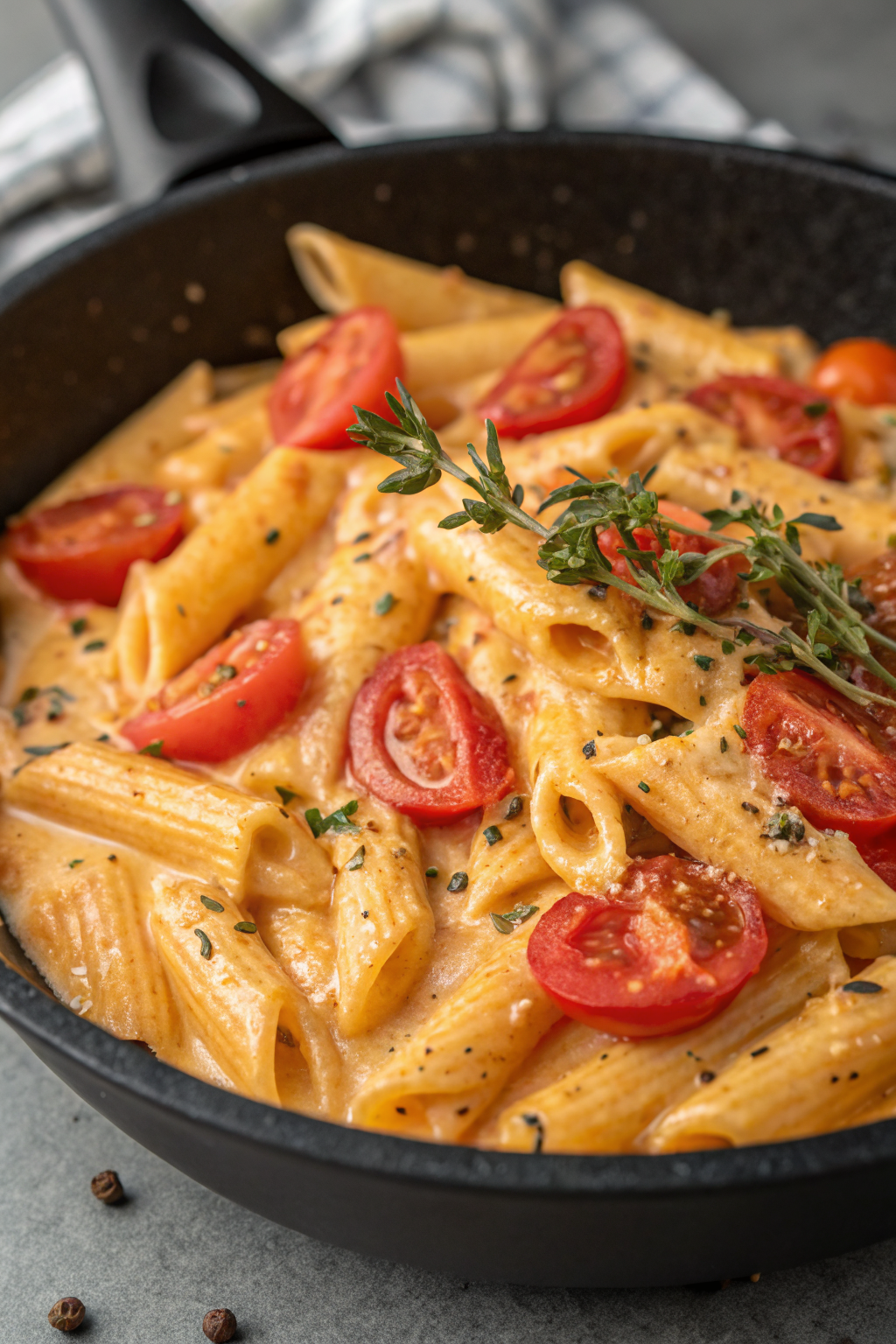
Tomato Pasta Recipe
Ingredients
Instructions
- Bring a large pot of water to a rolling boil and salt it generously so it tastes like the sea.
- Add the pasta and cook until al dente, following package directions but checking 1–2 minutes early.
- Scoop out at least 1 cup of pasta cooking water and set aside. Drain the pasta without rinsing.
- Heat the olive oil in a large deep skillet over medium heat.
- Add the chopped onion and cook, stirring often, until soft and lightly golden, about 5–7 minutes.
- Add the garlic and cook for 30–60 seconds, until fragrant and just starting to turn golden at the edges.
- Sprinkle in the red pepper flakes and stir to bloom them in the oil.
- Add the tomato paste and cook for 1–2 minutes, stirring, until it darkens slightly and smells sweet and rich.
- Pour in the crushed tomatoes (or hand-crushed whole tomatoes) and stir well.
- Stir in the dried oregano, dried basil, salt, and black pepper.
- If the tomatoes taste very sharp, add the sugar and stir again.
- Lower the heat to medium-low and let the sauce simmer gently for 10–15 minutes, stirring occasionally so it does not scorch.
- Check the thickness of the sauce. If it is too thick, add a splash of pasta water to loosen it slightly.
- Taste and adjust with more salt, pepper, or red pepper flakes as needed.
- If using lemon zest, stir it in now along with about half of the fresh basil.
- Add the drained pasta directly into the skillet with the tomato sauce.
- Toss vigorously so every strand or piece of pasta is coated, adding a small splash of pasta water if the mixture looks dry.
- Sprinkle in the grated Parmesan and add the butter, if using, then toss until the cheese melts and the sauce turns glossy and clings to the pasta.
- Turn off the heat and top with the remaining fresh basil and a light shower of extra cheese.
- Give everything one final toss and serve the tomato pasta hot in warm bowls.
- Offer additional grated cheese and a pinch of red pepper flakes at the table for anyone who wants more heat.
Notes
Approximate per serving (1/4 of recipe, made with 12 oz pasta, 3 tbsp olive oil, 2 tbsp butter, and 1/2 cup Parmesan): 520 calories; fat 20 g; saturated fat 9 g; carbohydrates 68 g; fiber 5 g; sugars 10 g; protein 18 g; sodium 780 mg. Values will vary based on pasta shape, cheese type, added butter, and portion size.
Leave a Reply